
The slitting quality of hot stamping foil (electrochemical aluminum) directly affects the hot stamping effect and material utilization. If there are burrs, draws, dust or uneven edges after slitting, in addition to equipment accuracy, wrong tool type selection or improper use is often the core reason. This article compares the applicable scenarios of round knives and flat knives to help you make quick decisions based on the characteristics of hot stamping foil.
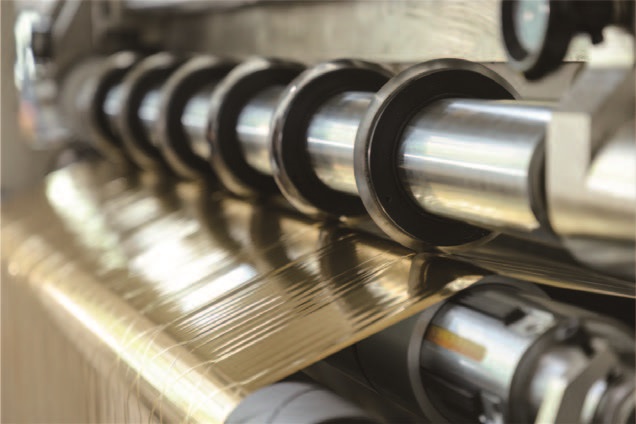
1. Diagnosis first: common causes of burrs
Before selecting, it is necessary to check whether the burr is caused by the superposition of the following factors:
• Material characteristics: The aluminum plating layer of hot stamping foil is brittle, the release layer is sensitive, and if the friction is too large or the edge is passivated during tool shearing, the coating is easy to tear.
• Slitting method: The force of the shearing type (round knife) and the pressing type (flat knife) is different, and the unsuitable knife type will directly produce burrs.
• Tension control: Tension fluctuations during slitting can cause the foil surface to shake, making it difficult to avoid slight burrs even with a good knife.
If the tension and winding problems have been eliminated, the focus is on optimizing the tool selection.
2. Round knife vs flat knife: key differences comparison
| project | Circular knife (shear) | Flat knife (press-cut) |
| Principle | The upper and lower round knives are misaligned and rotated for shearing, similar to scissors | The knife die is pressed down vertically and cut off on the hard cutting board |
| Cut-out features: | Smooth, no extrusion deformation with minimal burrs | It is easy to have crushing edges and is not friendly to thin foils |
| Applicable thickness | As thin as 6 μm hot stamping foil is acceptable | It is recommended to ≥ 20 μm or compound thicker foil |
| Slitting speed | High speed (≥150m/min) | Low speed (usually ≤ 60m/min) for small batches |
| Tool life | Long, can be repaired and ground many times | Short, especially when cutting aluminum-containing powder layers, it is easy to chip |
| Dust/debris | Almost none | It is easy to produce aluminum powder and paper scraps, and pollute the hot stamping foil |
| Difficulty in adjusting the knife | Fine adjustment of lateral clearance and overlap | The alignment of the knife die is simple, but the pressure needs to be finely controlled |
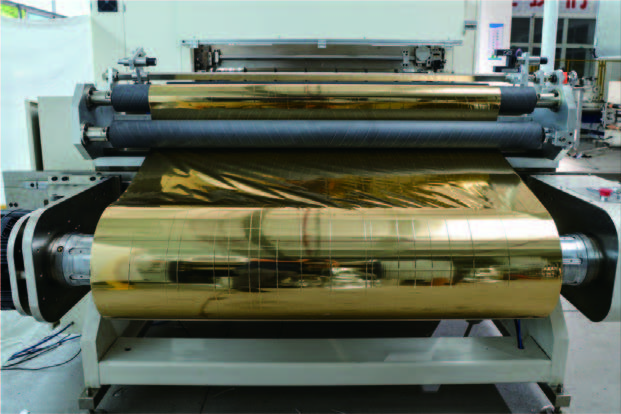
3. Core suggestions for selection: look at the material and order quantity
Preferential use of round knives:
1. Ultra-thin hot stamping foil with a thickness ≤ 12μm (commonly used in high-precision hot stamping): flat knives are easy to press out burrs or even break the foil.
2. No burrs and no dust (such as for optical lens decoration or electronic label bronzing).
3. High-speed slitting in large quantities (such as wide master coils being cut into narrow strips).
4. The material contains a coating that is easy to peel off (such as laser hot stamping foil).
Typical configuration: The upper and lower circular knives are made of tungsten steel or ceramic coated cutting edges, and the side clearance is controlled at 5%~8% of the foil thickness.
When a flat knife is optional:
1. Thick hot stamping foil or composite cardboard hot stamping foil with a thickness ≥ 30μm.
2. Sample trial production, very small batch (round knife adjustment takes a long time, flat knife change order fast).
3. The equipment is old and cannot control the gap of the round knife stably (forcing a round knife will cause the edge to collapse).
4. The slitting width > 300mm and allow for slight trimming (subsequent hot stamping can cover the burr area).
Note: Flat knives must be equipped with a soft anvil pad (e.g. polyurethane) and a jump cut method to reduce continuous indentation.
Fourth, avoid common misunderstandings
• Myth 1: A round knife must have no burrs
Wrong. If the circular cutter moves axially > 0.02mm, or there is a microscopic notch at the cutting edge, periodic burrs will still occur.
• Myth 2: Flat knives are cheap and use more
Flat knife die consumables may seem cheap, but the comprehensive cost of shutdown and tool replacement, cleaning aluminum powder, and rising scrap rates are often higher.
• Myth 3: One cut can use all foils
Different batches of hot stamping foil have different hardness and aluminum layer adhesion. It is recommended to make a 50-meter sample to confirm the incision every time you change the foil.
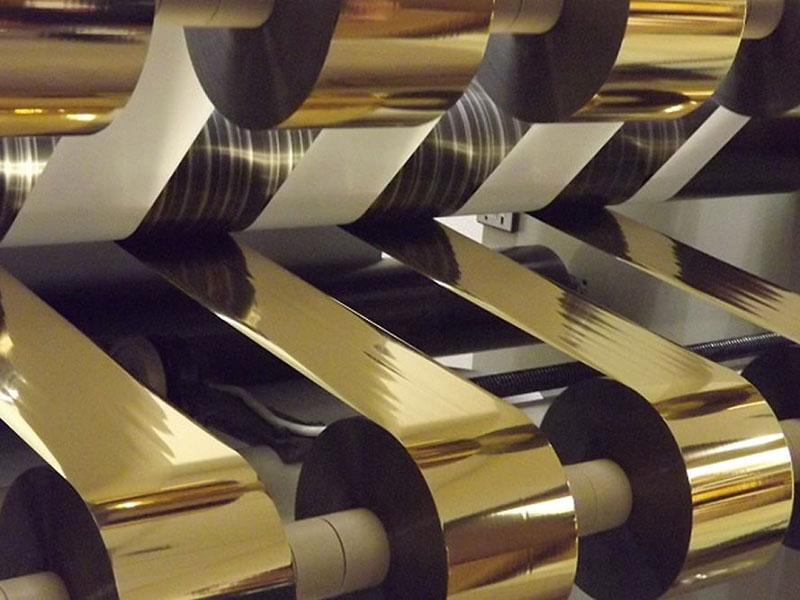
5. Actual combat checklist
If the burr has occurred, check in order:
1. First look at whether the knife is dull: it is recommended to regrind the round knife once every minute of 5~100,000 meters; Check the edge of the flat knife every 2~3 rolls.
2. Look at the gap/pressure: the gap on the side of the round knife should be 10%~20% smaller than the thickness of the foil; The flat knife pressure is based on just cutting off the release layer, and overpressure will produce burrs.
3. Final measurement of runout and parallelism: the runout of the spindle of the circular cutter is 0.01mm> which needs to be repaired; there should be no pit on the surface of the flat cutter cutting board.
Summary suggestions
• Pursue burr-free, high-speed, thin foil → round knives (slightly higher investment, but long-term worry-free).
• Prototyping, thick foil, intermittent production → Flat knives (flexible, but subject to minor burrs or additional trimming).
• If neither tool type can completely resolve the burr, go back to the slitting machine itself: check the rewinding roller, static eliminator and tension closed-loop control – sometimes the burr is actually scratched by the foil during rewinding.
The last sentence of experience: hot stamping foil slitting, seven points are on the knife, and three points are on tension and cleaning. Choose the right knife type, and with a dust-free scraper and vacuum suction device, the burr rate can be reduced to less than 0.5%.
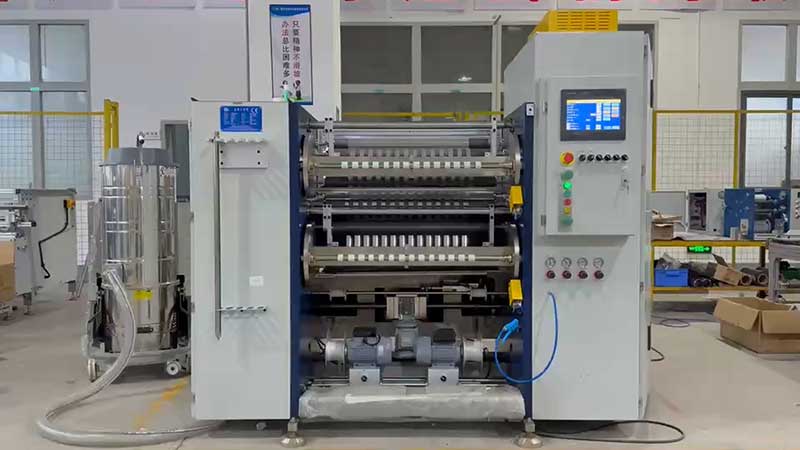 Common Problems with Hot Stamping Foil Slitting Machines and How to Solve Them
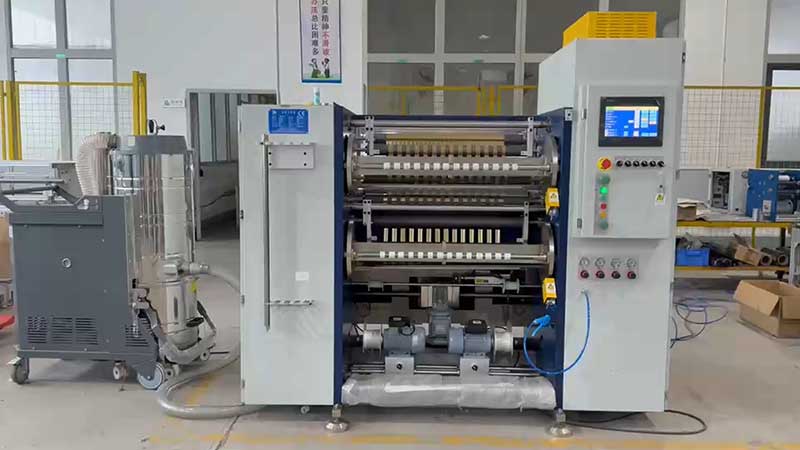 What Specifications Should You Look for in a Hot Stamping Foil Slitting Machine?
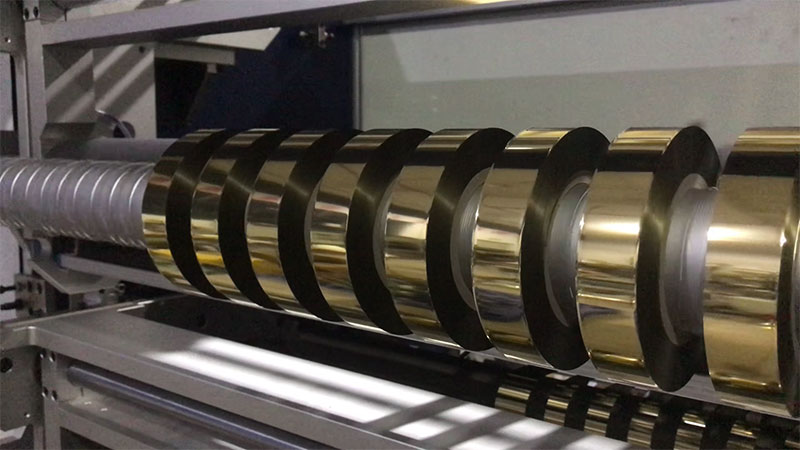 Hot Stamping Foil Slitting Machine Selection Guide: Tension Control Is Key
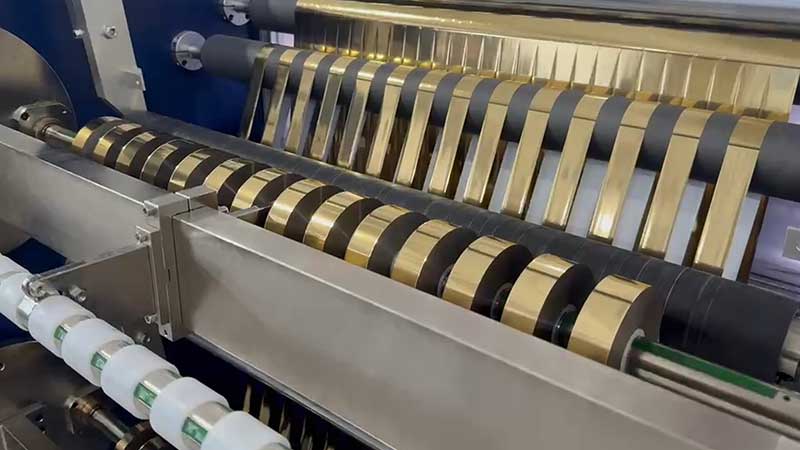 How to choose a hot stamping foil slitting machine? Let's first look at these three parameters
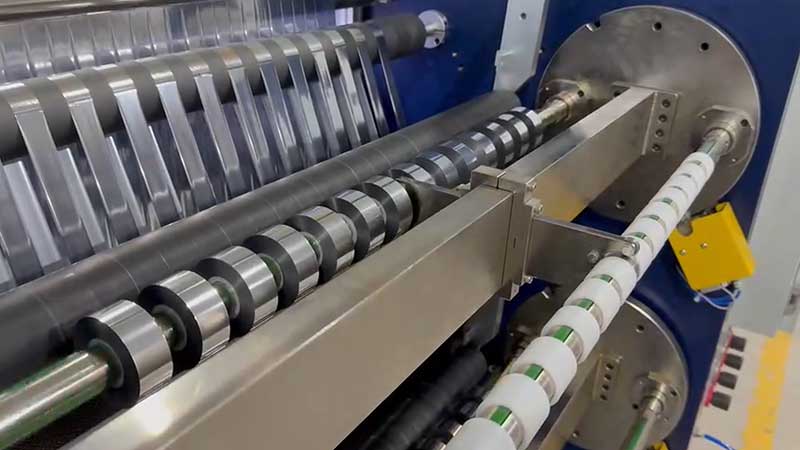 Selection of hot stamping foil slitting machines: how to match width and speed


 English
 Deutsch
 Français
 Español
 Português
 日本語
日本語 русский
 한국어
한국어 عربي
عربي ภาษาไทย
 Tiếng Việt
 Italiano
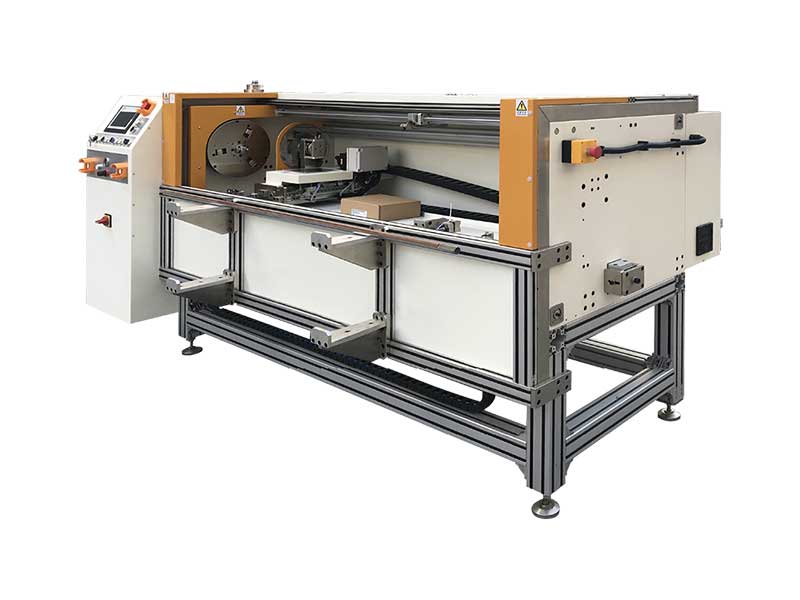 Automatic Foil Roll Cutting Machine
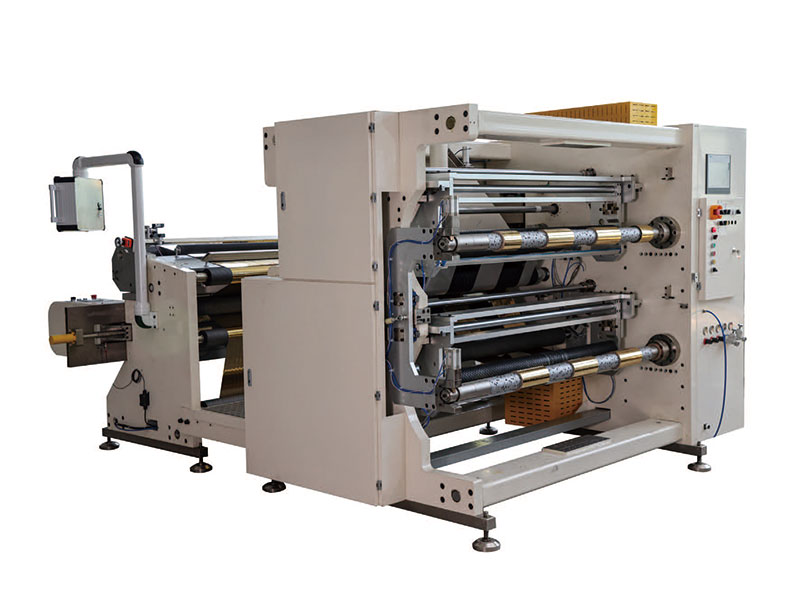 1400mm Hot Stamping Foil Slitting Machine
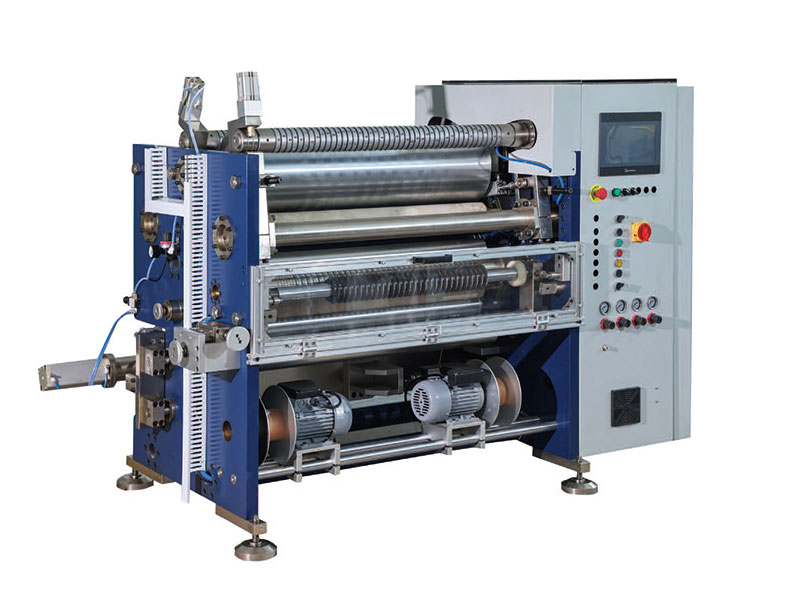 800mm Hot Stamping Foil Slitting Machine
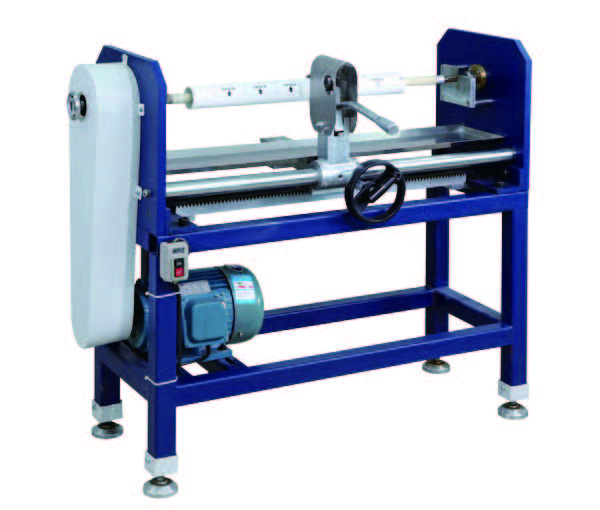 Manual Foil Roll Cutting Machine