
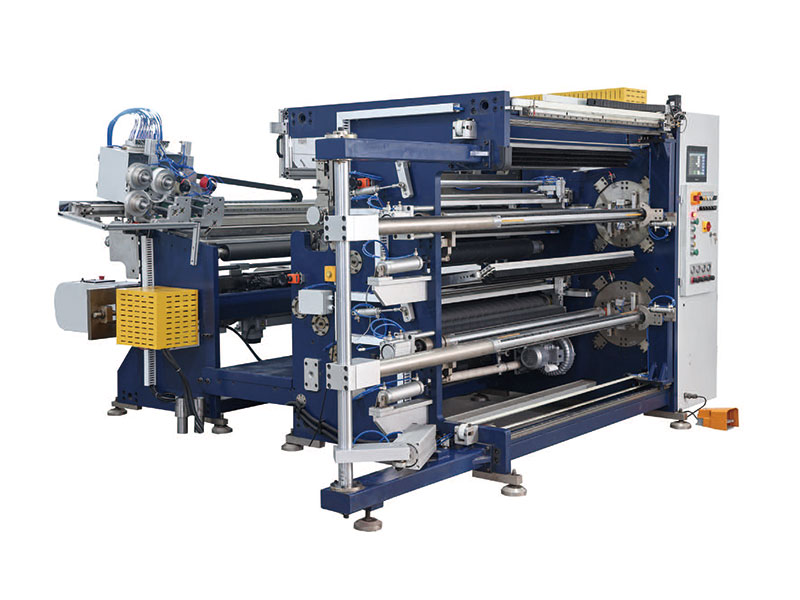
In the flexible packaging production process, film slitting machines are a key link. However, dust and static electricity problems generated during the slitting process often cause headaches for enterprises - not only affecting product quality, but also posing safety hazards. This article will delve into the dust removal and anti-static solutions of film slitting machines to help soft packaging companies improve yield rates and ensure production safety.
1. Why do slitting machines need dust removal and anti-static?
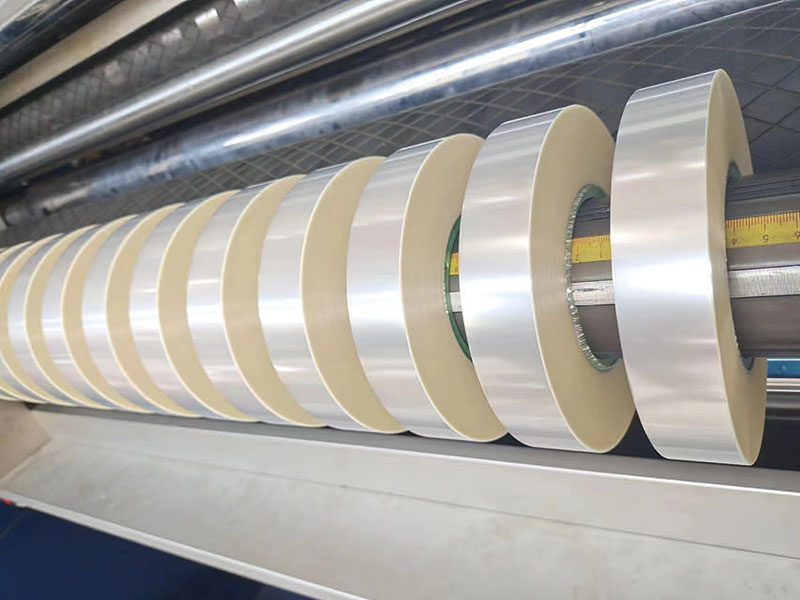
When the slitting machine is running at high speed, the friction between the film and the blades and guide rollers will produce a large amount of fine dust, especially for plastic film, aluminum foil, paper and other materials. These dusts can cause the following problems:
1. Contaminating the product surface: Dust adheres to the surface of the film, affecting subsequent processes such as printing and lamination
2. Reduced cleanliness: For industries with high cleanliness requirements such as medicine and food packaging, dust directly leads to waste
3. Accelerated equipment wear: Dust enters moving parts such as bearings and guide rails, exacerbating wear
4. Static electricity accumulation: Dust and static electricity are generated together, which not only absorbs dust, but also produces electric shock or sparks in severe cases
2. Source analysis of slitting machine dust
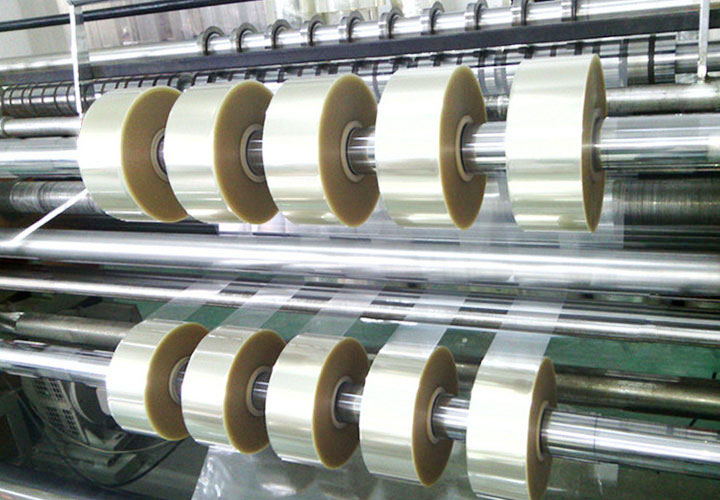
To solve the problem, we must first find the source. Slitting machine dust mainly comes from the following aspects:
• Tool cutting: Fine particles created by the friction of the blade against the film
• Film edges: especially for coated films and composite films, edge burrs are easy to lose powder
• Guide roller friction: The film produces fine peeling as it passes through the guide roller at high speed
• Ambient dust: Suspended particles settle in the air in the workshop
3. Design of efficient dust removal scheme
1. Source inhibition - start with the cutting method
• Choose sharp knives: Dull knives will create more friction, so it is recommended to use super-hard coated blades and replace them regularly
• Optimize slitting parameters: appropriately reduce the slitting speed, adjust tension control, and reduce cutting resistance
• Dust-free slitting technology: e.g. ultrasonic slitting, hot knife slitting (suitable for some thermoplastic films)
2. Topical vacuuming system – the most direct and effective method
Install a local hood in the tool holder and winding area to connect to an industrial vacuum cleaner or a central dust collection system. Key design takeaways:
• Vacuum port as close to the cutter position as possible (distance ≤ 50mm)
• Suction speed recommendation: 8~12 m/s
• The vacuum hose made of anti-static material avoids secondary adsorption caused by static electricity
• Equipped with a high-efficiency filter (HEPA) to prevent fine dust from flowing back
3. Electrostatic dust removal - assists in removing surface dust
For dust that has been adsorbed on the surface of the film, the combination of static elimination stick + brush/air knife can be used:
• Static elimination rods (AC or pulse type) first neutralize static electricity on the surface of the film
• Works with a rotating brush or ion air knife to blow up or sweep away dust
• Collected through the vacuum port
4. Sticky dust roller system – fine dust removal
For occasions with high cleanliness requirements (such as optical film, electronic film), sticky dust rollers can be installed at the outlet of the slitting machine:
• Upper and lower roller structure, the surface is a low-viscosity adhesive layer
• Continuous winding and transfer of dust, the adhesive layer can be replaced regularly
• Dust removal efficiency can reach more than 95%
4. Anti-static solution - an "invisible killer" that cannot be ignored
The harm of static electricity is not only the adsorption of dust, but also the possibility of penetrating sensitive electronic components, igniting solvent-based inks or dust, and causing fires.
1. The mechanism of static electricity generation
When the film is separated and friction with the guide roller at high speed, the electron transfer causes the film to become charged. The electrostatic sequence of common materials is as follows (from positive to negative):
Glass → nylon → wool → silk → aluminum → paper → cotton → steel → polyester → PVC → polypropylene → polyethylene → Teflon
The farther apart the two materials are in the sequence, the more severe the triboelectric initiation.
2. Active static eliminator
Recommended solution: Install AC or DC type static elimination rods
• Position: Before and after the film enters and exits the slitting machine, before winding
• Height: 20~50mm from the film surface
• Power: According to the width of the film and the speed of travel, generally 0.5~1.5 W/m
• Note: Clean the firing needle regularly to prevent contamination and reduce efficiency
3. Grounding and conductivity treatment
• All guide rollers, tool holders, and frames must be reliably grounded with a grounding resistance of ≤ 10Ω
• Use conductive rubber rollers or antistatic conductive rollers instead of regular rubber rollers
• The winding shaft adopts a grounding slip ring to export the static electricity of the core
4. Add antistatic agent (suitable for film production)
If the factory produces the film itself, it can be added with an internal antistatic agent or an external antistatic agent applied to the surface of the film to reduce the surface resistance from the material itself (target: 10⁶ ~ 10⁹ Ω).
5. Recommended schemes for different types of films
| Film type: | Dust characteristics | Recommended dust removal scheme | Anti-static focus |
| PE/PP ordinary film | There is more fluff at the edges | Local vacuuming + static elimination stick | Eliminates frictional static electricity from rollers |
| Aluminum foil/aluminum coating film | Fine aluminum powder, easy to oxidize | Sticky dust roller + HEPA vacuuming | It must be grounded to prevent sparks |
| Optical film/release film | Very small dust requirements | Sticky dust roller + ion air knife + clean room | The whole process is anti-static and resistive monitoring |
| Paper/paper-plastic composite | The amount of paper powder is large | Power vacuuming + brush | Humidity control > 50% RH |
6. Key points of installation and maintenance
1. Clean the vacuum duct regularly: Dust buildup can reduce suction power or even clog
2. Check the performance of the static elimination rod: Measure the residual voltage with an electrostatic tester every month (it should be less than ±100V)
3. Tool replacement cycle: It is recommended to replace or grind every 200~300 hours of operation
4. Monitor the temperature and humidity of the workshop: the temperature is 20~25°C, and the relative humidity is 45~60% to reduce static electricity
5. Train operators: Dust and static issues are often hidden, and operators are the first line of defense
7. Summary
Dust removal and anti-static of film slitting machine are not two isolated things, but a system engineering. Dust removal focuses on "suction" and "brushing", and anti-static focuses on "elimination" and "conduction". Enterprises should reasonably configure corresponding equipment according to their own film type, cleanliness requirements, and safety level.
Although a one-time investment may increase the cost by tens of thousands to hundreds of thousands of yuan, it will result in a higher yield, a lower customer complaint rate and a safer production environment. In today's increasingly fierce competition in the soft packaging industry, details determine quality, and quality determines the market. Starting with a slitting machine is a wise choice to increase competitiveness.
 Complete Guide to Selecting Film Slitting MachinesThe Game and Symbiosis of Speed and Precision in Film Slitting MachinesApplications of new energy film slitting machinesTechnical analysis of the automatic deviation correction system for film slitting machines
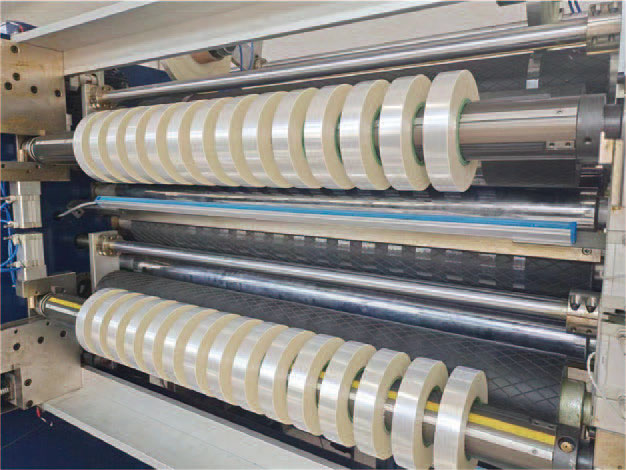 Tension Control Technology for Film Slitting Machines: From Principle to Implementation


 English
 Deutsch
 Français
 Español
 Português
 日本語
日本語 русский
 한국어
한국어 عربي
عربي ภาษาไทย
 Tiếng Việt
 Italiano
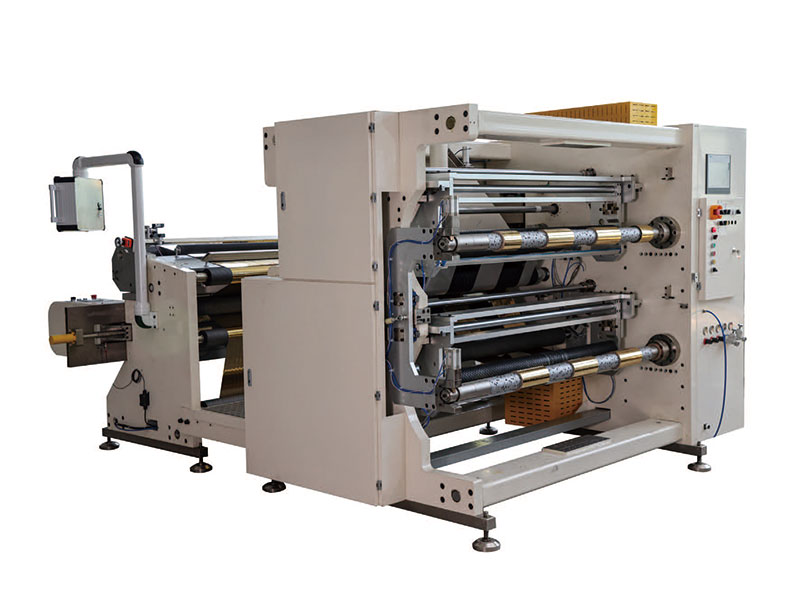 1400mm Hot Stamping Foil Slitting Machine
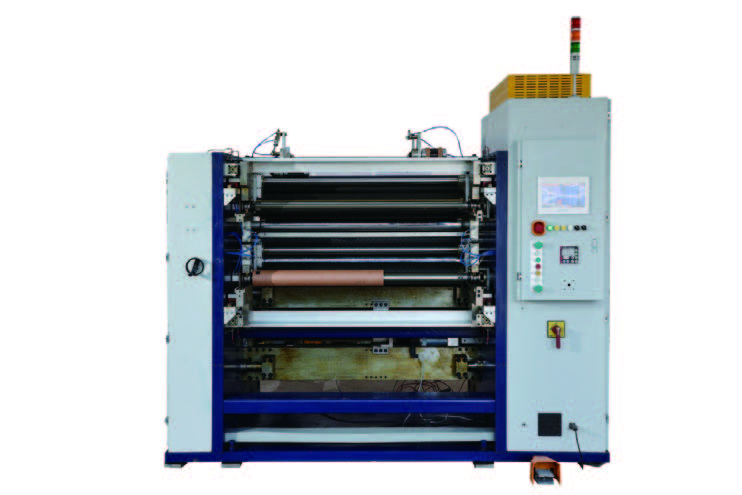 New Energy Ultra-thin Film Slitting Machine For Capacitive Film
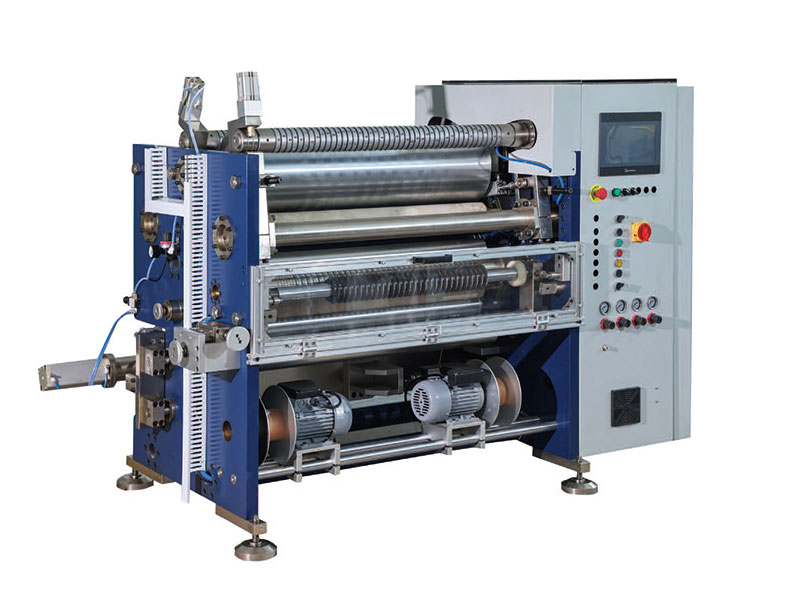 800mm Hot Stamping Foil Slitting Machine
 1350mm Hot Stamping Foil Slitting Machine