
During film slitting, wrinkling is one of the most common and troublesome quality issues. Whether it's BOPP, BOPET, or other types of films, wrinkles that not only affect the product's appearance but also lead to serious defects such as missing coating or film breakage in downstream printing and lamination processes. Among wrinkle issues, initial creases (bottom wrinkles) are particularly tricky—they occur during the initial winding stage of the paper core and are mostly dead wrinkles that cannot be stretched. When users reach this position, the entire section can be scrapped, directly causing economic losses.
So, what should you do about wrinkling in a film slitting machine? It is necessary to systematically investigate and resolve issues from four dimensions: process parameters, equipment status, excipient quality, and technological innovation.
1. Starting from Process Parameters: The "Balancing Technique" of Tension and Pressure
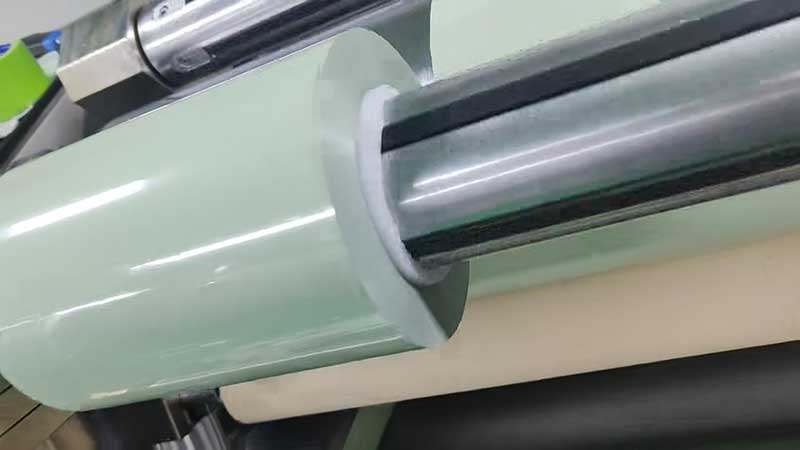
In the slitting process, winding tension and contact roller pressure are the core variables affecting wrinkle formation, requiring precise coordination.
• Excessive tension is a common trigger for wrinkles. When tension is too high, the film experiences uneven lateral force, disrupting the flatness of the film roll and making it very prone to wrinkles; Conversely, if the tension is too low, it can cause edge runaway and film roll loosening. The correct approach is to use the "decreasing tension" mode—the initial tension is set at 30%-40% of the film's breaking strength, and decreases linearly as the roll diameter increases, with the attenuation rate controlled at 15%-20%.
• Contact roller pressure is equally critical. Practice shows that reducing the pressure on the contact roller actually helps reduce bottom wrinkles—when the pressure decreases, the amount of air inside the film roll increases, the gaps between film layers widen, friction decreases, and it helps release wrinkles. However, the pressure cannot be reduced indefinitely; otherwise, if the membrane roll is too loose inside, the end face will become star-shaped, resulting in horizontal wrinkles.
Tension and pressure are not separate but a pair that requires coordinated adjustment. If the initial pressure is set too low, deceleration midway may cause deviation due to insufficient pressure. Therefore, setting the tension curve is crucial and requires repeated adjustments to achieve the ideal state on the film roll end face that "has no star shape but minimizes wrinkling."
2. Starting from equipment and auxiliary materials: paper cores, rollers, and tool details
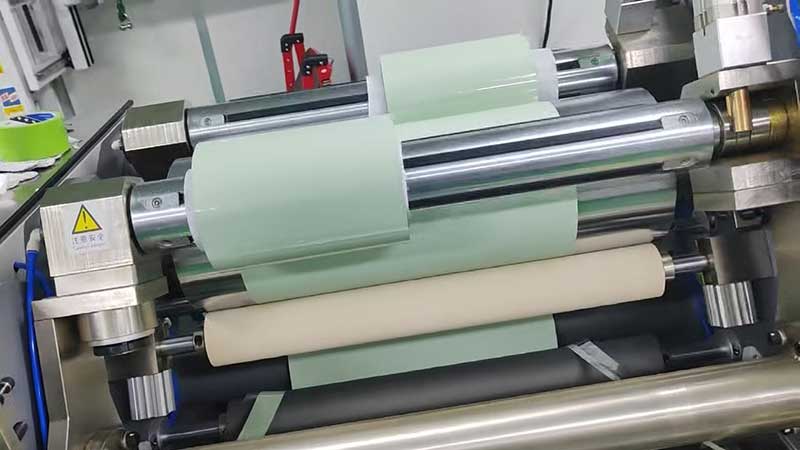
Many wrinkle issues stem not from process parameters but from the details of the equipment and auxiliary materials.
The quality of paper core (paper tube) is often overlooked, but it has a significant impact on bottom wrinkles. When the slitting machine rotates at high speed, the paper core acts as the axis for film winding, and its straightness, concentricity, strength, and surface finish are crucial. Especially for long-sized film rolls, the longer the paper core, the harder it is to ensure straightness and concentricity; slight bending in the middle can cause the film in the middle of the roll to wrinkle and remain unraveled for a long time. High-quality paper core straightness should reach within 0.04%, and for films below 10μm, surface roughness should be less than 0.2μm.
The relationship between the diameter of the pressure roller and the diameter of the film roll can also cause wrinkling. When the diameter of the pressure roller is greater than the diameter of the film roll, the wrapping angle between the film and the roller is large, making it easy for air to get caught in and cause longitudinal wrinkles. As the diameter of the film roll increases, when the diameter of the pressure roller is less than the diameter of the film roll, the wrapping angle decreases and air intake decreases. Therefore, selecting large-diameter paper cores and reducing the diameter of the pressure roller is an effective solution.
In addition, the sharpness and angle of the slitting knife should not be overlooked. Passivated tools cause stretching deformation in the cut, abnormal edge thickness, and thus edge wrinkling. For BOPP film, the recommended tool angle is 30°-45°. Use a 30° sharp-angle tool for < 20μm thickness, a 45° blade for a > 20μm, and regularly inspect and replace the tool.
3. Static Electricity: The Invisible "Fold Pushers"
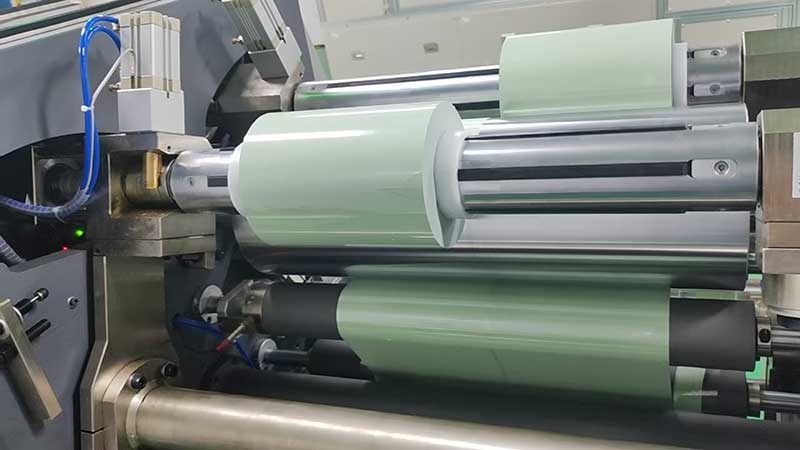
Static electricity generated during film slitting is an underestimated hidden driver in wrinkle issues. Static electricity causes the film to absorb dust from the air, leading to poor lamination between layers; At the same time, electrostatic films tend to adhere to guide rollers, disrupting the stability of film movement.
Solutions include: installing ion air rods at the slitting machine inlet, outlet, and winding points to ensure the static voltage is controlled within ±500V; The surface of the guide roller is treated for anti-static treatment (resistance value 10⁶-10⁹Ω); Some new slitting machines are also designed with dedicated static elimination structures and film separation guide mechanisms, separating the slitted films from top to bottom, preventing them from sticking together and causing wrinkles due to static attraction.
4. Technological Innovation: Unwinding and Swinging Method Breaks Up 'Thickness Accumulation'
In addition to the above routine adjustments, in recent years, an innovative technology—the unwinding swing method—has provided new ideas for solving wrinkle problems. The principle is: the film exhibits microscopic thickness unevenness (peaks and troughs) horizontally. In traditional slitting and winding processes, thick areas stack thicker areas and thin areas and thinner areas separately, causing macroscopic "bulging" and "depressions," ultimately manifesting as wrinkles.
The unwinding swing method uses a PLC controller to drive the unwinding rollers to perform regular left-right swings (for example, the film swings once every 10m-500m forward, with an amplitude of 1mm-1m), causing the film's lateral position to change periodically, thereby dispersing and dispersing microscopic unevenness—stacking thick and thin areas and eliminating the thickness accumulation effect. Practice has proven that after adopting this method, the full-span outer diameter difference of film rolls decreases from greater than 1mm to about 0.54mm, and wrinkle issues are significantly improved. This modification only requires adding position sensors and PLC controllers, without altering the internal structure of the slitting machine, resulting in lower costs.
Conclusion
Film slitting and wrinkle is a systemic engineering issue; there is no one-size-fits-all solution. When facing wrinkling, it is recommended to check in the following order: first check the quality of the paper core (straightness, concentricity), then adjust the tension and pressure curves, confirm the condition of the tool, troubleshoot for static issues, and finally consider introducing new technologies such as unwinding and swinging. Different models, film types, and specifications of film rolls have different optimal parameters, requiring repeated testing and fine adjustments in actual production to minimize wrinkle losses.
 Detailed explanation of the automation functions of the hot stamping foil slitting machineComplete Guide to Selecting Film Slitting MachinesThe Game and Symbiosis of Speed and Precision in Film Slitting MachinesApplications of new energy film slitting machinesTechnical analysis of the automatic deviation correction system for film slitting machines


 English
 Deutsch
 Français
 Español
 Português
 日本語
日本語 русский
 한국어
한국어 عربي
عربي ภาษาไทย
 Tiếng Việt
 Italiano
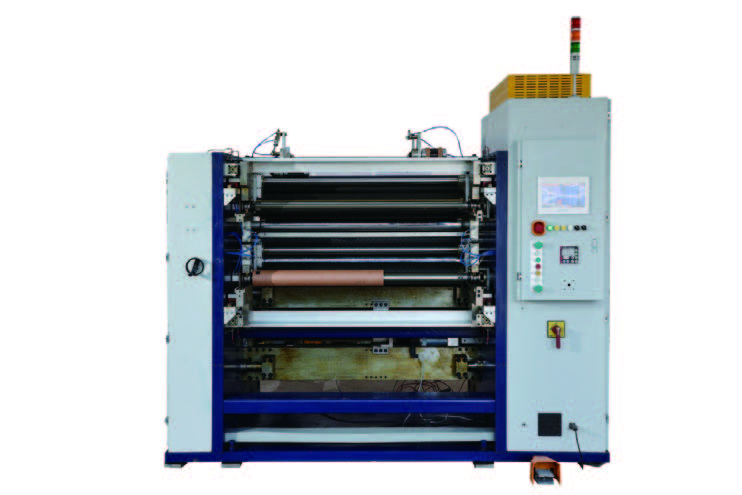 New Energy Ultra-thin Film Slitting Machine For Capacitive Film
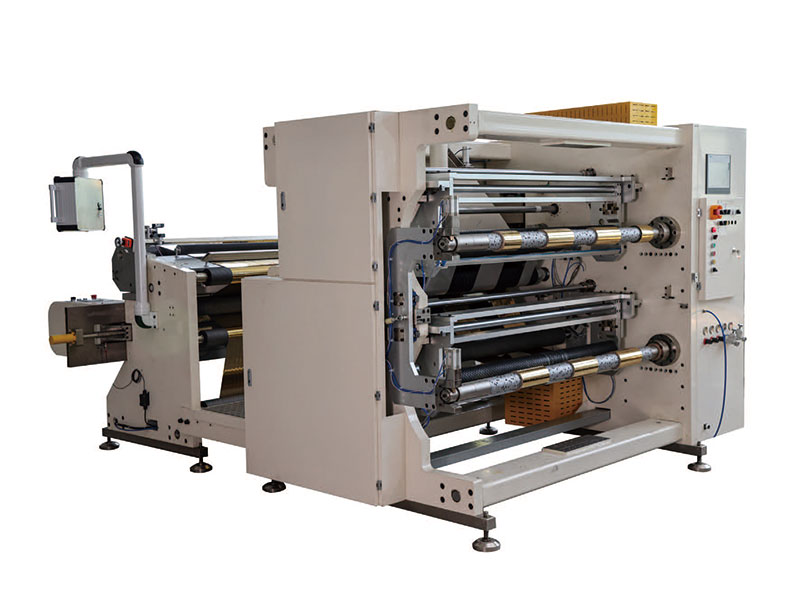 1400mm Hot Stamping Foil Slitting Machine
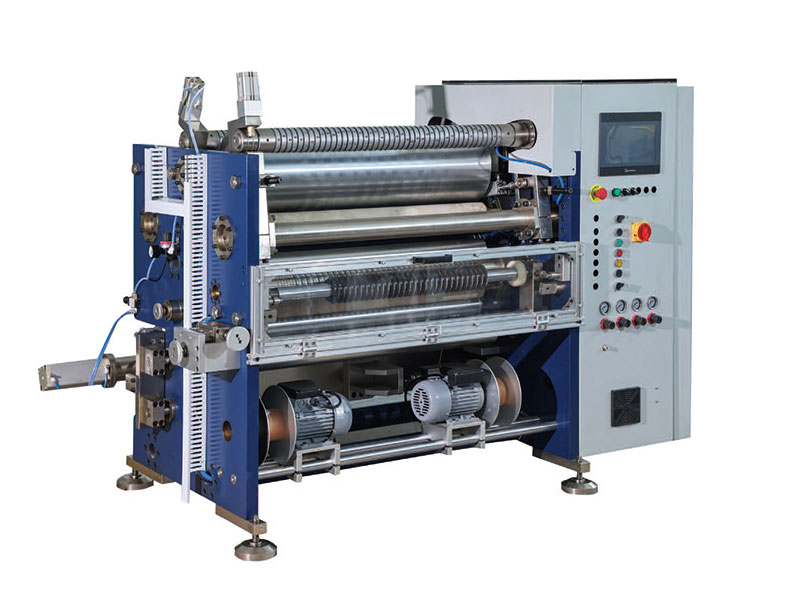 800mm Hot Stamping Foil Slitting Machine
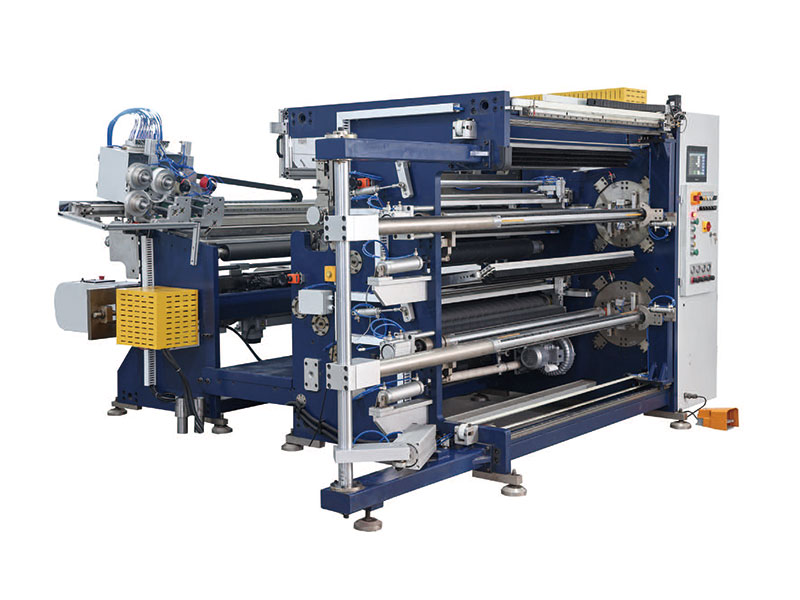 1350mm Hot Stamping Foil Slitting Machine