
In the packaging, printing, and decoration industries, hot stamping is an important means to enhance product added value thanks to its unique metallic luster and luxurious texture. As the front-end process in hot stamping production, the selection of the hot stamping foil slitting machine directly affects the smoothness of subsequent hot stamping processes, finished product yield, and production costs. Faced with various models on the market ranging from hundreds of thousands to millions, how can you make precise selection decisions? This article will provide you with a systematic selection approach from three dimensions: core parameters, process matching, and practical experience.
1. Core Knowledge Before Selection: The quality of the slitting determines the quality of hot stamping
Before delving into the parameters, it is necessary to establish an understanding: the precision of the slitting machine directly determines the production efficiency and scrap rate of the hot stamping workshop. Hot foil foil typically consists of a 12μm-25μm PET base film, release layer, tinting layer, and adhesive layer. The material is extremely thin and easy to stretch.
If the cut edges develop burrs, flanges, or tiny cracks (commonly known as "ruffle edges"), it is very likely to cause foil breakage, incomplete stamping, or "gold stamping spots" during stamping. Therefore, the first step in selecting a model is to clearly define your true requirements for "cross-section quality" and "tension stability."
2. Analysis of the four core technical parameters
1. Tension control system: the lifeblood of thin material slitting
Hot stamping foil is highly prone to stretching and deformation; excessive tension leads to inaccurate stretching and registration of the substrate; If the tension is too low, the roll will be uneven and the ball will go off-balance.
• Model selection recommendation: Choose models with fully automatic closed-loop tension control, preferably systems with floating swing rollers or high-precision sensors providing real-time feedback. For ultra-thin electrochemical aluminum with a thickness of about 12μm, it is recommended to select center winding or center + surface gap winding, and have taper tension control in the winding section, meaning the tension decreases according to a set curve as the coil diameter increases. This is especially important for winding large coil diameters (such as 400mm or more).
2. Slitting method: The choice of knife determines the quality of the trimming
The foil foil must be cut in two with a single cut, with no adhesion at all.
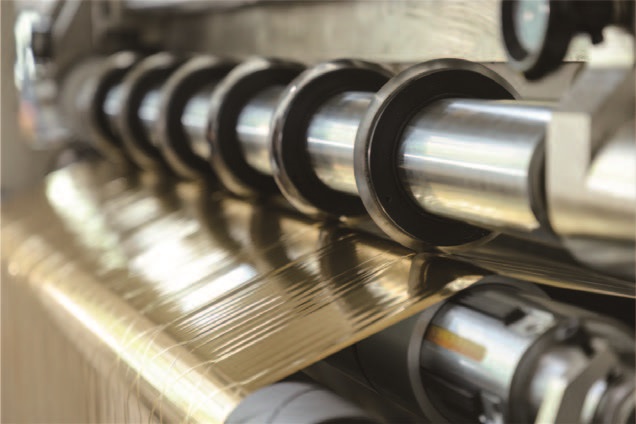
• Selection recommendation: Prioritize shear-type circular blade slitting (upper and lower disc blades). Compared to traditional razor blades (flat blades), round blades offer a smoother cutting surface, longer blade lifespan, and can accommodate frequent specification changes. At the same time, the rigidity of the cutter shaft is crucial. The wider the slitting width (e.g., over 1.6 meters), the less the cutter shaft must bend under heavy pressure, otherwise the middle cut may not be cut properly and the sides may be overcut.
3. Automation and tool layout efficiency
There are many hot stamping foil specifications (from 2mm narrow threads to 120mm standard color blocks), and frequent order changes are the norm.
• Selection Recommendation: For high-precision requirements, it is recommended to equip a hydraulic tool locking system to ensure uniform pressure across all tool groups and prevent axial movement. If the budget allows, consider equipping an automatic tool positioning system where the slitting width is input and the tool holder automatically moves to the designated position, greatly shortening order change times and reducing manual errors.
4. Dust removal and static elimination
During slitting, the edges produce tiny aluminum powder and dust. If they adhere to the foil surface, "pit spots" form during hot stamping, leading to scrap.
• Model selection recommendation: The equipment must be equipped with multi-stage dust removal devices, such as a combination of contact dust rollers and non-contact ion air knives/air suction outlets. At the same time, static elimination rods are installed at the winding and unwinding points to prevent dust from being adsorbed by static electricity and to avoid material slippage caused by static electricity during winding.
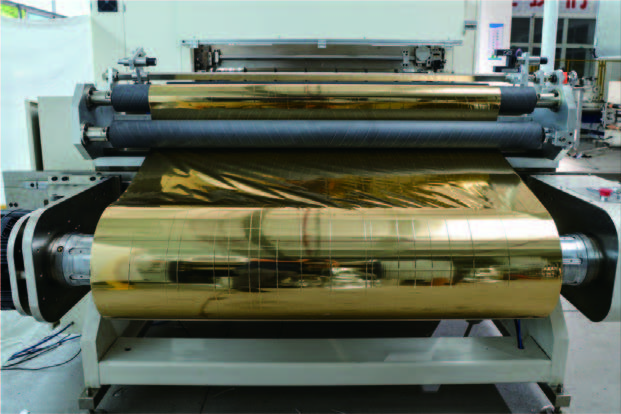
3. Positioning Comparison: Different configurations correspond to different markets
Based on your product positioning and target customers, you can refer to the following configuration comparison table:
| Contrast dimensions | Universal (economical) | High-end/Special (Quality Priority) |
| Tension accuracy | ±1N-±3N | ± Within 0.5N (imported servo motor + low-inertia guide roller) |
| Slitting method | Shear-type circular blade | Shear-type circular cutter + carbide cutter |
| Winding flatness | Standard roller press | Gap winding control + reduced contact pressure |
| Edge detection | Manual visual inspection | CCD online defect detection (real-time feedback on burrs and notches) |
| Receiving station | Ordinary platforms | Automatic film bonding mechanism with suction platform (reduces downtime losses) |
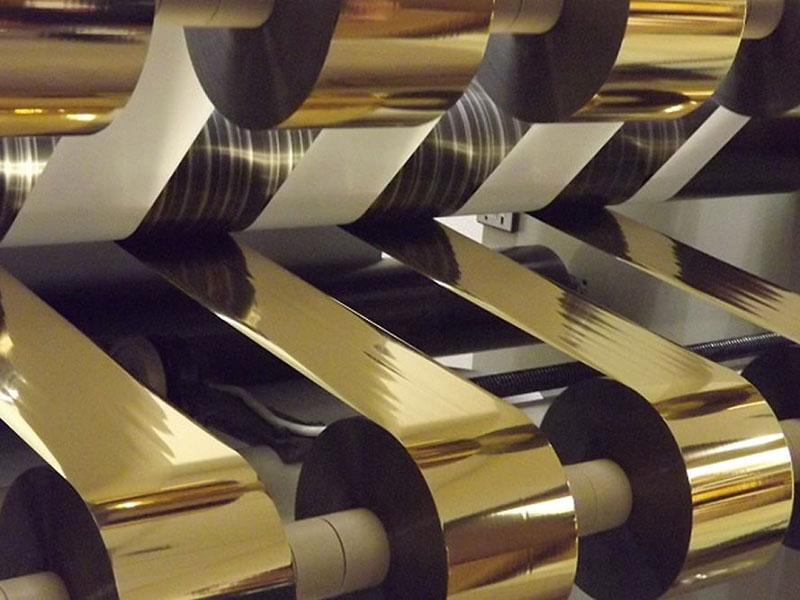
4. Practical experience: How to handle the issue of splitting and burrs
Slitting and burr are the most common quality incidents in the hot stamping foil industry. When encountering such issues, please follow the principle of checking from outside to inside, from easy to difficult:
1. Replace the blade: This is the preferred operation to address 90% of sudden burr issues. Don't try to sharpen old blades; just replace them with brand-new, high-quality circular blades. Establish a record of blade usage and implement regular mandatory replacement rather than waiting until the blade can no longer be cut.
2. Check the tool position: The gap between the upper and lower blades should be very small, usually 0.02-0.07mm, or even "almost bumping but not really touching" (preferably small rather than large); The cutting depth (overlap) should be one-third to one-half of the blade edge.
3. Adjust tension: Ensure smooth winding without shaking; tension should not be too high; The winding tension should be moderate and uniform. During slitting, the foil strip should be flat, taut, and free of vibration.
5. Supplier selection and trial verification
Finally, the "hard power" of equipment is just as important as the supplier's "soft power."
1. Be sure to test the machine: Bring your own master roll materials to the manufacturer for on-site testing. Observe the uniformity and tension fluctuations of the slitting end face at different speeds (from low speed 50m/min to high speed 200m/min).
2. Consumables supply: Confirm whether the blades are standard parts and check the inventory status of local suppliers. If non-standard inserts run out of stock, the entire production line may face shutdown.
3. Process support: A good supplier not only sells equipment but can also provide slitting process parameter recommendations based on your material characteristics (such as adhesive layer viscosity and substrate thickness), such as tool angle angle and roller pressure settings.
Conclusion
Selecting a hot stamping foil slitting machine essentially requires a balance of precision and efficiency. For startup companies, an economical machine with stable tension control and manual tool adjustment is sufficient to meet basic needs; For professional manufacturers pursuing ultimate hot stamping effects and high-speed production, investing in a high-end model with high-precision closed-loop tension, automatic blade arrangement, and powerful dust removal systems is the optimal solution for brand reputation and long-term cost control.
 Detailed explanation of the automation functions of the hot stamping foil slitting machineCustomized plans and processes for hot stamping foil slitting machines
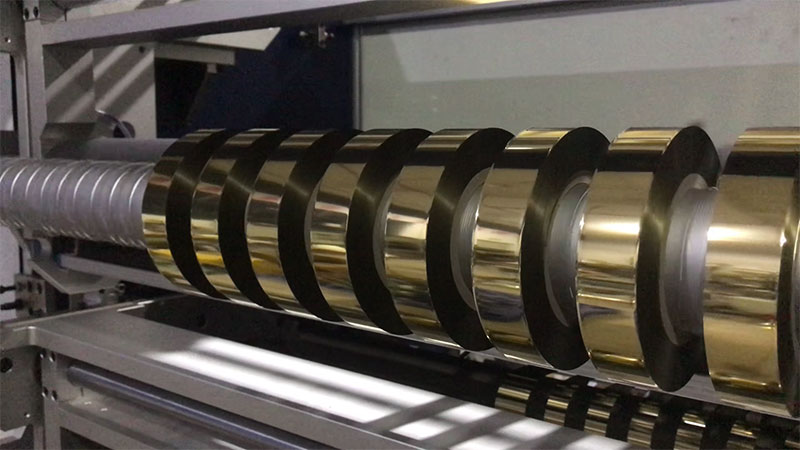 Description of the hot stamping foil slitting machine's winding and rewinding systemThe hot stamping foil slitting machine is suitable for both materials and scenariosWorking principle and advantages of the hot stamping foil slitting machine


 English
 Deutsch
 Français
 Español
 Português
 日本語
日本語 русский
 한국어
한국어 عربي
عربي ภาษาไทย
 Tiếng Việt
 Italiano
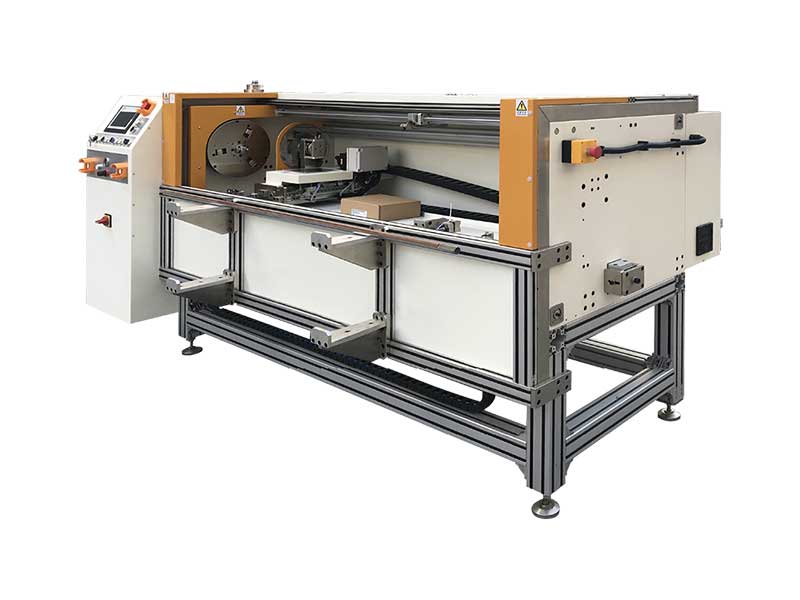 Automatic Foil Roll Cutting Machine
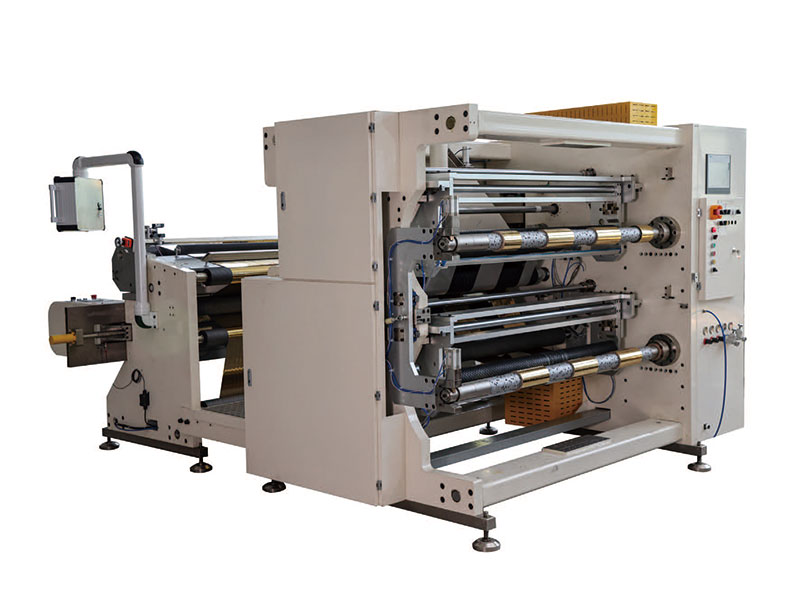 1400mm Hot Stamping Foil Slitting Machine
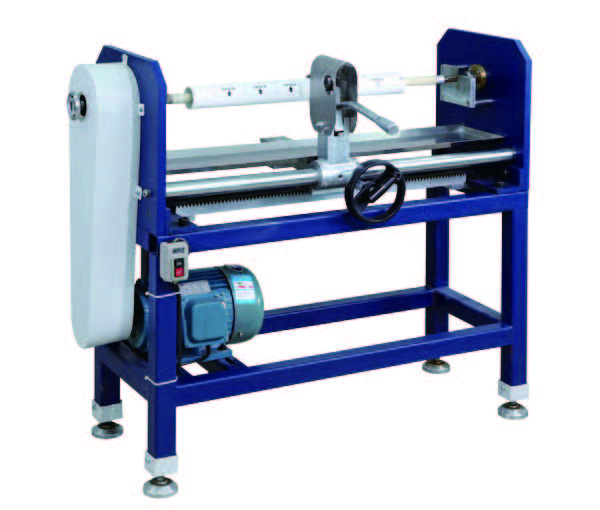 Manual Foil Roll Cutting Machine
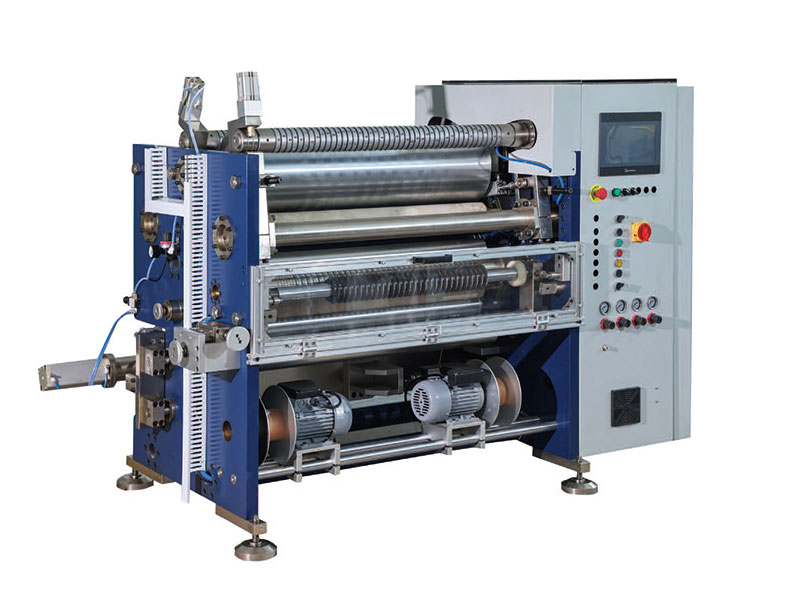 800mm Hot Stamping Foil Slitting Machine