
Abstract
Ribbon slitting accuracy is a key factor determining the quality of thermal transfer printing, directly affecting barcode clarity, print head lifespan, and material utilization. As a multilayer composite film (PET substrate + thermal coating) with a thickness of only 4-20μm, carbon ribbons face special challenges during slitting, such as easy stretching, wrinkling, and burrs. This paper systematically analyzes four core factors affecting slitting accuracy: tension control system, slitting tool system, correction and feeding stability, as well as equipment rigidity and environmental conditions. Research shows that slitting accuracy can be improved from ±0.1mm to ±0.05mm, and the scrap rate can drop from 3%-5% to below 0.5%, resulting in significant economic benefits. Modern high-precision slitting is moving toward closed-loop servo control, intelligent online inspection, and micron-level processing.
1. Introduction
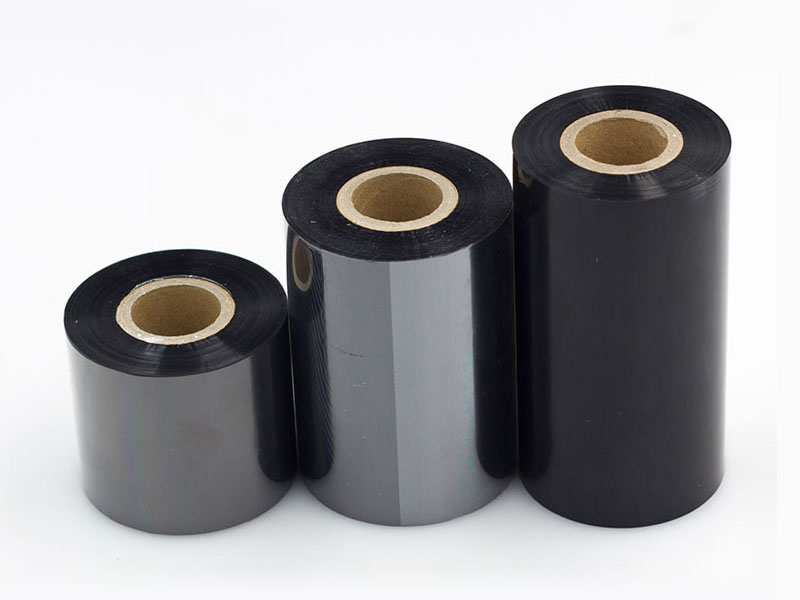
Ribbon (heat transfer ribbon) is a core consumable in fields such as barcode printing, logistics labels, and electronic component identification. As the key device for processing wide-width master rolls into narrow-format finished products for different printers, the ribbon slitting machine directly determines the final printing quality—whether the barcode is clear, the edges neat, and whether the print head is damaged by burrs.
However, ribbon slitting is not a simple cutting process. Carbibial ribbons are made by laminating polyester film (PET) substrates with heat-sensitive coatings and backcoatings, typically only 4-20μm thick. The material is lightweight, soft, and extremely sensitive to tension. Tension fluctuations during slitting may cause stretch deformation of the base film, microcracks in the coating, or even strip breakage; Tool dullness leads to squeeze cutting rather than shear cutting, resulting in edge burrs and flanging; Even micron-level deviations in the feeding system can cause the strips cut to "snake" and deviate.
As high-end applications such as anti-counterfeiting labels and medical labels increasingly require carbon ribbon width tolerances (±0.05mm or even less), a deep understanding of the factors affecting slitting accuracy has become a core issue for ribbon manufacturers to reduce costs and improve efficiency.
2. Tension Control: The "Soul of Stability" for Precision
Tension is the tensile force experienced by the ribbon during slitting and is considered the most critical variable affecting slitting accuracy. Ribbon is highly sensitive to tension: excessive tension causes the PET base film to stretch, causing the width to shrink after slitting and resulting in inaccurate dimensions, which in severe cases can lead to coating peeling and powder shedding; If the tension is too low, the material becomes loose and wrinkled, uneven rolling, and the cut edges become serpentine.
2.1 Three major misconceptions about tension control
Traditional slitting machines mostly use magnetic powder clutches or mechanical friction discs to control tension, which has significant limitations: magnetic powder brakes respond slowly, tension fluctuations can reach ±up to 10%, making it difficult to meet high-precision requirements. What deserves even more caution are three common misconceptions:
First, the tension is consistent throughout the entire section. The tension requirements for the unwinding, slitting, and rewinding zones are completely different: the tension in the unwinding zone should decrease as the roll diameter decreases to prevent material stretching; The slitting area must maintain constant tension to ensure uniform cuts; The winding area should use a "tapering decrease" strategy as the diameter increases, preventing the outer layer from being overly tight and crushing the inner layer, forming a "daisy core" winding.
Second, ignoring taper tension. If the tension during winding remains constant, as the diameter increases, the pressure on the inner layer of the outer carbon ribbon continuously rises, causing mild deformation of the inner layer and severe ink adhesion. Modern equipment uses a taper tension algorithm, which automatically lowers the winding tension according to preset curves based on real-time coil diameter, ensuring consistent hardness between the inner and outer layers and a mirror-like flat end face.
Third, ignoring the differences in ribbon materials. Wax-based ribbons have a softer texture and are suitable for low tension (3-5N); Mixed-base ribbons require medium tension (5-8N); Resin-based ribbons containing high-hardness pigments require higher tension (8-12N). Copying the same set of tension parameters from different materials inevitably leads to loss of precision.
2.2 Breakthroughs in closed-loop control
Modern high-precision slitting machines commonly use a three-stage independent closed-loop tension control system: unwinding uses magnetic powder brakes or servo motors; the traction section is driven by servo motors; the winding section uses vector variable frequency motors. These three systems provide real-time feedback from tension sensors and dynamically adjust the PLC via PID algorithms to compress tension fluctuations to within ±0.5N. Some high-end models go further, automatically adjusting speed and tension within the buffer interval between startup and shutdown to avoid sudden tension changes during acceleration and deceleration.
3. Tool System: The First Line of Defense for Slitting Accuracy
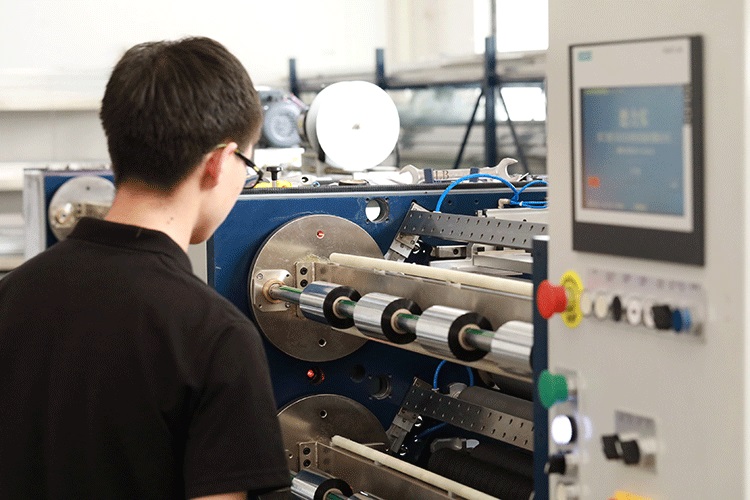
The tool is the executor of the slitting action, and its condition directly determines the quality of the cut. Ribbon slitting often uses a circular blade method, with the upper and lower blades working together to complete the shearing action. The impact of the tool system on accuracy is reflected in three dimensions:
3.1 Material and Cutting Edge
The pigment coating in the ribbon (especially the resin-based ribbon) causes significant wear on the blade. Ordinary high-speed steel inserts have limited lifespan when slitting resin-based carbon ribbons, while cemented carbide (tungsten steel) inserts reach HRA hardness of 89-92, increasing their lifespan by 5-10 times. High-end equipment also uses diamond-coated tools, with edge roughness controlled at Ra≤0.05μm, combined with a cutting edge angle of 30°±1°, to achieve smooth, burr-free cuts.
A blunt blade turns "shear" into "squeeze," causing the ribbon edges to stretch, deform, and burrs. Therefore, after a certain mileage (e.g., 1000km), the blade should be ground or replaced, and a tool replacement record should be established.
3.2 Assembly Precision
The overlap between the upper and lower blades and the lateral clearance must be precisely adjusted according to the ribbon thickness (usually 4-8μm). If the gap is too small, friction generates heat and burrs; If the gap is too large, the edges will be torn. Typical parameters require overlap of 0.01-0.03mm, lateral clearance of 0.02-0.05mm, and requires microscope calibration. If the parallelism deviation between the tool holder and the bottom roller is off, it may cause local cutting failure—use a dial gauge to check whether the clearance at both ends is consistent before troubleshooting.
High-end models have introduced dynamic tool setting technology: laser displacement sensors monitor the knife gap in real time and automatically fine-tune by 0.005mm every 10km to compensate for wear; or use online tool sharpening systems to keep the edge sharp while cutting.
4. Correction and Material Offset: Make sure every cut is in the correct position
Even if tension is stable and the tool is sharp, if the ribbon deviates in the machine, slitting accuracy is still impossible.
4.1 Correction System
The edges of the ribbon master rolls are often uneven, or the material itself has uneven thickness. The correction system's responsibility is to monitor the ribbon edge position in real time through photoelectric sensors or CCD line array cameras. If any offset occurs, the servo system drives the unwinder to adjust laterally within milliseconds, pulling the ribbon back to the correct path. High-end models can achieve correction accuracy of up to ±1μm (static), with a response time of <5ms.
4.2 Feeding stability
All roller rollers and leveling rollers must undergo high-precision dynamic balancing testing and ensure parallelism with each other. Any radial runout or axis misalignment will cause lateral wobble of the material, resulting in slitting boundary jitter. The traction roller surface is plated with hard chrome, and the straightness requirement is <±1μm/m. In addition, high-speed ribbon slitting (up to 300-500m/min) easily generates static electricity, causing dust to adsorb or stick to the tool on the substrate. Installing an active static elimination rod can effectively reduce feed deviation caused by static interference.
5. Equipment rigidity and environmental factors
All of the above precise controls need to be built on a solid mechanical foundation.
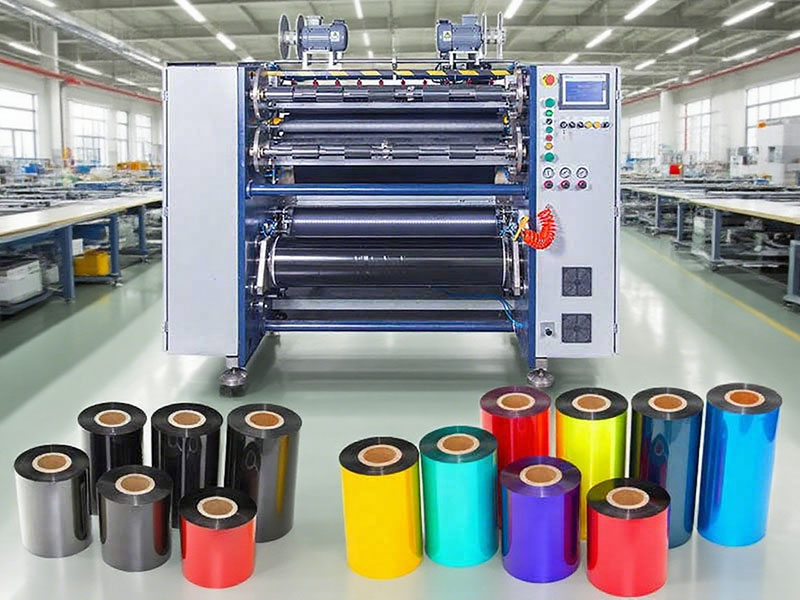
If the equipment frame lacks rigidity, vibrations generated during high-speed operation will be directly transmitted to the cutting tools and guide rollers, causing the slitting boundaries to form waves. High-precision equipment uses C-grade or higher-precision linear guides + ball screws (axial clearance ≤0.05mm), and the runout of the retraction and unloading reels must be controlled within ±2μm.
Environmental factors are equally important. The thermal expansion and contraction effects of carbon ribbons cannot be ignored under micron-level precision requirements. It is recommended to maintain a constant workshop temperature (23±2°C), humidity ≤ 50%, and let ribbons stand for more than 4 hours before slitting to eliminate internal stress. Active vibration damping bases (air springs or magnetic levitation isolation) can further reduce ground vibration conduction.
6. Comprehensive Benefits and Trends of Precision Improvement
The improvement in slitting accuracy not only meets the numbers stated in the specification but also brings considerable cost savings. A set of industry comparison data shows that traditional slitting machines have an accuracy of ±0.1mm and a defect rate of 3%-5%, while high-precision slitting machines can reach ±0.05mm and a defect rate of <0.5%. For high-priced ribbons such as resin-based and hybrid-based, a decrease in scrap rates means real profit margins.
Currently, ribbon slitting technology is iterating in three directions: intelligence—AI automatically recommends optimal process parameters based on historical cutting data; Online Detection—integrated high-magnification cameras to monitor slitting edges in real time, automatically identifying burrs or width deviations through image algorithms; Flexibility—modular tool holders enable rapid order changeover, reducing changeover time from 30 minutes to within 5 minutes.
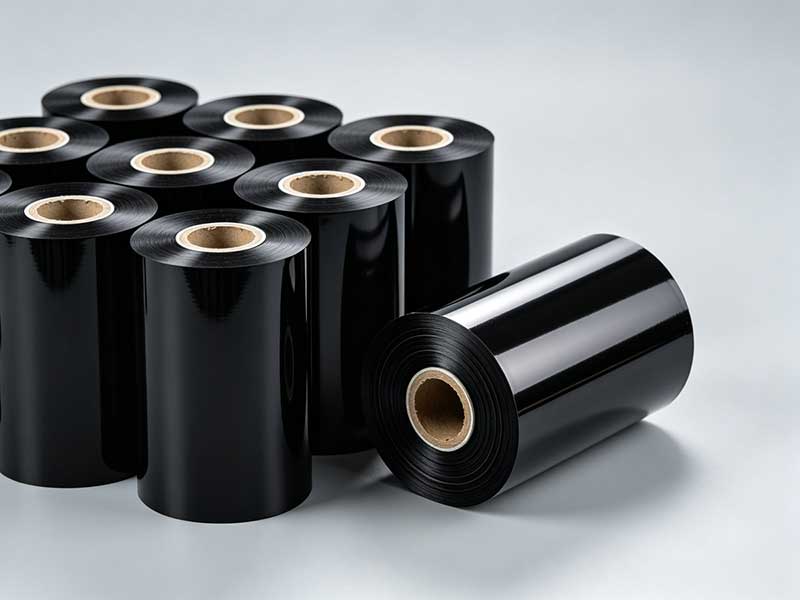 Fully automatic ribbon slitting machine: efficient, stable, and labor-saving
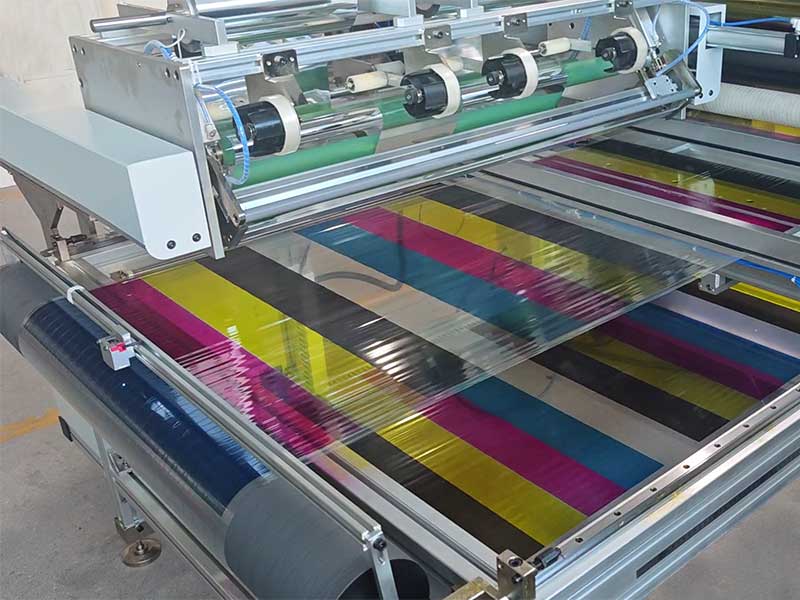 How to choose a color ribbon slitting machine? Three core parameters to understandDetailed explanation of the meter-counting shutdown function of the ribbon slitting machine
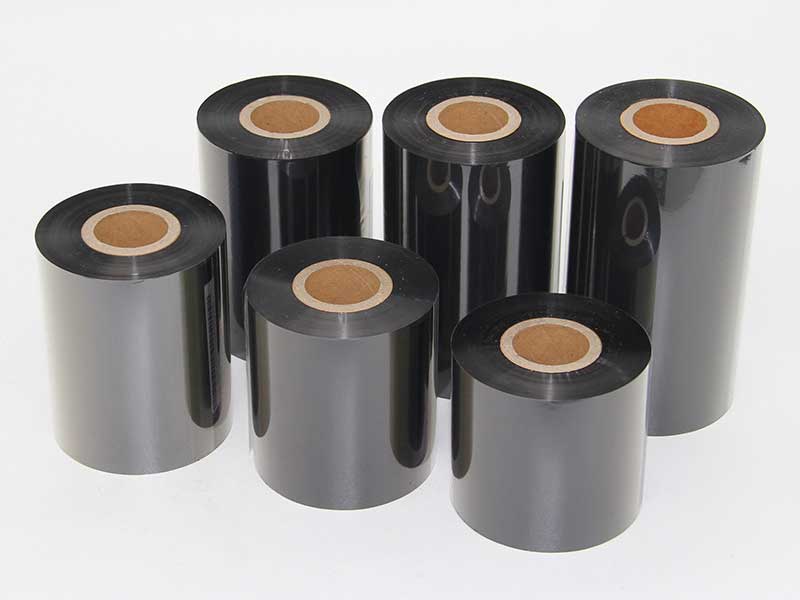 Introduction to the automatic offset correction function of the ribbon slitting machineProduction efficiency improvement plan for ribbon slitting machines


 English
 Deutsch
 Français
 Español
 Português
 日本語
日本語 русский
 한국어
한국어 عربي
عربي ภาษาไทย
 Tiếng Việt
 Italiano
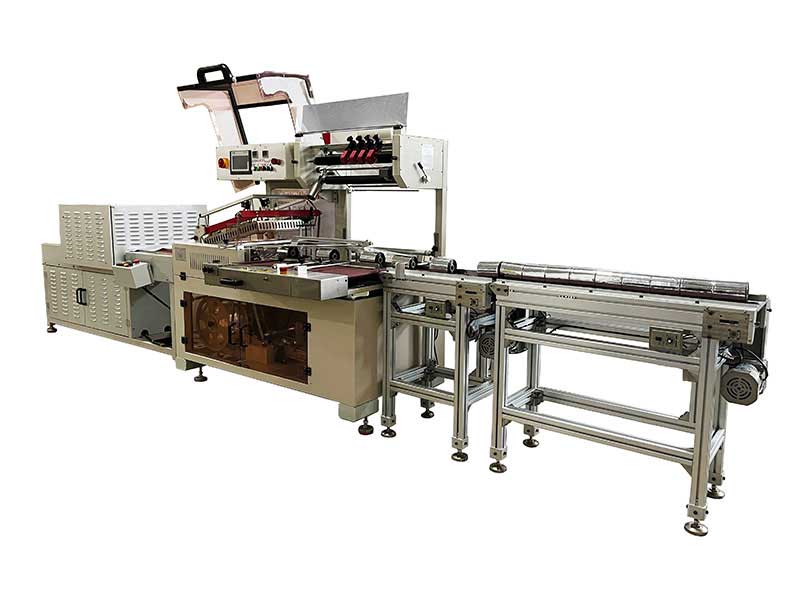 Thermal Transfer Ribbons Packaging Machine
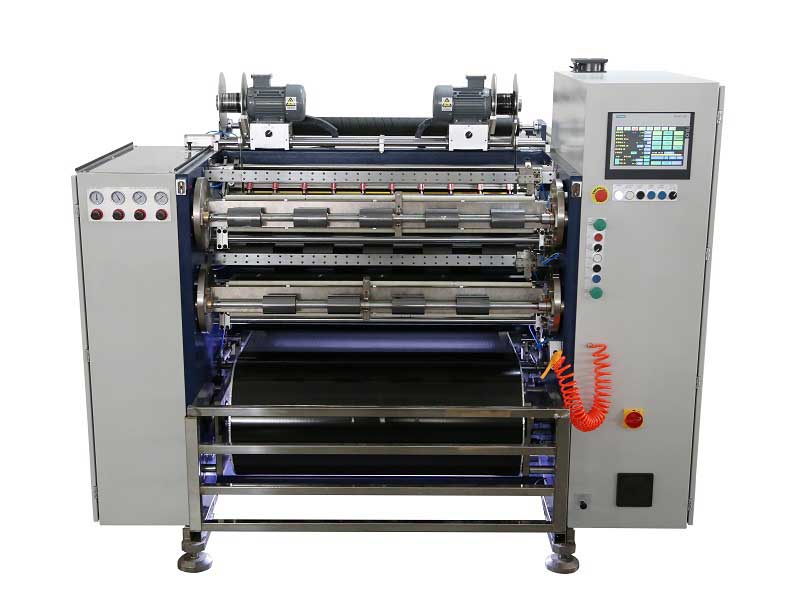 Automatic Thermal Transfer Ribbon Slitting Machine RSDS8 H PLUS
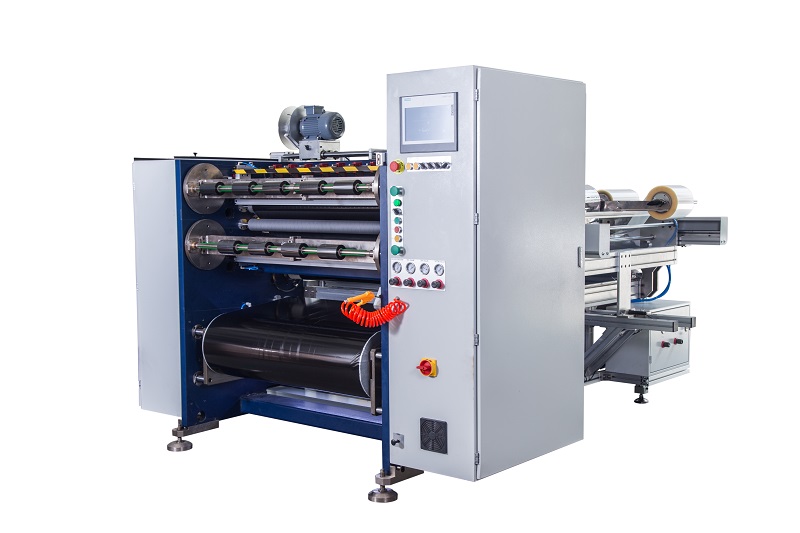 Semi Automatic Thermal Transfer Ribbon Slitting Machine RSDS5 PLUS
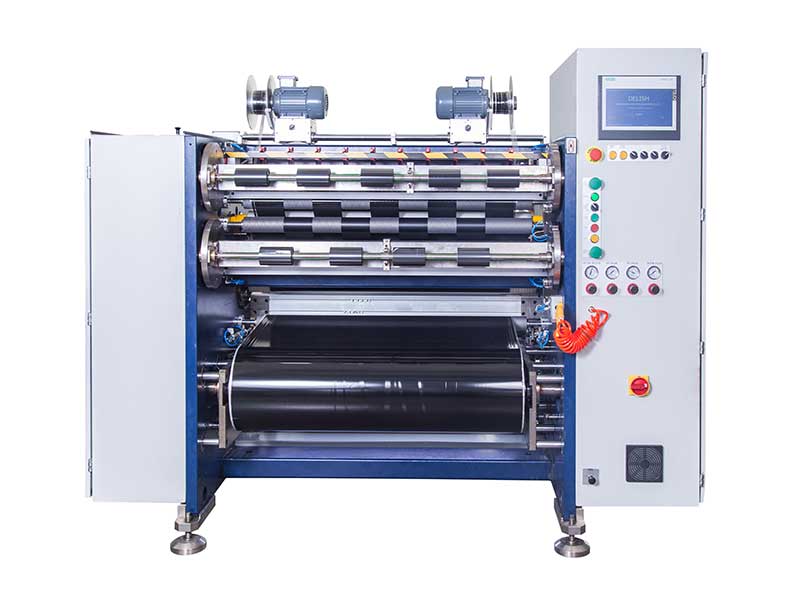 TTR Slitting Machine