
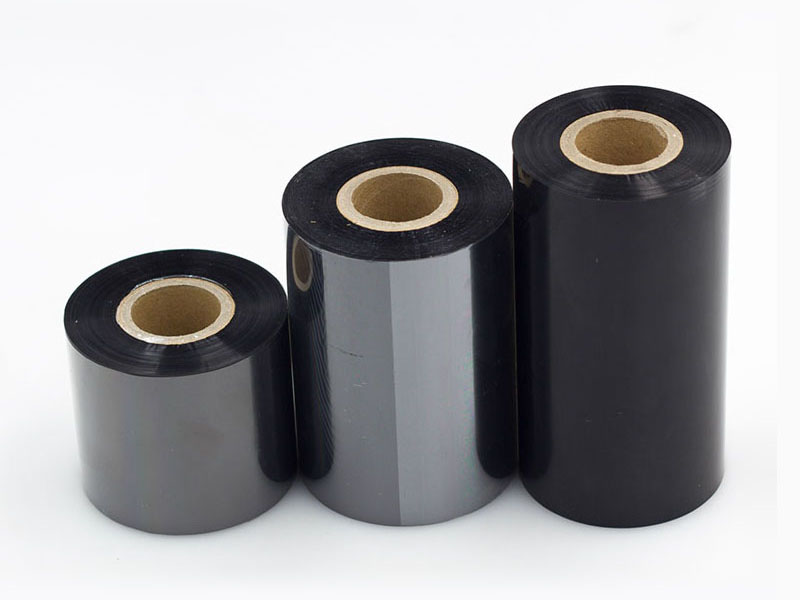
Although thermal transfer ribbons may look similar, they hide completely different "tempers" inside. Wax-based ribbons are soft and sensitive, while resin-based ribbons are hard and brittle, prone to breakage. Traditional production lines often require different equipment for both or repeatedly experiment and adjust parameters on a single machine. The emergence of wax-based/resin-based universal slitting equipment is a direct response to this pain point—it attempts to use a tension system, a set of switchable cutting techniques, and an intelligent parameter library to control two distinctly different materials within the control of a single machine.
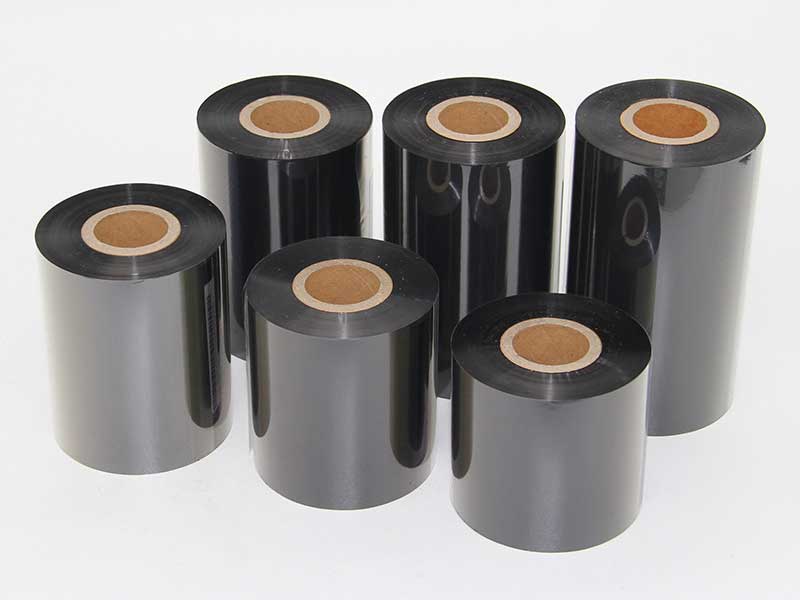
1. Two Materials, Two "Slicing Challenges"
Wax-based ribbons account for about 70% of the market share, mainly made of wax and carbon black. Their coatings are soft, have low melting points, adhere well to paper labels, and are cost-effective. But softness means trouble during slitting: friction generates heat easily causing edge wax overflow or interlayer adhesion, and the base film is extremely thin—usually only 4 to 10 microns—so even a slight tension can stretch and deform, resulting in wrinkles in the finished roll and white lines or indentations during printing.
Resin-based ribbons are the other pole. The coating, made entirely of resin, has the highest hardness, is resistant to chemical corrosion, high temperatures, and scratches, suitable for harsh scenarios such as PET labels, washable labels, and electronic component labeling. The downside is that the tool wears out very quickly during slitting, and improper control can cause chipped edges or microcracks; It is also highly sensitive to static electricity; the voltage generated during peeling attracts dust, which falls on the finished product as white spots on the print.
For one piece of equipment to serve both materials simultaneously, it's not about 'compromise,' but about a differentiated strategy that allows switching.
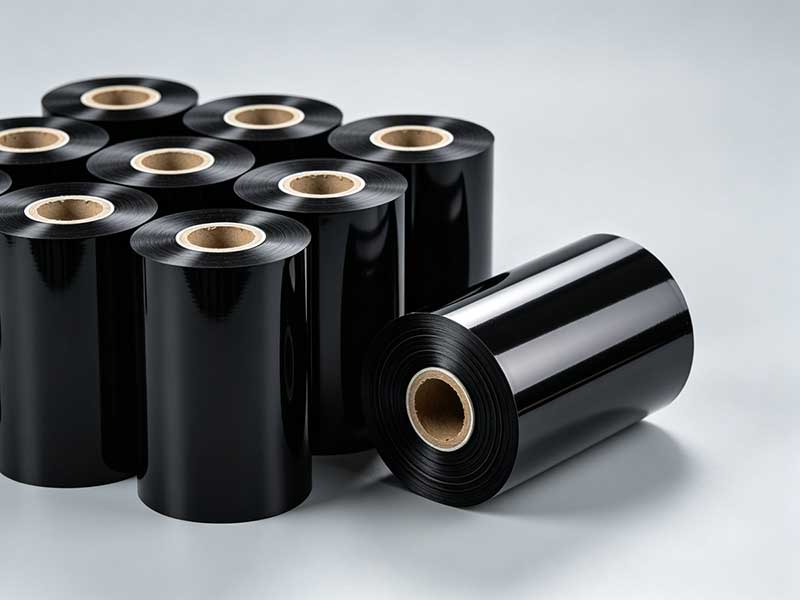
2. The universal triple pivot: tension, knife technique, environment
Tension control is the soul of the slitting machine. Wax-based ribbons require low-tension operation, usually controlled at 5 to 10 newts to prevent tensile breakage; Resin-based ribbons require high tension of 15 to 30 Newtons to ensure smooth winding. The core of the general-purpose equipment lies in a closed-loop servo system combined with high-precision tension sensors to suppress fluctuations to sufficiently small ranges, then switch formulas to output two sets of tension curves from the same set of hardware. Taper control is also required during the winding stage: initial tension is slightly higher and decreases linearly as the diameter increases; otherwise, the inner layer is compressed by the outer layer, causing "daisy core" deformation or uneven end face hardness.
The cutting method and cutting method are the second watershed. Wax-based ribbons are soft, and the "scissor-type" cutting with a circular blade reduces compression and wax overflow; Resin-based ribbons are hard and brittle; the flat blade is suspended and cut instantly with a sharp edge to prevent edge chipping. Blade material is equally crucial: high-frequency steel tools are more than suitable for wax-based ones, while resin-based tools require diamond coatings or tungsten carbide blades, extending their lifespan several times over. The approach of general-purpose equipment is not to find a "universal knife," but to quickly replace the tool holder module, reducing the change time to under fifteen minutes. Speed also varies by material: wax-based vehicles can run 150 to 200 meters per minute, while resin-based ones need to be reduced to 50 to 100 meters. Forcing speed increases only leads to delamination and burrs.
Environmental and electrostatic control are especially demanding for resin bases. During high-speed slitting, the peel voltage is extremely high, so ion air rods must be installed before winding to eliminate static electricity; otherwise, dust adsorption will directly cause white spots in the print. Fine dust generated by slitting also needs to be removed by vacuum adsorption. Constant temperature and humidity environments (23±2°C, 50±5% relative humidity) reduce layer misalignment caused by material expansion and contraction. These configurations may be streamlined on pure wax-based production lines, but general-purpose equipment must reserve these capabilities for resin-based products; otherwise, the term "general" becomes meaningless.
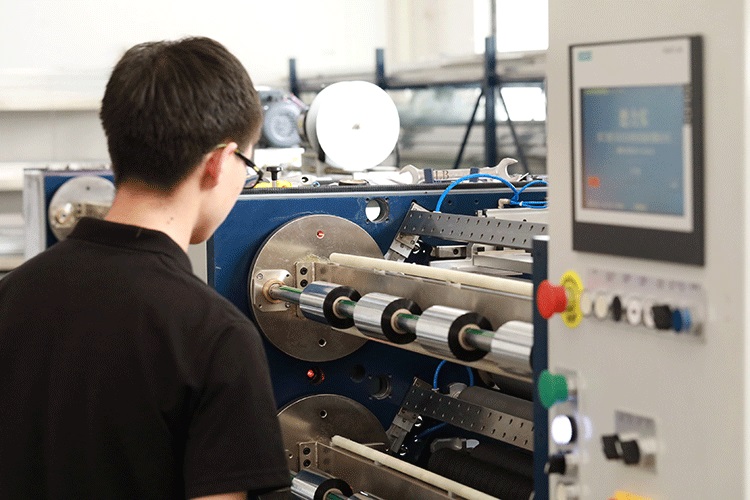
3. From "manual parameter adjustment" to "one-click switching"
Traditional slitting machines rely heavily on the experience of experienced craftsmen. Switch to a different ribbon—tension, speed, and cutting pressure all depend on feel. You have to waste a few rolls of material to find the "feel." The advanced direction of next-generation general-purpose devices is to transform this tacit knowledge into accessible data.
High-end models are now integrating optical sensors or RFID recognition to automatically determine whether the incoming membrane is wax-based or resin-based, and retrieve matching schemes from preset parameter libraries. The machine vision system monitors the slitting edges in real time, automatically slowing down and lifting the knife temperature when burrs appear on the resin base; If wax overflow is detected at the edge of the wax base, slightly adjust the tension. This feedback closed loop allows the equipment to maintain finished product rates without human intervention, with scrap rates reduced to below 0.5%, and slitting accuracy reaching ±0.1 millimeters or even tighter.
A deeper layer of change lies in data accumulation. Each slitting is a parameter experiment: a certain resin-based carbon ribbon, under specific temperature and humidity, uses a combination of tension and velocity to produce the optimal end face, and this data is recorded, reused, and optimized. Over time, equipment adapts to "unknown materials" faster and faster, and versatility no longer depends on operator memory but is embedded in the system.
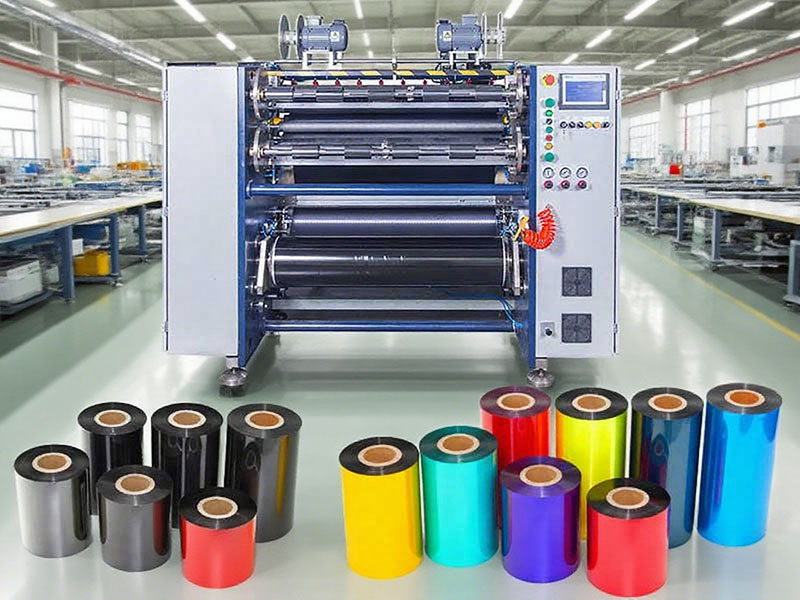
4. The Practical Logic of Selection
For manufacturers planning to purchase general-purpose equipment, it is important to clearly understand: "general" does not mean "equal." If the business mainly uses wax-based and blended bases and resin-based materials are only occasionally involved, conventional rotary slitting machines combined with stable tension control can cover most of the needs and offer the highest cost-performance ratio. If the resin-based ratio is substantial, then blade material, static elimination, vacuum system, and tension attenuation capability must be considered as rigid configurations; otherwise, so-called universality is just a spec on paper.
The scenarios truly worth investing in general-purpose equipment are when order structures are shifting from large-volume standard rolls to multi-variety, small-batch production. E-commerce rolls, medical-grade alcohol-resistant rolls, high-temperature resistant industrial labels—these niche demands require the same machine to switch materials and specifications multiple times within a single day. At this point, the value of the quick-change module, one-click call of parameter recipes, and automatic tool layout system truly realized.
Ribbon slitting has never been as simple as "cutting open." Wax bases fear stretching, resin fears edge cracking—one needs low-tension, slow care, the other high-tension hard knife for care. The technical sophistication of the universal slitting equipment lies precisely in not pretending that the two materials are indistinguishable, but instead writing the differences into the control system, allowing the same knife to react differently to these two materials. For ribbon processors, this means the boundaries of order acceptance have expanded—no need to buy a dedicated machine or gamble on a mismatched machine just because of a rushed resin-based washing order.
Efficiency improvement solution for ribbon slitting and rewinding machines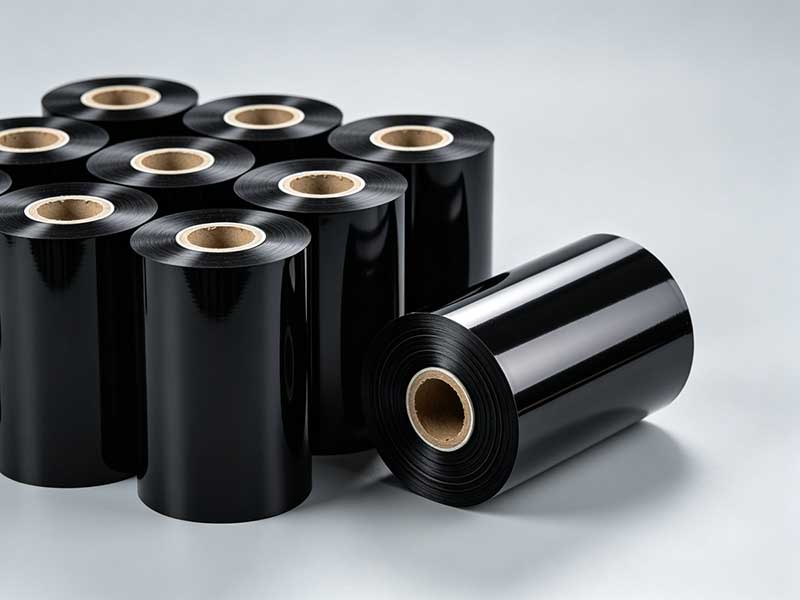 Industry application cases of ribbon slitting and rewinding machines
 Fully automatic ribbon slitting machine: high precision and low loss
 Fully automatic ribbon slitting machine: efficient, stable, and labor-saving
 How to choose a color ribbon slitting machine? Three core parameters to understand


 English
 Deutsch
 Français
 Español
 Português
 日本語
 русский
 한국어
 عربي
 ภาษาไทย
 Tiếng Việt
 Italiano
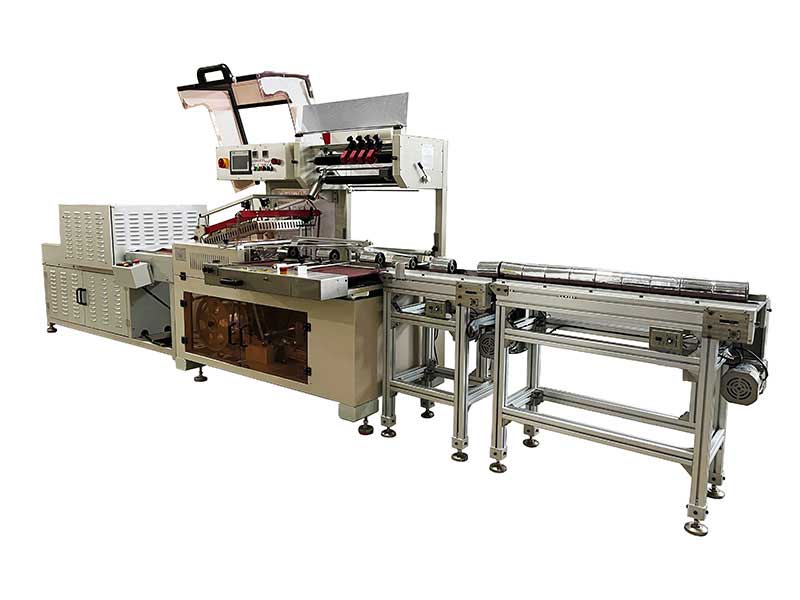 Thermal Transfer Ribbons Packaging Machine
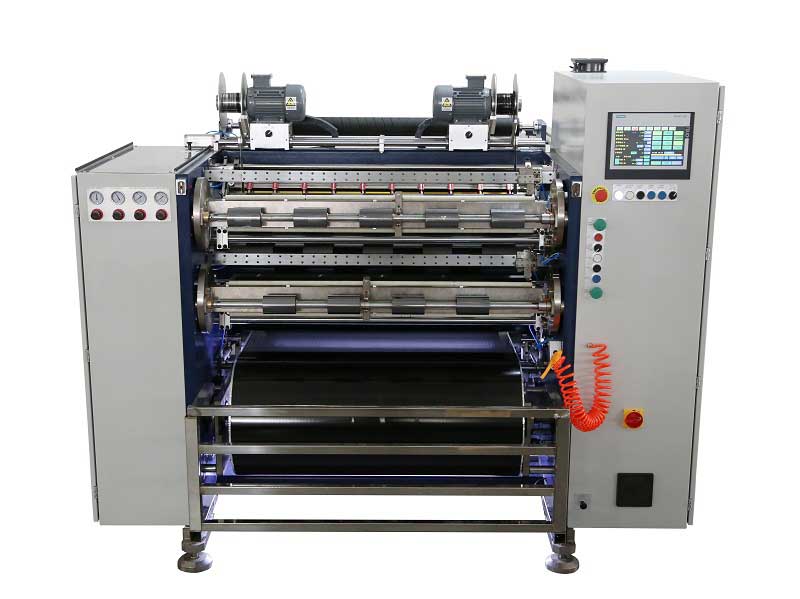 Automatic Thermal Transfer Ribbon Slitting Machine RSDS8 H PLUS
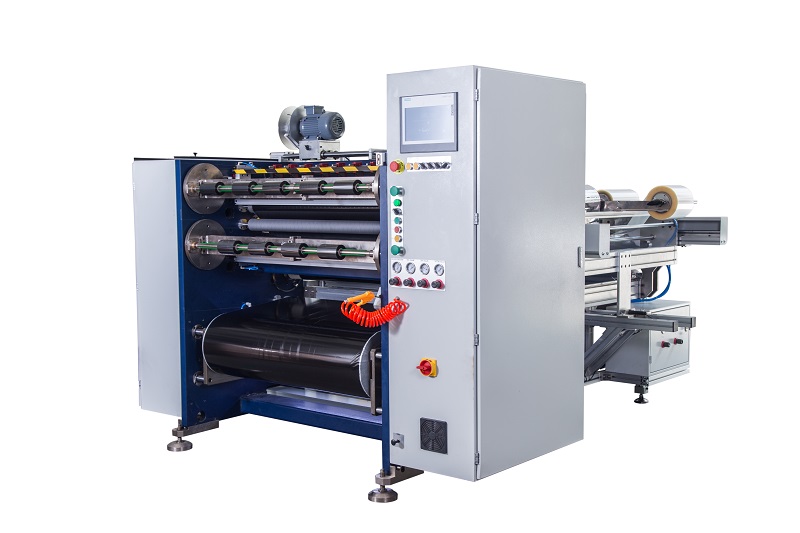 Semi Automatic Thermal Transfer Ribbon Slitting Machine RSDS5 PLUS
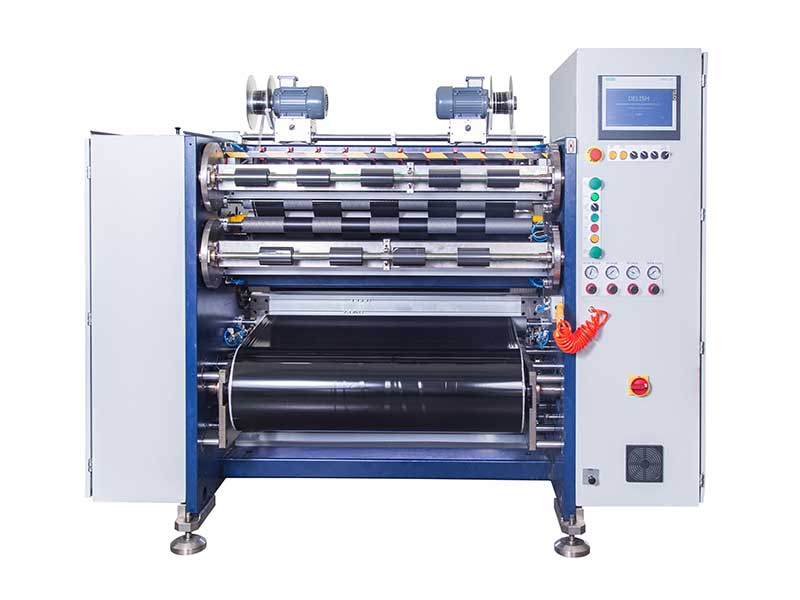 TTR Slitting Machine