
Abstract:
With the rapid development of optoelectronic display, new energy and high-end packaging industries, the demand for PET (polyester film) as a key substrate is increasing day by day. In the post-processing process, PET film slitting machine, as the core equipment connecting the "master roll" and "commodity", its precision, efficiency and stability directly determine the yield and cost of the product. This article delves into the core functions of PET film slitting machines and analyzes their key value in modern manufacturing based on actual industrial cases.
Introduction
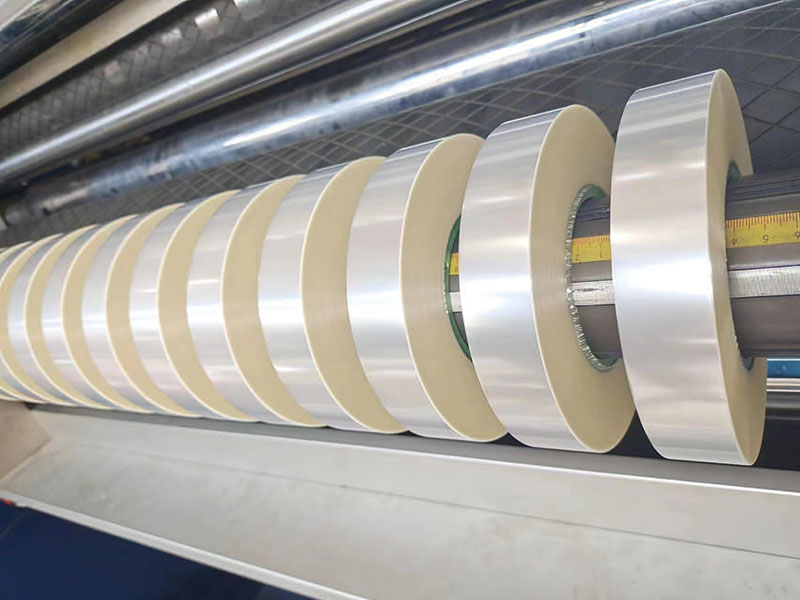
PET film is widely used in release films, protective films, optical films, and insulating materials due to its excellent mechanical strength, high temperature resistance, transparency, and electrical insulation. However, large production lines produce master coils that are typically 2-6 meters wide and weigh several tons, and cannot be directly applied to downstream die-cutting or laminating processes.
The PET film slitting machine is the key equipment for accurately cutting wide master coils into specific narrow formats. It is not just a simple "cutting", but a precision process of tension control, face neatness and winding quality.
Core Function: Precision craftsmanship that goes beyond cutting
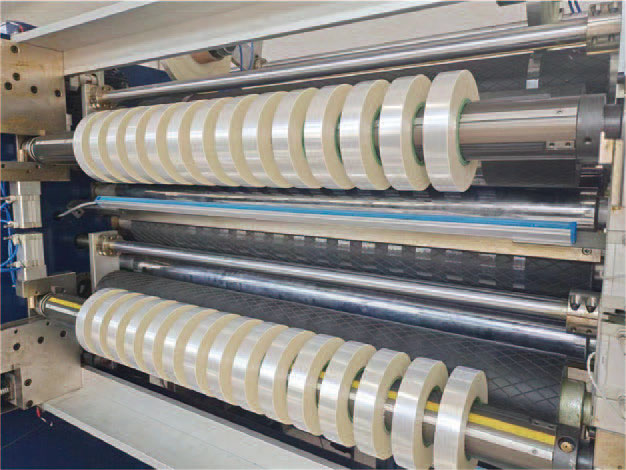
Modern high-speed PET film slitting machine has developed into an intelligent equipment integrating mechatronics, and its core functions are mainly reflected in the following aspects:
1. High-precision unwinding and tension control
This is the soul of the slitting process. PET films are extremely thin (often between 12 μm and 250 μm) and are susceptible to tensile deformation.
• Closed-loop tension control: Imported servo motor with floating roller or tension sensor is used to realize closed-loop PID adjustment. Whether it is accelerating, decelerating or running at a constant speed, it ensures that the film tension is constant and avoids stretching (necking) of the film due to excessive tension or longitudinal streaks due to too little tension.
• EPC Edge Correction: The unwinding mechanism is equipped with a high-sensitivity photoelectric correction system to detect the edge of the film coil in real time and ensure the position accuracy of subsequent slitting.
2. Diversified slitting methods
For PET films of different thicknesses and hardnesses, slitting machines require flexible tool configurations:
• Circular cutter cutting: suitable for thicker or hard PET (such as above 125μm). The upper and lower circular hobs rotate for shearing, the incision is smooth and burr-free, and the tool life is long.
• Flat knife (pneumatic knife) cutting: suitable for thin PET film. The upper knife is a sharp disc blade, and the lower knife is a carbide roller, and the cutting line speed is extremely high, suitable for large-volume thin die slitting.
3. Waste edge removal and winding neatness
• Automatic waste discharge: The waste edges generated during the slitting process are automatically extracted through high-pressure fans or suction ducts, keeping the site clean and reducing material waste.
• Rewinding edges: Use digital counters or laser sensors to monitor the winding end face. Under high-speed rotation, the pendulum roller mechanism is fine-tuned to ensure that the end face of each roll is as flat as a mirror, preventing collapse and making it easy for downstream customers to use on the machine.
4. Intelligent tool arrangement and MES docking
Modern slitting machines are usually equipped with automatic tool rowing systems. After the operator enters the specifications, the system automatically calculates the tool position and drives the tool holder to move, greatly reducing the order change time. At the same time, through the industrial Ethernet and MES system docking, the output, meters and alarm information are uploaded in real time to realize digital workshop management.
Industry application case sharing
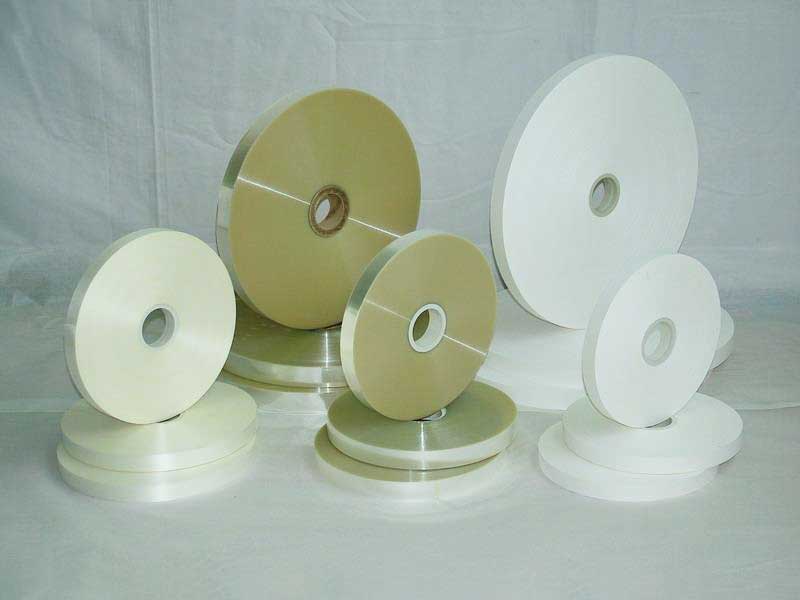
The following shows the value of PET film slitting machines in different scenarios through several specific industrial cases.
Case 1: Optical display field - the protector of polarizer release film
• Customer background: An optoelectronic material company produces polarizer release film for TFT-LCD (liquid crystal display). The film is coated with an expensive silicon coating, and any scratches or contamination will cause the panel to display defects.
• Pain point requirements: Optical grade PET requires extremely high cleanliness (usually required in a Class 100 environment), and the winding tension must be extremely low and stable, otherwise the coating is easily damaged.
• Solution: Use ultra-low tension optical film slitting machine.
◦ Technical highlights: The equipment is equipped with non-contact airflow flattening rollers, which flatten the film without touching the coating surface at all; The winding mechanism adopts center plus surface composite winding technology, which automatically reduces the tension when the coil diameter increases to ensure that the internal coil core is not crushed.
• Results: The flatness error of the end face after slitting is controlled within ±0.5mm, and the products are directly supplied to the panel factory for lamination, and the yield rate is increased to more than 98%.
Case 2: New energy industry - efficient slitting of lithium battery pressure-sensitive tape
• Customer background: A power battery supplier that produces PET high-temperature tape for cell termination. The width of the master coil is 1.5 meters, and it needs to be cut into narrow strips ranging from 6mm to 20mm.
• Pain point requirements: The thickness of the battery tape is thin (25μm-50μm) and the stickiness is large, which is easy to stick (overflow) or constantly lead to wire drawing during slitting.
• Solution: High-speed narrow strip slitting unit is adopted.
◦ Technical highlights: For viscous materials, razor cutting is used, and ultrasonic blade cleaning device is installed to remove the adhesive buildup at the knife edge in real time. At the same time, the winding shaft adopts an inflatable shaft with a plastic sleeve, which is convenient for the small roll to be removed without damaging the tape.
• Results: The slitting speed reaches 300 m/min, which solves the problem of tape adhesion, increases the daily production capacity by 40%, and the finished product has a uniform coil diameter, which is suitable for the high-speed operation of the downstream automatic gluing machine.
Case 3: Packaging and printing industry - efficient knife rowing of heat shrink film
• Customer background: A large printing and packaging group has undertaken a large number of orders for beverage labels (PET heat shrink film). Orders are diverse, and orders are changed frequently.
• Pain point demand: Traditional manual tool changes take 1 hour, resulting in a high idle rate of equipment, making it difficult to cope with the market trend of "small batches, multiple batches".
• Solution: Introduce a fully servo driven automatic knife rowing and slitting machine.
◦ Technical Highlights: After the system enters the width of the next order, all tool holders are automatically moved to the specified position, eliminating the need for manual measurement. Equipped with an online defect detection system, once a master roll printing defect is found, it will be automatically stopped and marked.
• Results: Reduced order change time to less than 3 minutes, increased equipment utilization rate (OEE) by 50%, and successfully achieved zero-defect delivery, winning long-term orders from beverage giants.
Epilogue
Under the wave of Industry 4.0, PET film slitting machine is no longer a simple processing machine, but a comprehensive platform integrating high-precision tension control, intelligent tool rowing, and online quality monitoring.
It is not only the key to improving material utilization and reducing production costs, but also the first gateway to ensure the quality stability of downstream precision manufacturing (such as mobile phone screens and new energy vehicles). With the development of PET film in the direction of thinner, wider and functional, slitting technology will also continue to evolve in the direction of smarter and more flexible, providing solid equipment support for the take-off of the new material industry.
 Considerations for selecting ribbon slitting machine equipment
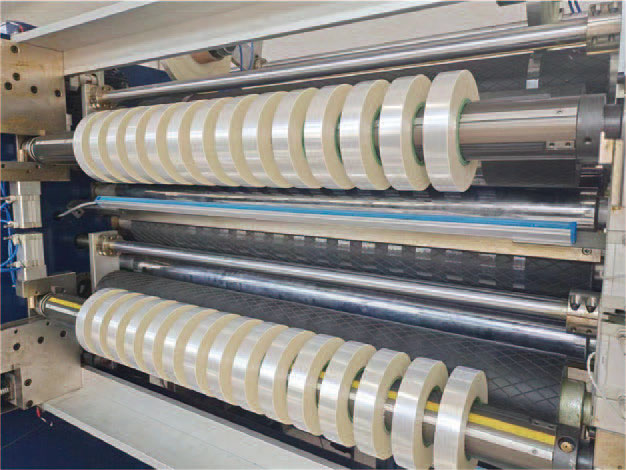 Key points for purchasing a PET film slitting machine
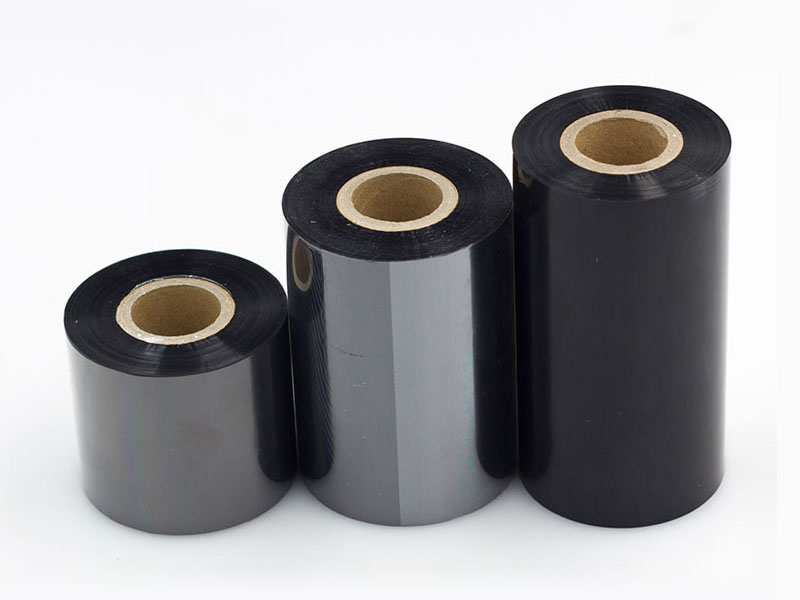 Core factors affecting the quality of ribbon slittingHow to select a film slitting machine? The key is to look at these five points
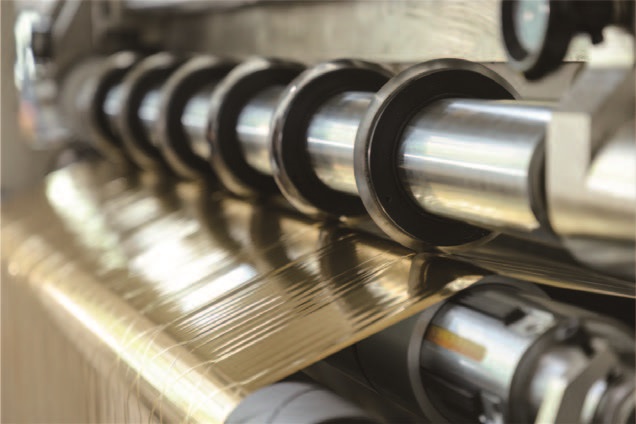 What is the difference between hot stamping foil slitting machines and ordinary film slitting machines?


 English
 Deutsch
 Français
 Español
 Português
 日本語
日本語 русский
 한국어
한국어 عربي
عربي ภาษาไทย
 Tiếng Việt
 Italiano
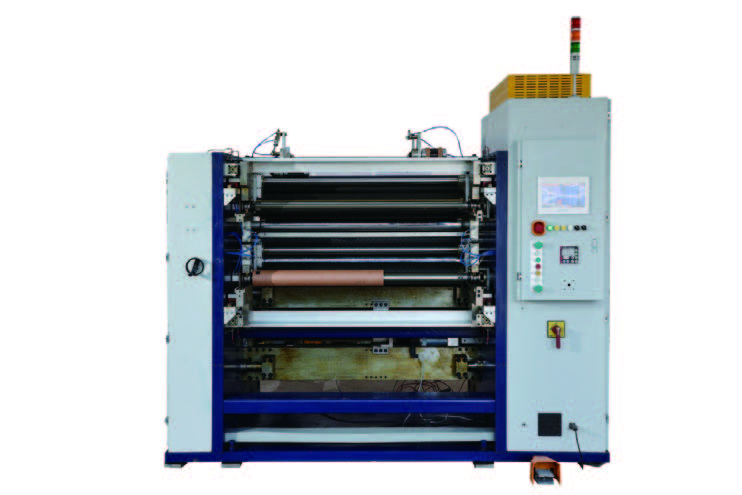
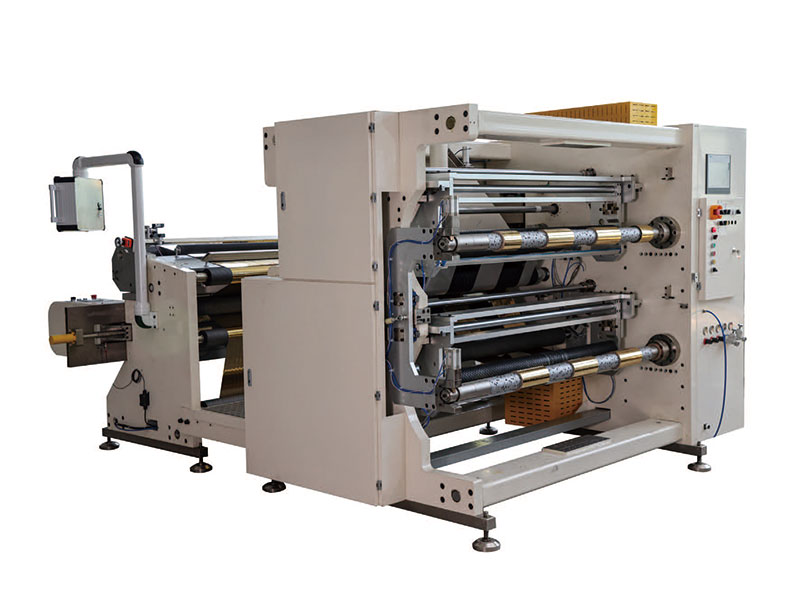 1400mm Hot Stamping Foil Slitting Machine
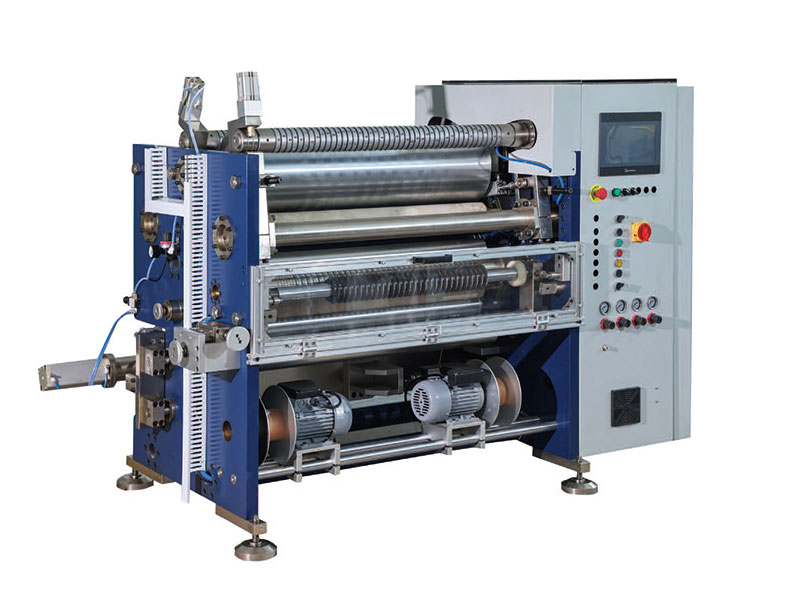
 New Energy Ultra-thin Film Slitting Machine For Capacitive Film
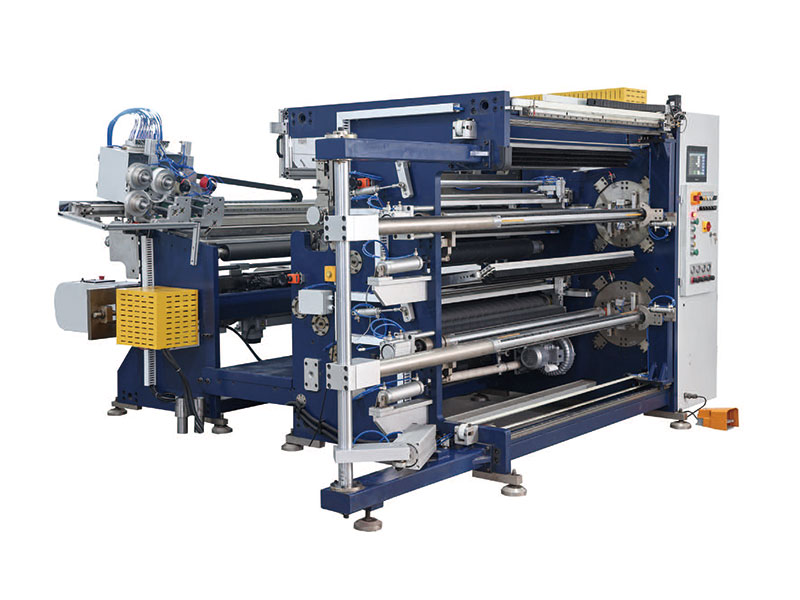
 800mm Hot Stamping Foil Slitting Machine
 1350mm Hot Stamping Foil Slitting Machine