
In the production process of optical films, packaging materials or electronic insulation, the slitting of PET (polyethylene terephthalate) films is a key part of connecting the output and end use of master rolls. The quality of the slitting process not only directly affects the yield rate of the product, but also determines the smoothness of subsequent processing.
This article will delve into how to achieve high-quality production with neat cutting edges, stable tension, and flat winding end faces by optimizing process parameters and fully utilizing the core functions of PET slitting machines.
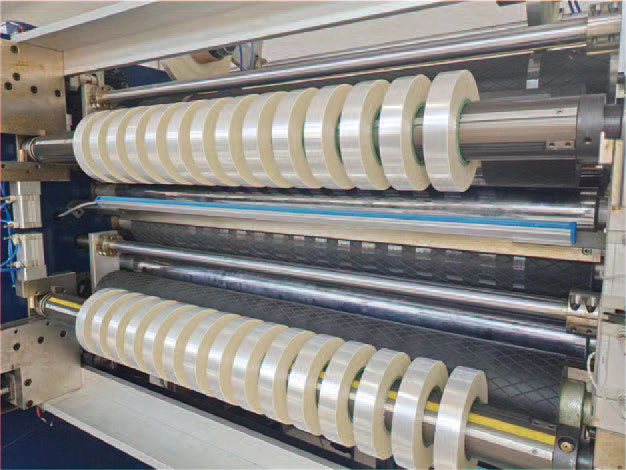
1. Understand the core pain points of PET slitting
PET film usually has the characteristics of thin thickness (often tens to hundreds of microns), high hardness, and easy to generate static electricity. During the slitting process, common quality issues include:
1. Uneven end face: The side surface is uneven after winding, which affects the downstream unwinding.
2. Wrinkles and scratches: caused by improper tension control or unclean guide rollers.
3. Dust and burrs: Worn or wrong angles of cutters can cause particle pollution, which is fatal for optical-grade PET.
4. Electrostatic Adsorption: The film adsorbs on the machine, causing the material to shift or be difficult to rewind.
Therefore, the key to optimizing the process is: precise tension zone control + efficient dust and static removal + ultimate tool matching.
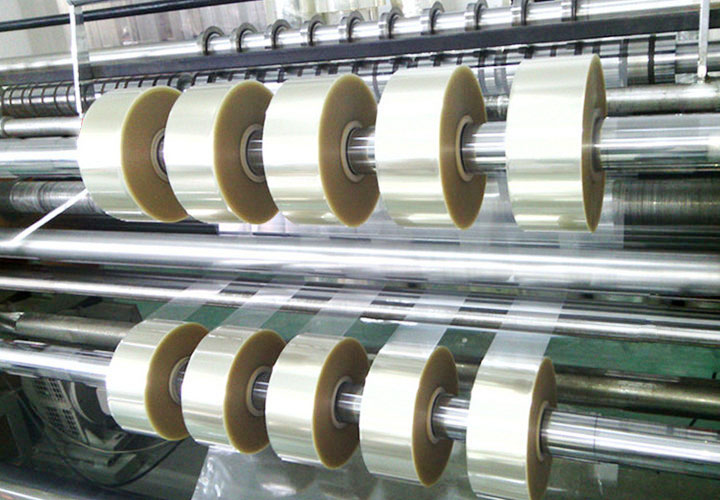
2. How to optimize the film slitting process? Four key dimensions
1. Gradient optimization for tension control
Slitting machines are usually divided into three tension zones: unwinding zone, traction zone, and winding zone.
• Unwinding tension: Automatic taper reduction based on the weight and diameter of the master roll. If the tension is too large, the film will produce longitudinal stretching (and even cause micro-cracking of the coating); If it is too small, it will cause the jitter to deviate.
• Rewinding tension: Taper tension control is recommended. As the coil diameter increases, the tension should gradually decrease to prevent inner loosening and external tightness or inner tightness and external loosening. For PET materials, a small taper (such as 5%-10%) is usually used to ensure the balance between winding hardness and internal stress.
2. Tool selection matches the angle
The hardness of PET determines that it wears out on the tool faster.
• Scissor type and razor type: For PET with a thickness of less than 50 μm, sharp razor type slitting (with the bottom roller) should be preferred, but attention should be paid to the wear of the knife groove on the roller surface. For thick film or coated PET, disc scissors are recommended for more uniform shear and less burr.
• Angle of cut: Adjust the angle of entry of the tool to ensure it is "shearing" rather than "tearing", which is key to reducing dust.
3. Static electricity and dust management
• Static Elimination Rod: Install an active static eliminator after unwinding and before unwinding to prevent static buildup from causing unwinding deviations while reducing dust adsorption.
• Contact dust removal: Use sticky dust rollers or non-contact ion air knives to clean the film surface on both sides. For production lines with high cleanliness requirements, the sticky dust paper rolls need to be replaced regularly.
4. Feeding path and leveling
Curved or corrugated rollers are used to remove longitudinal folds of the film during travel, ensuring that the film enters the slitting area and rewinding shaft in a flat state.
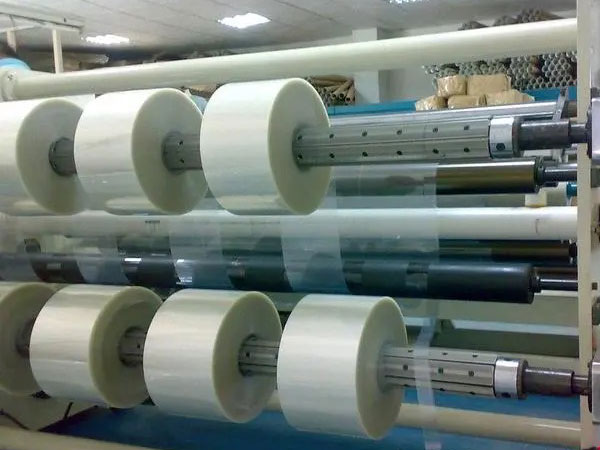
3. Guide to the core functions of PET slitting machine
Modern high-speed PET slitting machines are not just simple cutting equipment, but also a sophisticated system that integrates automatic control and detection. Learn about the following core features to help you realize the potential of your device:
1. Closed-loop tension control system
This is the heart of the slitting machine. The high-end model is equipped with imported or high-precision domestic tension sensor, real-time feedback of the tension value of unwinding and rewinding, PID (proportional-integral-differentiation) operation with PLC (programmable logic controller), and automatically adjusting the torque of the magnetic powder clutch/brake or servo motor. It can realize constant tension or taper tension switching from low speed to high speed operation, greatly reducing the film breakage rate.
2. Automatic deviation correction system
PET slitting speed can often reach 200-400m/min, and the deviation cannot be corrected in time with the naked eye.
• Function: Detect the edge or line of the film through the photoelectric sensor, and drive the lead screw to move the retraction and unwinding frame in real time, ensuring that the edge of the film coil after slitting is as neat as a knife.
• Selection suggestion: For transparent PET, ultrasonic correction or specially designed infrared sensors should be selected to avoid detection failure caused by light transmission.
3. Switching ability between center winding and surface winding
• Center winding: suitable for most PET films, the torque is generated by the rotation of the core, and the tension is controlled accurately.
• Surface winding: For extremely thin or thick PET, surface winding is driven by friction rollers to drive the film roll to rotate, which can effectively expel the air between the layers and prevent the core from wrinkling. Good PET slitting machines usually offer two modes or compound modes (center/surface winding).
4. Intelligent diagnosis and formula management
Modern slitting machines should have a "memory function". When switching between products of different specifications (such as 12μm thickness capacitive film and 75μm insulating film), the operator only needs to call up the preset process recipe, and the equipment automatically adjusts the tension parameters, slitting speed and winding pressure curve to achieve "one-click order change" and greatly reduce the scrap rate of the adjustment machine.
5. Unloading and rolling assistance
For finished PET rolls with large diameters and heavy loads, an automatic discharge arm or rolling device is an essential feature to improve efficiency and safety, avoiding bruises or injuries caused by manual handling.
4. Conclusion
Optimizing the PET film slitting process is essentially a fine balance of "force" (tension), "blade" (knife), and "cleanness" (cleanliness). An excellent PET slitting machine should have high-precision actuators (servo motors, sensors) and flexible software algorithms to meet the demanding requirements of different application scenarios (such as release film, optical film, protective film).
In actual production, it is recommended to regularly calibrate the sensor, check the blade sharpness, and use the formulation function of the equipment to cure the optimal process parameters, so that every meter of high-quality film can be reliably cut at high speed.
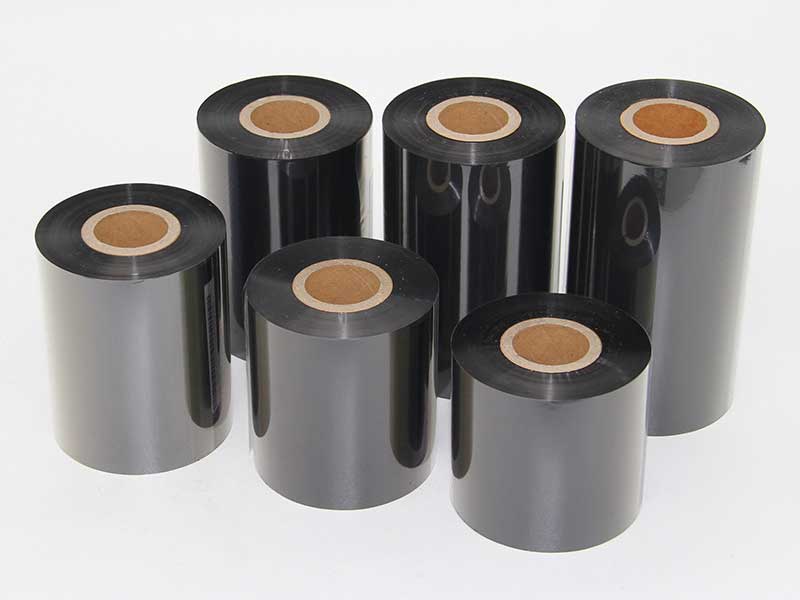 Considerations for selecting ribbon slitting machine equipment
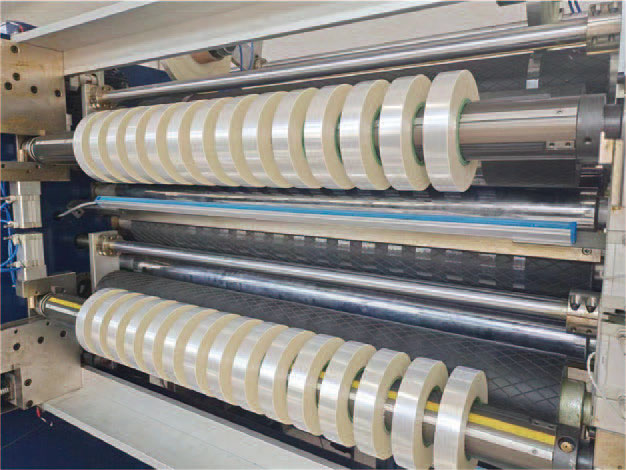 Key points for purchasing a PET film slitting machine
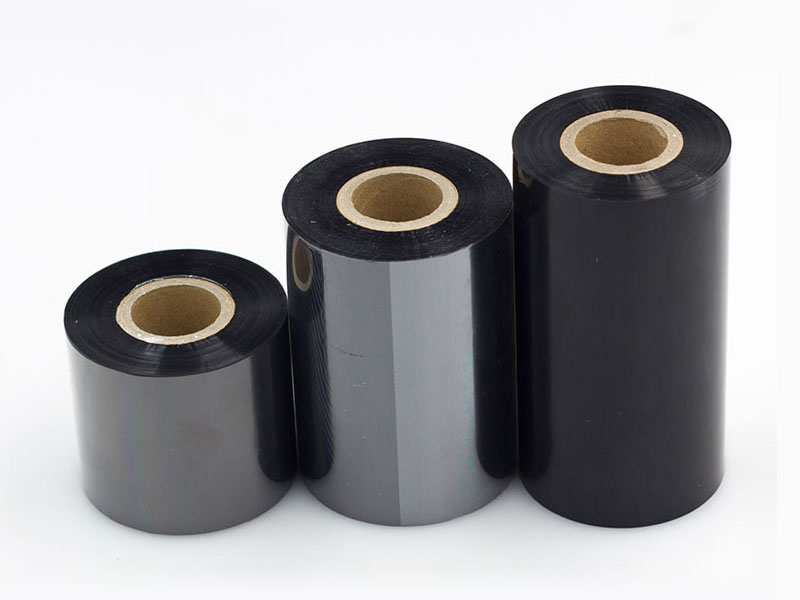 Core factors affecting the quality of ribbon slittingHow to select a film slitting machine? The key is to look at these five points
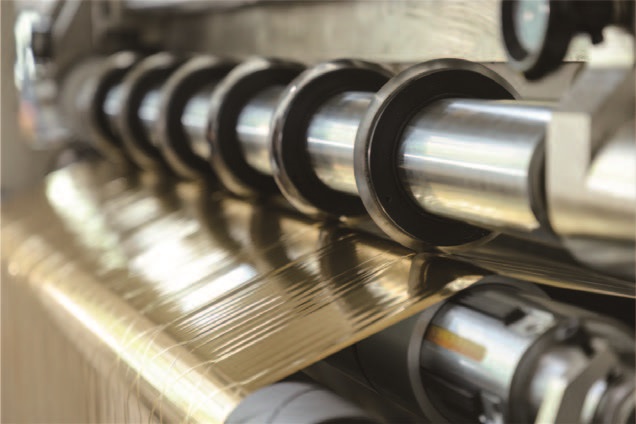 What is the difference between hot stamping foil slitting machines and ordinary film slitting machines?


 English
 Deutsch
 Français
 Español
 Português
 日本語
日本語 русский
 한국어
한국어 عربي
عربي ภาษาไทย
 Tiếng Việt
 Italiano
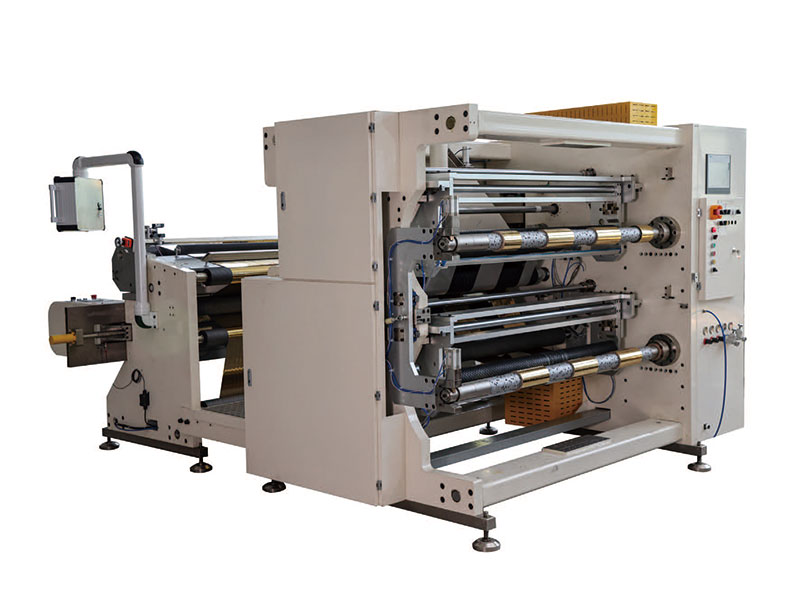 1400mm Hot Stamping Foil Slitting Machine
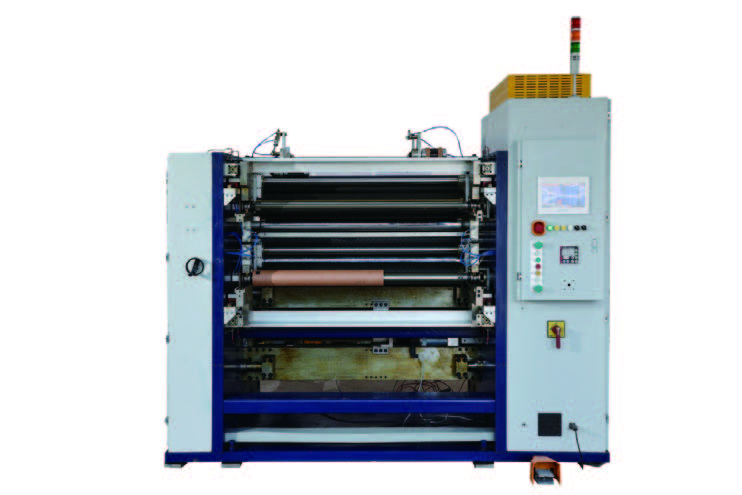 New Energy Ultra-thin Film Slitting Machine For Capacitive Film
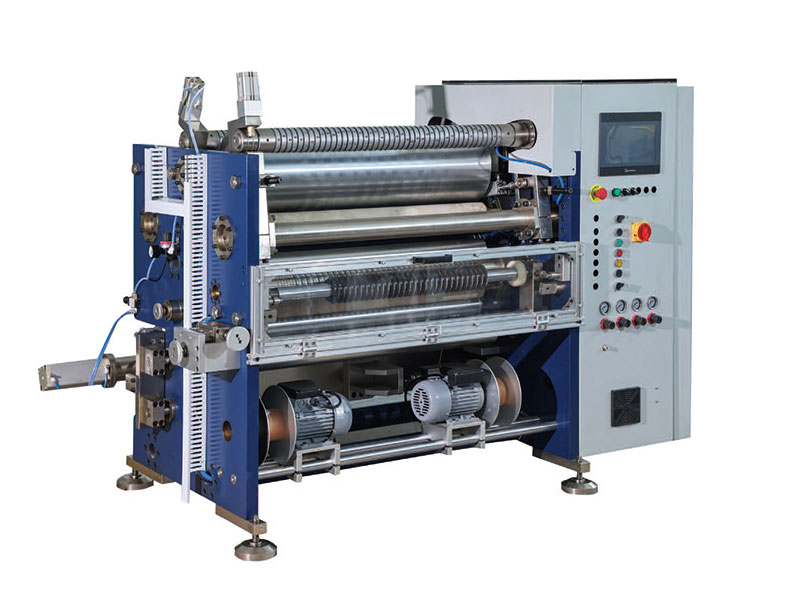 800mm Hot Stamping Foil Slitting Machine
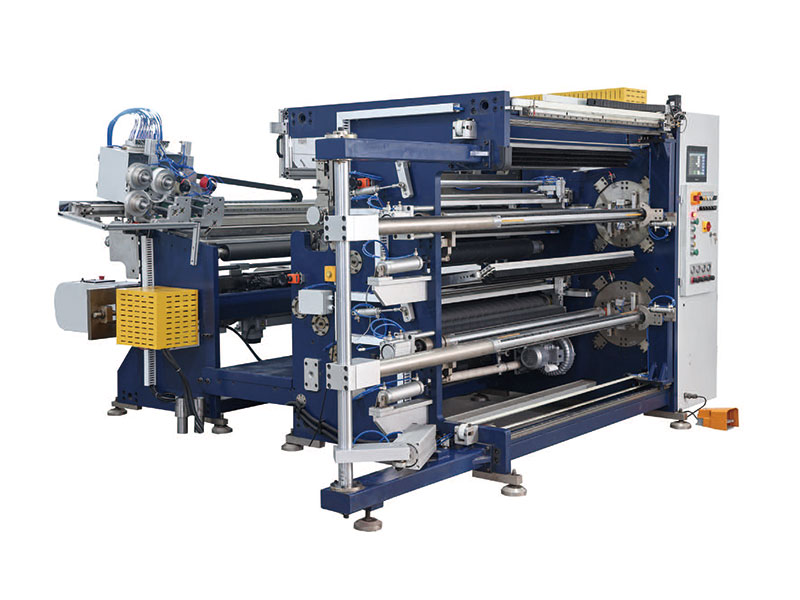 1350mm Hot Stamping Foil Slitting Machine