
In the slitting process of PET film, winding folds are one of the most common and headache quality problems. Once wrinkles appear, it not only affects the appearance of the product, but also may cause downstream customers to be unable to use it normally, directly causing economic losses.
When many operators encounter wrinkle problems, their first reaction is to suspect that the equipment itself is faulty and rush to disassemble and repair. However, according to many years of experience, the vast majority of winding folds are not caused by equipment damage, but by improper adjustment. As long as the following four key adjustment points are investigated in order, most problems can be solved.
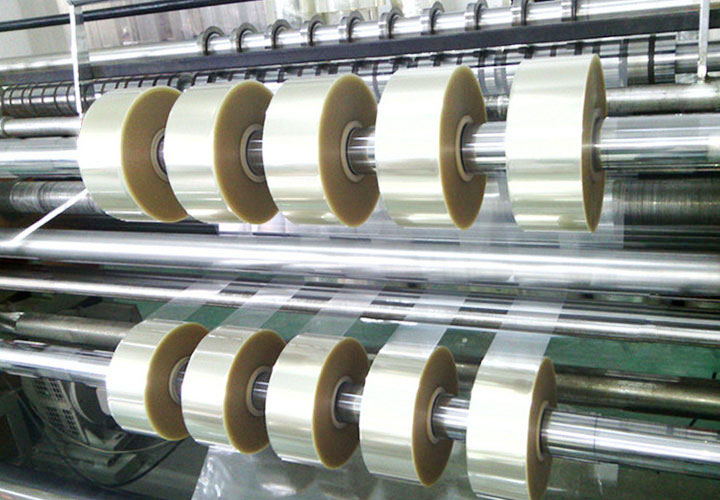
The first point: winding tension - the most overlooked "culprit"
PET films are extremely sensitive to tension changes. If the tension is too large, the film will be overstretched, and transverse folds will be produced after cooling and contraction. If the tension is too small, the film roll will be loose, and the film layer will slip during the winding process, and folds will also form.
Adjustment suggestions:
• Check whether the currently set winding tension value matches the thickness and width of the film
• Taper tension control is adopted, that is, the tension is gradually reduced with the increase of the coil diameter, and the general taper is set between 30% and 50%
• Observe the end face of the film roll: If the end face is convex outward, the tension is large, and the tension is small if it is concave
The second point: the press roller (contact roller) - the "goalkeeper" of straightness
The function of the press roller is to allow the film to fit smoothly to the winding core. Wrinkles are almost inevitable if the following problems occur with the press rollers:
• Uneven surface of the rollers: pits, wear or peeling of the adhesive layer
• Roller parallelism is out of balance: the clearance between the ends and the rewinding shaft is inconsistent
• Uneven pressure of the pressing roller: There is a difference between the left and right air pressure or spring pressure
Adjustment suggestions:
• Use a dial indicator to check the cylindrical and radial runout of the pressure roller, and the runout amount should be controlled within 0.05mm
• Adjust the parallelism between both ends of the roller and the winding shaft to ensure that the front, back, and top and bottom directions are parallel
• Check whether the left and right pressures are consistent, and can be verified by pressure test paper (copy paper method): put a paper strip between the press roller and the winding shaft, and the left and right resistance should be the same when pulling
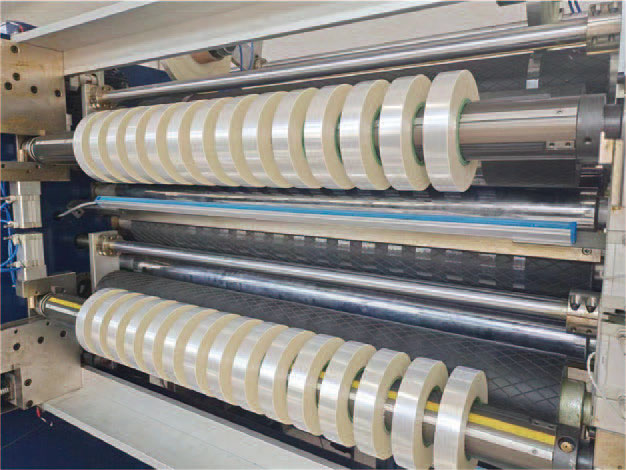
The third point: flattening roller (curved roller/rubber unfolding roller) - the "iron" of the folds
The flattening roller is the core component that actively eliminates wrinkles. PET film slitting machines are usually equipped with arc flattening rollers or spiral flattening rollers, and their adjustment effect directly determines the flatness of the film before entering the winding.
Adjustment suggestions:
• Arc roller: adjust the bending amplitude of the arc arch, the wider and thinner the film, the smaller the required curvature, generally adjusted between 5-15mm, too much will cause the middle of the film to arch
• Spiral Flattening Roller: Check the helix angle and rotational speed to ensure symmetrical unfolding
• Position verification: The flattening roller should be installed closest to the winding point, and there should be no interference from other rollers in the middle
In addition, check whether the flattening roller has surface wear or bearing jamming due to long-term use, which can weaken the flattening effect.
The fourth point: guide roller (film through path) - the "fuse" of deviation
The film passes through several guide rollers from the slitting knife to the winding shaft. A problem with any of the guide rollers can disrupt the lateral tension distribution of the film, eventually appearing as a wrinkle during rewinding.
Adjustment suggestions:
• Check that all guide rollers are parallel: Using a level or laser aligner, make sure that the axes of each roller are parallel to each other and perpendicular to the direction of the film's run
• Observe the roller surface for foreign objects (glue, dust, scratches), these local high points can change the tension distribution of the film
• Confirm that the guide roller can rotate freely and the bearing is free of jamming
A simple verification method: when the equipment is running at low speed, observe the coating status of the film on each roller, if one side is tight and the other side is loose, it means that the roller is skewed.
Supplementary investigation: eliminate "false faults"
After completing the above 4 adjustment points, if the folds still exist, it is recommended to go back and confirm the following two basic conditions:
1. Whether the static electricity of the film coil is too large:P ET film is prone to static electricity, resulting in uneven adsorption of the film layer. You can try adding an electrostatic eliminator or adjusting its position.
2. Whether there are defects in the incoming film itself: Sometimes the wrinkles are not a problem of the slitting machine, but the original defects caused by the upstream film making process. A piece of film can be intercepted and laid on the smooth table for observation to confirm the flatness of the incoming material.
Summary: Troubleshoot in order with the highest efficiency
When encountering PET film slitting and winding folds, do not do it blindly. It is recommended to follow the following sequence:
Rewinding tension → pressure roller → flattening roller → guide roller
Every time you check a place, do a trial verification, and do not adjust multiple parameters at the same time. In most cases, the problem can be resolved in the first or second step. If the wrinkles do not disappear after the four-step inspection, consider the structural failure or wear of the equipment itself, such as bending of the rewinding shaft and wear of bearings.
Remember: slitting is a "fine job", and adjustment is more of a test of technical skills than replacing parts. Master these 4 adjustment points, and your PET film slitting efficiency and quality will reach a new level.
 Considerations for selecting ribbon slitting machine equipmentKey points for purchasing a PET film slitting machine
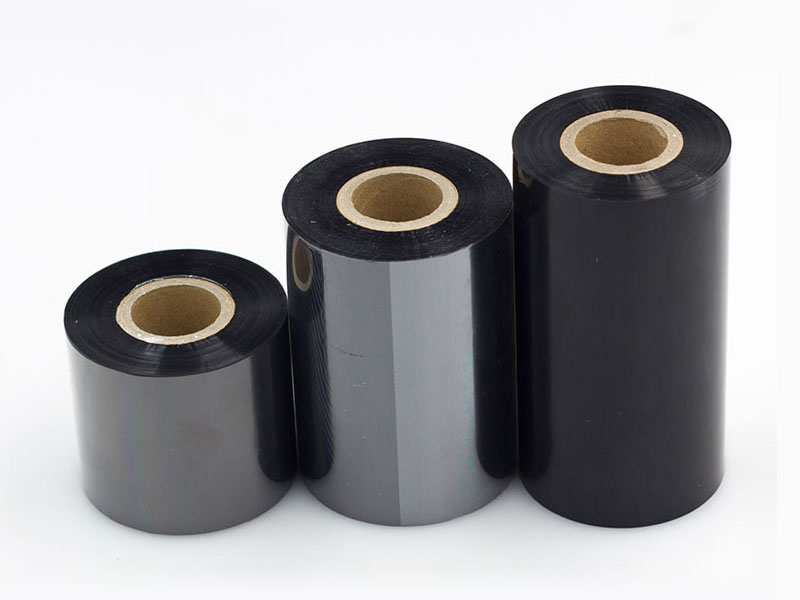 Core factors affecting the quality of ribbon slittingHow to select a film slitting machine? The key is to look at these five points
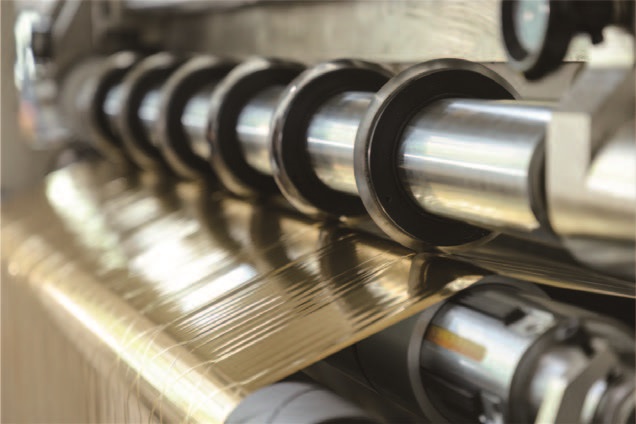 What is the difference between hot stamping foil slitting machines and ordinary film slitting machines?


 English
 Deutsch
 Français
 Español
 Português
 日本語
日本語 русский
 한국어
한국어 عربي
عربي ภาษาไทย
 Tiếng Việt
 Italiano
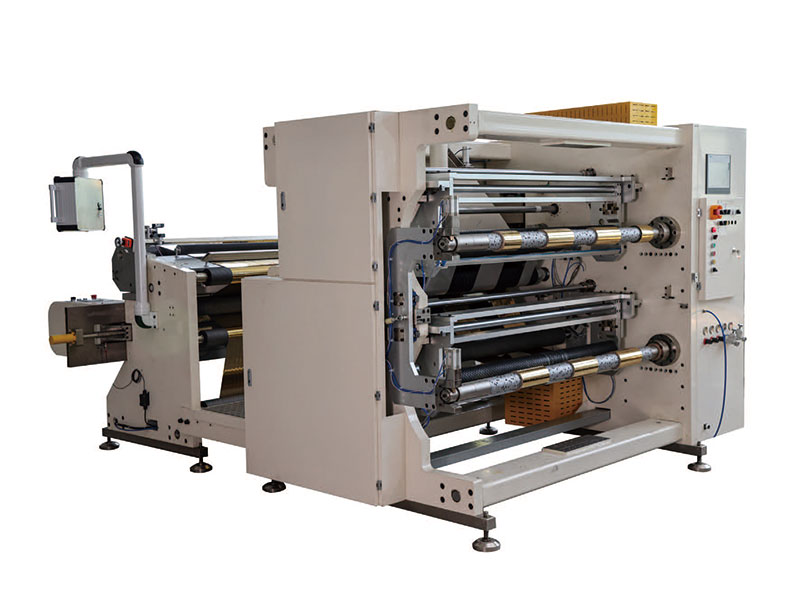 1400mm Hot Stamping Foil Slitting Machine
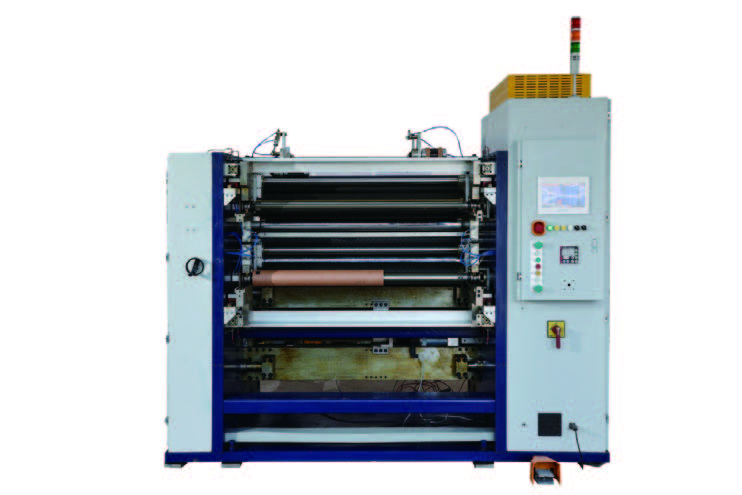 New Energy Ultra-thin Film Slitting Machine For Capacitive Film
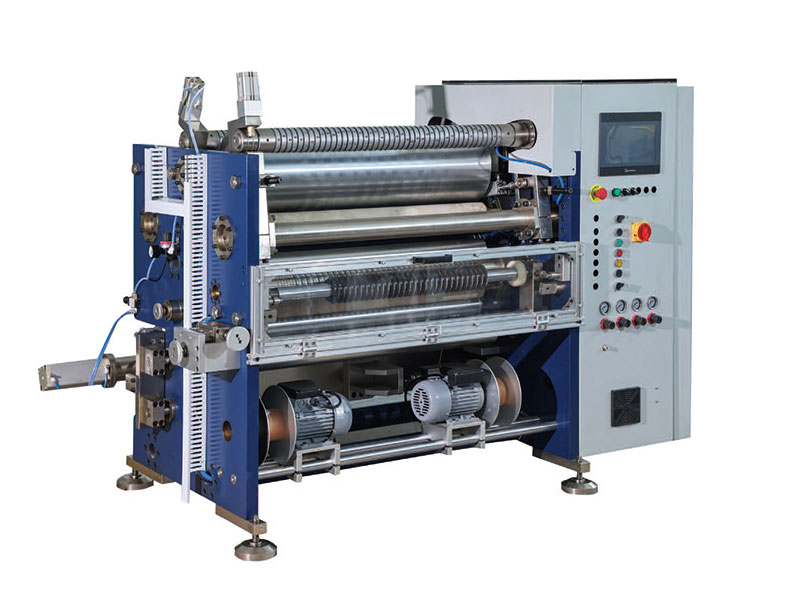 800mm Hot Stamping Foil Slitting Machine
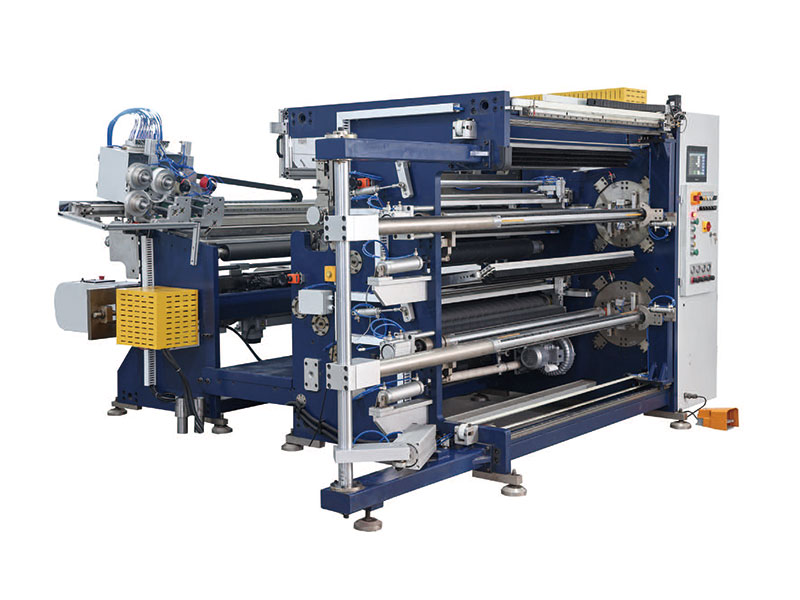 1350mm Hot Stamping Foil Slitting Machine