
In the production and slitting process of hot stamping foil, static electricity is a common and tricky problem. The hot stamping foil itself is composed of a multi-layer structure such as a carrier film (usually PET polyester film), a release layer, a color layer, and an adhesive layer, and its material characteristics determine that it is very easy to accumulate static charges during high-speed slitting. When static electricity accumulates to a certain extent, it will cause the gold foil sheets to stick to each other, adsorb to the equipment, and even cause quality problems such as uneven slitting and broken belts. So, how can the hot stamping foil slitting machine effectively prevent gold leaf adhesion caused by static electricity? This paper discusses the principle, equipment adjustment, environmental control and consumables optimization from four dimensions.
1. The relationship between the mechanism of static electricity generation and the adhesion of gold leaf
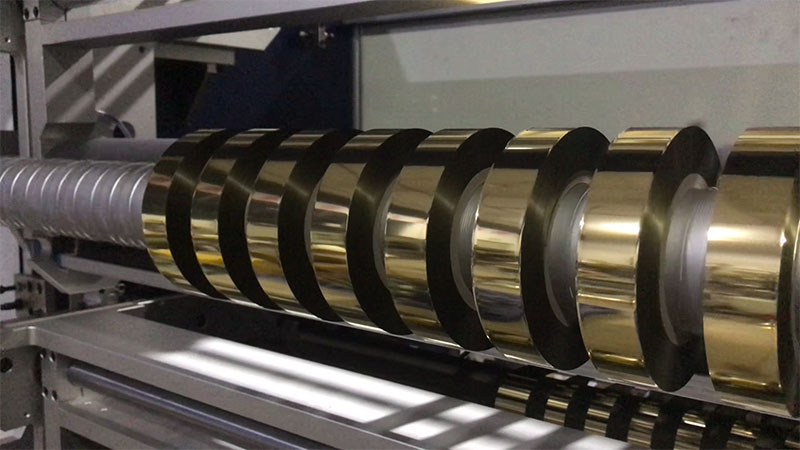
In the process of slitting hot stamping foil, the gold foil rubs against the guide rollers, blades, pressure rollers and other components at high speed, and at the same time, the gold foil layers are quickly separated, which will produce contact energization and peeling energization. PET film is an excellent insulator, and it is difficult to discharge the charge naturally, and it is easy to leave a high potential electrostatic charge on the foil surface.
When two pieces of gold leaf come close, electrostatic gravity causes them to fit together, forming a "pseudo-adhesion" – not a true hot melt or press-fit bond, but a bond caused by electrostatic adsorption. In addition, static electricity can also attract impurities such as fibers and dust in the air, further exacerbating adhesion and affecting the foil stamping effect. Therefore, preventing static electricity is key to ensuring slitting quality and production efficiency.
2. Equipment grounding and electrostatic eliminator configuration
1. The overall grounding of the equipment
All metal parts of the slitting machine (including unwinding shafts, guide rollers, rewinding shafts, tool holders, etc.) need to be reliably grounded, and the grounding resistance should be less than 10 ohms. Good grounding can provide a discharge channel for the charge and reduce local static accumulation.
2. Install an electrostatic eliminator
In areas with serious static accumulation such as unwinding, slitting, and winding, active static eliminators should be configured. Common types include:
• AC/DC corona type static elimination rod: installed in front and behind the slitting knife set, through corona discharge to generate positive and negative ions neutralization and charge on the foil surface.
• Static Elimination Brush (Passive Type): Use ultra-fine carbon fiber or metal fiber brushes to contact the edge of the foil surface to derive the charge, suitable for local static control, but care should be taken to avoid scratching the foil surface.
• Ion air nozzle: For the winding area or other narrow spaces, use compressed ion airflow to purge the foil surface, and at the same time remove dust and static electricity.
In practical applications, the corona electrostatic elimination rod has the most stable effect, and it is recommended to choose a model with adjustable ion output intensity to adapt to the production needs of different vehicle speeds (such as 50-300 m/min).
3. Optimization of slitting process parameters
1. Control the slitting speed
The higher the speed, the more intense the frictional energization. Reducing the slitting speed (e.g. from 200 m/min to 120 m/min) can significantly reduce static electricity while ensuring capacity. For metal hot stamping foil or high release force varieties that are prone to static electricity, the production speed should be reduced.
2. Reduce the winding tension
When the winding tension is too high, the pressure between the foil layers increases, and even small static electricity can cause the layers to fit tightly and make it difficult to separate. Constant tension control should be applied and a lower initial winding tension should be set (usually 15%-25% lower than the usual value). At the same time, avoid over-tightening, and the hardness of the end face is recommended to be controlled between 60-75 Shore hardness (you can use a hardness tester to test the end face of the paper roll).
3. Optimize the slitting tool and contact method
• Use an ultra-sharp slitting circular knife or razor to reduce additional friction due to cutting resistance.
• Minimize the contact angle and contact length between the foil tape and the guide roller and the platen. The fixed guide roller can be changed to a large-diameter smooth aluminum roller without driving (aluminum has better static conductivity than rubber roller), or an anti-static rubber roller (surface resistance 10^5-10^8Ω) can be used.
4. Environmental humidity control
Air humidity has a huge impact on static electricity accumulation. When the relative humidity is lower than 40%, the surface resistance of PET rises sharply, and the static electricity is difficult to dissipate. When the humidity is between 55% and 65%, the foil surface will adsorb a very thin layer of water molecular film, which is conducive to charge leakage.
It is recommended to install a humidifier (such as an ultrasonic or wet film humidifier) in the slitting workshop to control the humidity at 55% ±5%. However, it should be noted that excessive humidity (>70%) may cause the moisture-absorbing deformation of the hot stamping foil or the failure of the release layer due to moisture. For dust-free workshops, a local atomization humidification system can be arranged separately in the slitting machine area. Be especially vigilant during winter production, as heating can make the humidity in the workshop too low.
5. Select antistatic hot stamping foil and auxiliary materials
1. Anti-static hot stamping foil
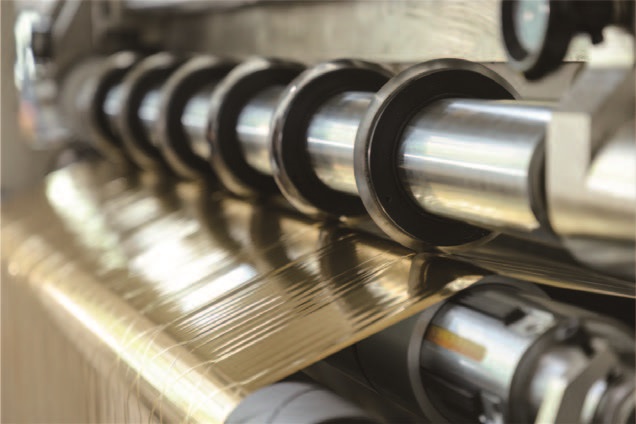
Some high-end hot stamping foil products are manufactured with antistatic agents (such as quaternary ammonium salts or conductive polymers) added to the back coating (adhesive backing or back-coated anti-static layer). When slitting, such materials can be preferred, and the power amplitude can be reduced from the source.
2. Apply with an antistatic agent
For ordinary hot stamping foil, a non-ionic antistatic agent diluted with ethanol (e.g. SN antistatic solution) can be lightly applied to the foil surface or edges with a spray or flannel before slitting. It needs to be verified that it does not affect the adhesion and gloss of hot stamping.
3. Supporting anti-static winding pipe core
Use surface resistors when winding < 10^5Ω conductive plastic core or paper tube lined with conductive paper can be derived from the charge at the core to prevent end surface adhesion caused by static electricity accumulation in the end area.
6. Operation and maintenance specifications
• Clean the static eliminator regularly: If the corona needle tip absorbs dust, the efficiency of elimination will be greatly reduced, so it is recommended to clean it weekly with alcohol and a dust-free cloth.
• Check the grounding continuity: Measure whether the grounding loop between the guide roller and the main engine is open once a month to prevent the guide roller from "floating to the ground" due to bearing oil pollution.
• Anti-static wearing by employees: Operators should wear anti-static bracelets or anti-static shoes to avoid instantly adsorbing multiple layers of foil due to human electrostatic discharge when their hands touch the foil surface.
• Wrap immediately after winding: The slitted hot stamping foil roll should be immediately wrapped with anti-static film to avoid secondary electrostatic fields caused by environmental changes or handling friction during storage.
7. Case analysis
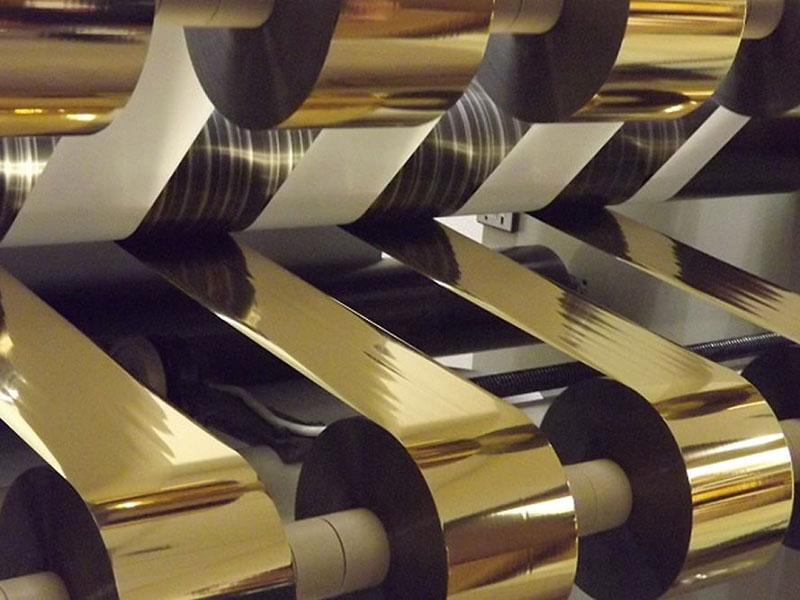
A hot stamping foil slitting factory has been trapped in the problem of "adhesion of the inner ring after gold leaf winding" for a long time, with a downtime rate of up to 15%. The investigation found that the humidity in the workshop in winter was only 28%-32%, and the static elimination rod used in the slitting machine had aged, and the ion output was seriously attenuated. The improvement measures are:
• Install industrial humidifier to increase humidity to 55%-60%;
• Replaced with a fully sealed pulsed DC static elimination rod;
• Reduced the rewinding tension from 8kg to 5.8kg.
After two weeks of implementation, the adhesion defective rate decreased from 12% to 1.8%, and the slitting speed was reduced from 180 m/min to 150 m/min, but the overall efficiency increased by 20% due to the reduction of downtime.
8. Summary
To prevent gold leaf adhesion caused by static electricity during the hot stamping foil slitting process, systematic comprehensive treatment measures need to be taken:
1. Foundation: reliable grounding of equipment + reasonable installation of static eliminator;
2. Process: speed reduction, tension reduction, optimization of contact material;
3. Environment: maintain 55%-65% relative humidity;
4. Material: choose antistatic foil or auxiliary antistatic treatment;
5. Management: Standardize cleaning and operation habits.
No method can completely eliminate static electricity, but through the above multi-pronged combination strategy, the static adhesion can be controlled within an acceptable range, so as to ensure the flatness of hot stamping foil slitting, winding neatness and the smooth progress of subsequent hot stamping processing. For high-end hot stamping foil (such as holographic hot stamping foil and fine line hot stamping foil), it is recommended to additionally configure an online electrostatic monitor on the slitting machine to achieve dynamic feedback adjustment and prevent problems before they occur.
 Common Problems with Hot Stamping Foil Slitting Machines and How to Solve Them
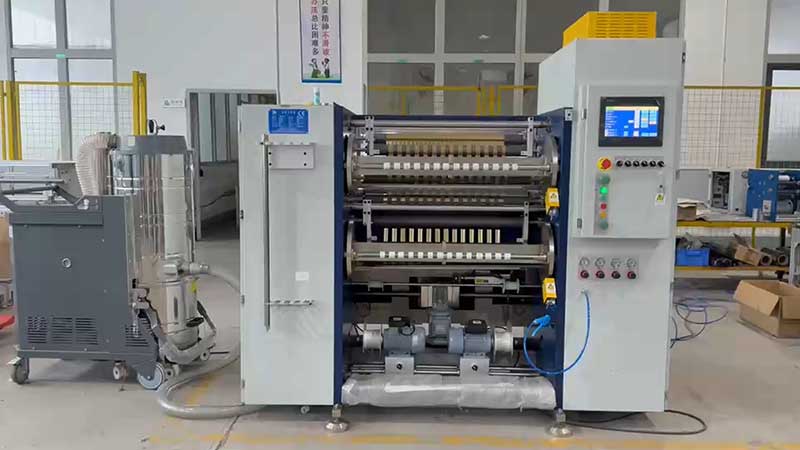 What Specifications Should You Look for in a Hot Stamping Foil Slitting Machine?
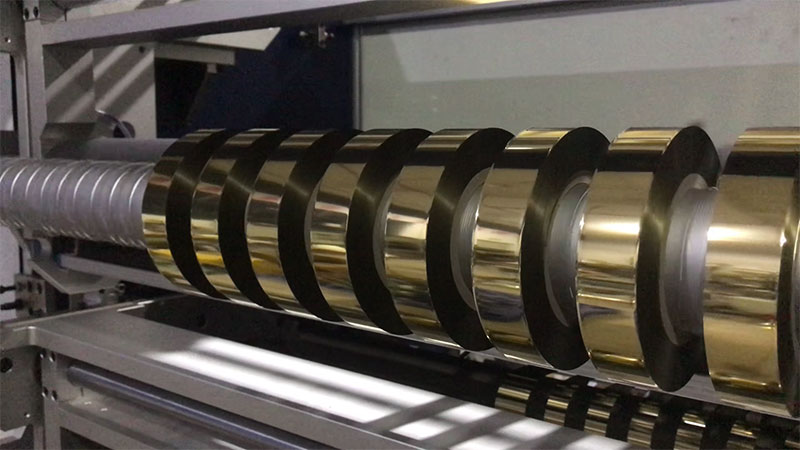 Hot Stamping Foil Slitting Machine Selection Guide: Tension Control Is Key
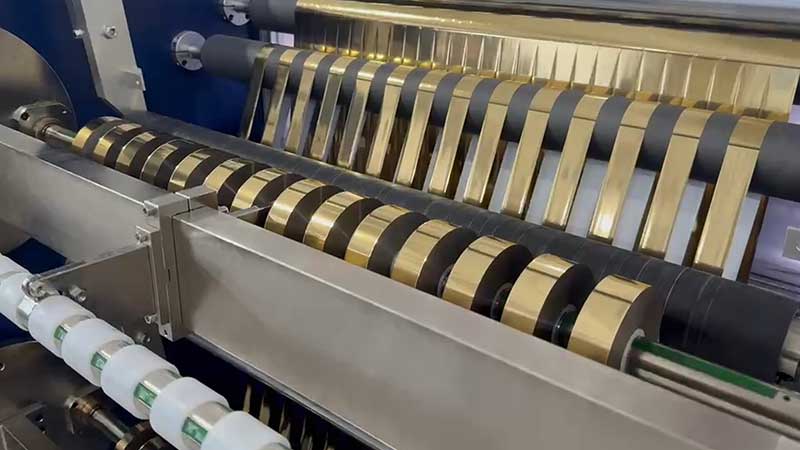 How to choose a hot stamping foil slitting machine? Let's first look at these three parameters
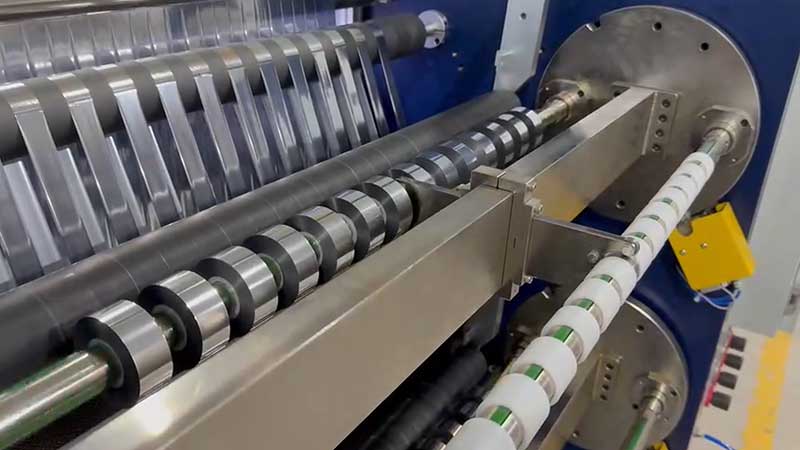 Selection of hot stamping foil slitting machines: how to match width and speed


 English
 Deutsch
 Français
 Español
 Português
 日本語
日本語 русский
 한국어
한국어 عربي
عربي ภาษาไทย
 Tiếng Việt
 Italiano
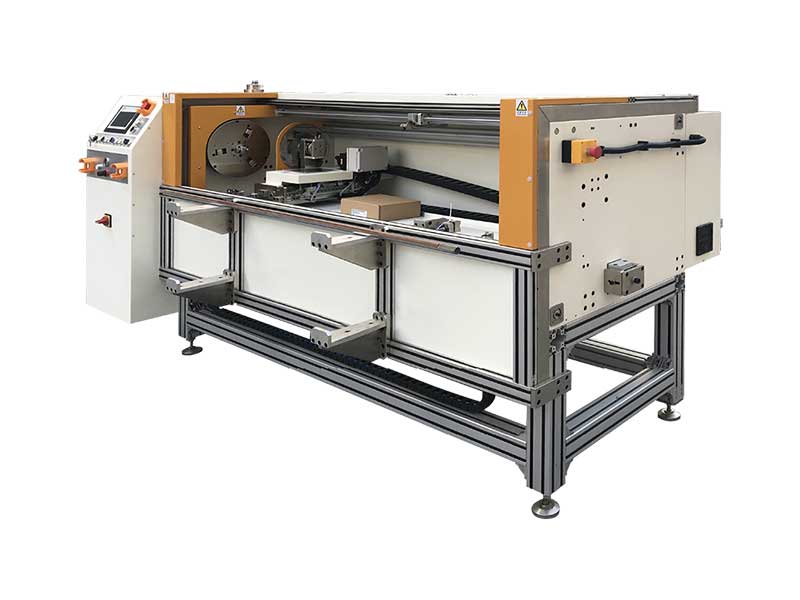 Automatic Foil Roll Cutting Machine
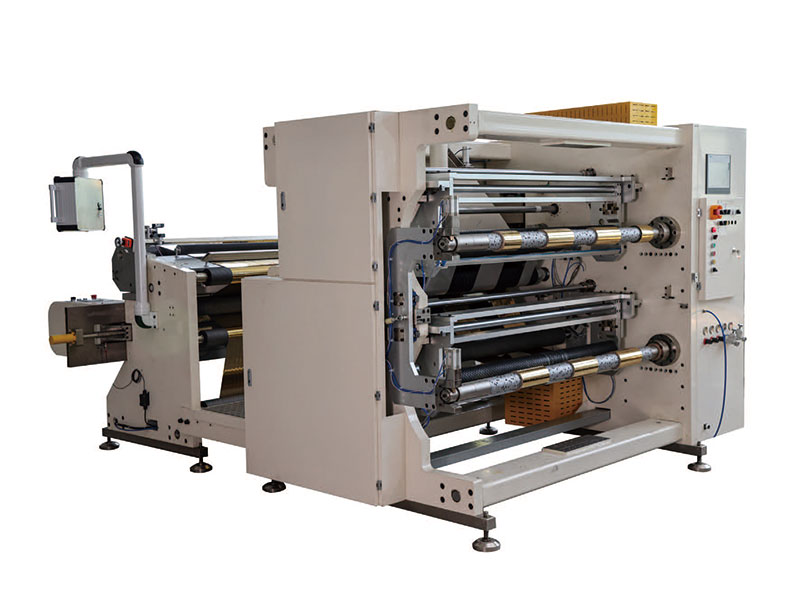 1400mm Hot Stamping Foil Slitting Machine
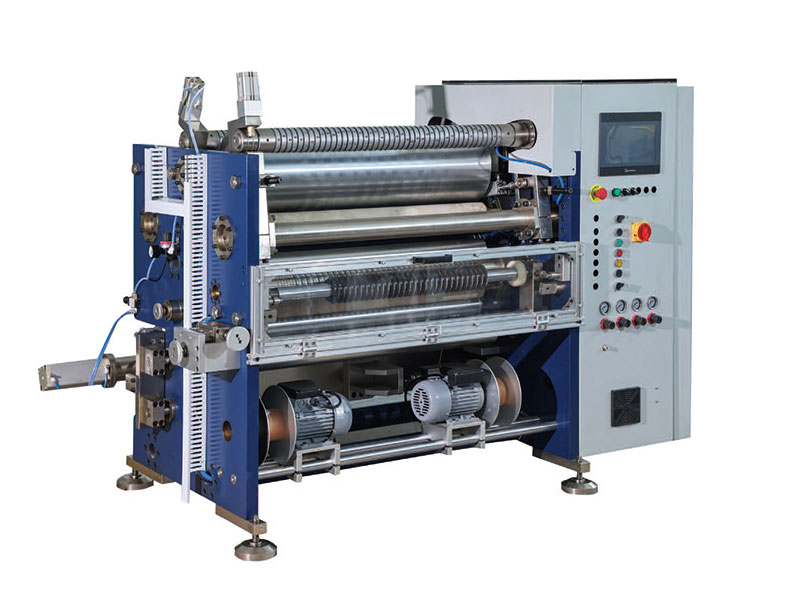 800mm Hot Stamping Foil Slitting Machine
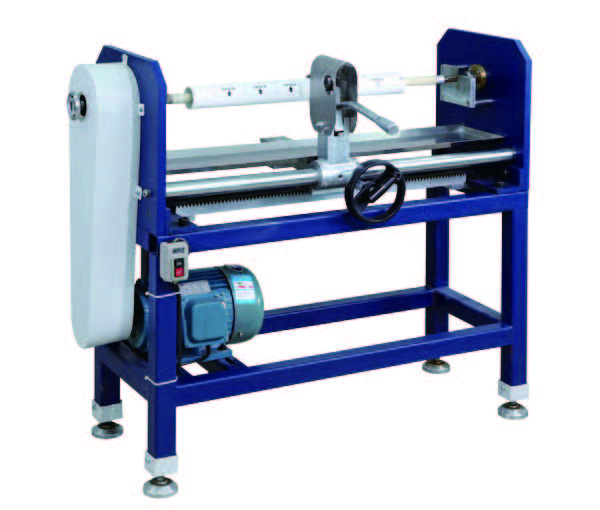 Manual Foil Roll Cutting Machine