
In the fields of packaging printing and surface decoration, hot stamping technology, with its unique metallic luster and three-dimensional texture, has always been an important means to enhance product added value. As the first step in foil foil processing, the technological evolution of hot stamping foil slitting equipment profoundly impacts the quality and efficiency of downstream industries. Today's industrial-grade hot stamping foil slitting machines are no longer just simple "slitting tools" but have evolved into precision manufacturing platforms integrating high-precision control, intelligent management, and multifunctional adaptation.
Precision architecture: the cornerstone of process collaboration through system collaboration
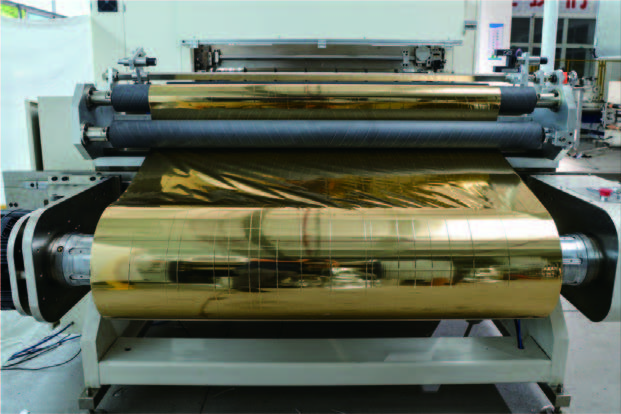
The precise operation of industrial-grade hot stamping foil slitting equipment is built on the coordination of four core mechanisms:
The unwinding mechanism carries the main roll, fixes the core through an air expansion shaft, and is equipped with a photoelectric deviation correction system (capable of tracing edges or threads), ensuring the foil path is straight before entering the cutting zone. The tension control system is the heart of the entire device—the hot stamping foil is only 4~30 microns thick, and its ultra-thin material is extremely sensitive to changes in tension. Modern equipment uses servo motor-driven closed-loop tension control, allowing real-time adjustment of unwinding and rewinding torques, fundamentally eliminating issues such as wrinkling, stretching deformation, or strip breakage.
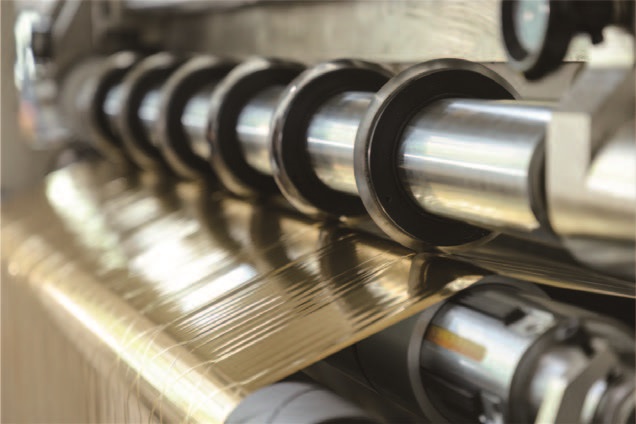
The cutting mechanism is the ultimate executor of precision. The mainstream solution uses either a round blade or a flat blade; the round blade is more suitable for thicker or hard-coated industrial foils, while the flat blade is suitable for standard electrochemical aluminum. Some advanced models even support adjustable cutting angles to meet the slitting needs of different materials and patterns. The winding mechanism independently controls the tension of each narrow roll via the slip shaft or gas expansion shaft, ensuring the finished roll ends are as smooth as a mirror and with consistent tightness, providing a perfect foundation for subsequent high-speed stamping.
Key technological breakthroughs: from "cutting well" to "cutting well"
The core gap between industrial-grade equipment and ordinary machinery lies in the technical capability to handle extreme working conditions.
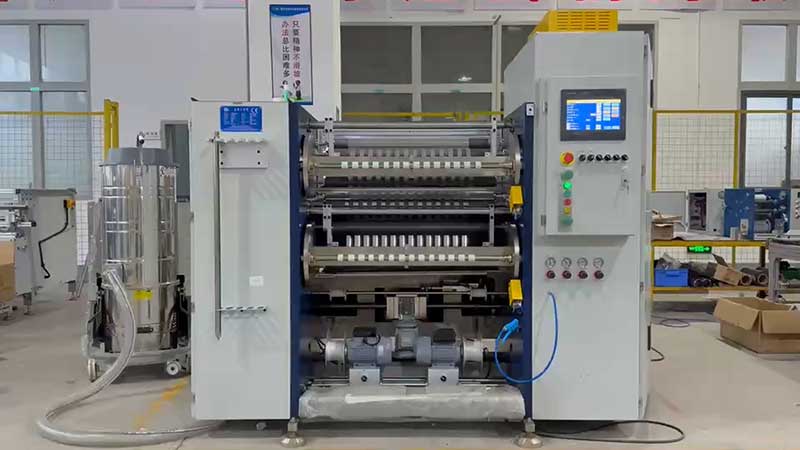
Micro-tension control of ultra-thin foil is the primary challenge. Hot stamping films with a thickness of 12~20 microns are very prone to tearing or wrinkles during high-speed operation. High-end equipment achieves stable slitting under extremely low tension through servo drives and precision algorithms, with speeds reaching 200~500 meters per minute. Slitting precision pursues ± 0.05mm-level error control, combined with a high-rigidity tool post and laser ruler positioning to ensure edges free of burrs. Automation and intelligent operations and maintenance greatly reduce dependence on manual labor: operators can use PLC touchscreens to preset plans and call up different order parameters with one click, reducing order change time from 15 minutes to 3 minutes; IoT modules can also enable remote fault diagnosis.
Efficiency and value: data-driven industry returns
The benefits brought by advanced slitting equipment are immediate. Taking a certain packaging factory as an example, after introducing an intelligent slitting machine, the slitting speed increased from 150 meters per minute to over 200 meters per minute, boosting overall production capacity by 30%. More importantly, material cost savings — the slitting loss rate dropped from over 5% to below 1%, and just the material savings alone can recoup a significant portion of equipment investment within half a year. Product quality has also improved, with smooth, burr-free foil coils running more smoothly on high-speed hot stamping machines, significantly improving yield rates.
Cross-industry evolution: from packaging and decoration to industrial functional materials
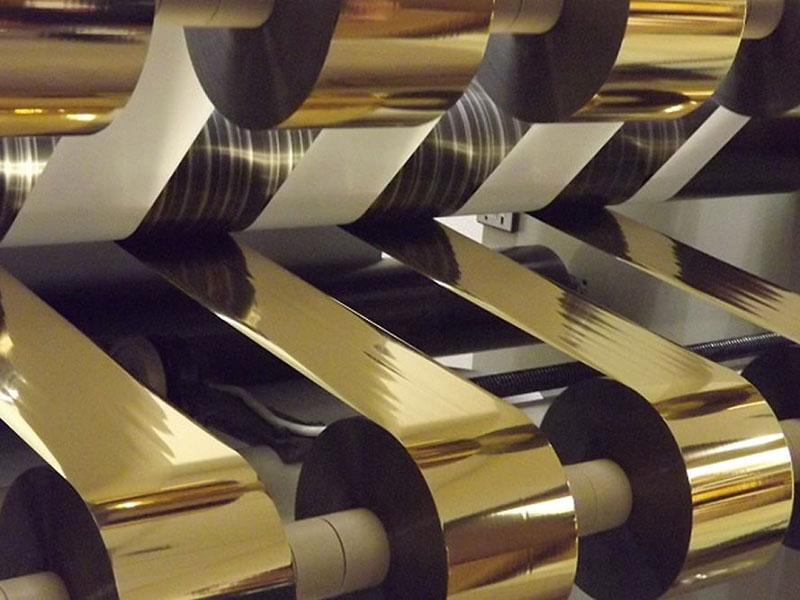
The application boundaries of hot stamping foil slitting machines are expanding significantly. In the field of flexible electronics, it is used in dust-free slitting conductive gold foil to meet the production needs of precision components such as RFID antennas. In the automotive and home appliance sectors, with the popularization of in-mold decoration processes, slitting machines have begun to serve wider and thicker industrial transfer foils, reaching new heights in requirements for edge burrs and rigidity. In response to the trend of short orders after digital printing, specialized digital hot stamping foil slitting machines have also developed rapidly, emphasizing convenient order changes and high precision (edge error± 0.1~0.2 millimeters) to meet the flexible demands of the personalized market.
Conclusion
Industrial-grade hot stamping foil slitting equipment is evolving from precision machinery to an "intelligent manufacturing node." It integrates materials science, automatic control, and information technology, not only solving the classic question of "how to cut accurately and quickly," but also advancing deeply toward "how to cut efficiently and intelligently." For packaging and printing companies, choosing a high-performance slitting machine means choosing a clear path from reducing losses and improving efficiency to expanding process boundaries.
 Common Problems with Hot Stamping Foil Slitting Machines and How to Solve Them
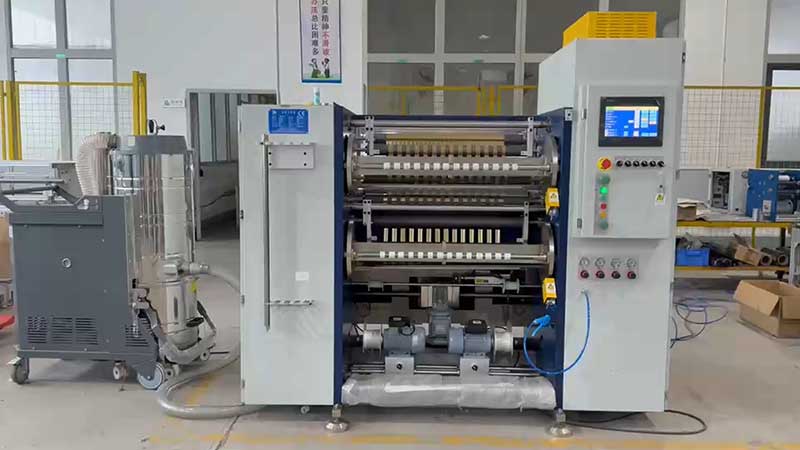 What Specifications Should You Look for in a Hot Stamping Foil Slitting Machine?
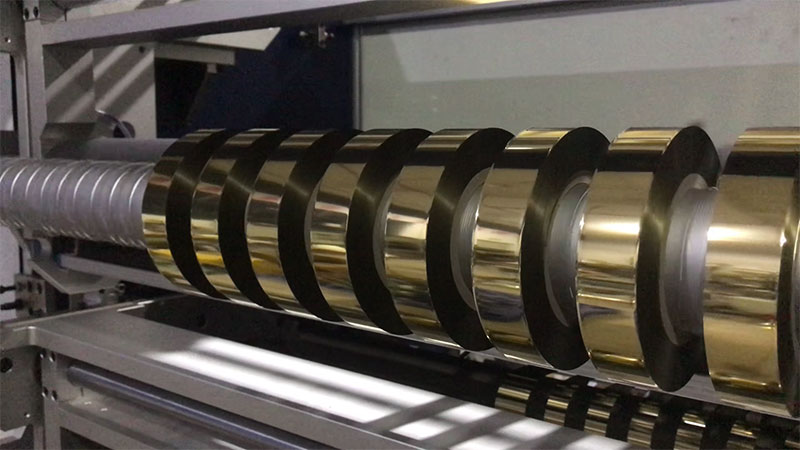 Hot Stamping Foil Slitting Machine Selection Guide: Tension Control Is Key
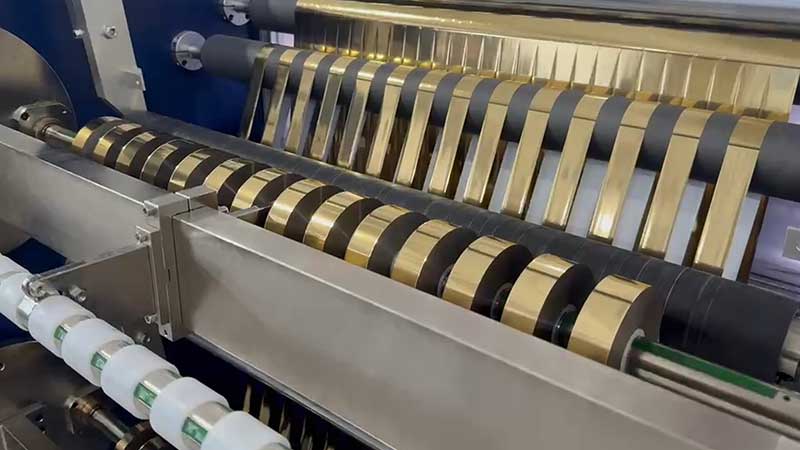 How to choose a hot stamping foil slitting machine? Let's first look at these three parameters
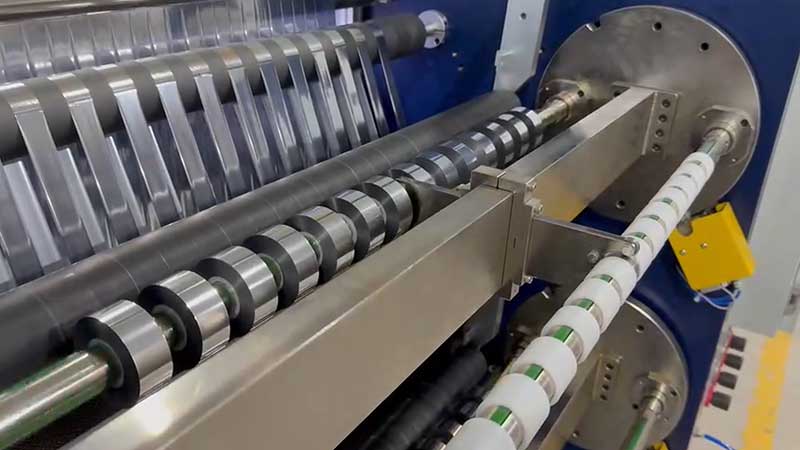 Selection of hot stamping foil slitting machines: how to match width and speed


 English
 Deutsch
 Français
 Español
 Português
 日本語
日本語 русский
 한국어
한국어 عربي
عربي ภาษาไทย
 Tiếng Việt
 Italiano
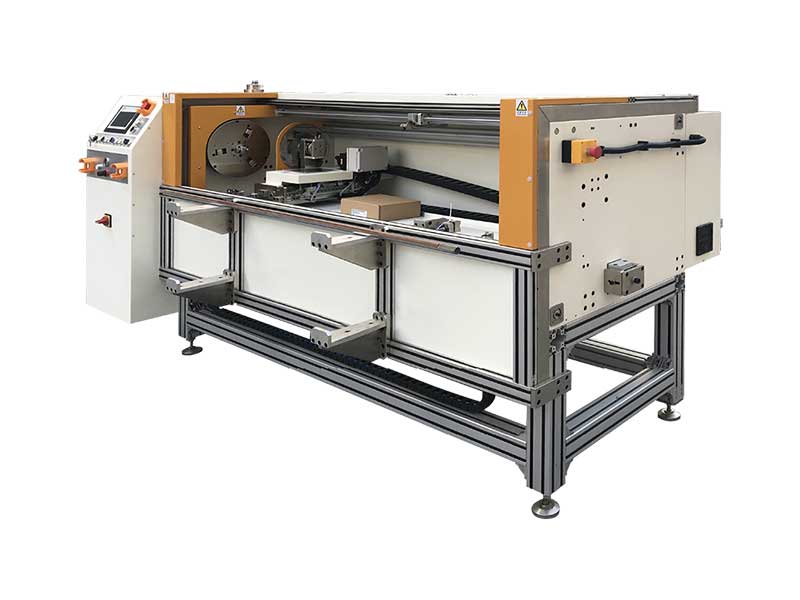 Automatic Foil Roll Cutting Machine
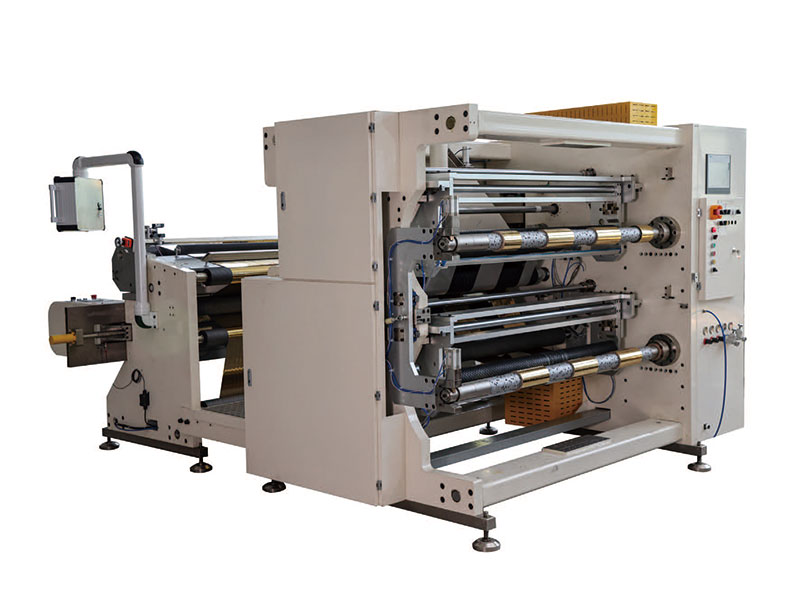 1400mm Hot Stamping Foil Slitting Machine
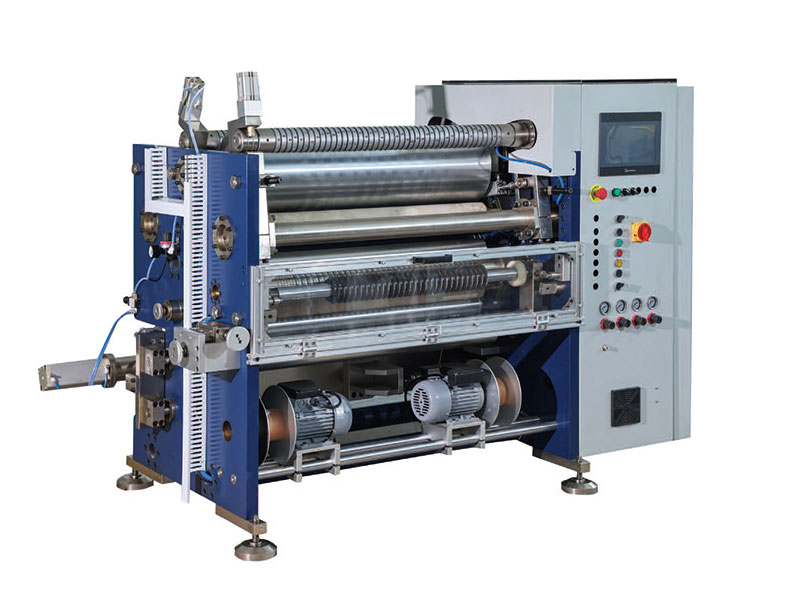 800mm Hot Stamping Foil Slitting Machine
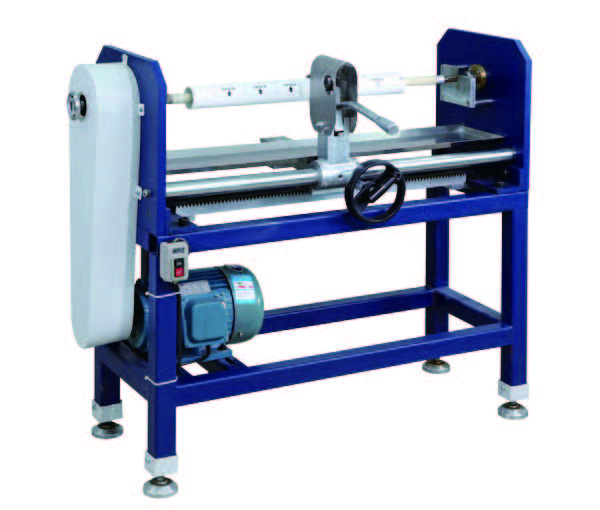 Manual Foil Roll Cutting Machine