
In the field of thermal transfer printing, the quality of ribbons (thermal transfer ribbons) directly determines the printing effect, and ribbon slitting machines are key equipment for processing large rolls of raw materials into narrow finished products suitable for different printers. With the increasing requirements for carbon band width tolerance, end face flatness and material utilization in barcode, label, packaging and other industries, how to improve slitting accuracy and reduce material loss has become the core issue of cost reduction and efficiency increase for production enterprises.
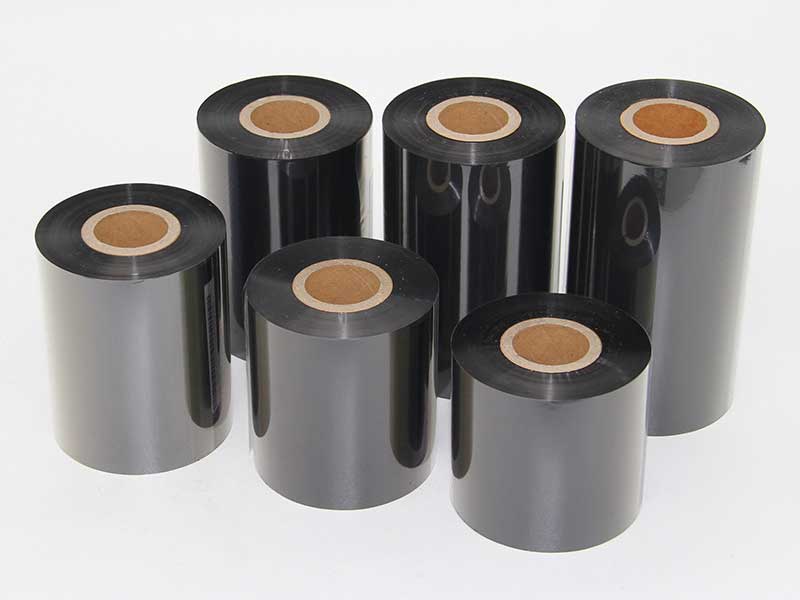
1. Key influencing factors and optimization measures of slitting accuracy
Slitting accuracy is usually reflected in width tolerances (e.g., ±0.1mm), face verticality, and no burrs or ruffles. The main factors that affect accuracy include:
1. High-precision tool set design and maintenance
◦ Tool material and edge: Use super-hard and wear-resistant carbide or ceramic circular knives to ensure sharp and wear-resistant edges. Passivating tools creates extrusion cuts that cause edge stretch deformation.
◦ Upper and lower knife assembly accuracy: When slitting the round knife, the overlap between the upper and lower knives and the lateral clearance must be accurately adjusted according to the thickness of the ribbon (usually 4-8μm). Gaps that are too small will cause friction burrs, and too large will tear the edges. Micron-level accuracy is guaranteed using a laser tool setter or automatic tool adjustment system.
◦ Tool life management: Establish tool replacement files and regularly check the degree of edge wear to avoid gradual accuracy degradation caused by tool deterioration.
2. Tension control system optimization
◦ Closed-loop tension control: abandoning the traditional mechanical friction disc, the pendulum sensor or tension detector is used with servo motor to form a closed-loop constant tension control. The winding and unwinding tensions should be adjusted independently to avoid longitudinal or lateral contraction of the ribbon substrate (usually polyester film) due to tension fluctuations.
◦ Taper tension strategy: With the increase of the winding diameter, the winding tension should be automatically reduced (usually linear or curved decreasing according to the "taper coefficient") to prevent tightness on the inside and loose on the outside or "chrysanthemum core" winding, so as to ensure the neatness of the finished end face.
3. Stability of feeding system
◦ Dynamic balance and parallelism of guide rollers: All passing rollers and flattening rollers must undergo high-precision dynamic balance testing and ensure that they are parallel to each other. Any radial runout or asymmetry of the axis will cause the material to swing laterally, causing the slitting boundary to shake.
◦ Static Elimination: High-speed slitting of ribbons (up to 300-500m/min) is prone to static electricity, causing the substrate to absorb dust or stick to the tool. Installing active static elimination rods (such as AC ionization rods) can reduce the feed offset caused by electrostatic interference.
4. Digital positioning and detection
◦ Video microscope online inspection: Integrated high-magnification camera to monitor the slitting edge in real time, automatically identify burrs, notches or width deviations through image algorithms, and feed back to the servo system for fine-tuning in time.
◦ Servo tool holder drive: An independent servo motor is used to drive the axial displacement of each tool holder to achieve closed-loop position control and completely eliminate the positioning error caused by the gap of the mechanical lead screw.
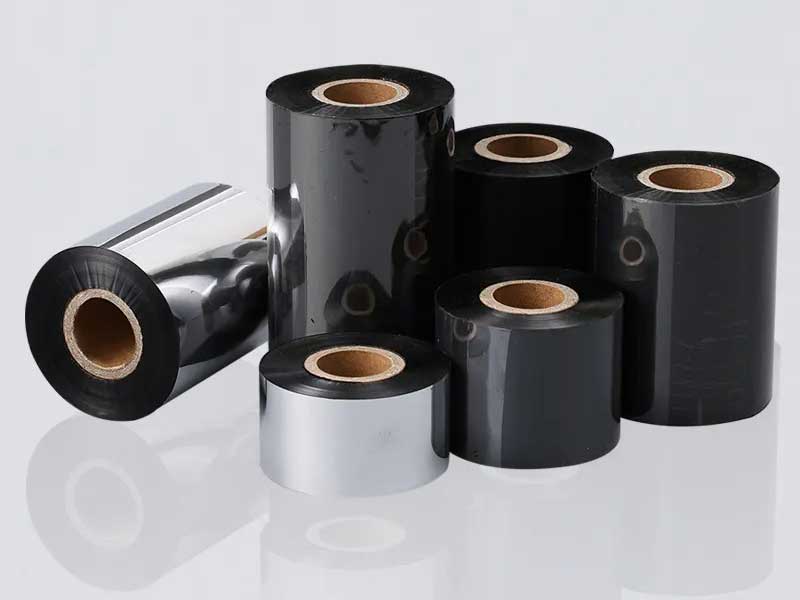
2. Special strategies to reduce material loss
Material loss mainly occurs from: machine adjustment waste, slitting edges, waste coils caused by poor winding, and waste at joints. Impairment can be achieved by:
1. Reduce the loss of machine adjustment and trial cutting
◦ Automatic tool position arrangement algorithm: After entering the finished product width combination, the system automatically calculates the optimal tool arrangement scheme (such as nested slitting), maximizes the width of the master coil, and automatically moves the tool holder to the target position to avoid manual cutter arrangement repeatedly testing to generate waste.
◦ Quick Order Change (SMED): Design modular tool holder components to enable offline tool pre-adjustment. When changing orders, the overall replacement shortens the time of a single adjustment from 30 minutes to 5 minutes, and the corresponding adjustment waste can also be reduced by more than 80%.
2. Minimize edge waste
◦ Dynamic edge cutting function: For master rolls with poor edge coating or uneven thickness, the slitting machine can automatically detect the effective width, control the cutting position of the trimming knives on both sides in real time, and only cut the minimum invalid edges (can be compressed to 2-3mm).
◦ Automatic winding and crushing of waste edges: The cut narrow edge material is introduced into the waste edge collector through high-pressure air flow or rotating nozzle to prevent the edge material from winding around the guide roller or rolling into the finished product roll, avoiding the generation of collateral waste.
3. Improve the quality of winding and eliminate "scrapping of small rolls"
◦ Variable pitch rewinding: The winding shaft adopts a spoke shaft or pressure roller that can swing axially, so that there is a slight offset (misaligned winding) between each ring of ribbon and the lower layer, eliminating local bulges or folds, and extending the normal reel length.
◦ Automatic joint detection: Install an optical hole detection or thickness detector at the unwinding end, automatically mark joints or defects when they are found, and automatically stop or eject when rewinded to that position to prevent the entire roll from being scrapped due to internal defects.
4. Data-driven loss management
◦ Integrate the production execution system (MES) to record the utilization rate, edge material rate, and scrap rate of each batch of master rolls. By analyzing the data, it is possible to identify whether the loss is caused by a tool problem, a tension parameter problem or a raw material problem, so as to make precise improvements.
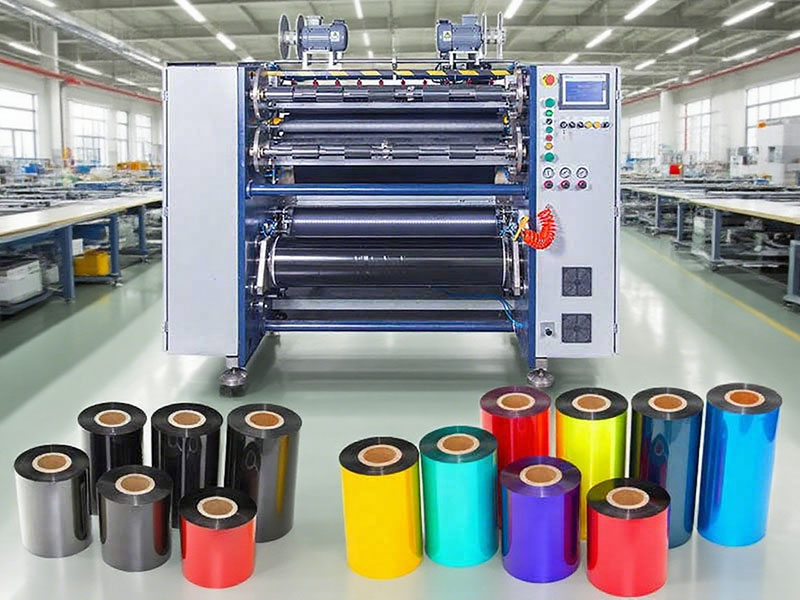
3. Overall optimization of intelligent upgrading
Contemporary high-end ribbon slitting machines have gradually introduced digital twins and self-learning systems. For example, the equipment automatically calls up the optimal slitting speed, tension curve, and tool clearance based on ribbon type (wax-based, mixed-based, resin-based) and thickness; Machine learning models predict and compensate for mechanical errors based on historical slitting results. This overall intelligence can stabilize the slitting accuracy within ±0.05mm, and the material utilization rate can be increased to more than 98%.
Epilogue
Improving the accuracy of the ribbon slitting machine and reducing material loss are not two isolated indicators, but a system engineering that works together with equipment mechanical design, control algorithms, tool technology and production management. From high-rigidity tool holders to intelligent closed-loop tension, from electrostatic control to data traceability, every small optimization accumulates, which is ultimately reflected in the smaller tolerance of the finished product, more finished rolls per square meter of master coil, and fewer shutdowns and adjustments. For high value-added consumables such as thermal transfer ribbons, "cutting more accurately and leaving less" is the most direct source of profit. Manufacturers should give priority to upgrading the tension control system and tool positioning system of old slitting machines based on the actual product structure, which is usually the entry point with the highest input-output ratio.
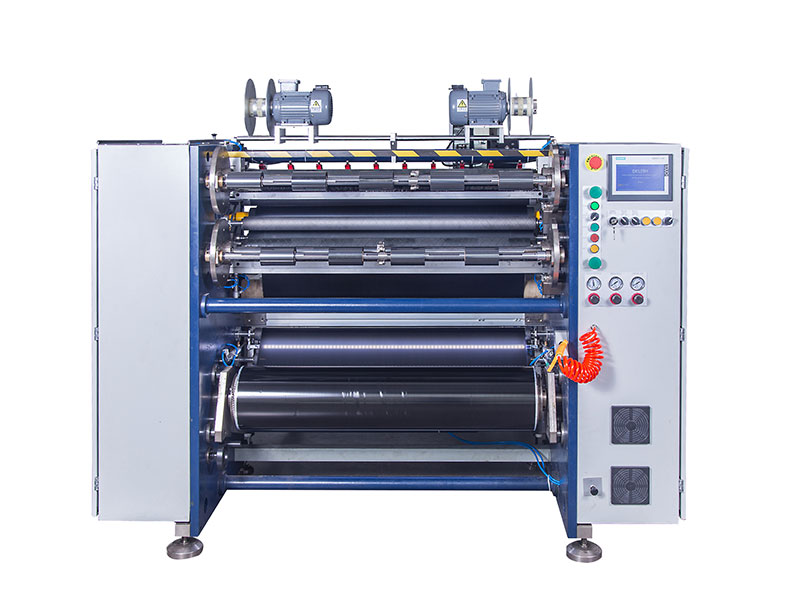 Can a barcode ribbon slitting machine cut and thermal transfer ribbons?
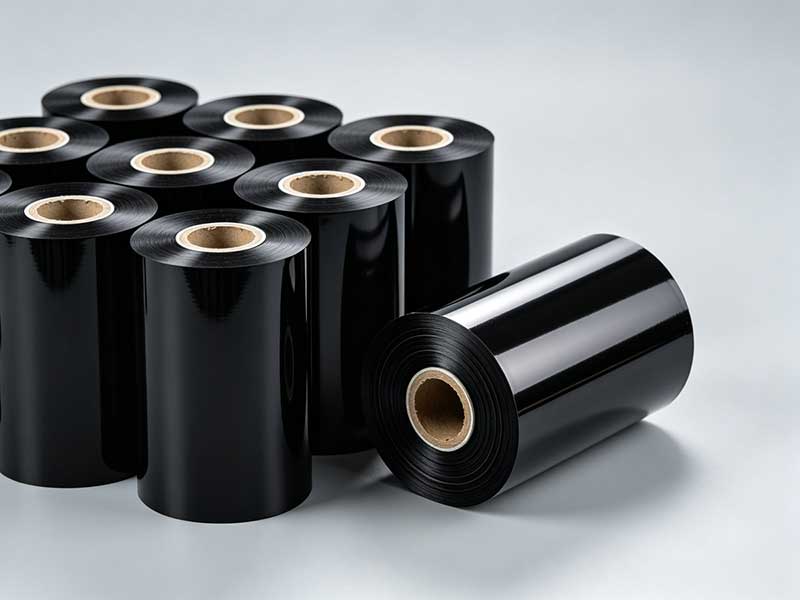 What ribbon materials are suitable for the barcode ribbon slitting machine?
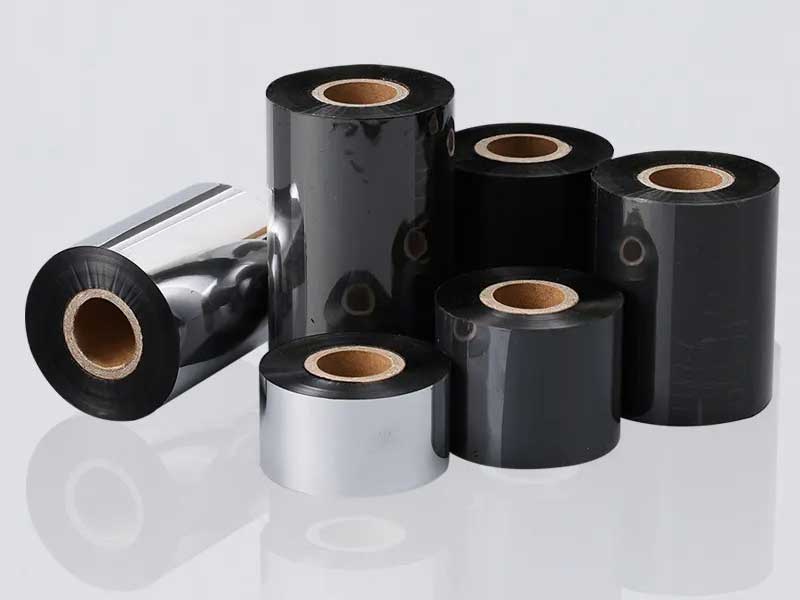 How to propose customized requirements for barcode ribbon slitting machines?How to choose a barcode ribbon slitting machine? Core Features and Key Selection PointsThe ribbon slitting machine for the barcode printer is suitable for ribbon types


 English
 Deutsch
 Français
 Español
 Português
 日本語
日本語 русский
 한국어
한국어 عربي
عربي ภาษาไทย
 Tiếng Việt
 Italiano
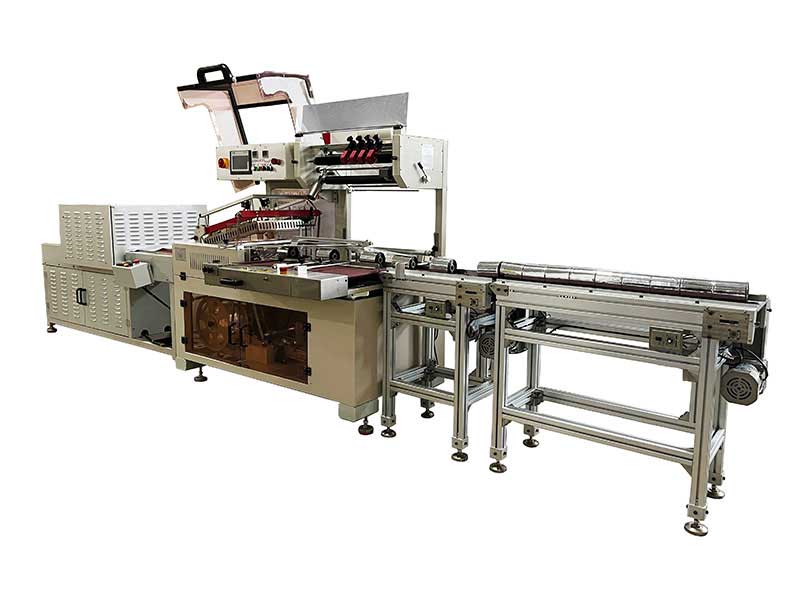 Thermal Transfer Ribbons Packaging Machine
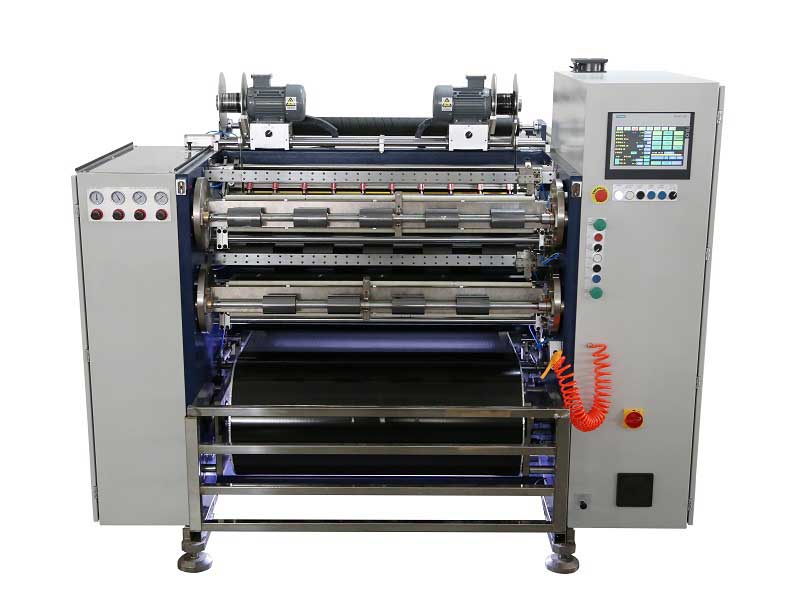 Automatic Thermal Transfer Ribbon Slitting Machine RSDS8 H PLUS
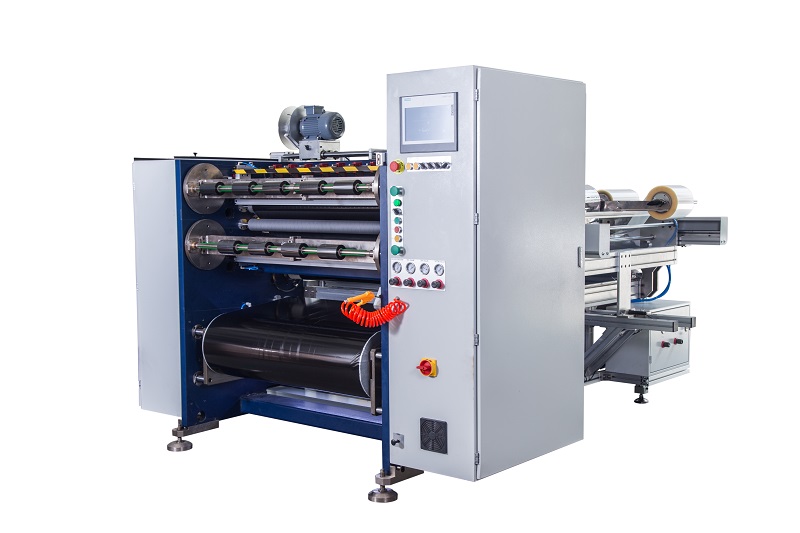 Semi Automatic Thermal Transfer Ribbon Slitting Machine RSDS5 PLUS
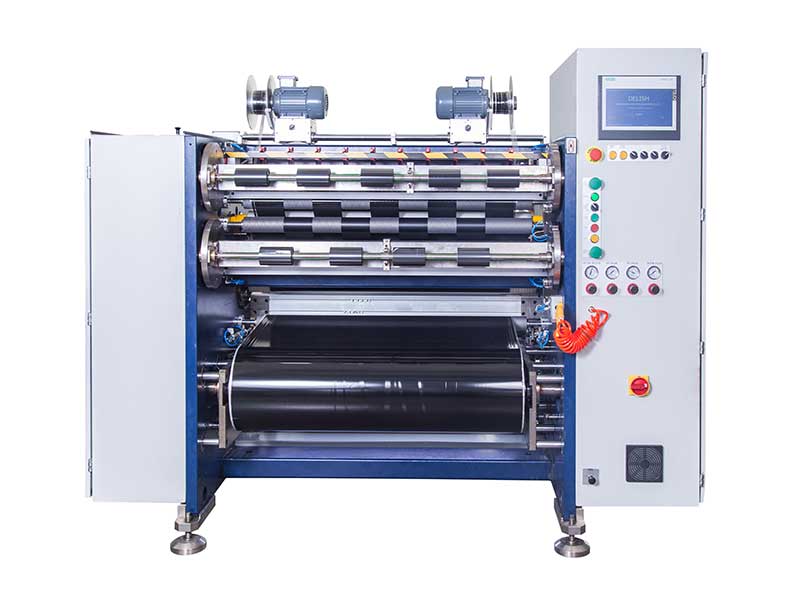 TTR Slitting Machine