
In the production process of thermal transfer ribbons, slitting is a key process. It slices wide large coil ribbons into narrow small coils required by customers. However, common "uneven winding" issues in the slitting process—manifested by uneven end faces, raised or collapsed ribbon edges—not only affect aesthetics, but also directly lead to cassettes, broken bands, or print offsets during downstream printing. At the root of the problem, unstable tension is the culprit.
This article will analyze the causes of tension instability in ribbon slitting and propose systematic solutions to help manufacturers improve product quality and production yield.
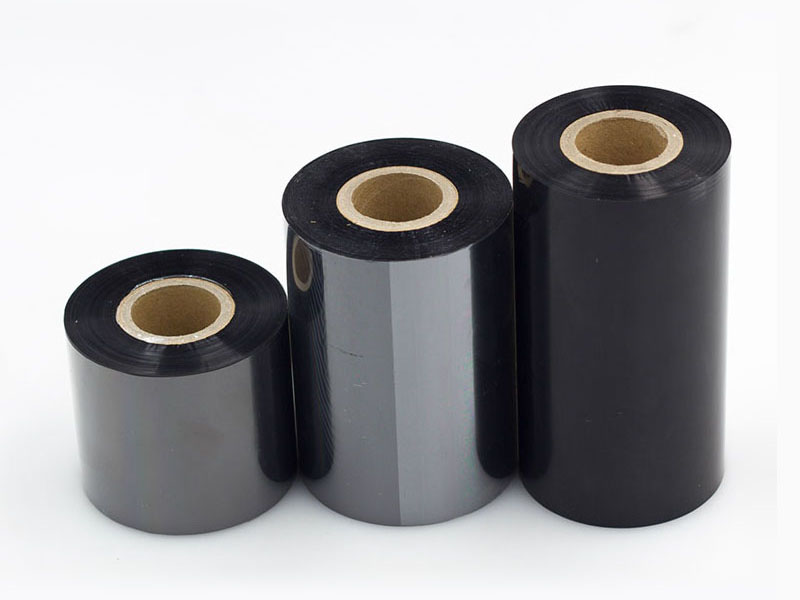
1. Typical manifestations and hazards of unstable tension
The intuitive reflection of unstable tension on the winding core is the uneven "hardness" of the coil. When the tension is too large, the ribbon is overstretched, and the base layer close to the coil core is subjected to huge stress, causing the edge of the ribbon to rise and form a "chrysanthemum core"; If the tension is too small, the interior will be loose, the interlayer will slip, and finally the tower shape will be twisted. A more hidden hazard is that intermittent tension fluctuations can leave stretch marks or shrinkage folds on the ribbon that are difficult to see with the naked eye, which directly affects the uniformity of the transfer of the printed ink layer.
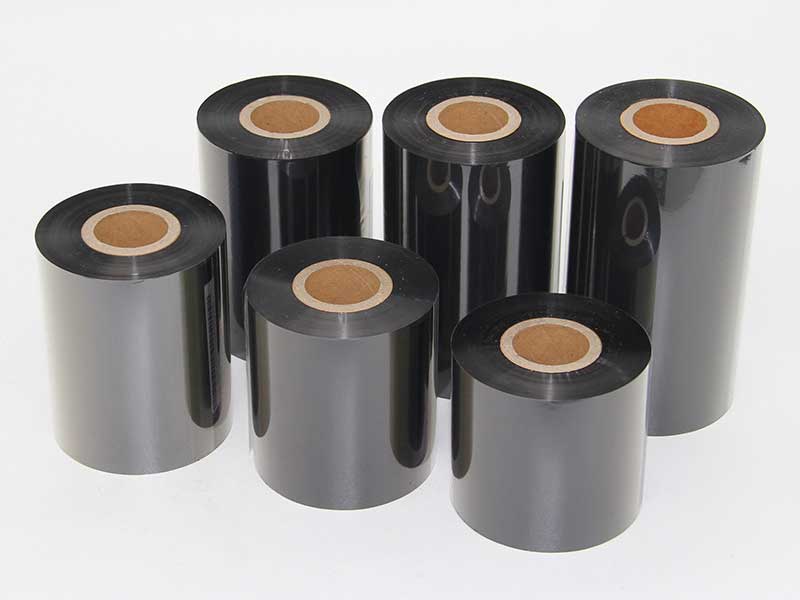
2. Analysis of the root causes of tension instability
To solve the problem, you need to find the source first. Common causes include:
1. Uneven damping of the unwinding shaft: Air leakage of the inflatable shaft or wear of mechanical brake pads, resulting in large and small braking force in unwinding, resulting in fluctuations in upstream tension.
2. Parallelism error of the roll system: If the guide roller, pressure roller or tension detection roller are not parallel, the ribbon will deviate to one side, and the controller will instantly change the tension for correction, causing vibration.
3. Electrostatic interference: The carbon ribbon base film (usually PET) rubs against the metal roller to generate static electricity, and the sudden discharge after accumulation will interfere with the signal of the tension sensor, causing the control system to misjudge.
4. Unstable pressure of the winding roller: The cylinder pressure of the floating roller fluctuates, making the contact pressure between the roller and the surface of the coil core uneven.
5. Transmission servo response lag: The low-end slitting machine uses ordinary frequency conversion motors, which respond slowly when accelerating and decelerating, resulting in the speed of unwinding and rewinding lines cannot be matched in real time.
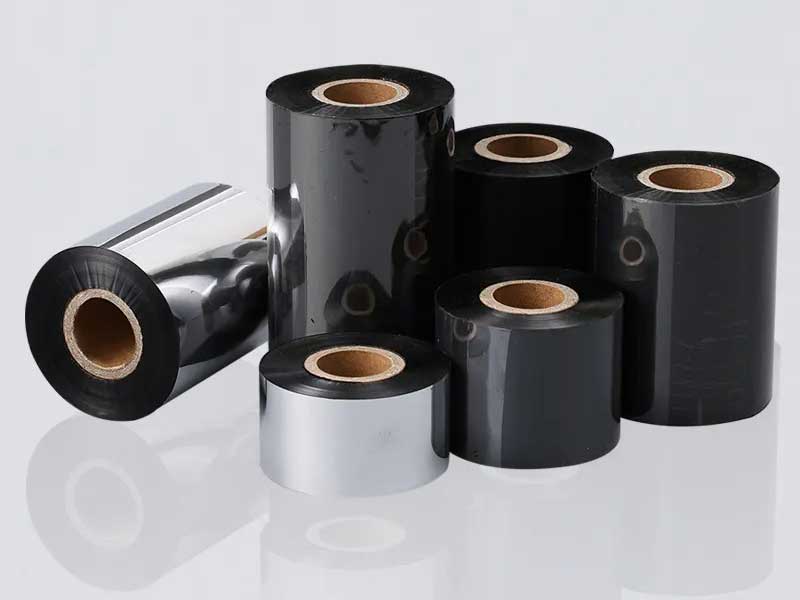
3. Systematic solutions
Based on the above analysis, the solution of tension instability needs to start from three dimensions: mechanical, electrical, and process.
1. Mechanical end: consolidate the basic precision
• Calibrate roll system parallelism regularly: Use a laser aligner or dial indicator to ensure that the parallelism of all roll axes ≤ 0.05mm/m. In particular, the levelness of the tension sensor roller directly affects the authenticity of the reading.
• Upgraded inflatable shaft and clutch: Multi-stage inflatable shaft is used to ensure uniform core locking force. Replace the mechanical brake with a magnetic powder clutch or servo unwinding motor for smooth, programmable unwinding resistance.
• Optimize the roller structure: Double cylinders + proportional pressure valve are used to control the pressure of the roller, so that the pressure of the roller on the winding core decreases linearly with the increase of the coil diameter (taper tension control).
2. Electrical end: improve control response
• Introduction of closed-loop tension control system: The core components include tension sensors (such as Mitsubishi or Rheinland), PID controllers, and servo drive systems. The sensor detects the actual tension in real time, and the controller calculates the deviation and instructs the rewinding servo motor to instantly adjust the speed. The sampling frequency should be ≥ 1kHz.
• Realize automatic calculation of reel diameter: The system automatically derives the current rewinding diameter through the lap sensor or angular velocity ratio, and automatically reduces the rewinding torque to maintain constant surface tension. This "taper tension" mode prevents the outer layer from pressing on the inner layer.
• Install active static eliminator: install an AC corona rod or pulsed DC static eliminator before the ribbon enters the winding unit to control the electrostatic potential within ±500V and eliminate interference with sensor and servo signals.
3. Process end: set parameters reasonably
• Optimize initial tension: Set the initial tension based on the width, thickness, and strength of the base film. For example, the tension of ordinary wax-based ribbon lines is controlled at 8-12N, while resin-based ribbons use higher tension (15-20N) to avoid stretching caused by excessive excess.
• Adjust the pressure curve of the roller: set the function curve of the pressure with the roll diameter - compact in the initial stage to obtain a flat winding, and gradually reduce the pressure in the middle and late stages to prevent the inner ring from being crushed.
• Control the slitting speed: flexible substrates (such as thin PET) should not be slitted too fast, usually 80-150m/min is recommended to avoid high-speed airflow disturbance tension.
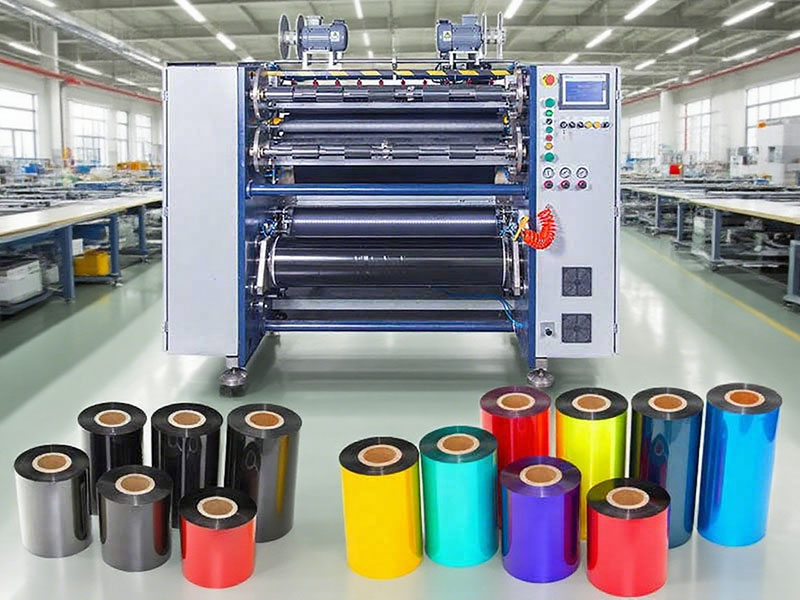
4. Effect verification and daily maintenance
After implementing the above solutions, the effect can be verified by the following indicators:
• The winding end face drop ≤ 0.5mm (0.2mm for high-end standards).
• The hardness of the whole roll is uniform, and the difference in surface hardness is detected by a Shore hardness tester < 5 degrees.
• Continuous use of downstream printers without feeding lag.
Routine maintenance should adhere to:
• Clean all rollers daily to avoid changes in the coefficient of friction caused by glue chips or dust.
• Check the zero point of the tension sensor every week and calibrate it with weights.
• Monthly detection of static elimination rod ion balance to prevent failure.
Epilogue
"Uneven winding" is by no means an inevitable defect, it is a litmus test of tension control ability. Through the hard improvement of mechanical accuracy, the soft control of electrical closed-loop and the reasonable matching of process parameters, the ribbon slitting machine can completely eliminate the chronic disease of unstable tension. In today's development of thermal transfer ribbons to ultra-thin, high-speed and high-density, mastering the slitting technology of stable tension is to master the core competitiveness of product quality - it makes your finished product from an uneven "trouble" to a "high-quality product" as flat as a mirror.
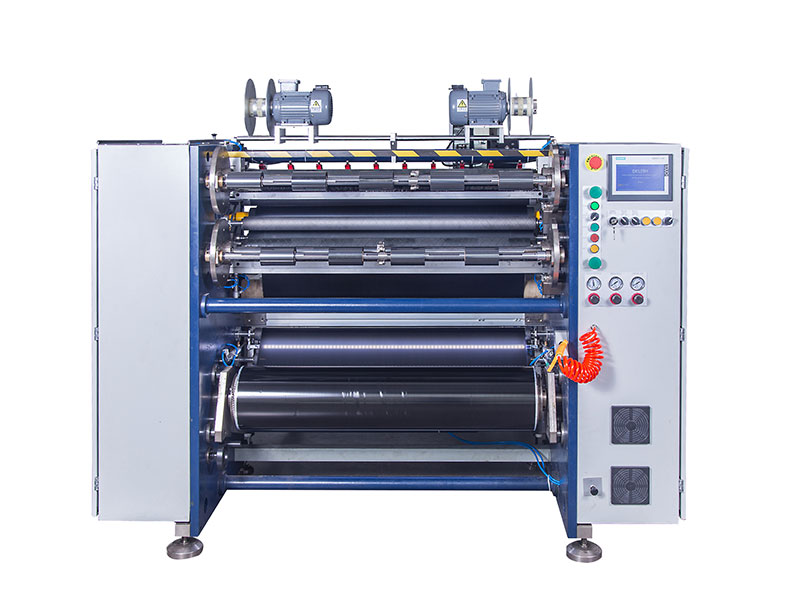 Can a barcode ribbon slitting machine cut and thermal transfer ribbons?
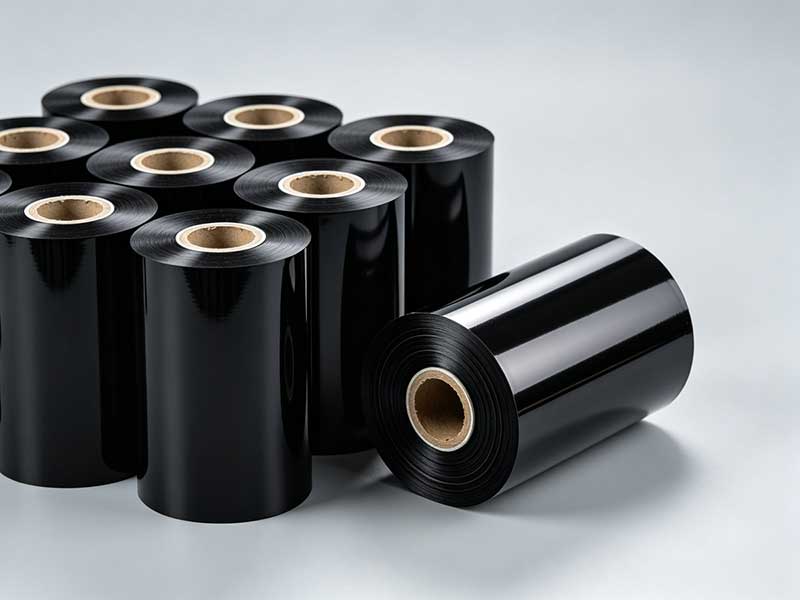 What ribbon materials are suitable for the barcode ribbon slitting machine?
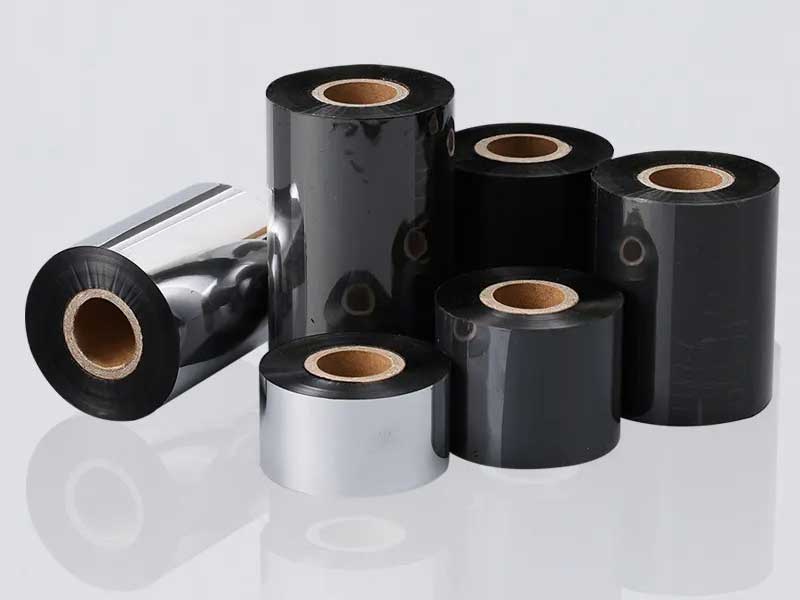 How to propose customized requirements for barcode ribbon slitting machines?How to choose a barcode ribbon slitting machine? Core Features and Key Selection PointsThe ribbon slitting machine for the barcode printer is suitable for ribbon types


 English
 Deutsch
 Français
 Español
 Português
 日本語
日本語 русский
 한국어
한국어 عربي
عربي ภาษาไทย
 Tiếng Việt
 Italiano
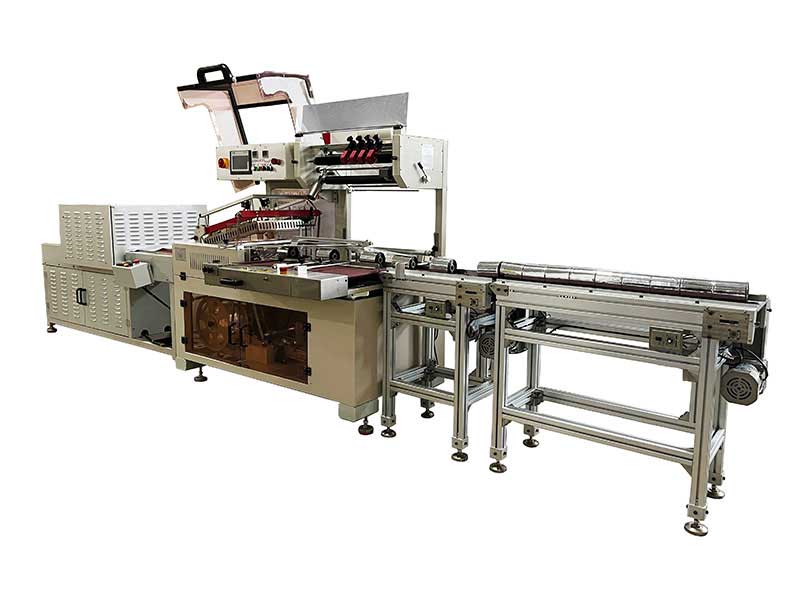 Thermal Transfer Ribbons Packaging Machine
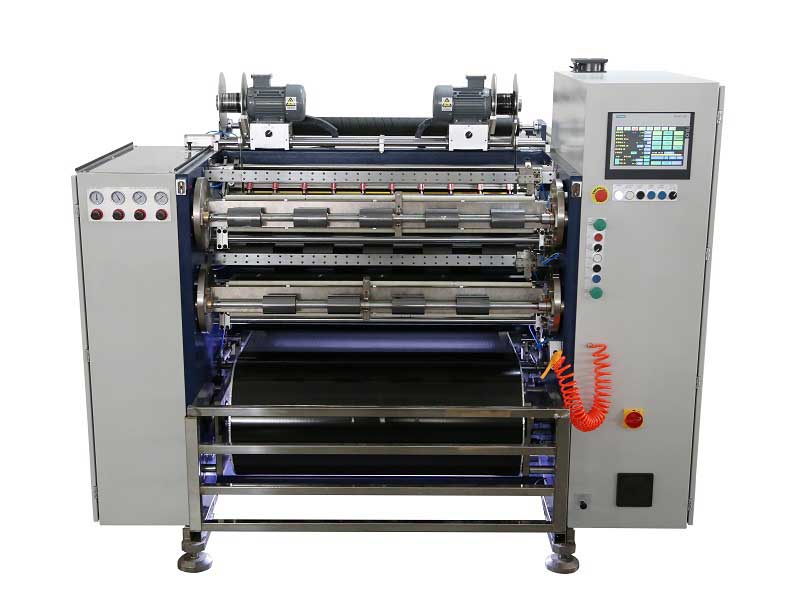 Automatic Thermal Transfer Ribbon Slitting Machine RSDS8 H PLUS
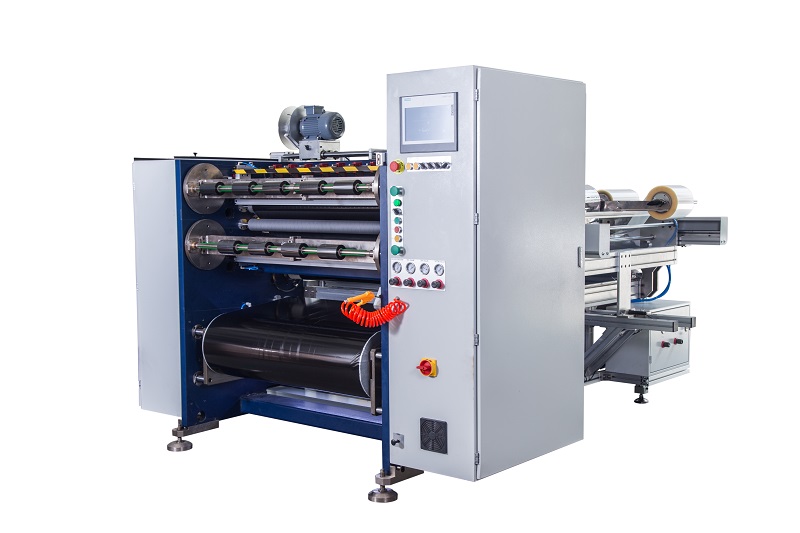 Semi Automatic Thermal Transfer Ribbon Slitting Machine RSDS5 PLUS
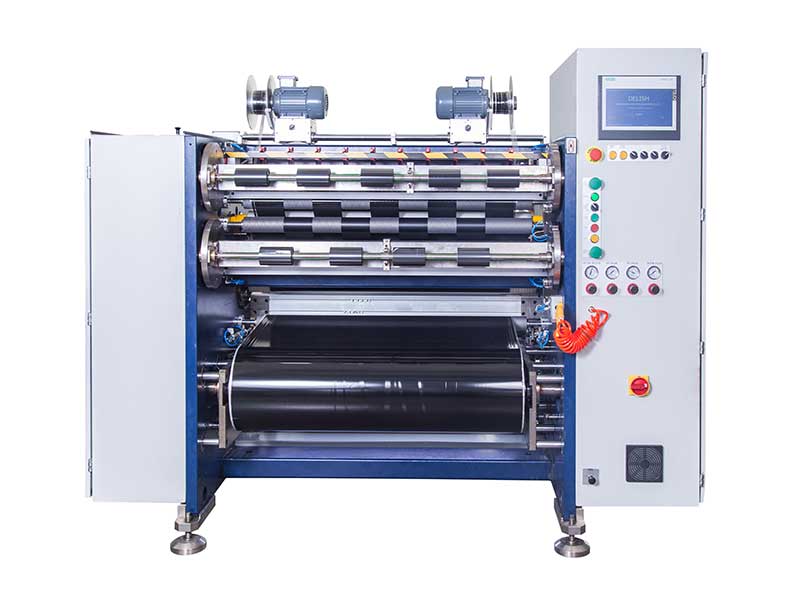 TTR Slitting Machine