
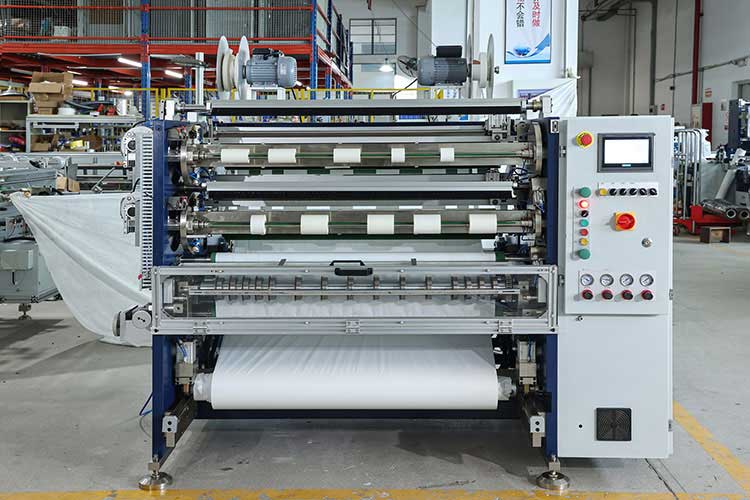
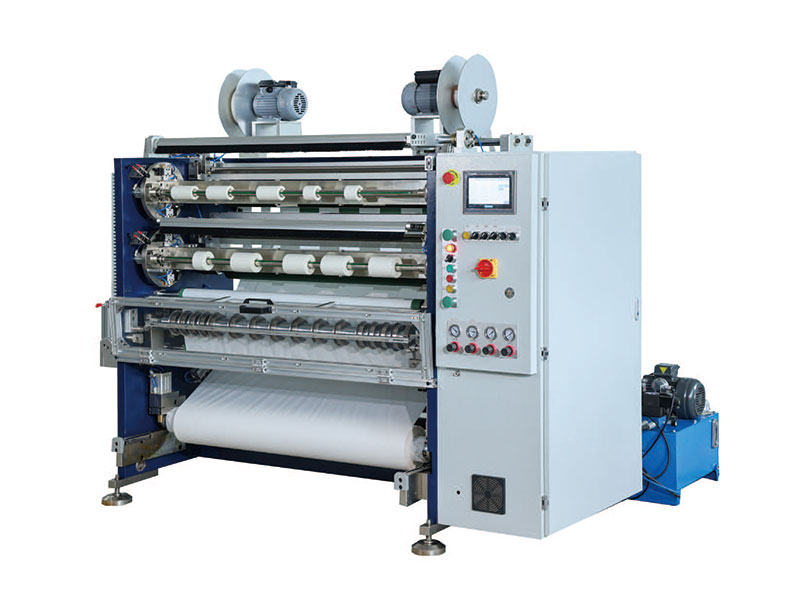
In the adhesive product processing industry, the single-sided adhesive slitting machine is the core production equipment, and its operating condition directly determines product quality and production efficiency. However, many factories wait until equipment starts to make abnormal noises, has severe burrs, or is uneven rolling. This kind of "firefighting" maintenance is not only costly but also results in a large amount of scrap. Scientific preventive maintenance is the fundamental guarantee for extending equipment lifespan and stabilizing product pass rates.
The following maintenance schedule for single-sided adhesive slitting machines consists of a four-level system of daily, weekly, monthly, and quarterly levels. It is recommended that equipment managers keep it for reference and follow accordingly.
I. Daily Maintenance List (Executed by Operator)
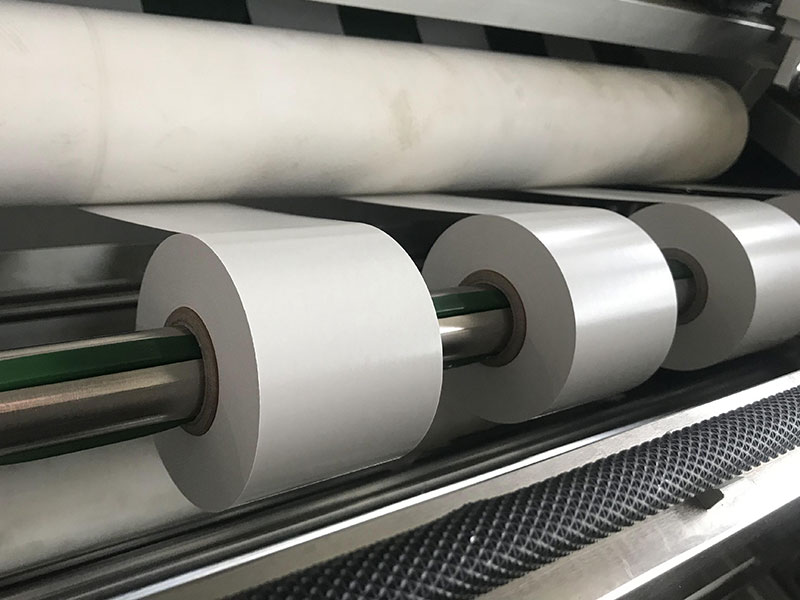
Daily maintenance takes about 15-20 minutes, focusing on cleaning and inspection.
| Maintenance items | Key points of operation | Acceptance criteria |
| Clean the working surface | Clean residual glue and dust from the knife holder, guide roller, and pressure roller | No glue buildup on roller surfaces or tool holders |
| Blade edge inspection | Visual inspection; minor wear should be repaired promptly | There should be no visible white lines or notches on the blade edge |
| Cleaning the adhesive residue on the blade surface | Wipe the blade surface with non-woven fabric dipped in industrial alcohol | The blade surface should have no sticky deposits |
| Airway examination | Check whether there are any air leaks in the air circuit and whether the pressure gauge readings are normal | Stable air pressure and no leakage in the pipelines |
| Operation monitoring | After powering on, listen for abnormal noises or abnormal vibrations | Smooth operation with no periodic abnormal noises |
| Sampling inspection of winding quality | Check whether the winding end face is neat and whether the slitting width meets standards | The end face is flat, and the width is within tolerances |
2. Weekly Maintenance List (Maintenance Worker Cooperation)
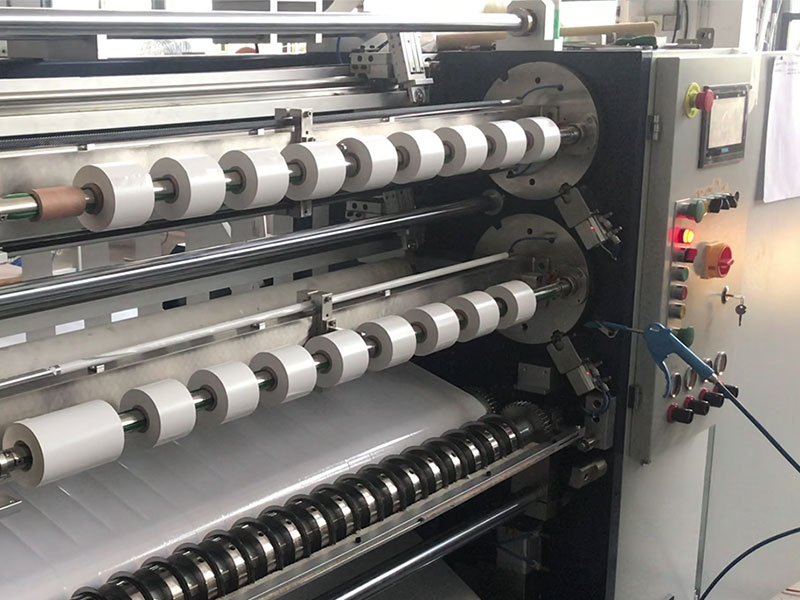
Weekly maintenance takes about 1-2 hours, focusing on lubrication and tightening.
| Maintenance items | Key points of operation | Acceptance criteria |
| Lubricate and add more fluids | Add the specified grade of grease to each bearing and slide rail | New oil overflows at all lubrication points |
| Transmission belt inspection | Check the tension of the timing belt/V-belt and check for cracks | Tension is moderate, and there are no obvious wear cracks on the belt surface |
| Bolts tightened | Check the fastening bolts at key parts such as the tool holder and motor base | All bolts are not loose |
| Electrical inspection | Check if the wiring terminals are loose, and clean the dust from the control cabinet | The terminals are secure, and there is no dust accumulation inside the cabinet |
3. Monthly maintenance checklist
Monthly maintenance requires a half-day downtime, focusing on inspection and calibration.
| Maintenance items | Key points of operation | Acceptance criteria |
| Bearing condition monitoring | Measure and record the temperature and vibration values of each bearing | Establish trend profiles, with no abnormal temperature increases |
| Check the condition of the rubber rollers | Inspect all rubber roller surfaces and re-overmold if necessary | The roller surface should be smooth, without dents or hardening |
| Tension sensor calibration | Verify zero point and linearity | The sensor output is accurate, with fluctuations within ±0.5N |
| Clearance between blade and bottom roller | Use feeler gauges to check the gap between the blade and the bottom roller | A gap of 0.05-0.10mm is the standard range |
| Correction device inspection | Check the correction response speed and stroke | Responsive and normal travel range |
4. Quarterly/annual maintenance checklist
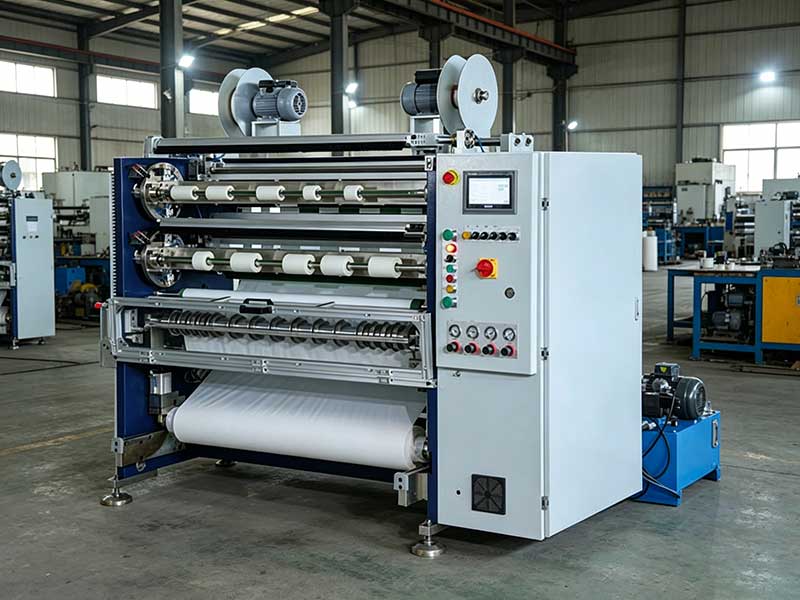
Quarterly/annual maintenance is recommended to be performed by the manufacturer or professional repair personnel, focusing on major overhauls and accuracy restoration.
| Maintenance items | Key points of operation | Cycle |
| Replace wear parts | Replace wear parts such as bearings, oil seals, and drive belts | Year |
| Calibration of guide rail accuracy | Thoroughly inspect the accuracy of the tool holder's linear guide rails and recalibrate them | Year |
| Full-machine horizontal re-testing | Use a level or laser centering instrument to re-measure the overall machine level | Annual or post-relocation |
| Replacement of knife anvil/bottom roller | After 500 hours of operation, the slitting knife and anvil should be inspected or replaced | 500 hours |
5. Discontinuation Maintenance and Spare Parts Management
In addition to routine maintenance, there are two other situations to pay attention to:
Maintenance after disuse: If the slitting machine is out of use for a long time (over 2 weeks), all bright surfaces should be wiped clean, coated with anti-rust oil, and covered with a plastic cover. If the device has been discontinued for more than 3 months, cover the rust-proof oil with moisture-proof paper.
Spare parts inventory recommendations: It is recommended to establish a list of commonly used spare parts to ensure quick replacement in case of failure:
| Category | Spare parts list |
| Machinery | Circular blade/flat blade, bearings, synchronous belt, pressure roller, oil seal |
| Electrical | Encoders, tension sensors, proximity switches, relays |
| Qi moves | Solenoid valves, gas pipe fittings, pressure regulating valves, cylinder seals |
Summary
Failures in single-sided rubber slitting machines mostly focus on three aspects: the blade system, tension control, and transmission components. A three-level maintenance system of "routine inspection—periodic maintenance—rapid fault locating" has been established, significantly reducing unplanned downtime. Practice shows that scientific maintenance plans can increase the mean time between failures (MTBF) by more than 30%, and maintain a slitting pass rate above 99.5%.
It is recommended to print and post the above maintenance schedule next to the equipment, with dedicated personnel recording each item and execution status item by item. Good equipment is built through cultivation.
 How can single-sided adhesive slitting machines improve belt slitting efficiency? Key factor analysis
 What is a single-sided adhesive slitting machine? A complete explanation of its working principles and applicable scenariosCommon faults and quick troubleshooting guide for single sided adhesive slitting machinesHow to select a single sided adhesive slitting machine? Five key pointsSingle sided adhesive slitting machine operation guide: 3-minute mastery


 English
 Deutsch
 Français
 Español
 Português
 日本語
日本語 русский
 한국어
한국어 عربي
عربي ภาษาไทย
 Tiếng Việt
 Italiano
 Single Sided Adhesive Slitting Machine