
In the adhesive product processing industry, single-sided glue slitting machines play a crucial role as a bridge between previous and lower generations. It does not directly produce tape, but it determines the specification accuracy and user experience when tape moves from the main roll to the end application. Whether it's the carton sealing tape casually torn off on the packaging line or the protective film used to bond precision components on electronic production lines, the width consistency and end face flatness all rely on stable control during the slitting process. This article will review the actual value of this equipment in modern production from two dimensions: core functions and applicable scenarios.

1. Core Function: More Than Just "Narrowing Wide"
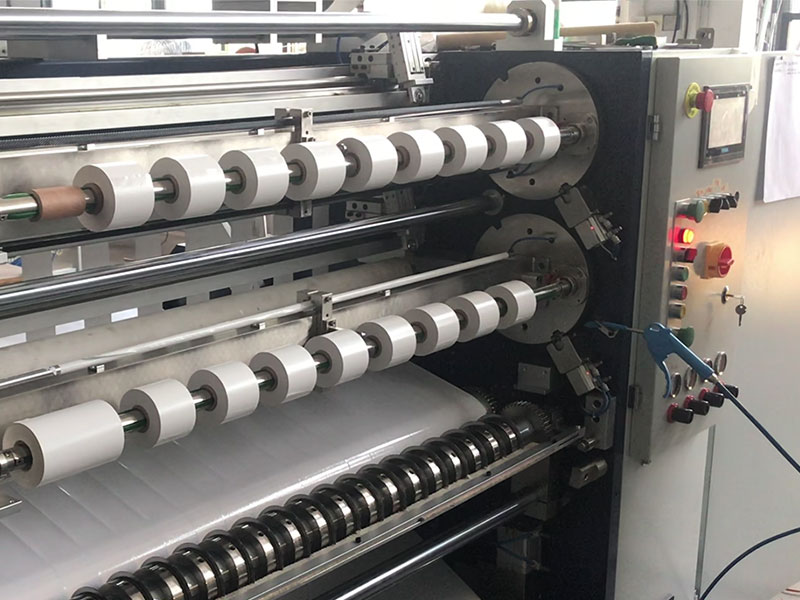
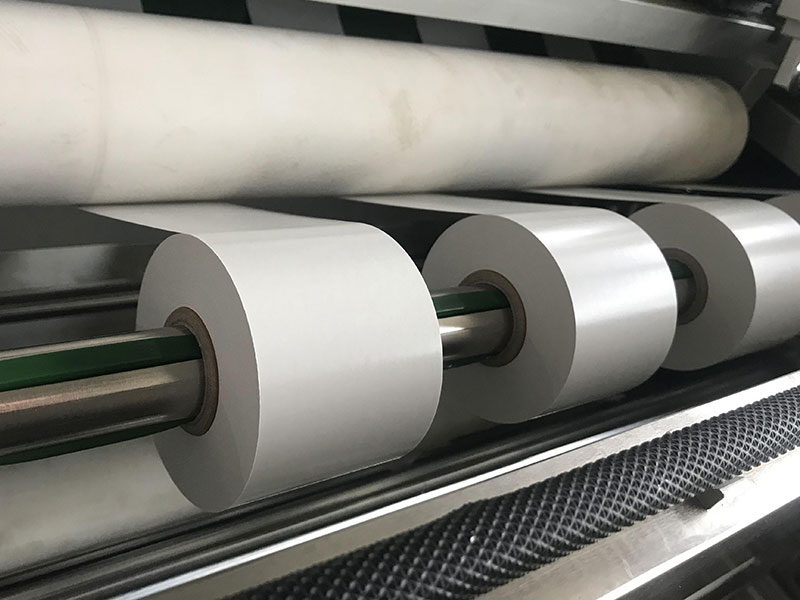
The basic task of the single-sided rubber slitting machine seems simple—to slice the wide-width large roll master roll into multiple narrow small rolls. But what truly demonstrates the value of equipment is its ability to maintain smooth cuts, tight coiling, non-sticking, and no deviation during high-speed operation. Its functional design revolves around this goal.
High-precision slitting and correction control are the primary functions. The equipment uses circular or flat blades to cut materials longitudinally, and in conjunction with the edge tracking or line correction systems in the unwinding stage, it ensures that the width tolerance of the finished product after slitting is kept within the process limits. For special tapes used in the electronics industry, precision requirements are often even stricter. Ordinary packaging tapes typically have tolerances around 0.2mm ±, while precision electronic tapes may need to reach ±0.05mm or even higher. The quality and stability of the slitting knife directly determine whether the cut edges show jagged edges, brushing, or glue overflow.
Tension and volume management are equally crucial. The substrate and adhesive layer of single-sided tape are extremely sensitive to tension: excessive tension causes the adhesive layer to overflow under pressure after winding, causing the end face to form a "telescope" protrusion; If the tension is too low, the membrane becomes loose, and interlayer slippage leads to uneven end faces. Modern slitting machines commonly use taper tension control, reducing the winding tension as the coil diameter increases, thereby balancing the tightness of inner and outer layers with the protection of the rubber layer. For tapes with different viscosity—low-viscosity protective films tend to slip, high-viscosity foam adhesives tend to stick to the knife—equipment must also have corresponding tension adjustment and anti-stick tool solutions.
Automated operation and human-machine interaction have become standard. The PLC programmable controller combined with the touchscreen interface allows operators to set multiple slitting specifications coaxially. The system automatically adjusts the tool holder position and cutting width, significantly reducing order change downtime. Some models also integrate data memory functions to store slitting parameters for different products, facilitating quick switching of production tasks.
In addition, safety protection and ease of maintenance are integrated into the equipment design. Photoelectric induction limits, undervoltage protection, blade shaft protective covers, and other devices ensure operator safety; The design of the expansion shaft and modular tool holder simplifies the loading and cleaning processes.
2. Application scenarios: from packaging lines to electronics workshops
The applicability of single-sided rubber slitting machines is based on their broad compatibility with materials and specifications. A well-commissioned piece of equipment can switch between different industries and handle a wide range of tasks, from conventional carton sealing tapes to specialty industrial tapes.
The packaging and logistics sector is the most fundamental application scenario for single-sided rubber slitting machines. BOPP carton sealing tape, masking tape, kraft paper tape, and others consume large amounts in such scenarios, so the requirements for slitting speed and efficiency take precedence over extreme precision. High-speed slitting machines on such production lines can reach cutting speeds of several hundred meters per minute, meeting the delivery needs of large orders. After slitting, the narrow rolls enter the packaging process directly or circulate as goods, and the neatness of the end face affects the smoothness of the downstream automatic carton sealing machine.
Electronics and precision manufacturing have set higher requirements for slitting quality. PET protective films, polyimide tapes, conductive tapes, and others used in electronic products are often extremely narrow, have high material value, and are extremely sensitive to trimming cleanliness. If the cut edges have burrs or adhesive residue, they may contaminate the cleanroom environment or cause poor adhesion. Such scenarios typically use servo-driven high-precision rotary blade slitting machines and require anti-static devices to address the issue of static adsorption in film-type materials. The slitted tape is used for mobile phone assembly, display module lamination, flexible circuit board protection, and other processes.

The automotive and industrial tape sector tests the material adaptability of equipment. Materials such as automotive wiring harness tape, foam tape, and VHB super-strength tape are highly adhesive and thick. During slitting, the adhesive layer easily adheres to blades, forming "glue lumps" that tear the substrate. For these materials, slitting machines require specially coated tools or online lubrication devices, and the winding tension must precisely match the elastic shrinkage characteristics of high-viscosity adhesive to prevent core deformation or glue overflow. Additionally, although masking tape used for automotive spray painting masking has low adhesion, the paper substrate is fragile, requiring stable tension control and a soft start function for the reel.
Medical and hygiene material slitting scenarios focus more on cleanliness and consistency. Medical single-sided tapes (such as breathable tapes and band-aid tapes) have additional requirements for the sanitary conditions of the cutting environment; equipment must be easy to clean and disinfect, and fiber dust must not be shed during the cutting process. The consistency of slitting width directly affects the specification consistency and user experience of end products.
It is worth noting that the applicable range of single-sided tape slitting machines is not unlimited. It mainly targets longitudinal slitting of membranes, not transverse cutting of sheets. If the material is extremely sticky and lacks release paper isolation, or if the substrate is too soft and lacks support, the difficulty of slitting increases significantly, and it is necessary to fully communicate material characteristics with equipment manufacturers during the selection stage.
Conclusion
The single-sided rubber slitting machine occupies a mid-stage stage in the adhesive product industry chain, and its functional level directly reflects the quality consistency of end products. From the neatly stacked packing tape in the packaging warehouse to the millimeter-level precision of the protective film roll on the electronics production line, behind it is the precise coordination of the slitting machine's tension, tools, and deviation correction system. For manufacturers, understanding the functional boundaries and scenario adaptation logic of slitting machines is a prerequisite for avoiding the common dilemma of "buying equipment but not using it well." When selecting models, first sort out the viscosity, thickness, and precision requirements of your own materials, then match them with corresponding control configurations, which is often more practical than simply pursuing high parameters.
 How can single-sided adhesive slitting machines improve belt slitting efficiency? Key factor analysis
 What is a single-sided adhesive slitting machine? A complete explanation of its working principles and applicable scenariosSingle-sided Adhesive Slitting Machine Maintenance Schedule (Recommended to Save)Common faults and quick troubleshooting guide for single sided adhesive slitting machinesHow to select a single sided adhesive slitting machine? Five key points


 English
 Deutsch
 Français
 Español
 Português
 日本語
 русский
 한국어
 عربي
 ภาษาไทย
 Tiếng Việt
 Italiano
 Single Sided Adhesive Slitting Machine