
In the solar film industry, material costs account for a significant proportion of total expenses. The composite material waste rate of traditional slitting processes once reached as high as 15%-25%, and in today's increasingly competitive environment, the industry's average loss rate still hovers between 5% and 8%. In other words, for every 100 rolls of finished film, 5 to 8 rolls of value silently disappear during the slitting process.
This is not alarmism. A poorly performing slitting machine causes comprehensive, all-encompassing waste—increased edge allowance due to poor slitting accuracy, unstable tension causing film rolling, wrinkling, and scrapping, and repeated trial cutting losses during order changeover and debugging—each item erodes the company's profits. Conversely, this also means huge room for improvement: reducing the loss rate from the industry average of 5%-8% to below 3% is not an unattainable goal. The three key points for choosing the right slitting machine are the key to unlocking this cost-saving door.
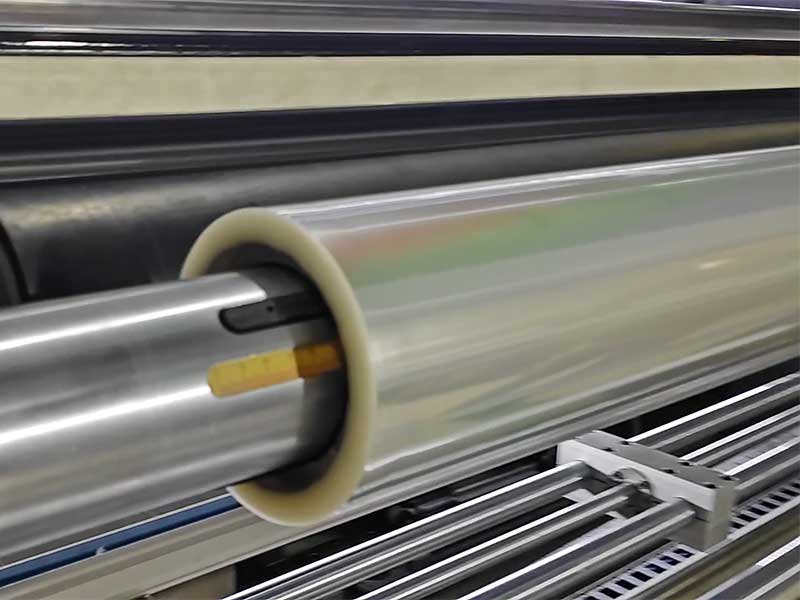
First: Relentless Tension Control — the "soul" of the slitting machine
Tension control is the core technical indicator of the slitting machine, directly determining whether the film material deforms, wrinkles, or stretches during the slitting process. Many seemingly "inexplicable" scraps stem from uncontrolled tension.
The key difference lies in whether the loop is closed or open. Open-loop control relies on operator experience preset tension values and cannot automatically adjust based on the actual state of the material during operation, making it especially unfriendly for inexperienced beginners. The closed-loop tension control system uses sensors to monitor film tension in real time, automatically adjusting the unwinding and rewinding torques, and can keep tension fluctuations within a minimal range. A slitting machine equipped with fully automatic closed-loop tension control can eliminate film roll stretching, deformation, wrinkling, and scrapping caused by tension issues at the source—for high-value products like optical-grade solar films, this configuration is almost a "must-have."
Selection Advice: Regardless of your budget, prioritize models equipped with closed-loop tension control systems. For business handling PPF (paint protective films) or high-end magnetron sputtering films, it is recommended to choose imported brand tension sensors, whose precision directly determines the safety factor of expensive materials.
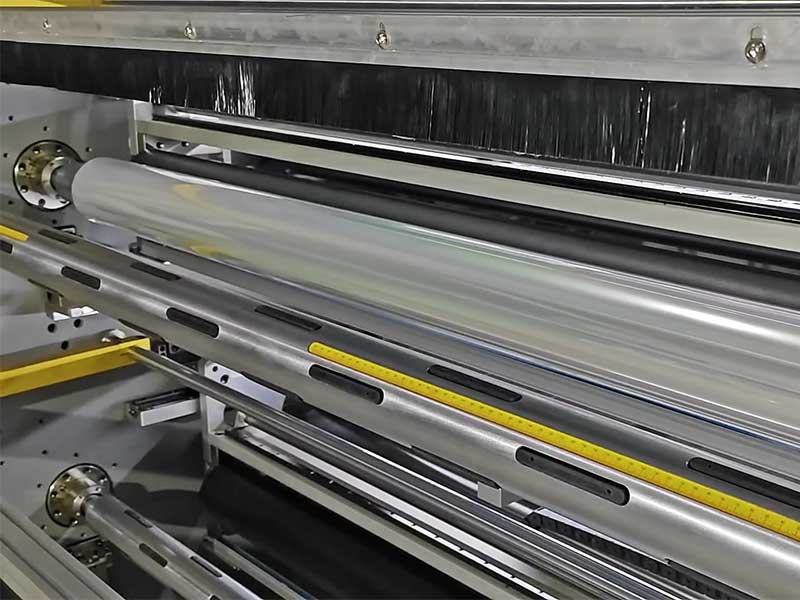
Second: Calculate the accuracy account—a difference of microns, a difference of profit
Slitting precision is another easily underestimated metric. The width tolerance of ordinary equipment is around ±0.2mm, while high-precision models can compress this value to within ±0.05mm. What does this 0.15mm difference mean?
This means that while ensuring the finished product dimensions are met, high-precision equipment can significantly reduce trimming allowances. For production lines that consume millions of yuan worth of raw materials each month, every 1 percentage point increase in output rate can add over a hundred thousand yuan in net profit annually. Another value of high precision lies in the number of slitting passes—the higher the accuracy, the more slitting can be done simultaneously, multiplying the output per pass.
In addition, the neatness of the roll is also worth noting. If the finished roll after slitting shows a "telescope" shape (protruding edges) or the core is loose, it will cause difficulties in unwinding during subsequent film application and may even cause the entire roll to be scrapped. The neatness of the winding end face of high-precision equipment itself acts as an invisible guarantee of quality.
Selection recommendation: Accuracy parameters should not be based solely on the manufacturer's rated values; be sure to use your own film materials for on-site sample testing to measure the consistency of slit width and cut flatness. At the same time, attention should be paid to the configuration of the polarization device (EPC), as photoelectric sensors typically achieve correction accuracy within ±0.1mm.
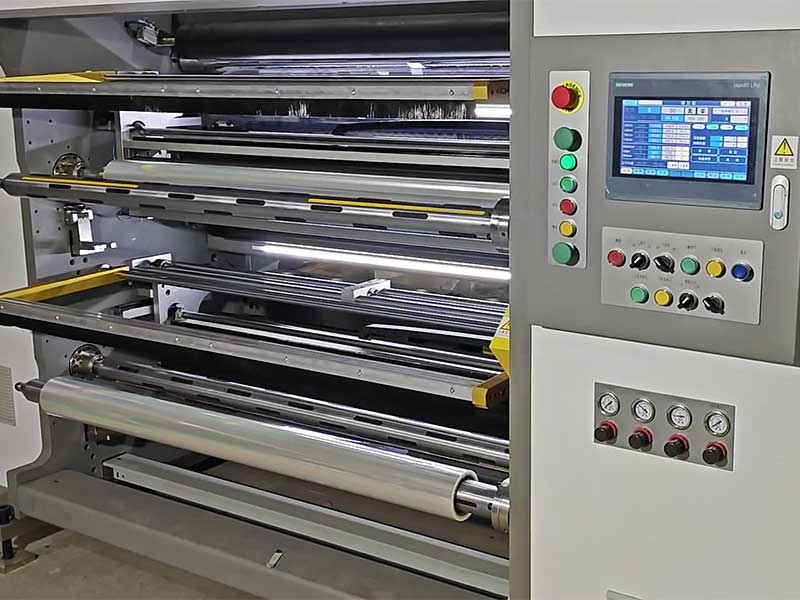
Point 3: Relevant — Film material characteristics determine the process route
Different types of solar films have vastly different requirements for slitting machines. Using equipment used for processing ordinary automotive film to cut PPF is like having a tailor cut leather with scissors.
Ordinary automotive film (PET substrate): Width is usually within 1.52m, can be cut with a circular blade, offering high cost performance. However, if magnetron sputtering films are involved, ordinary tools wear out very quickly and should be upgraded to carbide or diamond-coated tools.
Construction film: Width can reach over 1.8-2m, with a thicker film layer, requiring higher rigidity and tension stability of the slitting machine body. It is recommended to use surface winding to ensure neat large rolled finished products.
PPF (Paint Protective Film): highly elastic, with a rubber layer, easily stretched and deformed or to form glue fibers during slitting. These materials must be made from flat blade or air knife slitting machines, equipped with dedicated anti-stick coated blades, and the precision of tension control is of utmost importance.
Selection Suggestion: Identify the main types of membranes you process, and match according to the logic of 'film type determines process, width determines specifications, precision determines grade, budget determines automation.' There's no need to blindly pursue the most expensive configuration, but you must "not compromise" on the two core points of tension control and tool quality.
Return on investment: the "ledger" of a good piece of equipment
Take a company that consumes 1 million yuan in solar film raw materials per month as an example: the comprehensive scrap rate for traditional equipment is about 3%-5%, meaning materials worth 30,000 to 50,000 yuan per month become waste; High-precision slitting machines can keep the scrap rate below 1%. Just saving on materials alone can increase monthly profits by 20,000 to 40,000 yuan, totaling 240,000 to 480,000 yuan per year. Combined with increased capacity from improved efficiency, reduced labor costs, and higher customer satisfaction from stable product quality, a high-quality slitting machine can fully recoup its investment within 1-2 years through cost savings.
Selecting a solar film slitting machine is essentially a decision about "precision" versus "fit." Tension control sets the lower limit of scrap rate, slitting accuracy sets the upper limit of material utilization, and process route matching determines whether the equipment can be "used to the fullest." Choosing these three points correctly saves 20% of film material loss annually. This is not marketing talk but a real economic investment.
Solar Film Slitting Machine: How High-Precision Cutting Safeguards Film PerformanceSolar film slitting machine: slitting and rewinding processAccurate and consistent: Tension control and closed-loop correction full analysis of the high-precision solar film slitting machineIs the solar film slitting machine too electrostatic? Try this grounding solutionIs the solar film slitting machine not rolling tight? Check out these four reasons


 English
 Deutsch
 Français
 Español
 Português
 日本語
日本語 русский
 한국어
한국어 عربي
عربي ภาษาไทย
 Tiếng Việt
 Italiano
 Thermal Transfer Ribbons Packaging Machine
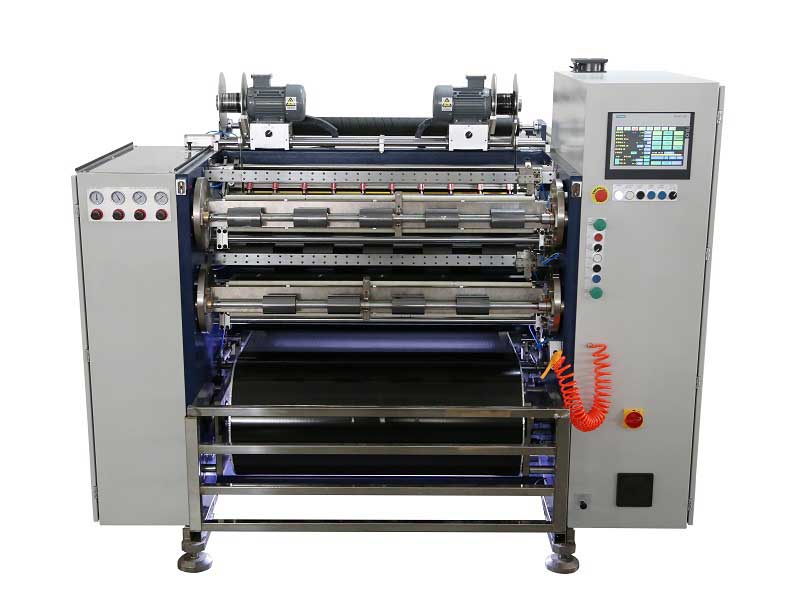 Automatic Thermal Transfer Ribbon Slitting Machine RSDS8 H PLUS
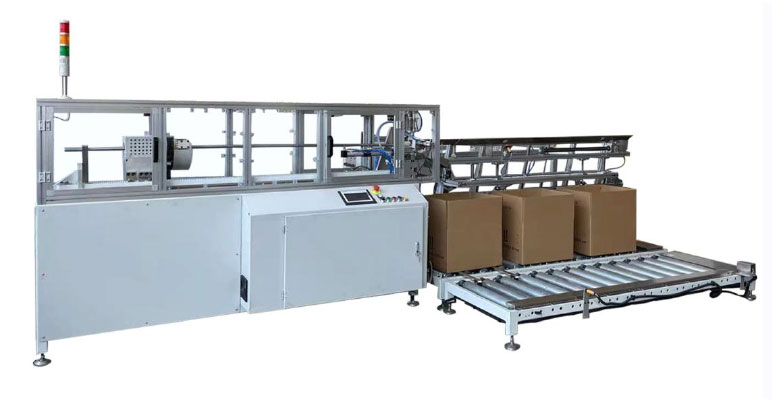 Automatic Paper Core Cutting Machine
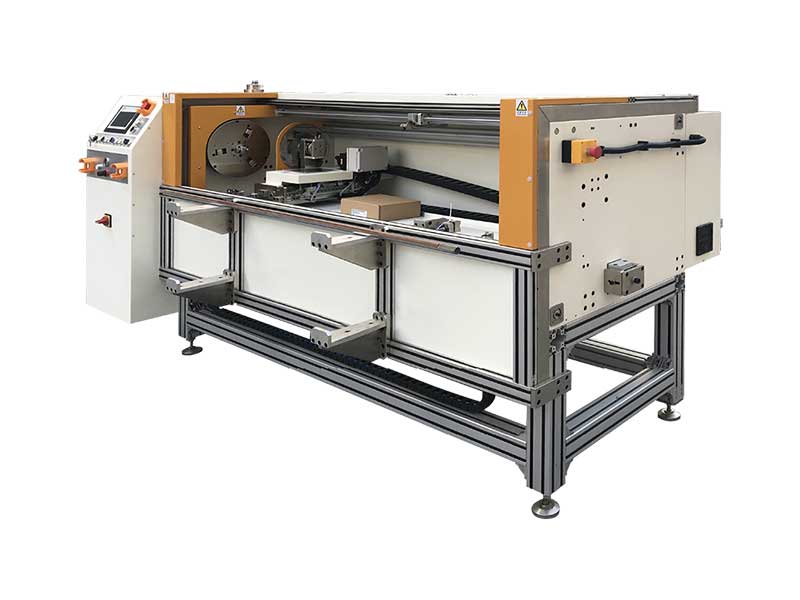 Automatic Foil Roll Cutting Machine