
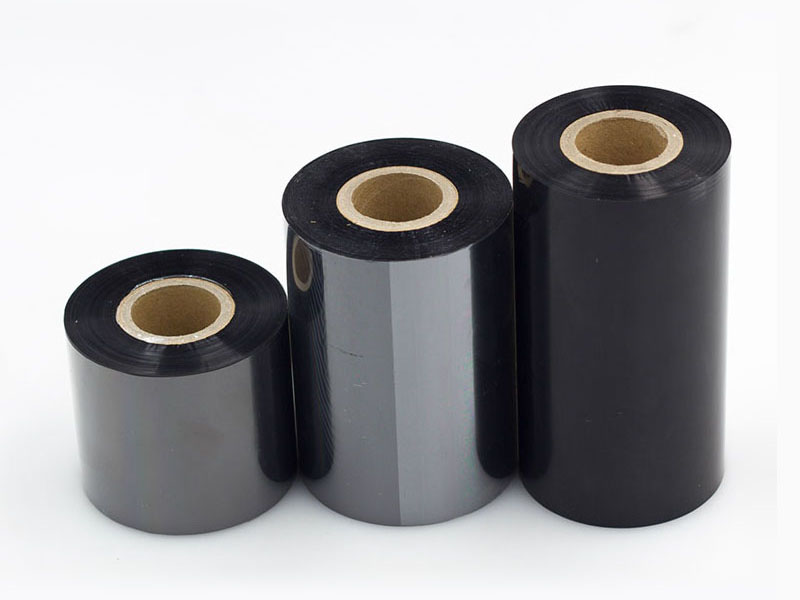
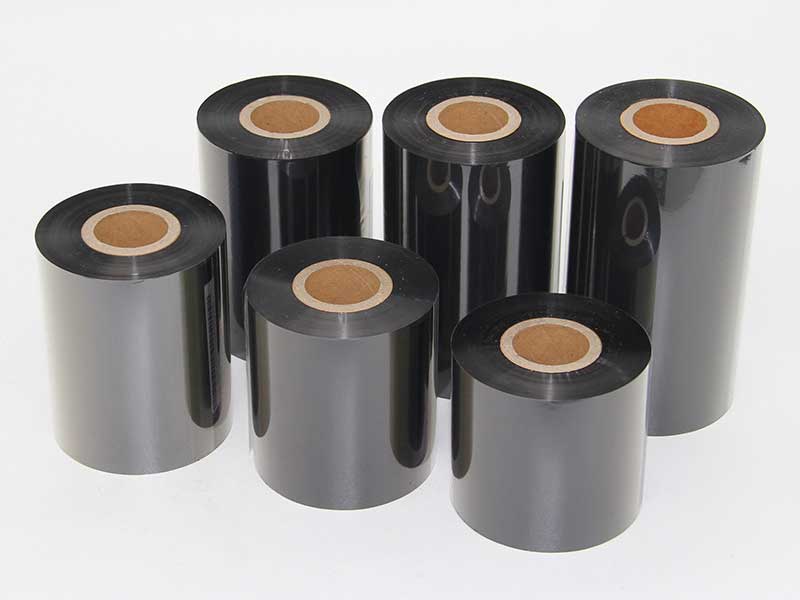
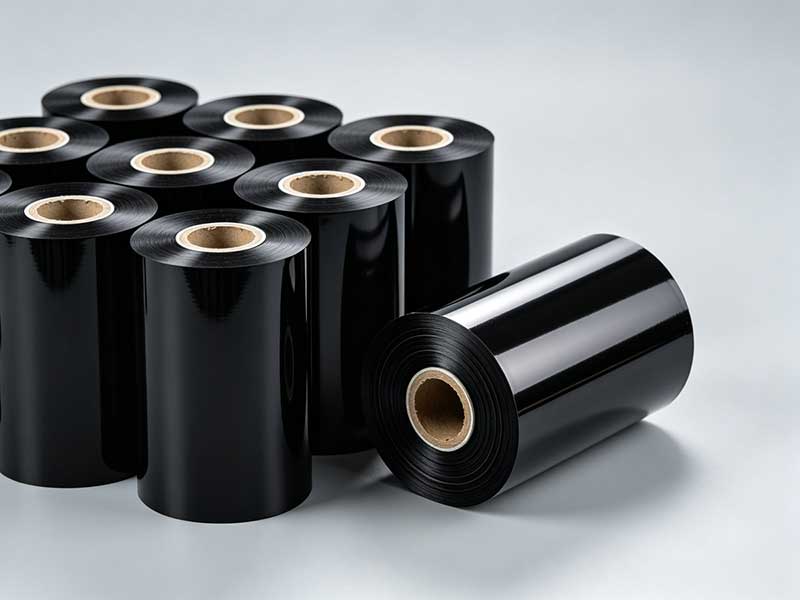
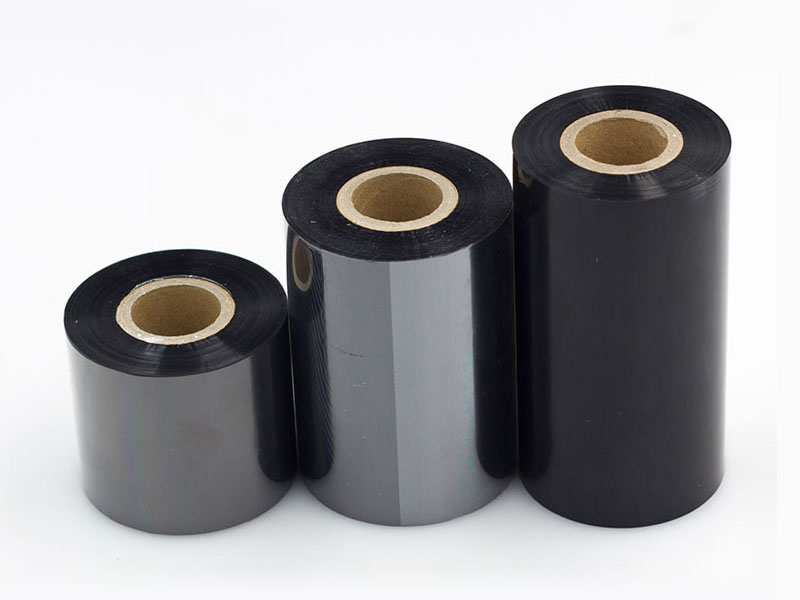
Thermal transfer ribbons consist of an ultra-thin PET base film, thermal-resistant coating, and ink layer, with a total thickness typically between 4.5 and 20 microns. Slitting is the final and most critical process that determines the quality of the finished product—a mismatched slitting machine may cause edge burrs to damage the print head, excessive width tolerances causing print displacement, or even uneven winding tension that may cause ribbon breakage. This article starts from three dimensions: accuracy, speed, and automation configuration to help enterprises make reasonable decisions when selecting models.
1. Slitting Precision: The Lifeline of Quality
Slitting accuracy is the primary indicator for measuring equipment performance, directly determining the width consistency and edge quality of the finished ribbon.
Accuracy level reference
| Accuracy grade | Tolerance range | Applicable scenarios |
| Ordinary level | ±0.3~0.5mm | Conventional commercial labels, logistics labels |
| High precision | ±0.1mm | Precision electronic tags, general industrial applications |
| Ultra-high precision | ± within 0.05mm | Medical labels, ultra-narrow ribbon (<10mm) |
Key configurations that affect accuracy
When selecting a model, pay special attention to the following hardware configurations:
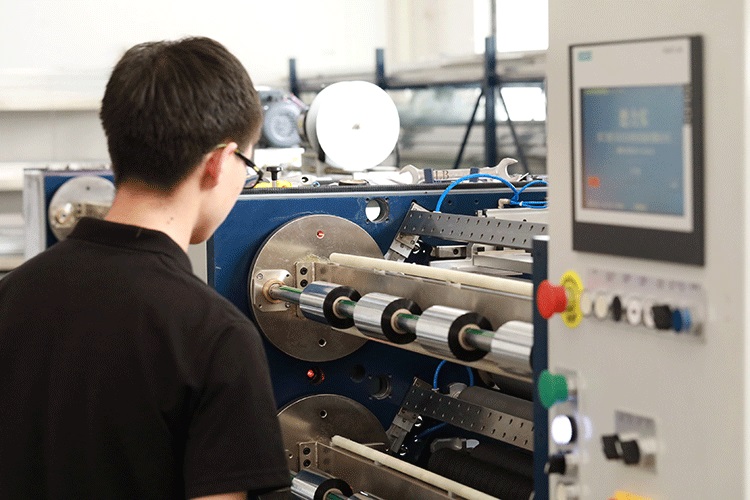
1. Tension Control System: This is the "soul" of slitting quality. Prioritize fully automatic closed-loop tension control (such as Mitsubishi PLC + servo drive), which can monitor and adjust tension in real time at each stage of unwinding, traction, and winding, with fluctuations controlled within ±2% of the set value. Unstable tension can cause ribbon stretching, deformation, wrinkling, or even breakage.
2. Rewinding Shaft Configuration: For high-end ribbon and multi-specification production, slip shafts are a must-have. Each winding unit is equipped with an independent slip ring, allowing real-time torque adjustment based on changes in roll diameter, effectively solving the issues of "loose inside, tight outside" or "core" issues. Pneumatic slip shafts offer higher control accuracy than mechanical ones, making them suitable for production scenarios where specifications are frequently switched.
3. Tool system quality: Check the radial runout of the tool shaft (controlled within 0.01mm); the smaller the runout, the neater the slitting edges. High-quality inserts (such as Germany's Schober and Japan's Tachi) not only extend lifespan but are also key to reducing burrs.
4. Correction System: Real-time detection of ribbon edge positions via CCD vision or ultrasonic sensors, automatically adjusting the belt path to prevent deviation. CCD correction is suitable for transparent/semi-transparent materials, while ultrasonic correction is suitable for opaque materials.
Model selection recommendations
Always refer to the on-site trial cut samples, not just the parameter table. Carry your own ribbon roller roll for on-site slitting, inspect end face uniformity, edge burrs, and tension fluctuations.
2. Slitting Speed: The balance between efficiency and quality
Slitting speed determines output per unit time, but you can't just look at the nominal maximum speed.
Speed rating reference
| Speed rating | Scope | Applicable scenarios |
| Low-speed economy model | 50–100 m/min | Small batch, multi-variety production |
| Medium-speed universal model | 150–250 m/min | Most commercial orders |
| High-speed production model | 300–500 m/min | Mass continuous production, with daily output exceeding 100,000 meters |
Hidden traps in speed selection
The actual usable speed is greatly affected by the ribbon material:
• Wax-based ribbon: low melting point, relatively soft texture, stable slitting at higher speeds
• Hybrid-based ribbons: higher resin ratio, usually requiring 10%~20% lower rates than wax-based ribbons
• Resin-based ribbon: The coating is hard and has low toughness, requiring operation speed 20%~30% lower than wax-based ribbons
Moreover, stability is more important than maximum speed—smooth operation at common speeds and precise start-stop control are key to efficient production. When selecting models, manufacturers are required to conduct on-site test cutting using the ribbon specifications you actually use, and observe the winding effect at high speeds.
3. Automated Configuration: From Manual Intervention to Intelligent Production
The level of automation directly affects labor costs, changeover efficiency, and scrap rates.
Automated functional grading
Basic Level (Semi-Automatic)
• Manual film introduction and bonding
• Manually set parameters
• Suitable for small-batch, multi-variety production
Advanced (fully automatic)
• Automatic feeding, slitting, and winding
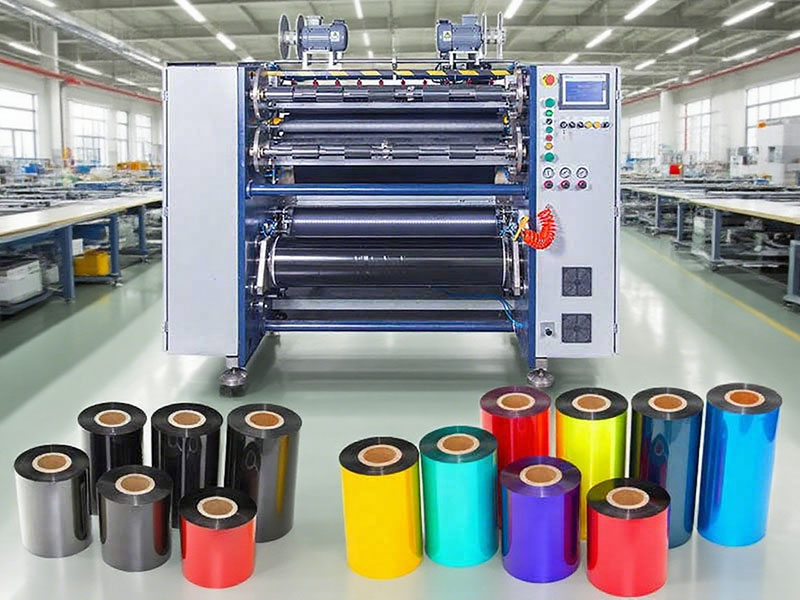
• Touchscreen presets parameters, supports recipe storage
• Automatic counting and fault self-diagnosis
• Suitable for medium to large batch standardized production
Intelligent Level (Intelligent Connectivity)
• Fully automatic loading and unloading (automatic docking of robotic arm or coil)
• AI parameters self-optimize (learning from historical data, automatically adjusting speed and tension)
• IoT integration enables real-time uploading of device status to the cloud
• Supports MES system integration for remote monitoring and production scheduling
• Suitable for large-scale, lean production enterprises
Noteworthy automation configuration
1. One-click specification change: Quickly switch slitting widths via the touchscreen, reducing model change time from 30 minutes to under 5 minutes
2. Dual-station/four-station winding: When one station is full, it automatically flips and switches, enabling continuous production without stopping the machine and greatly improving efficiency
3. Online Defect Detection: Infrared sensors monitor ribbon defects (pinholes, uneven coating) in real time, automatically marking or removing defective sections, reducing the defect rate to below 0.5%.
4. Automatic waste removal system: Waste edge automatically recovers, preventing waste edge from getting tangled on finished rolls, with material utilization rate exceeding 99%.
IV. Comprehensive Selection Action Checklist
1. Clarify requirements: List the main types of ribbons for slitting (wax-based/mixed/resin-based), commonly used width ranges, daily capacity, and precision requirements
2. Parameter locking: Request detailed technical parameters from at least 3~5 suppliers, and verify core indicators such as accuracy, speed, and unwinding/rewinding diameter one by one
3. On-site trial cutting verification: This is the most important step—the belt is loaded onto the ribbon busbar for on-site slitting, checking edge quality under different width specifications and stability during high-speed start-stop times
4. Examine core configuration: Pay special attention to tension control methods (closed-loop/open-loop), winding shaft type (slip shaft/standard coupling), and the brand of the correction system
5. Evaluate after-sales service: Clarify warranty period, installation and commissioning support, after-sales response time (e.g., 4-hour response, 24-hour on-site service), and inventory of consumable parts
6. Comprehensive cost considerations: Not only consider the purchase price, but also evaluate material waste rate, labor costs, and maintenance expenses. High-precision equipment can typically reduce scrap rates by 3~8%, offering considerable long-term returns
Conclusion
Choosing a Thermal transfer ribbon slitting machine is essentially a strategic decision made by the company based on its product positioning and production model. For large-scale production of wax-based ribbons, priority should be given to high-speed models; Resin-based ribbons or precision electronic tags should prioritize accuracy and tension control; For multi-variety, small-batch orders, it is recommended to choose smart models with a high degree of automation and flexible model changeover.
There is no absolute "best" equipment, only the "most suitable" choice at the current stage of development. It is recommended that during the selection process, actual needs should be the starting point, on-site trial cutting should be the basis for decision-making, avoiding pitfalls such as inflated parameters and configuration shrinkage, so that the slitting machine truly becomes a stable and reliable "precision provider" on the production line.
 Fully automatic ribbon slitting machine: efficient, stable, and labor-saving
 How to choose a color ribbon slitting machine? Three core parameters to understand
 Detailed explanation of the meter-counting shutdown function of the ribbon slitting machineIntroduction to the automatic offset correction function of the ribbon slitting machineProduction efficiency improvement plan for ribbon slitting machines


 English
 Deutsch
 Français
 Español
 Português
 日本語
日本語 русский
 한국어
한국어 عربي
عربي ภาษาไทย
 Tiếng Việt
 Italiano
 Thermal Transfer Ribbons Packaging Machine
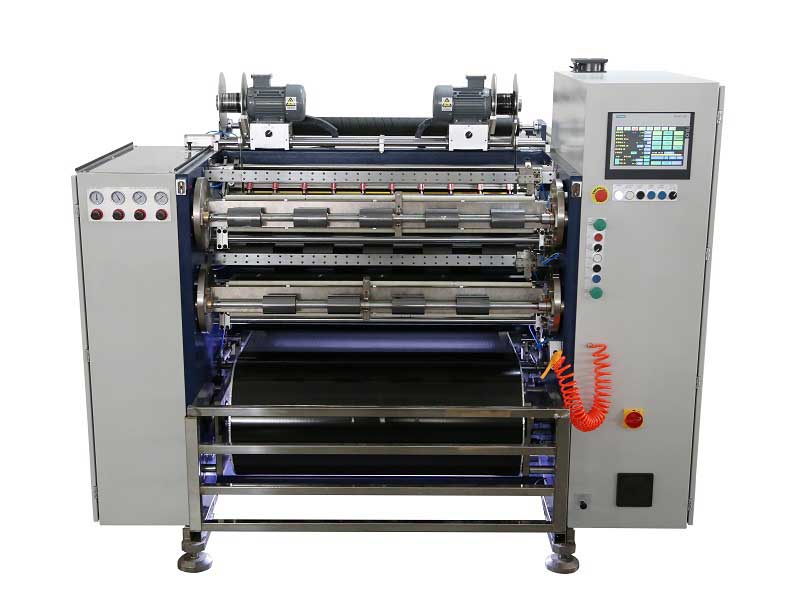 Automatic Thermal Transfer Ribbon Slitting Machine RSDS8 H PLUS
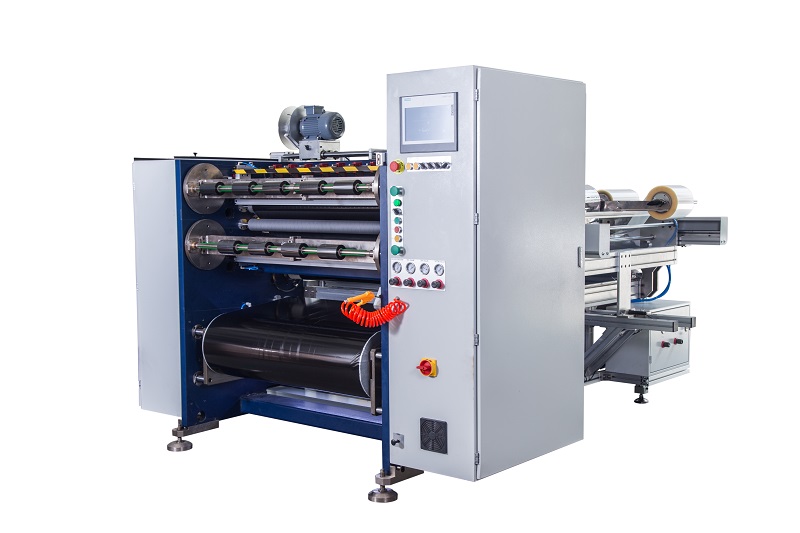 Semi Automatic Thermal Transfer Ribbon Slitting Machine RSDS5 PLUS
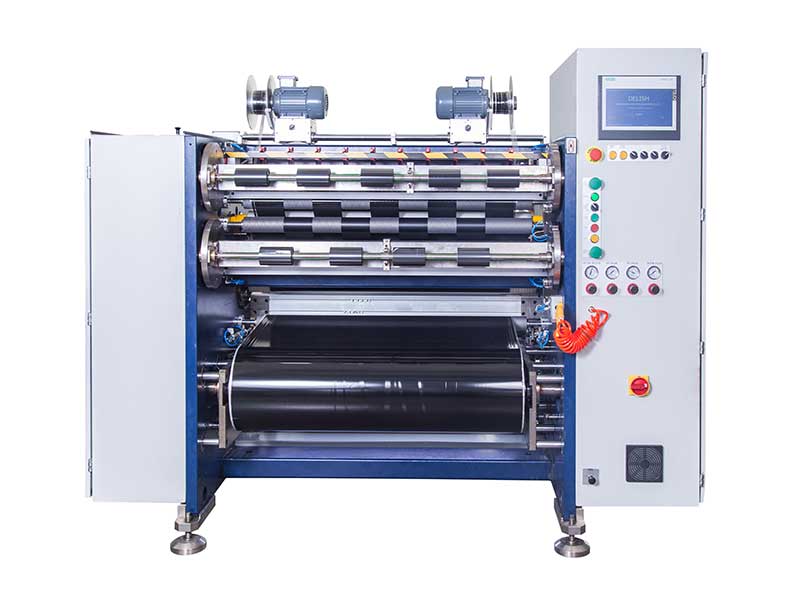 TTR Slitting Machine