
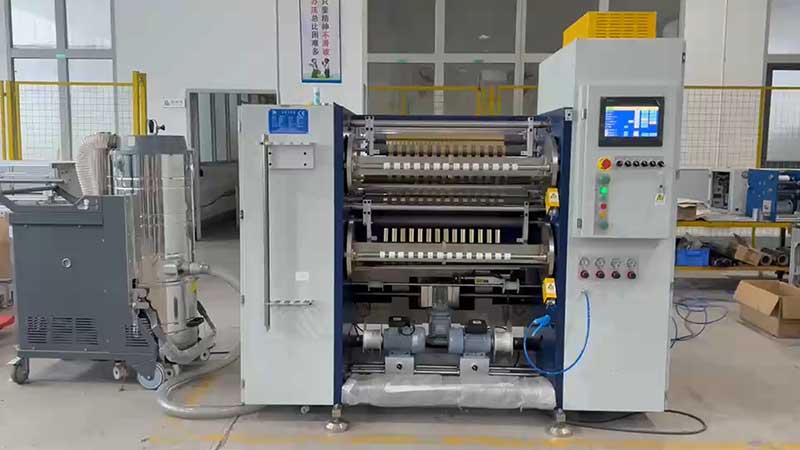
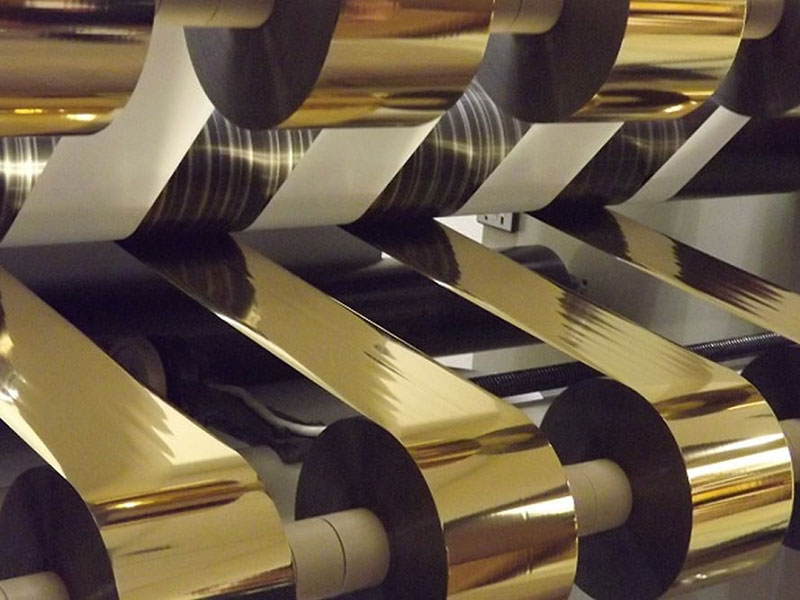
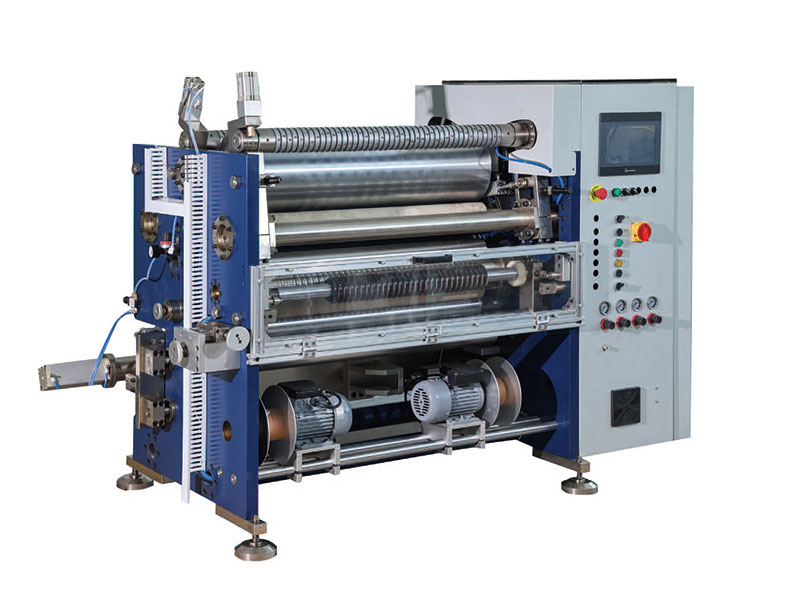
The hot stamping foil slitting machine has long been in a somewhat awkward position: it is an indispensable preparatory step in hot stamping but rarely becomes the focus of technical discussions. For a long time, the industry's expectations for slitting machines have remained at the level of "cutting straight and rolling neatly." However, as foil foil thickness approaches physical limits, order fragmentation becomes the norm, and material cost pressures continue to rise, the technical content of the slitting process is being re-examined. Slitting machines are no longer just a "supporting role" on the hot stamping production line; they are becoming a key node determining material utilization and quality stability.
In the coming years, the development trajectory of hot stamping foil slitting machines will clearly point in three directions: accuracy indicators will move from macro to micro, control logic will shift from experience to algorithms, and equipment roles will move from isolated islands to nodes.
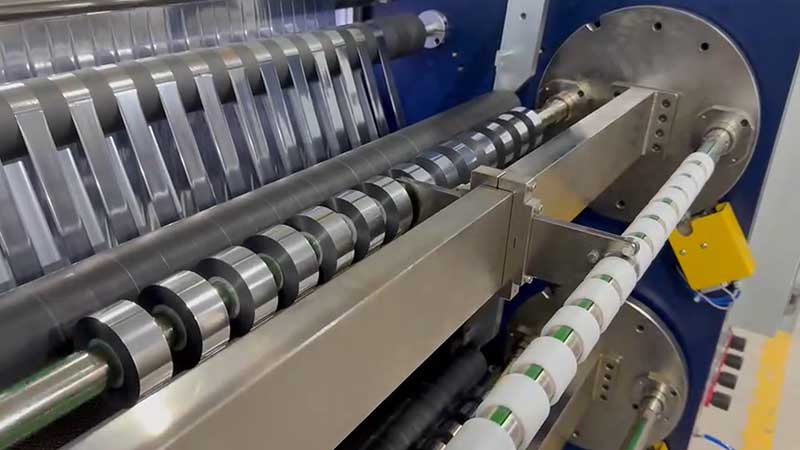
Precision: a hard threshold from "silk level" to "micron level."
The thickness of hot stamping foil is usually between 4μm and 30μm, with a base film of PET, and the surface is covered with a release layer, tinted layer, aluminum plating layer, and adhesive layer. This multilayer composite structure is extremely sensitive to mechanical stress—if the tension is slightly higher, the substrate stretches and deforms, and the coating cracks; Slightly less tension, loose rolling, and uneven ends. Traditional slitting equipment ± an error level of 0.5mm, which can barely handle ordinary packaging hot stamping scenarios. However, for high value-added orders such as holographic positioning hot stamping and fine line hot stamping, a 0.1mm deviation is enough to make the anti-counterfeit micro-patterns blurry and incomplete.
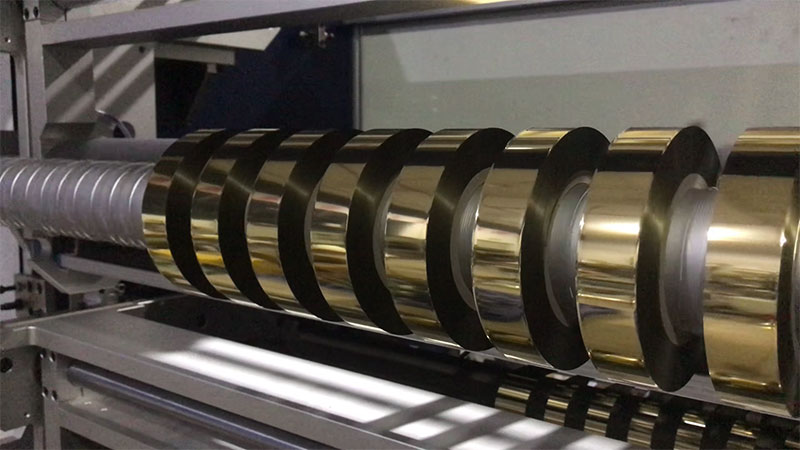
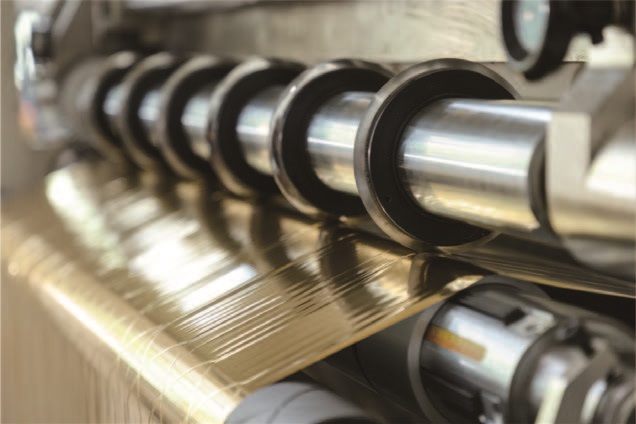
The mainstream standard for 2026 has already pushed slitting accuracy to within ±0.03mm, with some top-tier equipment reaching ±0.01mm to ±0.02mm. Behind this leap is the co-evolution of fully closed-loop servo tension control, carbide round cutters, and high-rigidity tool shafts. Blade runout is controlled within 0.005mm, cut smoothness reaches Ra≤0.4μm, cutting methods truly shift from "tearing" to "shearing," and burrs and dust are eliminated at the physical level. For fields where foil stamping precision is nearly demanding, such as cigarette packs, liquor labels, and cosmetic packaging, micron-level slitting is shifting from a "bonus" to an "entry requirement."
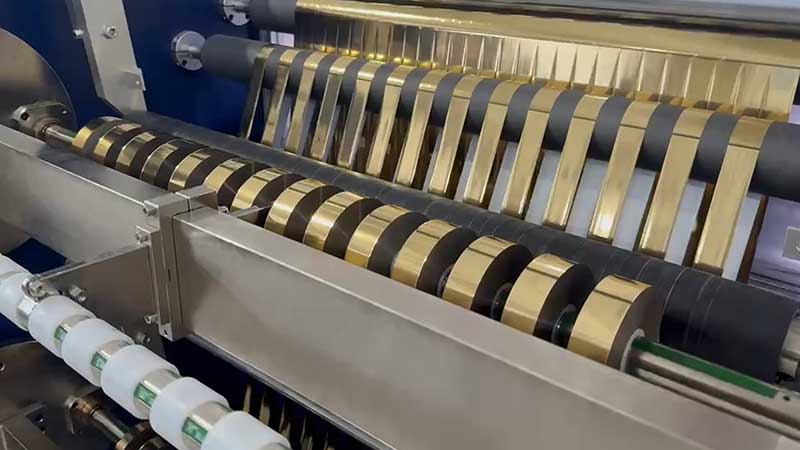
Algorithm: When the slitting machine starts to "think"
Accuracy improvement solves the problem of "cutting well," while algorithms address "whether cutting is cost-effective." Hot stamping foil is a typical high value-added material; every percentage point of margin material waste reduction corresponds to real cost savings.
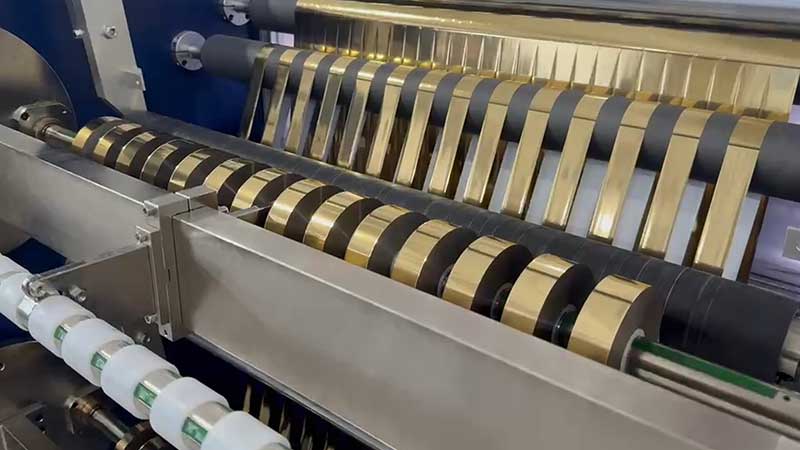
Traditional tool layout relies on the experience of experienced craftsmen, often leaving a large safety margin to ensure finished product quality, with material utilization rates hovering between 85% and 90%. The introduction of AI tool layout algorithms is changing this situation: the system automatically solves the optimal slitting combination based on the width of the main roll and order requirements. Taking the 1500mm wide original roll as an example, the algorithm can produce a scheme of "10mm ×100 strips + 5mm ×100 strips," leaving only 2mm of edge material, with utilization rate jumping to over 98%. Meanwhile, the machine vision system detects scratches, bubbles, and uneven plating on the foil surface with over 99.5% accuracy, actively avoiding defect locations during slitting to prevent defects from getting caught in the finished roll. Integrating defect avoidance, tool layout optimization, and predictive maintenance, medium-sized processing plants can save over 750,000 yuan in material costs annually.
Deeper changes occur at the control architecture level. Traditional PID tension control lags in response to high-speed operation at 500m/min, making it difficult to meet the sensitive characteristics of hot stamping foil. Edge computing delegates computing power to the device side, combined with a direct-drive torque motor and a "feedforward + dual closed-loop" control architecture, compressing the delay from tension adjustment instructions to torque output to within 5ms, stabilizing tension fluctuations within ±0.5%. This means that slitting machines are no longer machines that passively execute cutting commands, but have become intelligent entities with real-time perception and dynamic decision-making capabilities.
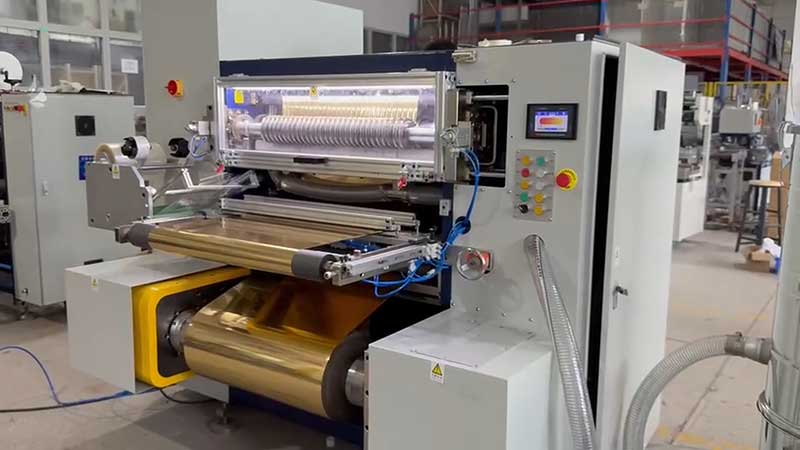
Flexibility: Fragmented orders driving a change revolution
The downstream demand structure for hot stamping foil is undergoing significant changes. Traditional large-batch orders for cigarette packs and liquor labels still exist, but micro-text hot stamping on luxury packaging, short stamping on limited-edition products, and small-batch customization of personalized labels are pushing order specifications from just a few to dozens, with single batch lengths drastically shrinking from tens of thousands to hundreds or even tens of meters.
This places almost demands on the order change speed of the slitting machine. If each specification change requires half an hour of downtime for debugging, the profit margin for small-batch orders will be completely devoured. The automatic tool placement system uses servo motors to drive the tool holder for automatic positioning, reducing order change time to under 5 minutes while avoiding manual misalignment. Production parameter formula management allows operators to preset and one-click call tension, speed, and knife compression parameters for foil foil of different materials, widths, and thicknesses, transforming machine adjustment experience from "master craftsman's muscle memory" into replicable and inheritable digital assets. Flexibility is no longer just a bonus, but a fundamental skill for devices to survive in a fragmented market.
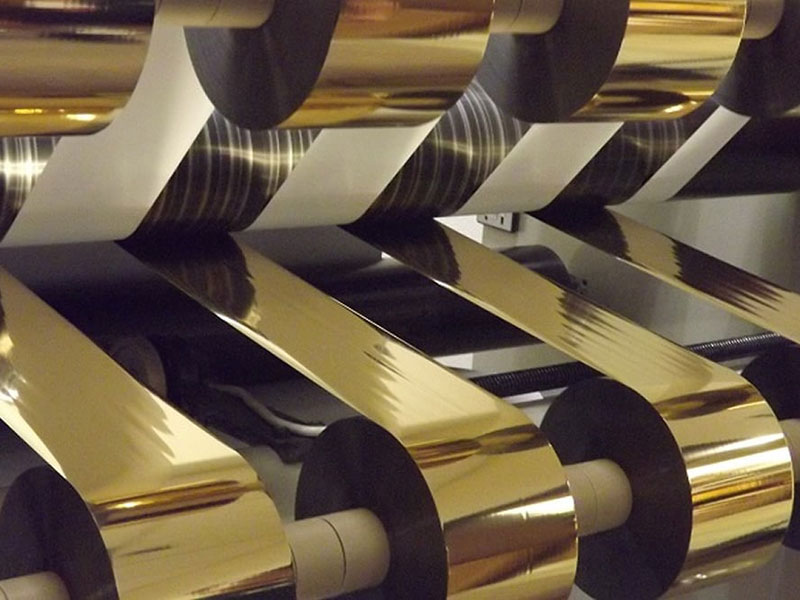
Connectivity: Slitting machines are no longer information silos
Within the landscape of smart factories, the position of slitting machines is being redefined. In the past, it was an isolated processing device, with production data recorded manually and equipment status determined by inspections. In the future, it needs to become an active node in the production line data flow.
Devices supporting OPC UA or MQTT protocols can upload production progress, alarm records, and energy consumption data in real time to MES or ERP systems. Predictive maintenance continuously monitors tool wear and bearing status through vibration, current, and temperature sensors, pushing maintenance reminders before faults occur to nip unplanned downtime in the bud. For hot stamping processing enterprises, this means the slitting process can be aligned with the actual consumption of downstream hot stamping machines, reducing intermediate inventory backlog; This also means that the complete processing history of each roll of finished foil can be traced, providing data support for quality anomaly analysis. Slitting machines have shifted from being the "end of execution" to the "data source," significantly expanding the boundaries of their value.
Conclusion
The evolution of hot stamping foil slitting machines reflects a common pattern in the entire field of precision machining: when material costs are high enough, precision requirements are strict enough, and order structures are fragmented enough, any process once considered an "auxiliary link" will be pushed to the forefront of technological upgrades. Micron-level precision addresses the quality bottom line, AI algorithms and edge computing address cost ceilings, and flexible order changeover and data interconnection address market adaptability.
Future slitting machines will not be the sole selling point of "faster speed." What truly matters is whether it can keep tension fluctuations within ±0.5% at 500m/min, whether it can reduce downtime during order changes to the time it takes to drink a cup of coffee, and whether it can accurately track the direction of every millimeter before cutting the master roll. Cutting accurately is the ticket; calculating well is the moat.
 Industry application cases of hot stamping foil slitting machines
 Operating steps and tips for hot stamping foil slitting machines
 Tension control technology for hot stamping foil slitting machinesMethods to improve the efficiency of hot stamping foil slitting machines
 Detailed explanation of the automation functions of the hot stamping foil slitting machine


 English
 Deutsch
 Français
 Español
 Português
 日本語
 русский
 한국어
 عربي
 ภาษาไทย
 Tiếng Việt
 Italiano
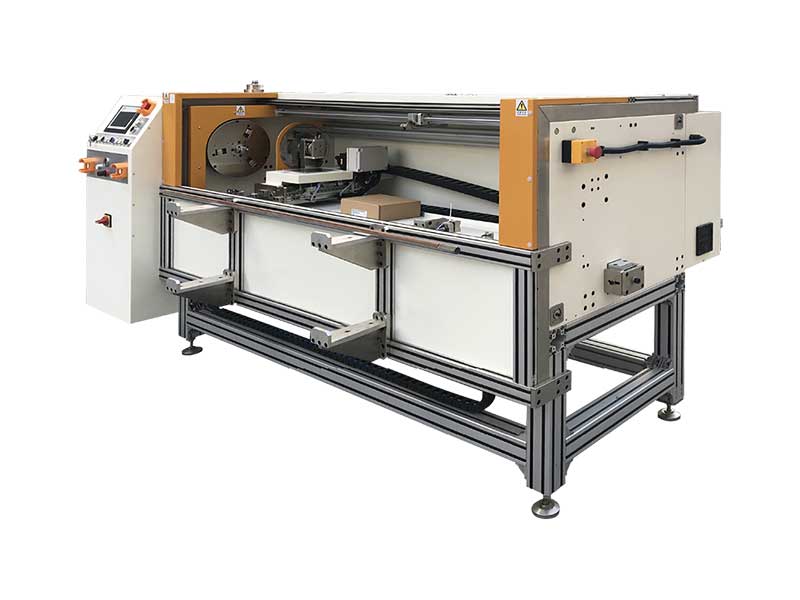 Automatic Foil Roll Cutting Machine
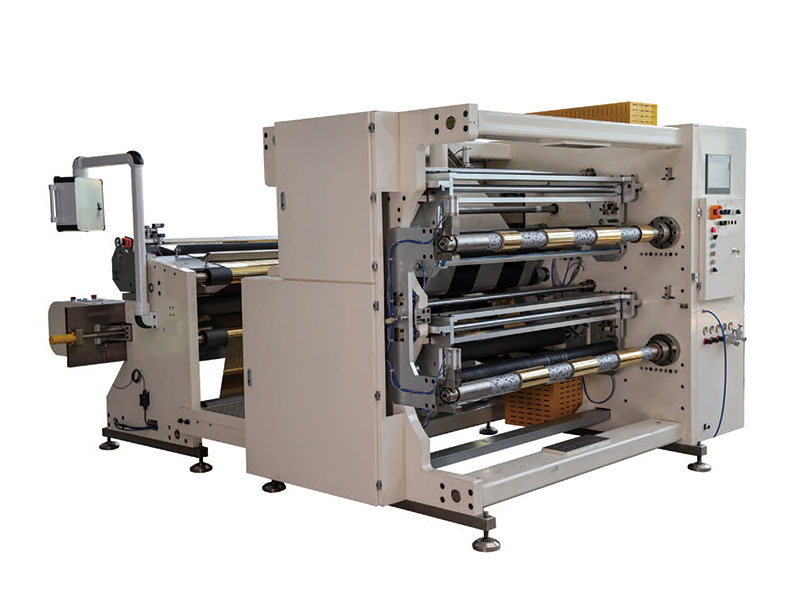 1400mm Hot Stamping Foil Slitting Machine
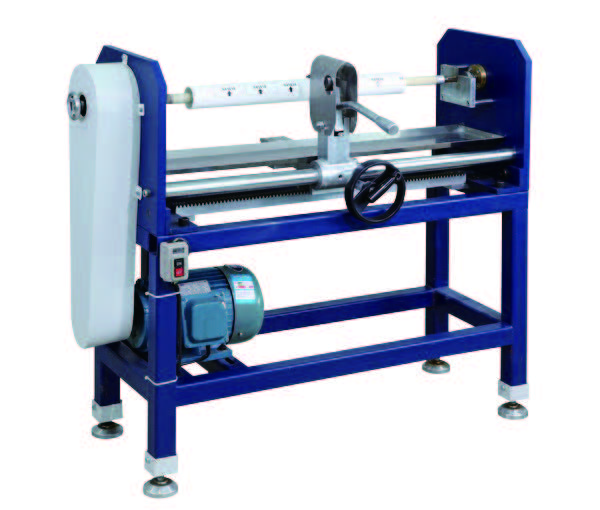 Manual Foil Roll Cutting Machine
 800mm Hot Stamping Foil Slitting Machine