
In the production of thermal transfer ribbons, the slitting process is the core link determining the quality and cost of the finished product. Industry practice shows that companies using traditional slitting methods generally have a scrap rate between 5% and 8%, but through systematic technology and management upgrades, reducing the scrap rate by more than 30% is entirely feasible. Below, specific solutions are proposed from four dimensions: equipment precision, tension control, process optimization, and material management.
1. Analysis of the main sources of scrap rates
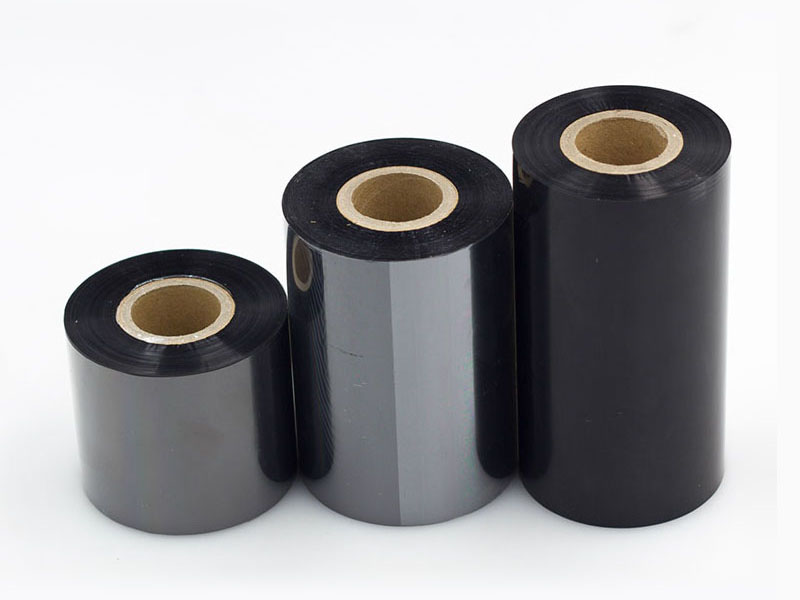
Ribbon slitting scrap mainly focuses on three types of issues:
End face defects caused by misalignment are the most prominent issue in narrow-band slitting. When the slitting width is less than 10mm, the ribbon's lateral rigidity is extremely weak, making it highly sensitive to tension fluctuations and mechanical deviations. At best, it causes uneven edges and a 'tower-shaped' roll, while at worst, the entire roll is scrapped.
Burrs and edge damage directly affect printhead lifespan. Factors such as blade wear, mismatch between slitting speed and material, and electrostatic adsorption of debris can all cause fibrous burrs at the ribbon edges.
Waste of tailings has long been regarded as a necessary loss. When the slitting coil approaches the hollow paper tube, the diameter decreases, causing tension instability. In the last ten or even dozens of meters of carbon ribbon, quality cannot be guaranteed, so it must be discarded.
2. Core technical solutions to reduce scrap rates
1. Fine tension control: comprehensive management from opening to retracting
Tension is the soul of the quality of the slit. Traditional slitting machines use constant tension control, but practice has shown that the tension requirements vary greatly at different stages of the slitting process.
It is recommended to adopt a three-stage gradient tension control strategy: keep the base tension stable in the unwinding area; The tension in the slitting zone is 10%-15% lower than in the unwinding area, minimizing tensile deformation of the material during cutting; The winding area uses taper control, with an initial tension of 120% of the slitting zone and a linear decrease to 80% as the roll diameter increases. For narrow slitting, the unwinding tension should be reduced to 60%-70% of conventional broad tape to prevent the ribbon from being "pulled thin" and dislodged from the slot.
During the tail material stage, when the coil diameter is less than the set value (e.g., 50mm), the "small diameter mode" should be actively switched to reduce the tension from 100N at full coil to around 30N. Combined with the taper tension curve, this effectively extends the effective slitting length and shortens the tailstock from an average of 15 meters to within 5 meters.
On the hardware side, magnetic powder clutches combined with fine-tuning mechanisms can effectively control ribbon tension during operation and reduce wrinkles; Modern high-end slitting machines use servo-driven independent winding mechanisms, with each winding unit independently controlling tension, eliminating spindle drive differences, especially suitable for ultra-narrow belt slitting with widths ≤ 6mm.
2. Deviation correction system: The core line of defense for real-time correction
Deviations are the biggest contributors to the defect rate, and systematic solutions to the problem require addressing equipment, processes, and operations.
On the equipment side, it is necessary to ensure the radial runout of the winding shaft ≤ 0.05mm, and the parallelism deviation of each guide roller <0.05mm/m. The gap between the blade and the groove should be controlled between 0.02-0.05mm, and worn blades should be replaced regularly.
The automatic deviation correction system is a key piece of equipment to prevent deviation. Photoelectric or infrared sensors detect ribbon edges in real time, and through servo-driven rollers, fine-tuning can achieve a correction accuracy of ±0.1mm and a response time of less than 0.5 seconds. Combined with ultrasonic correction systems, it can meet applications requiring extremely high end-face flatness.
On the operational side, the tape threading path must ensure that from unwinding to winding, it is absolutely perpendicular to the centerlines of each guide roller and tool groove—even a 1° deviation will be amplified at high speeds. A "narrow band slitting parameter table" is established, providing the optimal combination of curing parameters for carbon ribbons of different widths and materials, and when problems arise, a "single-variable method" is used to troubleshoot them one by one.
3. Tool and process parameter optimization: Reduces burrs at the source
Burr issues directly affect the lifespan of downstream printheads and must be controlled within 0.1%.
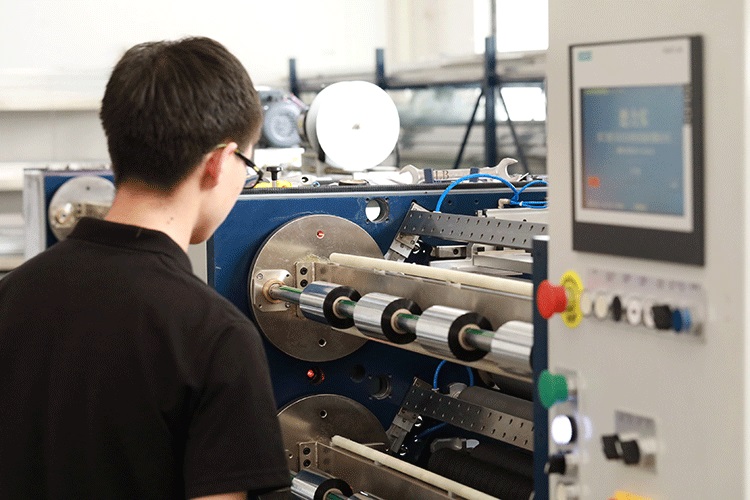
Tool selection: Use high-hardness circular blades (such as diamond-coated inserts), adjust the blade angle to 15°-20°, and use single-sided bevel cutting to reduce edge stress. Inspect the blade edge every 8 hours.
Process matching: Slitting speed must match the material. For thin ribbon (<8μm) slitting, the recommended initial speed is ≤50m/min, gradually adjusting to the optimal parameters; Brittle materials can be preheated to 40-50°C to improve cutting performance. At the same time, install static elimination rods (ion air rods) to maintain ambient humidity at 50%-60%, reducing static adsorption of debris.
4. Tailstock Management: Mining "invisible" losses
By compressing the tailstock from 15 meters to 5 meters, the proportion of tailstock in the total slitting volume can be reduced from 2.1% to 0.7%. Based on an annual output of 5 million square meters, the annual cost savings can reach 140,000 yuan.
The implementation steps include: using extended paper tubes or reusable metal cores to improve support for small roll diameters; During the tailstock stage (last 20 meters), reduce the vehicle speed from the normal 200-300 m/min to below 50 m/min; Installing a light-touch pressure roller to compensate for insufficient support at the core of the roll. The collected, surplus materials can be spliced into short-meter-sized finished rolls using a dedicated tape taping machine, which can be sold as samples or low-cost test tapes, turning waste into treasure.
3. Implementation Effects and Expected Returns
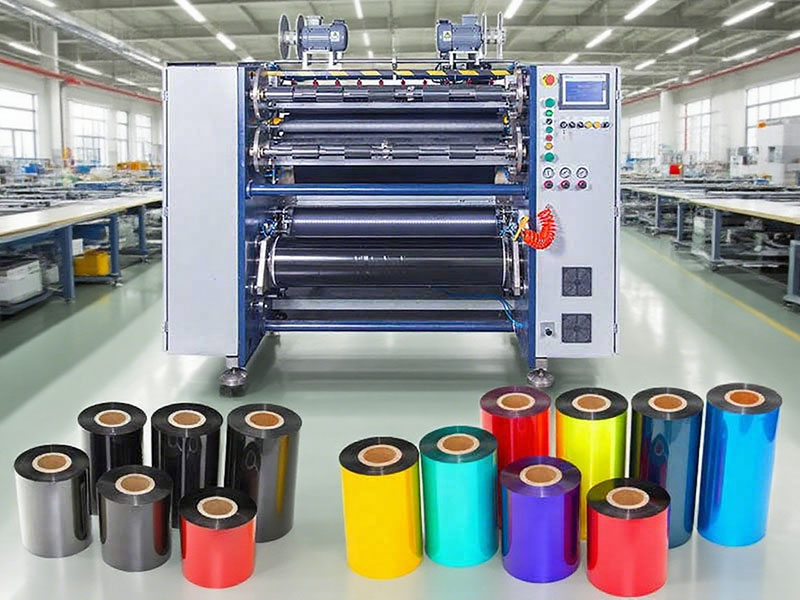
By applying the above solutions comprehensively, the scrap rate of ribbon slitting can be systematically reduced. Industry case data shows:
| Indicators | Traditional craftsmanship | After optimization |
| Slitting accuracy | ±0.5mm | ±0.1mm |
| Scrap rate | 5%-8% | 1.5% or less |
| Average tailstock length | 15 meters | 5 meters |
| Tension fluctuates | ±2N | ±0.5N |
| Correction accuracy | ±0.5mm | ±0.1mm |
The goal of reducing the scrap rate by 30% does not rely on a single technological breakthrough, but rather requires a coordinated effort across five dimensions: equipment precision assurance, fine tension control, real-time correction of the correction system, tool process matching optimization, and special management of tailings. It is recommended that enterprises establish a slitting process database during implementation, record parameters and scrap rate data for each batch through the MES system, and achieve continuous iterative optimization.
 Causes of uneven end faces in ribbon slitting machinesHow to solve wrinkled winding in ribbon slitting machinesRibbon slitting machine selection: wax-based, mixed-based, or resin-basedWhich ribbon slitting machine is the best? Start by asking these seven questionsThermal Transfer Ribbon Slitting Machine Buyer‘s Guide: Width, Speed, and Tension Explained


 English
 Deutsch
 Français
 Español
 Português
 日本語
日本語 русский
 한국어
한국어 عربي
عربي ภาษาไทย
 Tiếng Việt
 Italiano
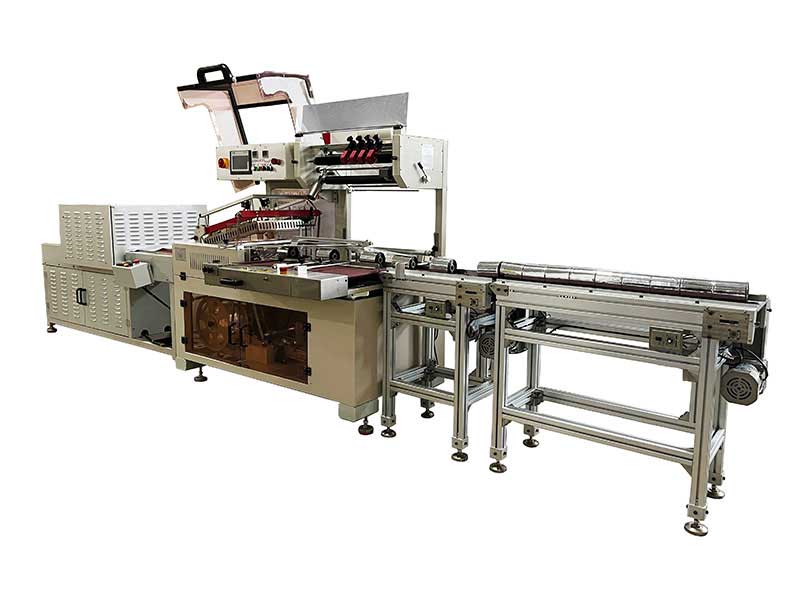 Thermal Transfer Ribbons Packaging Machine
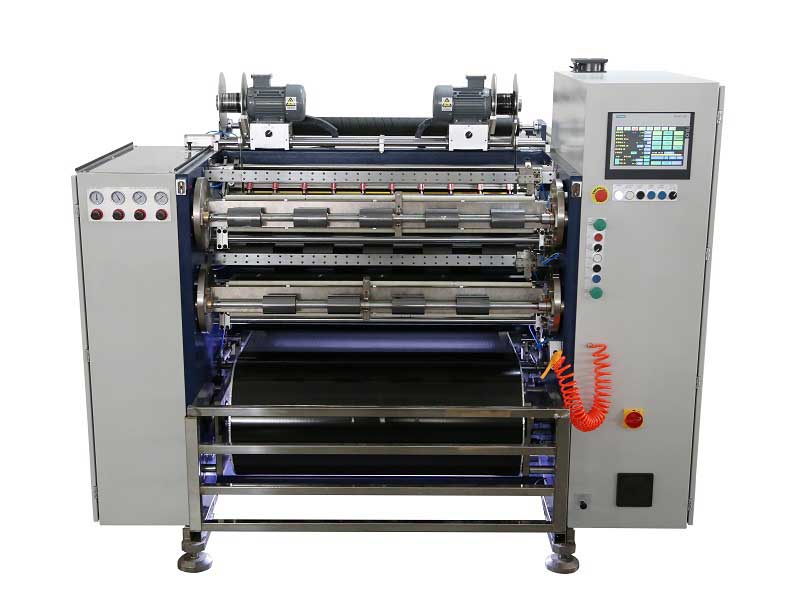 Automatic Thermal Transfer Ribbon Slitting Machine RSDS8 H PLUS
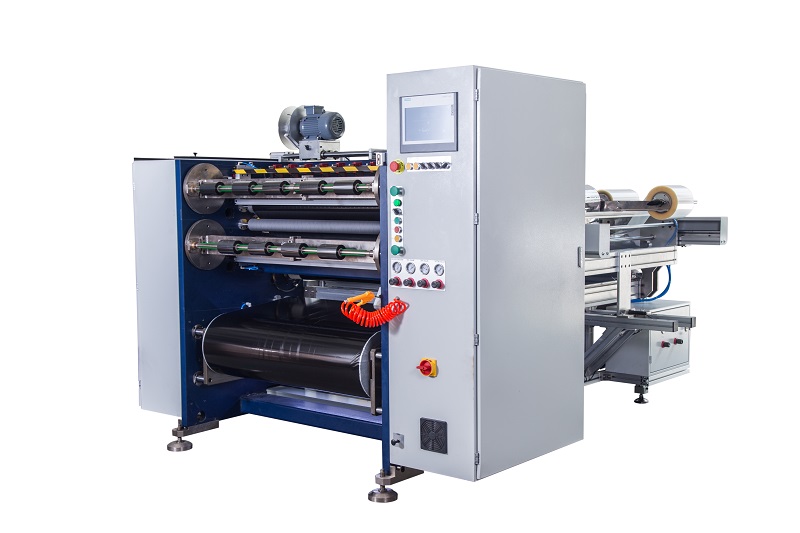 Semi Automatic Thermal Transfer Ribbon Slitting Machine RSDS5 PLUS
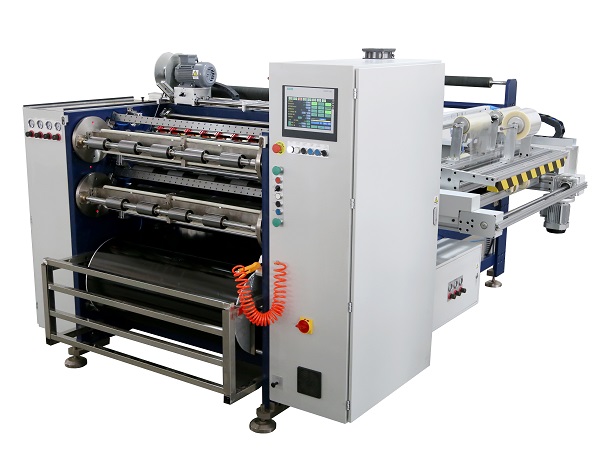 Automatic Thermal Transfer Ribbon Slitting Machine RSDS8 PLUS