
In the production chain of barcode ribbons, slitting is truly the "final step"—the wide-format master roll is transformed into a finished roll suitable for various printers, and the quality of slitting directly determines the clarity of final printing, print head lifespan, and even the overall efficiency of the production line. Faced with a wide variety of devices and complex parameters on the market, companies often face a classic dilemma: whether in precision, speed, or uniformity, who should be prioritized?
The answer is not "accuracy alone" or "speed alone," but rather a systematic judgment based on product positioning, order structure, and material characteristics. The following analysis follows the positioning and trade-off logic of three core dimensions.
1. Precision: An uncompromising baseline of quality
Slitting accuracy is the primary indicator for measuring equipment performance, directly determining the width consistency and edge quality of the finished ribbon. Industry reference standards are divided into three levels: Standard grade±0.3~0.5mm, suitable for conventional commercial and logistics labels; High-precision ±0.1mm, suitable for precision electronics and general industrial applications; Ultra-high precision can reach ± within 0.05mm, suitable for high-end scenarios such as medical labels and ultra-narrow ribbons.
The cost of insufficient precision is real: ribbon edges can cause tape misalignment, tape slips, or even damage to the print head during printing—a major taboo in thermal transfer printing. For high-end applications such as anti-counterfeiting labels and medical labels, accuracy is a "veto" item.
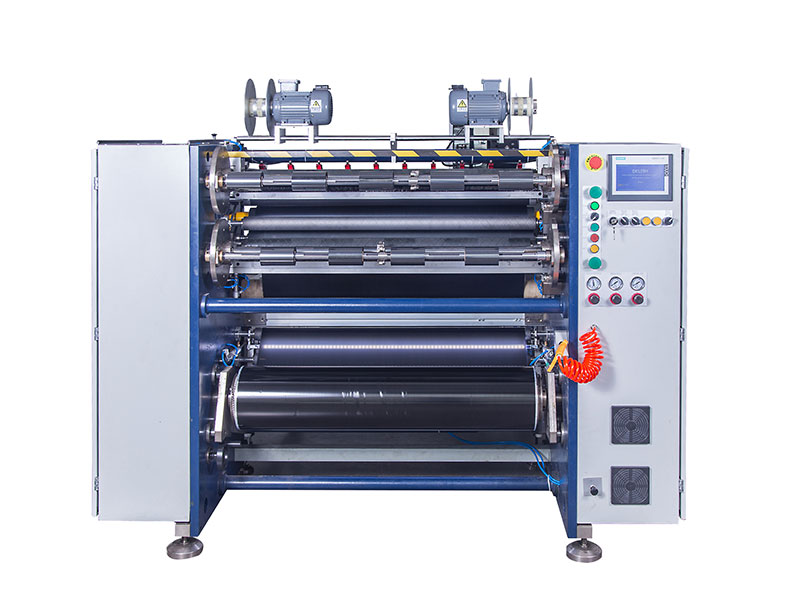
The core hardware that determines accuracy includes a tension control system and a correction device. The ribbon substrate is PET film with a thickness of only 4.5~10μm, and tension control accounts for more than 50% of the impact on winding flatness. Fully automatic closed-loop tension control can monitor and adjust tension in real time at each stage of unwinding, traction, and rewinding, making it an essential feature; High-end equipment should also have taper tension control features—automatically reducing tension as the roll diameter increases, preventing the inner ribbon from sticking under pressure. The correction system uses photoelectric or CCD sensors to monitor the ribbon edges in real time, ensuring the slitting path is straight.
2. Speed: The measure of efficiency, but higher is not always better
Speed determines output per unit time, but the nominal maximum speed does not equal effective capacity. A device that frequently slows down or stops due to tension fluctuations or correction issues may actually produce less output than a stable medium-speed model.
Common speed levels are as follows:
| Speed rating | Scope | Applicable scenarios |
| Low-speed economy model | 50–100m/min | Small batch, multi-variety production |
| Medium-speed universal model | 150–250m/min | Most commercial orders |
| High-speed production model | 300–500m/min | Mass continuous production |
A key understanding is that actual usable speed is greatly affected by the ribbon material. Resin-based ribbons have harder coatings and lower toughness, so they usually need to operate at speeds 20%~30% lower than wax-based ribbons. Therefore, when selecting models, one should not only look at the nominal maximum speed but also use the ribbon specifications used for on-site trial cutting to observe start-stop control, winding neatness, and joint treatment effects at high speeds.
Speed selection should match the order structure: for large batches and small specifications, prioritize high-speed models; In small-batch, multi-specification scenarios, changeover efficiency is more important than extreme speed, so attention should be paid to the parameter memory function of "one-click order change."
3. Neatness: The "Details" That Are Often Overlooked but Determine Success or Failure
The neatness of winding directly affects the smoothness of the backend packaging and printer flow, yet it is often overlooked by buyers. Face deviation should generally be controlled within ±1mm, with high-end equipment reaching up to ±0.5mm.
Common issues such as "bell-mouthed" end faces, "serrations" at edges, or internal wrinkles stem from inadequate tension control systems and correction devices. These defects can easily cause ribbon breakage or printer jams during subsequent unwinding and printing, posing a hazard comparable to insufficient precision.
The key to uniformity lies in the configuration of the winding tension control system and the slip shaft. The slip shaft can independently control torque for each winding unit, effectively solving the problem of "loose inside, tight outside" or "core core" in winding, making it an essential choice for small-batch, multi-specification production modes.
4. Three-dimensional trade-off: Who prioritizes depends on your business positioning
Accuracy, speed, and neatness are not simply about "which is more important," but should be differentiated based on the company's product positioning and order structure:
High-end resin-based/specialty ribbon manufacturers—precision first. Scenarios such as medical labels and anti-counterfeiting labels require strict width tolerances (± 0.05mm or even less), prioritizing accuracy and neatness, with speed compromises allowed (150–200 m/min).
High-volume standard ribbon manufacturers—balancing speed and uniformity. While ensuring ± 0.2mm accuracy, pursuing high-speed continuous operation (above 250 m/min) directly affects the smoothness of the automatic packaging line.
Small batch, multi-specification processors—uniformity comes first. In frequent order changeover scenarios, slip shaft configuration and changeover efficiency are more critical than extreme speeds, with precision requirements ± within 0.3mm to meet most commercial needs.
5. Guidelines for Selecting Models
No matter how beautiful the spec sheet is, it is strongly recommended to conduct on-site trial cutting with your own ribbon roll before purchasing. Key focus: edge quality at different widths, winding stability during high-speed starts and emergency stops, and equipment condition after continuous operation for more than 4 hours. At the same time, three key configurations were checked: whether it was equipped with a fully automatic closed-loop tension control system (including taper tension function), whether it was equipped with an active deviation correction device, and whether the winding shaft used a slip shaft configuration.
The bottom line of precision is uncompromising; speed matches capacity, and neatness determines the smoothness of the entire process—these three are not about "one overpowering the other," but about finding the most suitable balance within your business coordinate system.
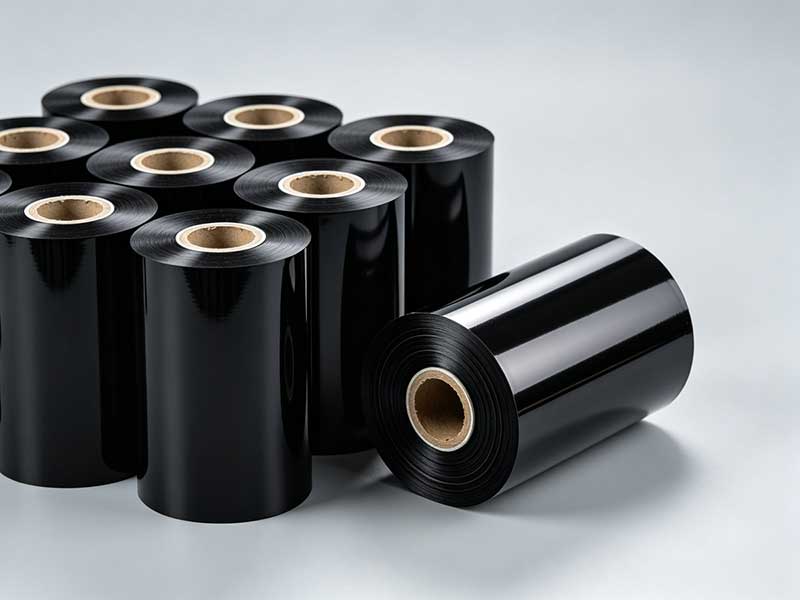 Ribbon slitting machine: high-precision slitting without burrs
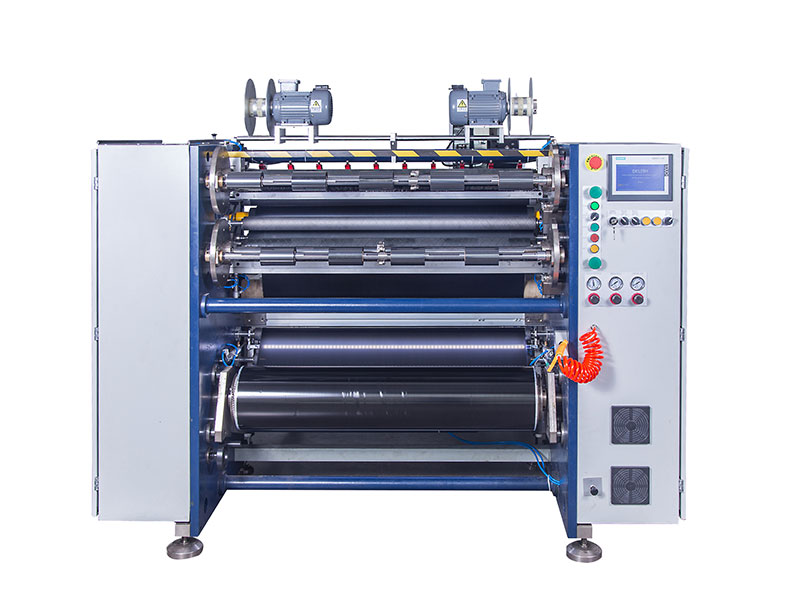 Can a barcode ribbon slitting machine cut and thermal transfer ribbons?What ribbon materials are suitable for the barcode ribbon slitting machine?
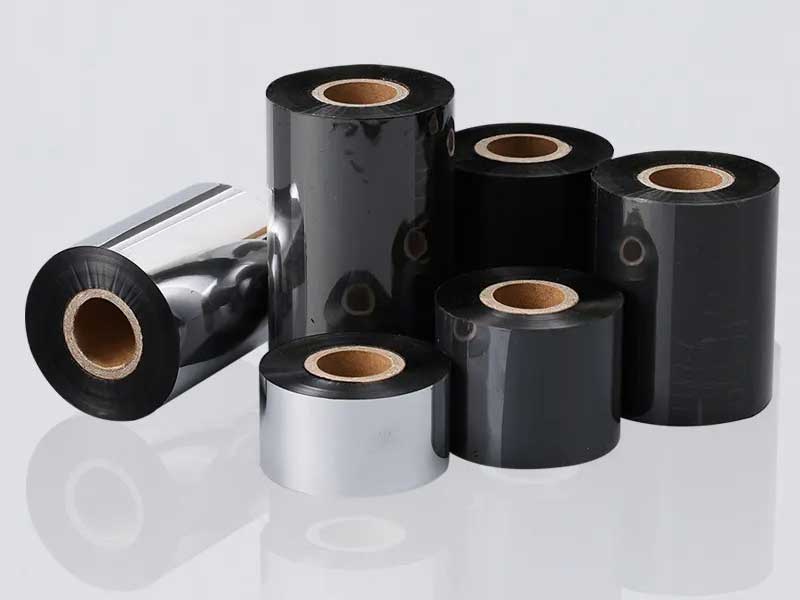 How to propose customized requirements for barcode ribbon slitting machines?How to choose a barcode ribbon slitting machine? Core Features and Key Selection Points


 English
 Deutsch
 Français
 Español
 Português
 日本語
日本語 русский
 한국어
한국어 عربي
عربي ภาษาไทย
 Tiếng Việt
 Italiano