
In the production chain of thermal transfer ribbons, slitting is the "final quality checkpoint." If you choose the right slitting machine, the finished product has neat edges, smooth tape movement, and clear printing; If chosen incorrectly, issues such as burrs, broken ribbons, and uneven winding can occur one after another, and in severe cases, may even damage downstream customers' print heads.
Faced with equipment on the market ranging from tens of thousands to over a hundred thousand yuan, and a dazzling array of spec tables, buyers are most likely to fall into two traps: either be misled by marketing rhetoric like "top speed" or "imported configuration," or lose their way amid complex technical specifications.
In fact, to determine whether a ribbon slitting machine is truly suitable for you, you don't need to be a slitting technology expert. When asking suppliers the following seven questions, the quality of the answers is far more valuable than the numbers on the parameter table.
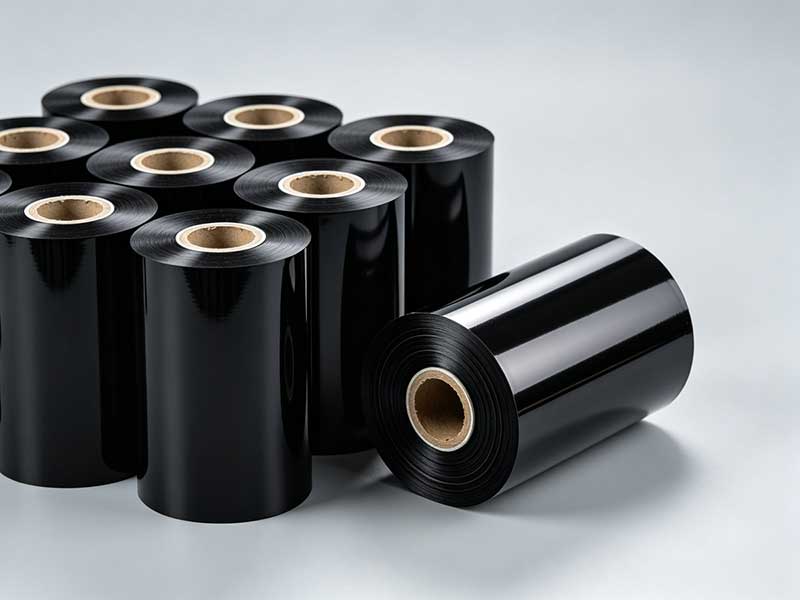
Question 1: Using my own ribbon reel for a test cut, what is the actual measured slitting accuracy?
This is the most critical issue of all. The base material for the ribbon is PET film with a thickness of only 4.5 to 20 microns. The material is extremely thin and sensitive to tension, so even micron-level deviations during slitting can cause burrs or inconsistent width at the edges of the finished product.
The industry reference standards are clear: ordinary slitting machines have an accuracy of about ±0.5mm, while high-precision models can be controlled within ±0.1mm or even ±0.05mm. However, the theoretical values on the parameter table do not equal the usable values in your actual production.
What truly matters is whether the supplier is willing to conduct on-site trial cutting using the ribbon specifications you actually use. The coating hardness and toughness of wax-based, mixed-based, and resin-based ribbons differ significantly; resin-based ribbons typically require 20%–30% lower operating speed than wax-based ribbons. After trial cutting, use a caliper to measure the deviation in the slitting width and check the end face for burrs or "jagged" edges—this is more reliable than any advertising.
Question 2: What is the configuration of the tension control system? Is it an open loop or a closed loop?
Tension control is known in the industry as the "soul" of slitting machines, and this analogy is no exaggeration. The carbon ribbon base film is extremely thin; if the tension is slightly high, it will stretch and deform, and after slitting, the width will shrink; If the tension is slightly low, the material becomes loose and wrinkled, resulting in a "snake-like" misalignment on the cut edge.
Traditional devices controlled by magnetic powder clutches or mechanical friction discs can experience tension fluctuations as high as ±10%, making it difficult to meet high-precision requirements. Modern high-precision slitting machines should adopt a fully automatic closed-loop tension control system, independently monitoring and adjusting tension in real time during the three stages of unwinding, traction, and rewinding, with fluctuations controlled within ±2% of the set value.
Here's a detail that's easy to overlook: whether the winding stage has a "taper tension" function. As the winding diameter increases, if the tension remains constant, the pressure on the inner layer of the outer carbon ribbon will continue to rise, causing mild deformation of the inner layer and severe ink adhesion to form a "chrysanthemum core." Good equipment will automatically reduce the winding tension as the coil diameter changes, ensuring consistent tightness inside and outside the finished coil.
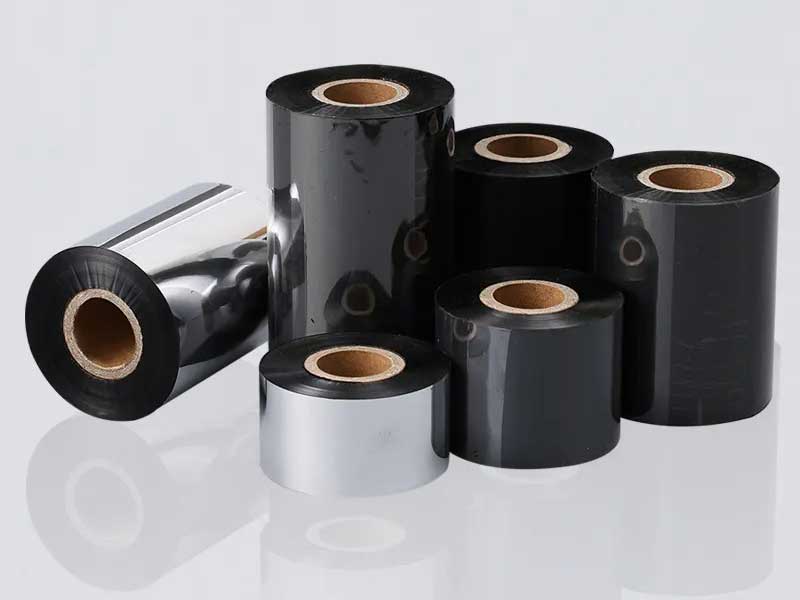
Question 3: Is the rewinding shaft a slip shaft or a regular gas expansion shaft?
This issue directly affects the quality of winding during multi-specification production. If you need to slice multiple narrow rolls simultaneously (ribbon slitting is usually the case), slip shafts are almost a must-have.
All winding positions of ordinary gas expansion shafts share the same torque. When the diameters of each roll differ slightly due to slitting width or material differences, issues such as "loose inside, tight outside" or some winding tight or loose can occur. Each winding unit of the slip shaft is equipped with an independent slip ring, which can adjust torque in real time according to changes in the roll diameter, ensuring every roll is tightly and evenly tightened. Pneumatic slip shafts offer higher control accuracy than mechanical ones, making them especially suitable for production scenarios where specification changes are frequent.
Question 4: How long does it take to change the specifications once? Is there a formula management function?
Currently, the carbon ribbon market is seeing an increasing number of "small batch, multi-specification" orders. Customers may need dozens of specially wide wax-based ribbons today, and hundreds of non-standard sizes of mixed-base ribbons tomorrow. If a single changeover takes tens of minutes or even longer, small orders become unprofitable due to lengthy preparation times.
Modern flexible slitting machines should be equipped with independent tool turrets driven by servo motors and formula management systems. Operators input the width parameters of new orders on the touchscreen, and the system automatically performs precise positioning and tension matching for all blades, reducing changeover time from tens of minutes to just a few minutes or even less.
Furthermore, the equipment should be able to store process parameters for hundreds or even thousands of products. When producing the same order again, simply call up the formula, eliminating human errors and allowing new employees to get started quickly.
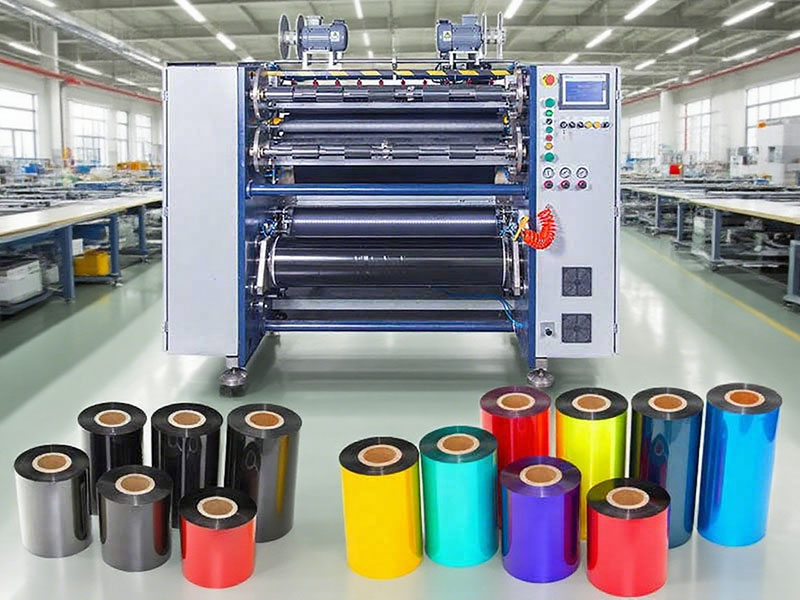
Question 5: Is the blade shape a square knife or a round knife? Does it match the thickness of my material?
Choosing the right tool shape is a fundamental hardware condition for slitting quality, but many buyers overlook this. In the industry, 100 microns is usually used as the reference line.
Square blade (razor cut) is suitable for thin ribbons below 70 microns, enabling higher slitting precision and neater edges. Circular blades (scissor cutting) are more suitable for thick materials over 100 microns or ribbons with paper backing, offering greater durability and suitability for mass production.
If your product line covers multiple thickness specifications, you need to confirm whether the equipment supports quick tool changes or compatibility with two tool types simultaneously. In addition, the radial runout of the tool shaft is also a key indicator—high-end equipment keeps the runout within 0.01mm, and the smaller the runout, the neater the cut edge.
Question 6: Can the device connect to my MES or ERP system?
This question may seem "ahead of its time," but for manufacturers with long-term plans, the answer determines the equipment's availability for the next three to five years.
High-end ribbon slitting machines are no longer just "processing equipment" but nodes in production data. Models with communication capabilities can receive order information issued by MES, automatically call the corresponding recipe for production, and transmit data such as output, defect rate, and equipment status in real time. For companies seeking digital traceability of production processes and optimized scheduling efficiency, this capability far exceeds the machine's processing capabilities.
If your business is still small and does not need system integration for now, at least confirm whether the device has reserved a data interface. In future upgrades, an "island-like" device will become a barrier to digitalization.
Question 7: What is the actual defect rate produced by this equipment? Is there any case data?
The last question, and also the sharpest one. It summarizes the answers to the previous six questions into a measurable result.
Don't ask, "What is the general defect rate?" Instead, ask "Among your existing customers, what is the actual defect rate data for products with a similar structure?" Well-documented cases are far more credible than vague promises. For example, a barcode consumables company in Dongguan reduced the defect rate from 8% to below 0.5% after replacing high-precision slitting equipment, stabilized slitting accuracy within ±0.1mm, and increased production capacity by more than 40%.
Another noteworthy perspective is the reduction in defect rates brought by improved precision: slitting accuracy increases from ±0.1mm to ±0.05mm, and the defect rate can drop from 3%–5% to below 0.5%. For higher value-added resin-based ribbons or ribbons used for medical labels, this difference directly determines the profit margin of the order.
If you communicate with suppliers with these seven questions, you're very likely to tell within a few rounds who is "selling equipment" and who is "helping you solve problems." Choosing a ribbon slitting machine is essentially not about picking a machine, but about selecting a partner who can help you guard the final barrier of quality.
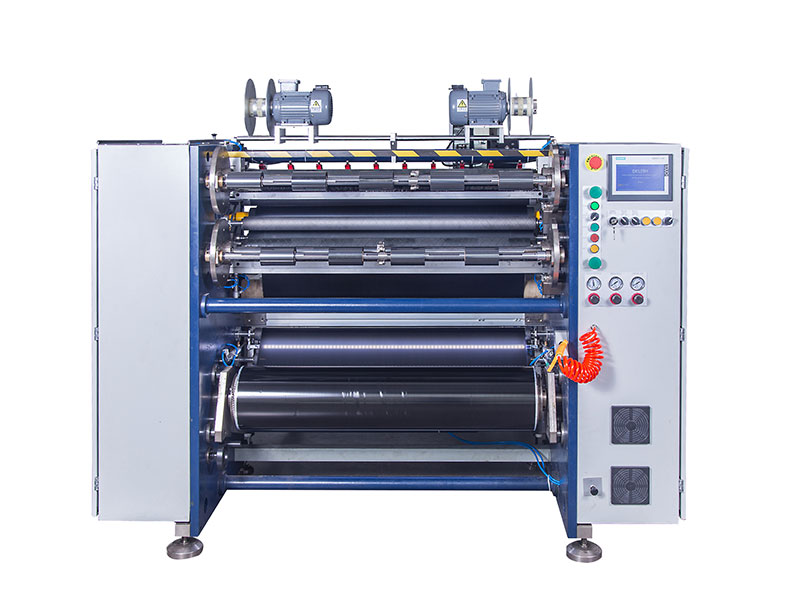 Can a barcode ribbon slitting machine cut and thermal transfer ribbons?What ribbon materials are suitable for the barcode ribbon slitting machine?
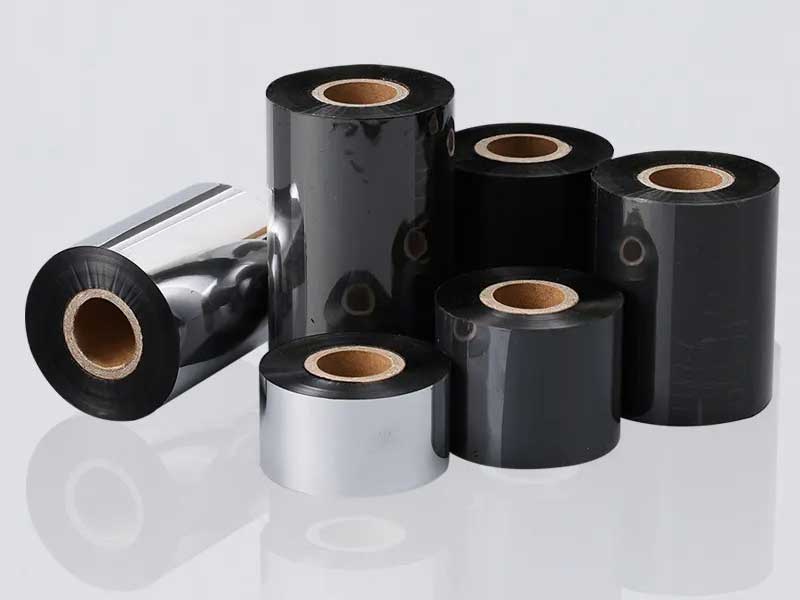 How to propose customized requirements for barcode ribbon slitting machines?How to choose a barcode ribbon slitting machine? Core Features and Key Selection Points
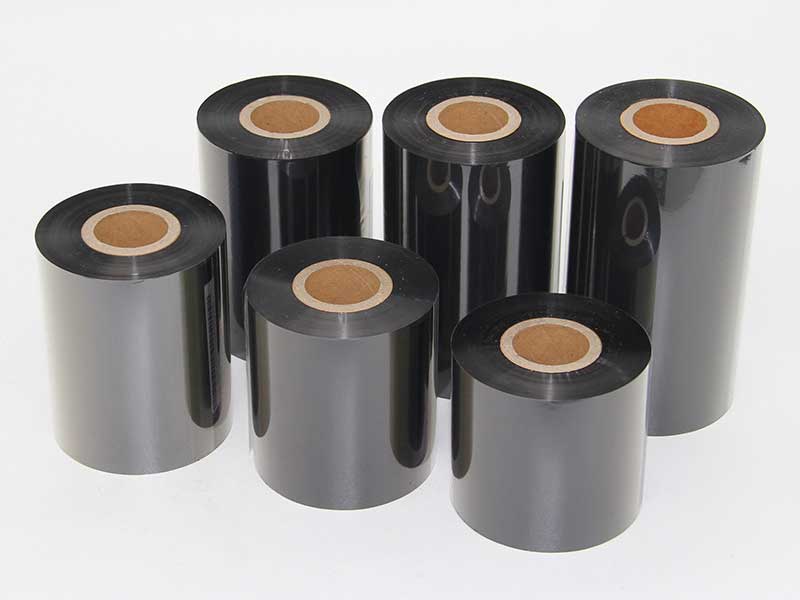 The ribbon slitting machine for the barcode printer is suitable for ribbon types


 English
 Deutsch
 Français
 Español
 Português
 日本語
日本語 русский
 한국어
한국어 عربي
عربي ภาษาไทย
 Tiếng Việt
 Italiano
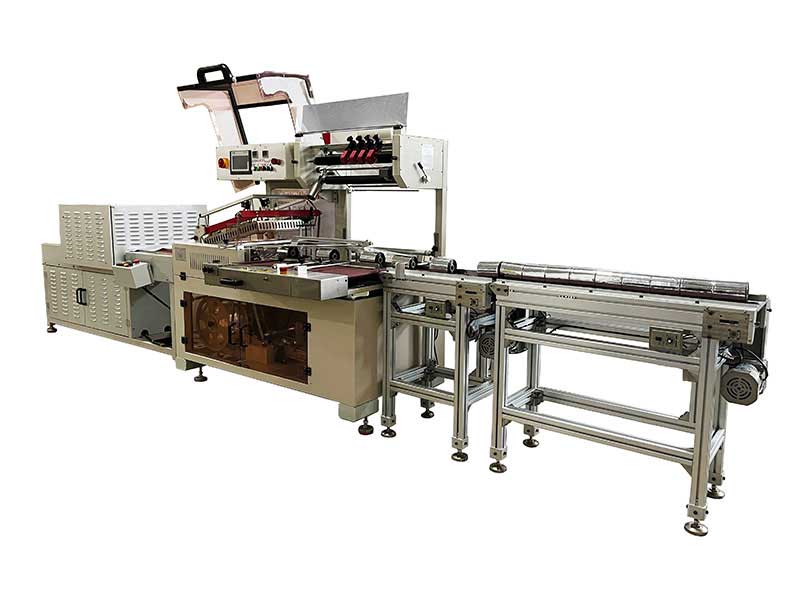 Thermal Transfer Ribbons Packaging Machine
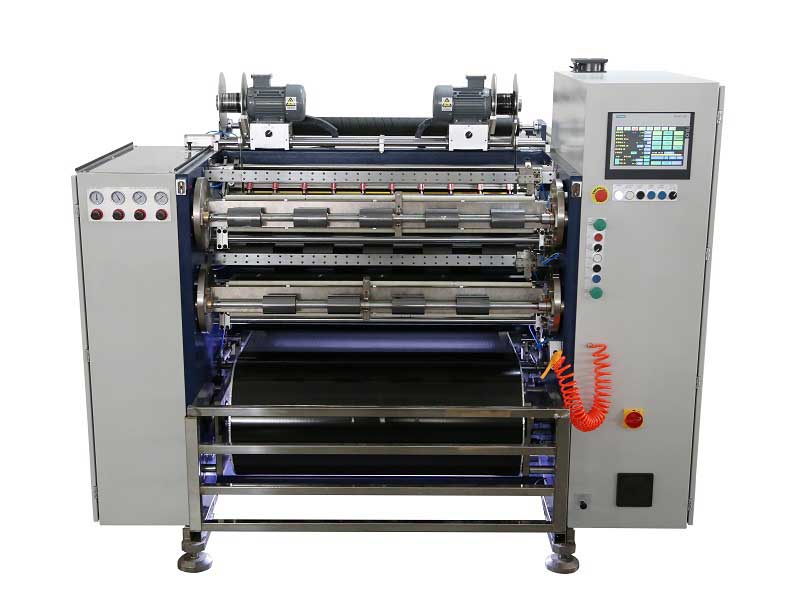 Automatic Thermal Transfer Ribbon Slitting Machine RSDS8 H PLUS
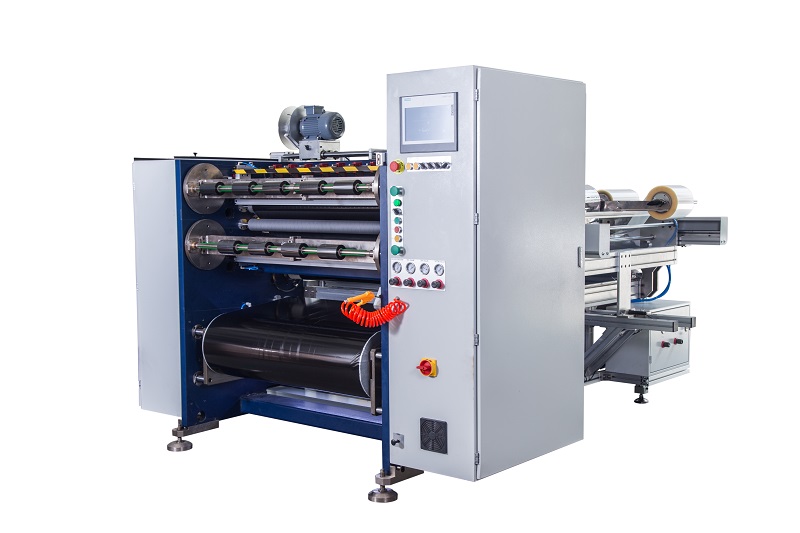 Semi Automatic Thermal Transfer Ribbon Slitting Machine RSDS5 PLUS
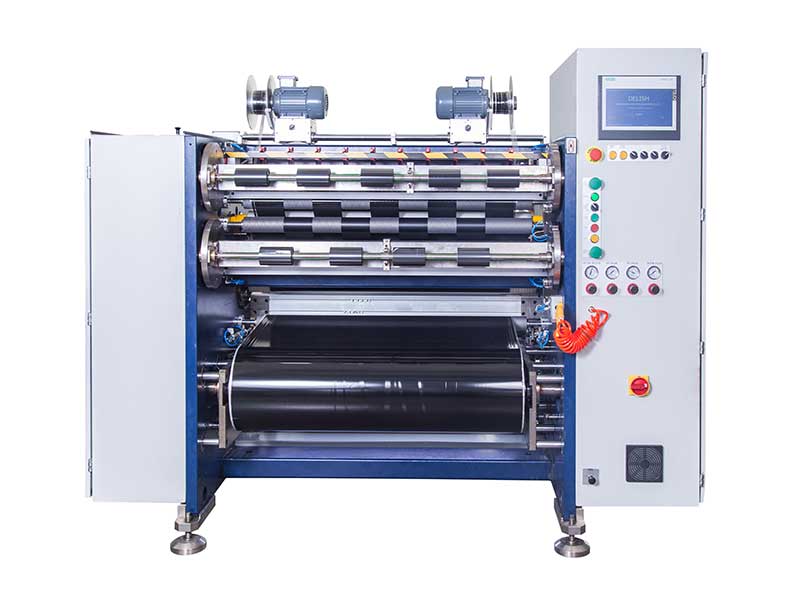 TTR Slitting Machine