
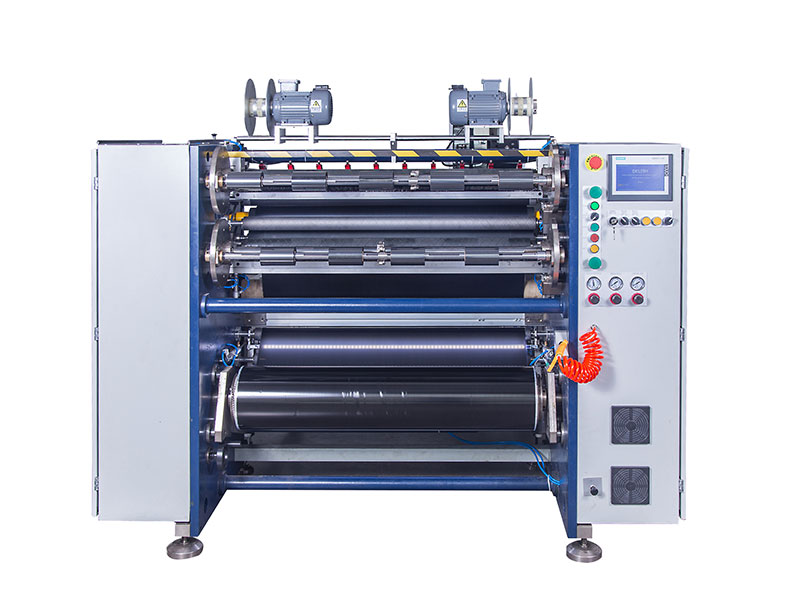
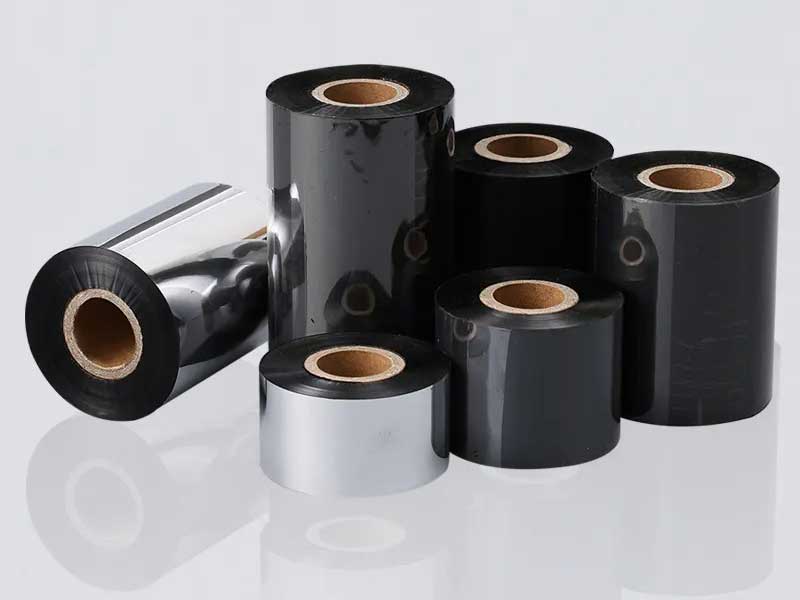
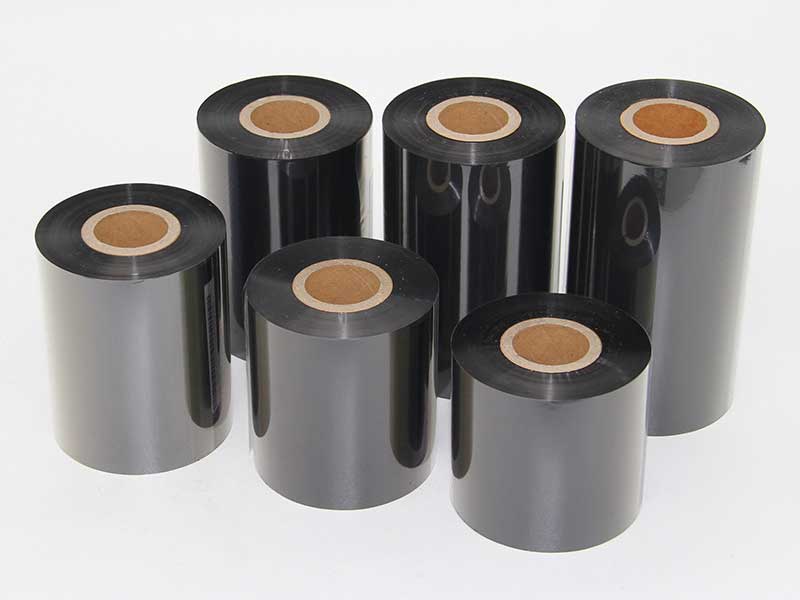
In the production chain of thermal transfer ribbons, slitting is the "final step" that determines the quality of the finished product. The ribbon consists of a PET base film and ink coating only 4.5 to 20 microns thick. Every tension fluctuation and every precision deviation during slitting can render expensive coating materials into scrap. Statistics show that under traditional operating modes, material waste rates in the ribbon slitting stage can reach as high as 8%–15%. Choosing the right slitting machine is not just about buying a piece of equipment, but about establishing a production system that controls losses from the source.
1. Underestimated Losses: The cost black hole in the slitting stage
Before discussing the choice, it's important to first identify where the loss is coming from. Material waste during ribbon slitting is not evenly distributed but concentrated in several key links.
Order-switching transition losses are the most easily overlooked fixed expenses. Each time the main roll is replaced, from shutdown and film penetration to restabilizing slitting, the transition section usually requires 5–15 meters of carbon ribbon as a sacrifice. If companies default to longer transition length settings, each order will consume several or even more than ten meters of material. A more economical approach is to use leftover defective material from the previous order or scrapped carbon ribbon as material penetration for new orders, avoiding using genuine materials for initial film penetration every order.
Belt breakage and stretching caused by uncontrolled tension are hidden but fatal problems. Ribbon is highly sensitive to tension: excessive tension causes the PET base film to stretch, causing the width to shrink after slitting and resulting in inaccurate dimensions; If the tension is too low, the material becomes loose, wrinkles, and uneven in rolling. Data shows that tension fluctuations are the primary cause of band-breaking, accounting for as much as 60% of unplanned shutdown events. Equipment controlled by traditional magnetic powder clutches can achieve tension fluctuations of up to ±10%, while fully automated closed-loop systems can keep fluctuations within ±1.5%.
Waste of tailings has long been regarded as a "necessary loss." When the slitting coil approaches the hollow paper tube, the diameter decreases, causing tension instability. In the last ten or even dozens of meters of carbon ribbon, quality cannot be guaranteed, so it must be discarded. Through taper tension control and small roll diameter mode, this waste can be significantly compressed.
2. Core Selection: Three major parameters determine the baseline for losses
Selecting a slitting machine does not have to be overwhelmed by complicated configuration tables. By focusing on the following three core parameters, you can quickly determine whether a device can control losses at the source.
Slitting precision: the lifeline of quality
Slitting accuracy directly determines the width consistency and edge quality of the finished ribbon. Insufficient precision can cause ribbon edges to become rough, tape slip during printing, and even damage the print head.
Clear industry reference standards: In conventional commercial label scenarios, tolerances ± 0.3–0.5mm are sufficient to meet requirements; Precision electronic tags or general industrial applications require ± 0.1mm grade; Medical labels and ultra-narrow ribbons (width less than 10mm) require ultra-high precision within ±0.05mm.
Key action: Do not trust the theoretical values on the parameter table. Be sure to require the manufacturer to conduct on-site trial cutting using your own ribbon roller, using a vernier caliper to measure the deviation between the slitting width and the set value, and using the actual sample data as the standard.
Slitting speed: The balance between efficiency and quality
Slitting speed determines output per unit time, but the "high-speed only" approach is precisely a trap of loss. The relationship between speed and yield is not simply linear; rather, there is an "optimal economic interval."
Speed ratings can be used as a reference: low-speed economy model 50–100 m/min is suitable for small batches and multiple varieties; Medium-speed general-purpose models at 150–250 m/min meet most commercial orders; High-speed production models of 300–500 m/min are suitable for large-scale continuous production. However, the nominal maximum speed is usually just "laboratory data," and the actual usable speed is significantly affected by the ribbon material: wax-based ribbons are soft and can stably slitting at higher speeds; Mixed-base ribbons typically need to reduce speed by 10%–20%; Resin-based ribbon coatings are hard and have low toughness, requiring operation at speeds 20%–30% lower than wax-based ones.
The research data further revealed the quantitative relationship between speed and yield: in the 250 m/min medium-speed range, yield can reach a peak of 98.5%; When the speed exceeds 500 m/min, the finished product rate drops below 90%, and issues such as burrs, broken strips, and coating peeling all break out in clusters. Stability is more important than maximum speed. When selecting models, observe the winding state during high-speed starts and emergency stops at common speeds.
Uniformity of Volume: The Overlooked 'Hidden Costs'
The neatness of the winding end face is the most easily overlooked indicator in product selection, yet it directly affects the smoothness of post-pass printing. End face deviation should be controlled within ±1mm, and high-end equipment can reach ±0.5mm.
The root cause of the end face is an "bell-mouth," "serration," or internal folds, all stemming from inadequate tension control and correction devices. These issues may not be obvious during slitting, but downstream customers may experience unstable tape walking, misprinted printing, or even broken tape. When selecting models, priority should be given to models equipped with closed-loop tension control and active deviation correction, and on-site inspection should be made to ensure the winding arm is uniform and whether the mandrel runout is sufficiently small.
3. Configuration Review: Tension Control Is the "Soul" of the Equipment
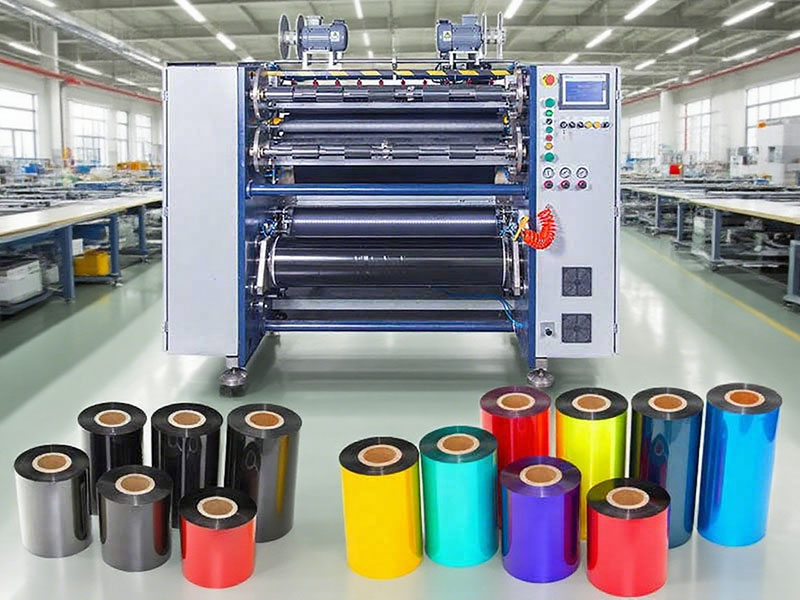
Beyond parameters, the configuration of core components determines the actual level of wear during long-term operation. Among these, the quality of the tension control system accounts for more than 50% of the impact on the flatness of the winding.
The ribbon substrate is extremely thin and has obvious viscoelasticity. At low speeds, tension control is relatively simple, but at high speeds, the inertia difference between winding and unwinding increases sharply. Once the tension sensor lags in response, the instantaneous tension spike stretches the substrate, causing "necking" or even strip breakage.
Prioritize the fully automatic closed-loop tension control system, which can monitor and adjust tension in real time during unwinding, traction, and winding stages. During acceleration and deceleration, fluctuations should be controlled within ±1.5%. Taper control is equally crucial—the finished roll should gradually soften in hardness from the axis to the outer circle to prevent inner cramps or outer ring collapse. For ultra-thin ribbons, attention must also be paid to whether the minimum stable tension value of the equipment meets the requirements.
In terms of reeling configuration, slip shafts are essential for high-end ribbons and multi-specification production. Each winding unit is equipped with an independent slip ring that can adjust torque in real time according to changes in the roll diameter, effectively solving the issues of "loose inside, tight outside" or "core core." Pneumatic slip shafts offer higher control accuracy than mechanical ones, making them suitable for scenarios where specifications are frequently switched.
The tool system also directly affects edge quality. The radial runout of the tool shaft should be controlled within 0.01mm; the smaller the runout, the neater the edges. Square blades (razor type) are suitable for thin ribbons under 70μm, while round blades (scissor type) are better suited for thick materials and ribbons with paper backing. The gap between the blade and the slot should be controlled between 0.02–0.05mm, and the worn blade should be replaced regularly to prevent burrs.
4. Flexible Production Adaptation: Key to Reducing Changeover Losses
Faced with the trend of "small batches, multiple specifications" orders, the long time required for traditional slitting machine changeover is becoming increasingly prominent. Each specification change requires shutdown to reset parameters, with setup time about 20 minutes and heavy reliance on operator experience.
When selecting models, rapid changeover capability should be prioritized. Equipped with an independent tool turret and formula management system driven by servo motors, operators only need to enter new order specifications on the touchscreen, and the system can automatically position the blades and match tension parameters, reducing changeover time from tens of minutes to just a few minutes or even tens of seconds. The equipment should be able to store process parameters for hundreds or thousands of products, allowing direct recall when producing the same order again, eliminating trial cutting waste caused by repeated machine adjustments.
Additionally, the automatic tool position arrangement algorithm helps maximize the utilization of the main roll width. After entering the finished product width combination, the system automatically calculates the optimal tool layout plan, avoiding waste generated from repeated manual tool layout testing.
Conclusion: Trial cutting is more important than parameters
The selection of ribbon slitting machines essentially involves finding a balance between precision, speed, stability, and flexibility that match the customer's own business. There is no "best" equipment, only the "most suitable" equipment.
No matter how beautiful the spec sheet is, using your own ribbon roller for on-site trial cutting before buying is the most effective way to avoid pitfalls. Focus on three dimensions: edge quality at different widths (narrowest and widest specifications), neat winding during high-speed starts and emergency stops, and ease of order changeover. A truly tailored slitting machine for actual production is valued not only in output efficiency but also in the exhaustive use of every meter of carbon ribbon through loss control.
 What are the advantages of constant tension control in ribbon slitting machines?
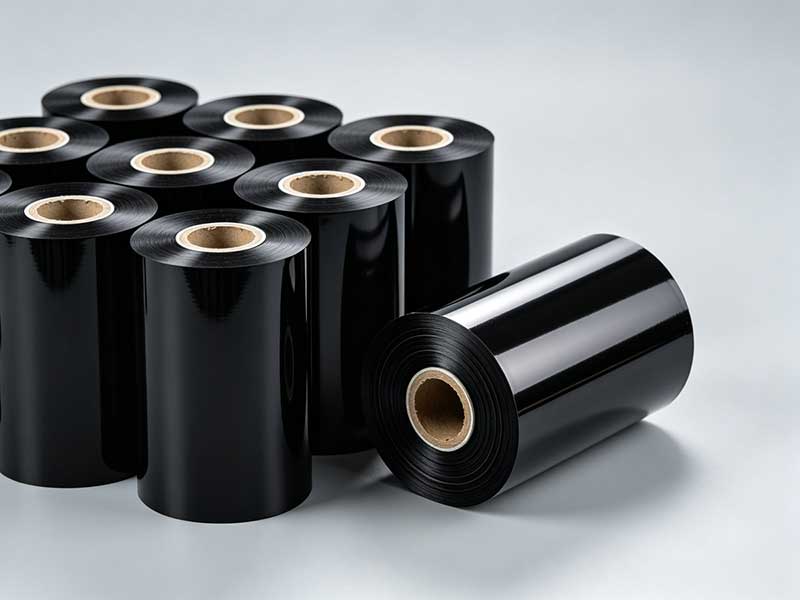 Ribbon slitting machine: high-precision slitting without burrs
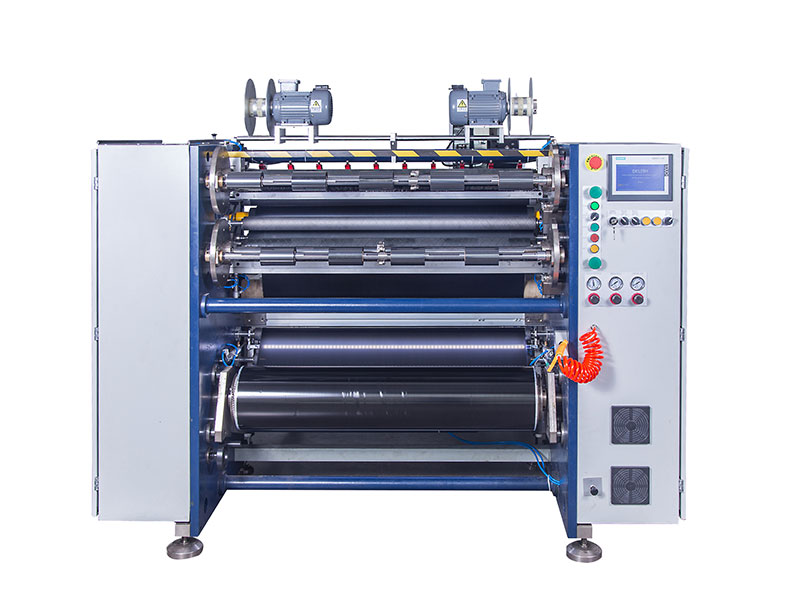 Can a barcode ribbon slitting machine cut and thermal transfer ribbons?What ribbon materials are suitable for the barcode ribbon slitting machine?
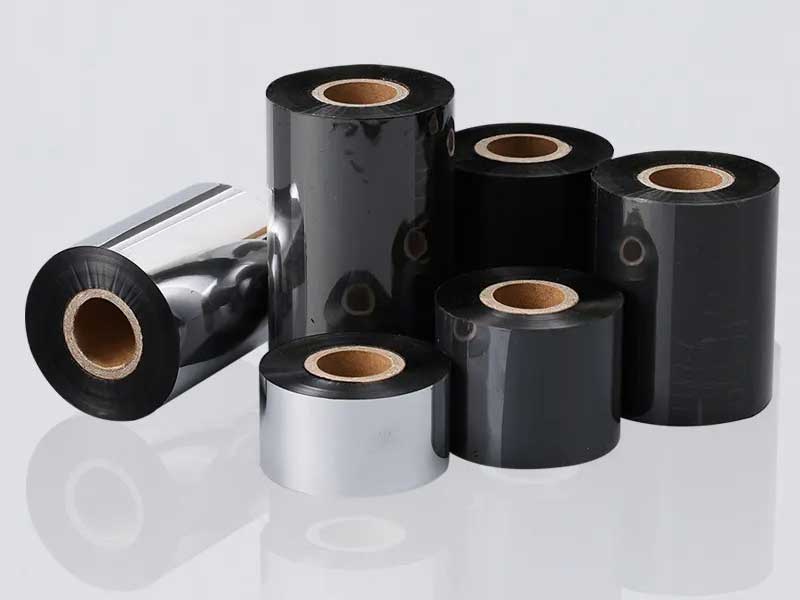 How to propose customized requirements for barcode ribbon slitting machines?


 English
 Deutsch
 Français
 Español
 Português
 日本語
日本語 русский
 한국어
한국어 عربي
عربي ภาษาไทย
 Tiếng Việt
 Italiano
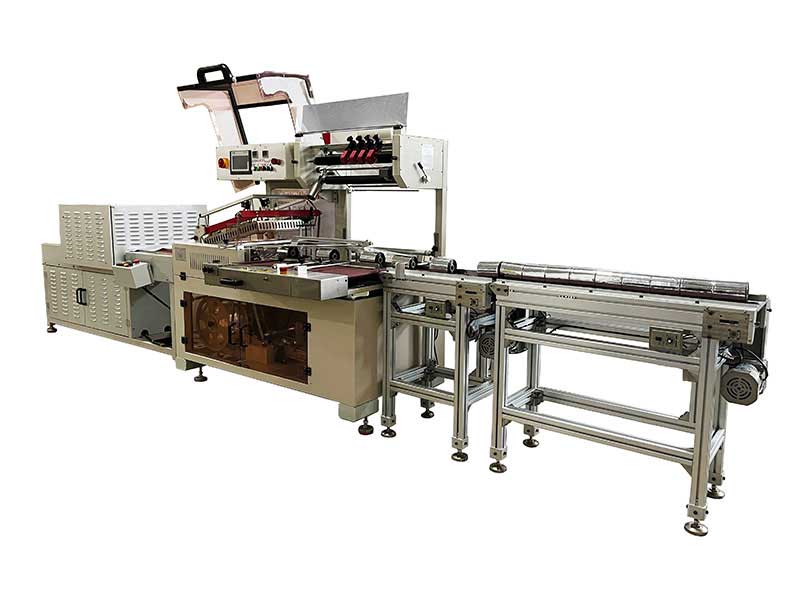 Thermal Transfer Ribbons Packaging Machine
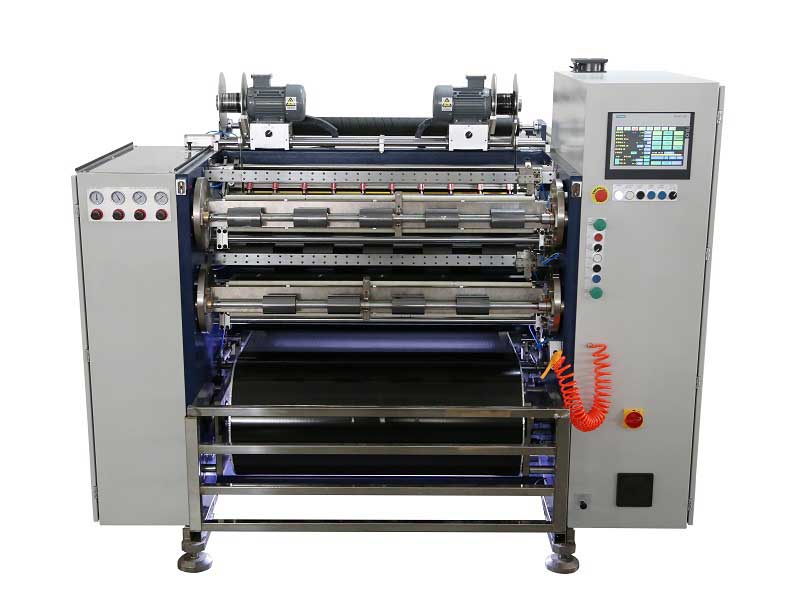 Automatic Thermal Transfer Ribbon Slitting Machine RSDS8 H PLUS
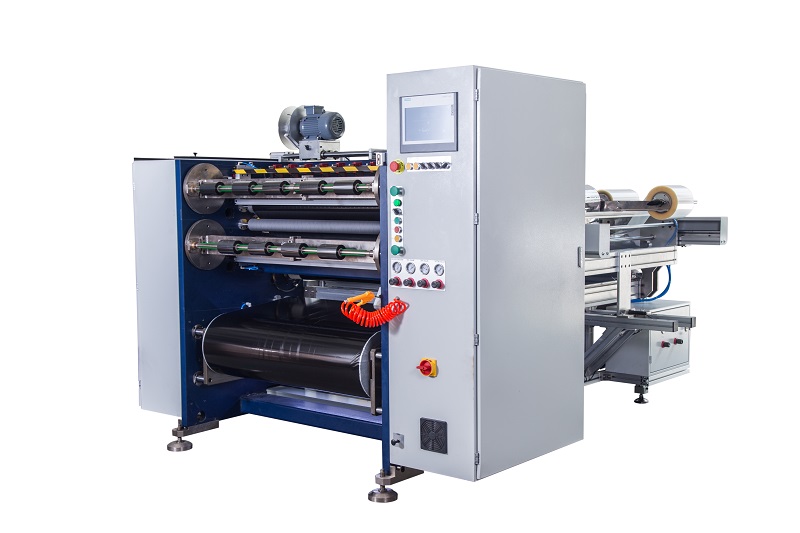 Semi Automatic Thermal Transfer Ribbon Slitting Machine RSDS5 PLUS
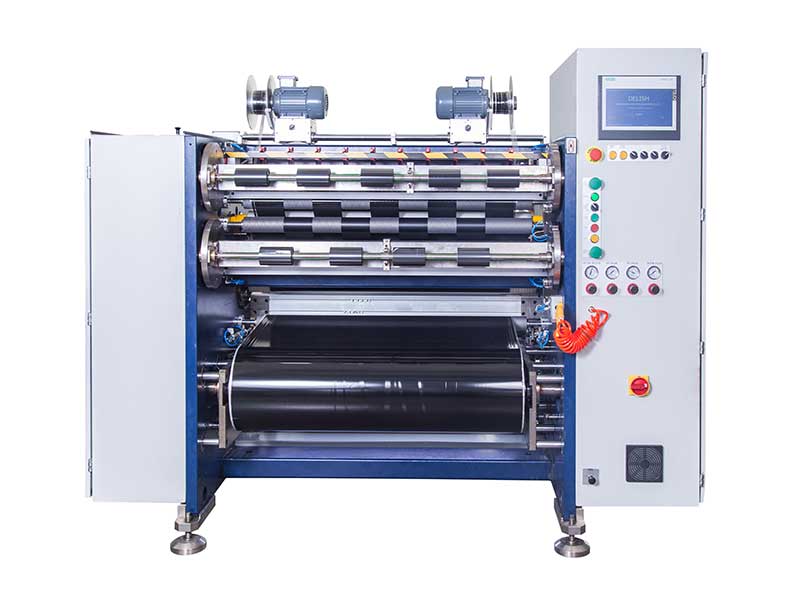 TTR Slitting Machine