
The hot stamping foil slitting machine is a key hub connecting the production of the foil foil master roll with downstream stamping processes. Its core task is to slit and rewind the wide-width hot stamping foil (or laser film, holographic foil) master roll into the narrow specifications required for hot stamping machines. Because hot stamping foil is extremely thin (commonly 4~30μm) and the surface coating is highly sensitive to tension, friction, and static electricity, traditional manual operation methods easily cause edge burrs, wrinkling, or even breakage. Today, automation functions have evolved from mere "auxiliary means" to core factors determining slitting quality and production efficiency. A mature automated system needs to form a closed loop simultaneously across four dimensions: correction, tension, cutting, and data management.
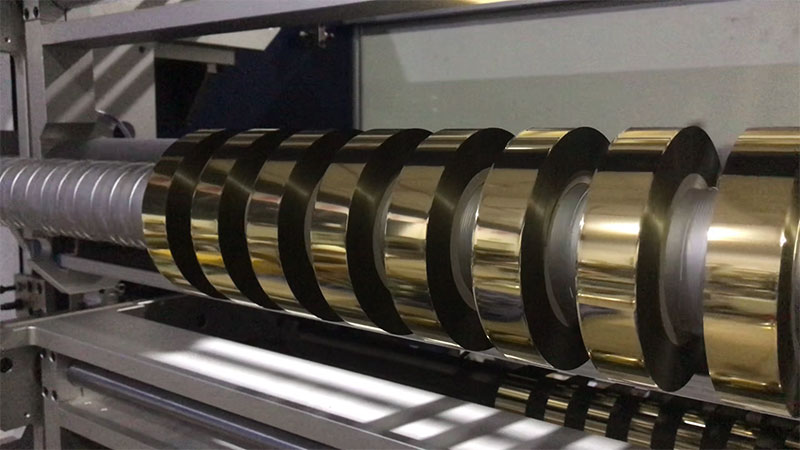
1. Automatic Correction and Material Positioning: Ensuring the Slitting Reference "Doesn't Deviate"
The first challenge in slitting is the initial position of the main roll and the stability of the edges during operation. During unwinding, if the edges shift even slightly, after being magnified by a stroke of several dozen meters, it becomes difficult to control the width tolerance of the narrow roll of the finished product.
The automation countermeasure for modern models is the automatic deviation correction system for unwinding. The equipment tracks the edge of the main roll (edge tracking mode) or printed marking lines (line tracking mode) in real time through ultrasonic or photoelectric sensors, feeds the position deviation signal back to the controller, and drives lateral fine adjustment of the unwinding platform. For highly reflective laser hot stamping foil, ultrasonic sensors have advantages over optical sensors and can avoid misjudgments caused by reflection. Meanwhile, laser positioning assistance is used on the winding shaft side: when operators change paper cores, the laser markings directly project the theoretical positions of each slitting strip, eliminating the need for repeated measurements and reducing order change preparation time to the minute level. The automated coordination of correction and positioning ensures the first line of defense for "accurate cutting" from the source.
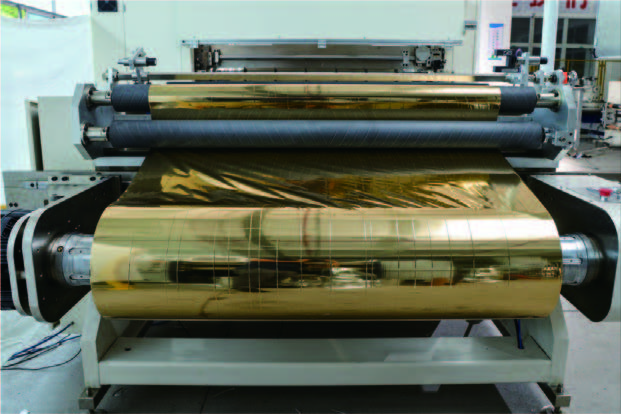
2. Tension Closed-Loop Control: The 'Life-and-Death Line' in Thin Foil Slitting
In foil stamping, tension is a more subtle variable than the cutting tool. Excessive tension causes the foil to stretch and deform, resulting in inaccurate pattern registration during hot stamping; If the tension is too low, the coil becomes loose and wrinkled, resulting in uneven winding ends. More challengingly, as the winding diameter increases, if the tension does not decrease, the outer material will exert excessive pressure on the inner layer, causing "expansion" or coating adhesion.
The automated tension system centers on a PLC, constructing dual-loop control. The unwinding end uses a magnetic particle brake combined with a tension sensor (Load Cell) to form a closed loop, compensating in real time for torque fluctuations caused by changes in the main roll diameter. The winding end relies on servo motor drive, combined with slip shafts or gas expansion shafts to achieve independent or grouped adjustment of tension in each slit. Some high-end configurations introduce PID algorithms that dynamically adjust tension setpoints during acceleration and deceleration phases to suppress inertial shocks. For ultra-thin foil with a thickness of less than 0.02mm, this system can control tension fluctuations to a minimum, preventing wrinkles and breakage. Stable tension is the essential capability that sets automated slitting machines apart from manual equipment.
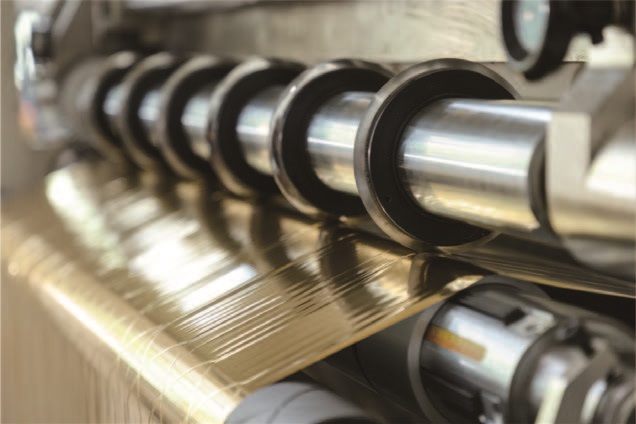
3. Automated Cutting and Rewinding: Balancing Precision and Efficiency
Automation in the cutting process is reflected in the coordination between the tool system and the rewinding switch. Round knife slitting is the mainstream method for hot stamping gold foil, which, combined with pneumatic compression cutting or shear-type blade holders, produces smooth and burr-free cuts. The contribution of automation here lies not in the "cutting" itself, but in rapid tool changes and pressure management. Magnetic or quick-lock tool holders reduce slitting width adjustment from hourly levels to just a few minutes. A preset process database can store width combinations for different customers and automatically call tool holder position parameters during order changes. The independent waste edge collection device automatically processes trimmed edge waste through fans or winding reels, preventing edge entanglement and interference with operation.
Automated winding focuses on "rolling in uniformity." The full-width pressure roller pneumatically compresses the winding surface evenly, expelling air between layers; For individual slitting strips with uneven thickness, independent small pressure rollers can apply pressure independently to prevent local loosening. Automatic rice counting and fixed-length shutdown functions ensure the length of each roll of finished product is consistent, reducing the frequency of recoil changes in downstream hot stamping machines. On high-speed models, slitting speeds can reach 50~500m/min, with a maximum winding diameter of 600mm. The automation system must synchronously reduce tension and follow the pressure rollers at high speeds; any lag will leave marks on the end face.
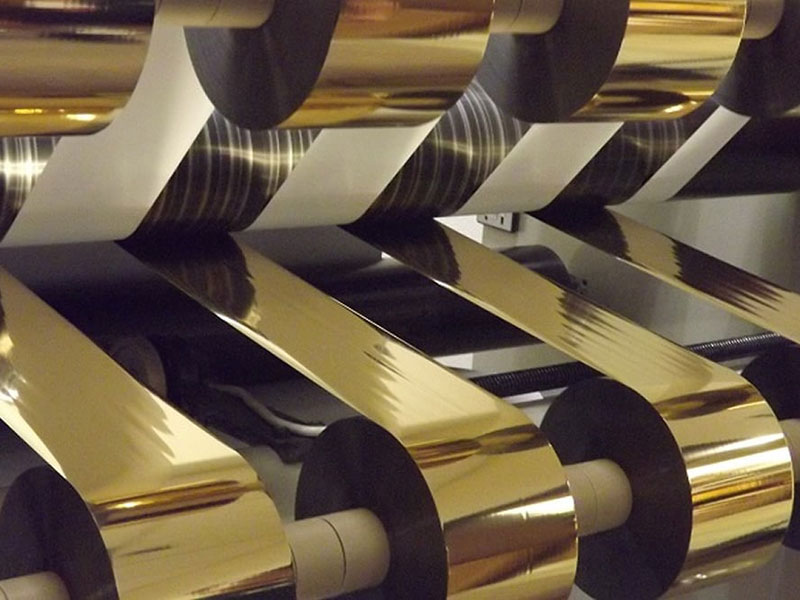
4. Intelligent Extension: From Standalone Automation to Data Integration
As basic automation matures, the competitiveness of slitting machines begins to shift toward "management efficiency." PLC touchscreens have become standard, but the advanced function lies in storing and recalling process parameters. Operators can store tension curves, slitting widths, and speed settings for different product specifications in the recipe library, allowing one-click retrieval for the next production, reducing reliance on skilled workers.
Further exploration lies in MES system integration and flexible production. Facing the trend of small batches and multiple specifications (such as luxury packaging requiring multiple widths for slitting in the same batch), the slitting machine can automatically plan the main roll usage path based on order information, keeping the remaining material within 5%. Online quality inspection modules (such as CCD defect detection) have begun to be integrated into slitting production lines, marking or removing coating defects during slitting to avoid batch defects in downstream hot stamping processes. These features transform slitting machines from isolated processing units into traceable and dispatchable nodes in intelligent packaging and printing production lines.
Conclusion
The automation of hot stamping foil slitting machines essentially solves a dilemma: materials are getting thinner and more precise are required, while the margin for error for manual intervention is shrinking. From millisecond-level response of the correction sensor, to gram-level control of the tension closed-loop, and then to formula management and data integration, every function is turning "experience" into "parameters." For hot stamping foil processing companies, evaluating the automation level of a slitting machine should not be based solely on its nominal speed, but also on whether the correction and tension system forms a true closed loop, and whether order change and data management are smooth. Only in this way can automation go from being a term in brochures to actual increments in yield and efficiency.
Customized plans and processes for hot stamping foil slitting machines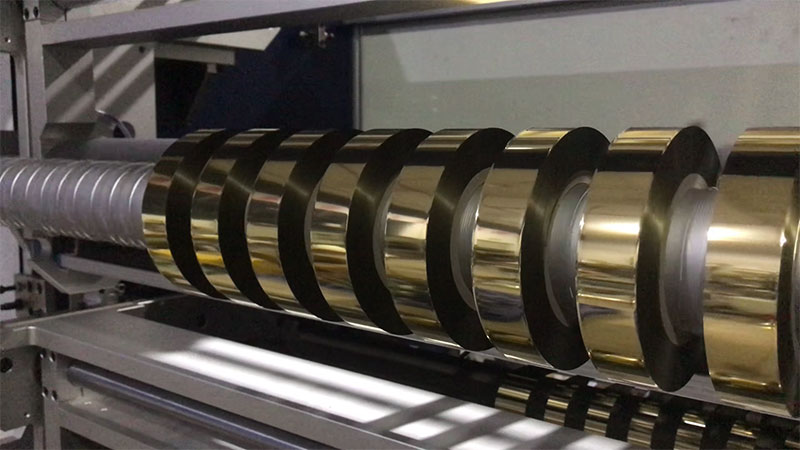 Description of the hot stamping foil slitting machine's winding and rewinding systemThe hot stamping foil slitting machine is suitable for both materials and scenarios
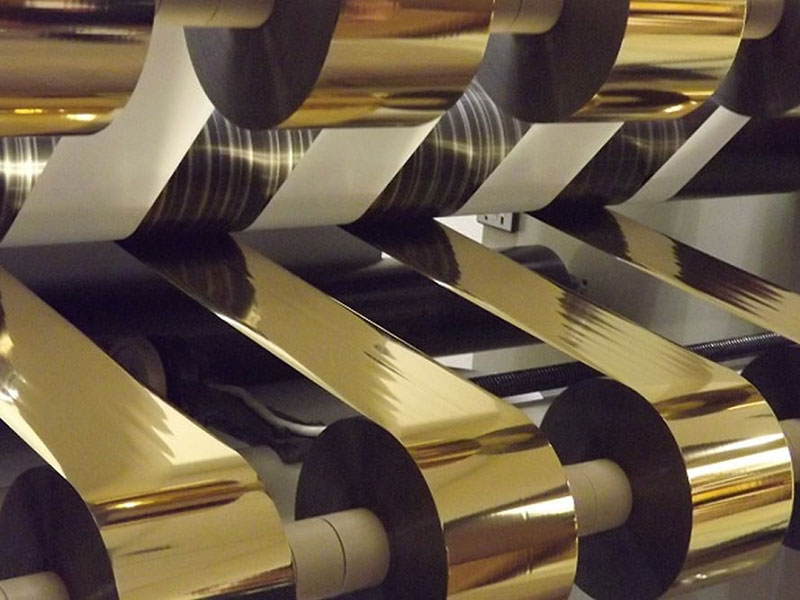 Working principle and advantages of the hot stamping foil slitting machine
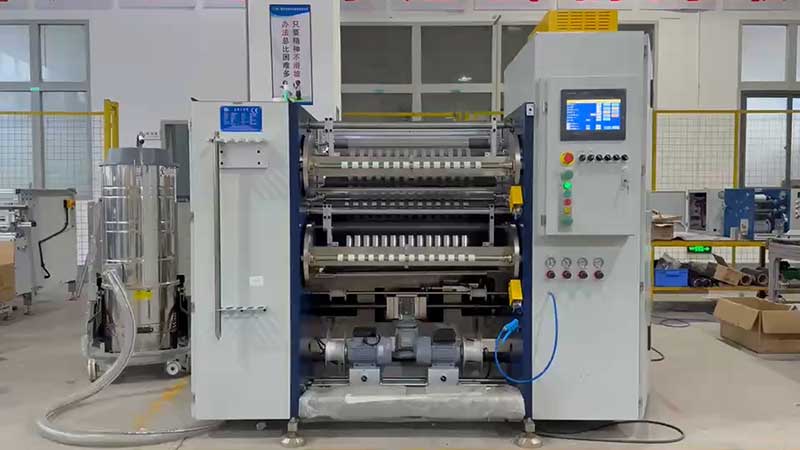 Common Problems with Hot Stamping Foil Slitting Machines and How to Solve Them


 English
 Deutsch
 Français
 Español
 Português
 日本語
 русский
 한국어
 عربي
 ภาษาไทย
 Tiếng Việt
 Italiano
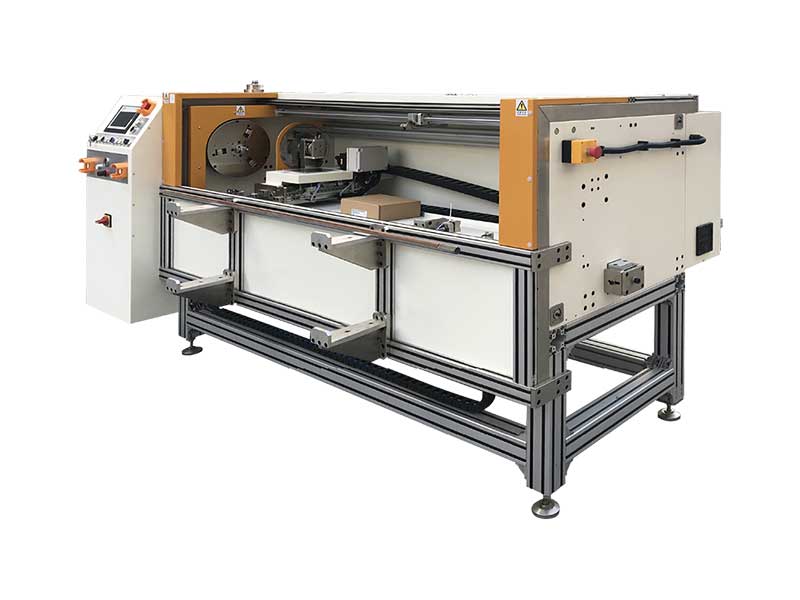 Automatic Foil Roll Cutting Machine
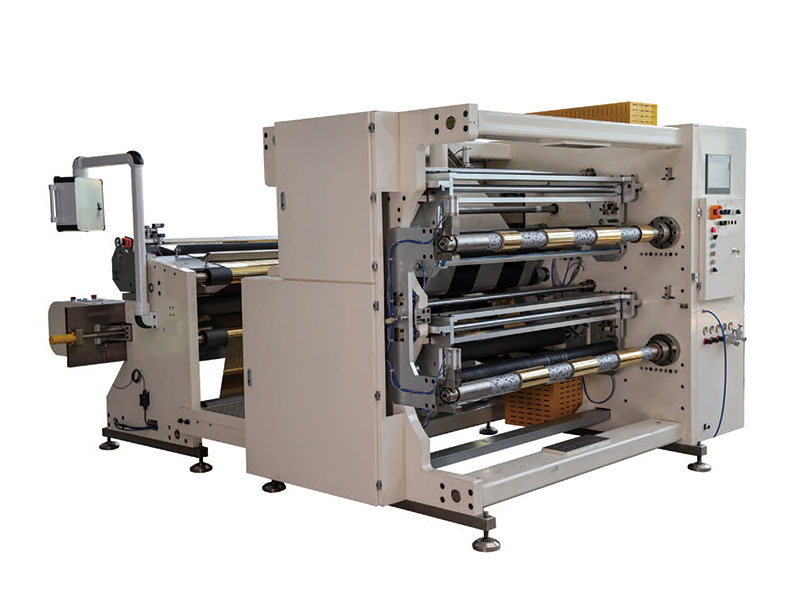 1400mm Hot Stamping Foil Slitting Machine
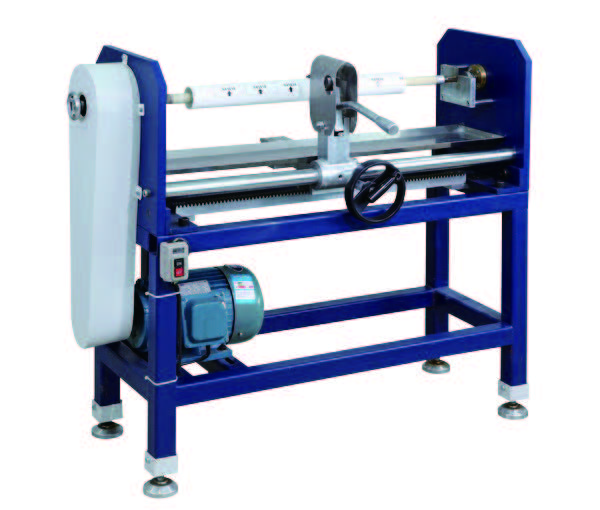 Manual Foil Roll Cutting Machine
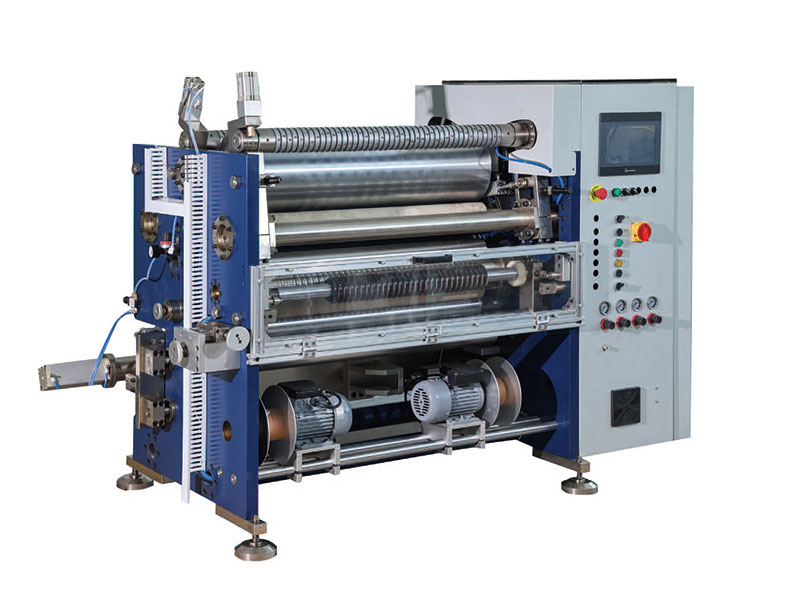 800mm Hot Stamping Foil Slitting Machine