
In the precision world of thermal transfer printing, ribbon slitting machines are like invisible scalpels, cutting wide raw materials to the specifications required by customers. However, every deviation of this "scalpel" is devouring the profits of enterprises. Statistics show that in the traditional mode of operation, the material waste rate in the ribbon slitting process can be as high as 8%-15%, which means that for every 100km of ribbon produced, 8-15km are discarded for various reasons. In the context of tight global supply chains and rising raw material costs, optimizing the settings of ribbon slitting machines and reducing material waste is not only a cost control issue, but also the key to the sustainable competitiveness of enterprises.
Precise tension control: the "first principle" to reduce waste
In the process of ribbon slitting, tension control is the core variable that determines success or failure. Insufficient tension will lead to sagging, deviation, and uneven edges after slitting. Excessive tension may cause tensile deformation or even fracture of the material. Studies have shown that tension fluctuations are the main causes of slitting edge defects and uneven material loss.
Optimizing the tension system needs to start from three aspects: First, the closed-loop tension control system is used to monitor tension changes in real time through high-precision sensors, and millisecond-level dynamic adjustments are made with servo motors to control tension fluctuations within ±0.5%. Secondly, according to the ribbon substrate type (polyester, nylon, etc.), coating characteristics and slitting width, a "material-tension" database is established to preset the optimal tension curve. Finally, a taper tension controller is installed at the retracting and unwinding part of the slitting machine, which automatically adjusts the tension with the change of the coil diameter to avoid the tension increase effect caused by the increase of the coil diameter.
The geometric art of the cutting edge: micro-optimization of slitting tools
The selection and setting of slitting tools directly determine the cutting quality. Traditional flat knife slitting is prone to burrs and dust, causing the coating on the edge of the material to fall off, affecting the subsequent printing effect. The optimization directions include: the use of circular knife slitting technology, the use of rotary cutting to reduce frictional heat, and the edge quality can be improved by more than 40%; Inserts with different cutting angles (25°-45°) and coatings (DLC, TiN) are selected according to the characteristics of ribbon coating (wax-based, mixed-based, resin-based). Implementing the principle of "minimum depth of cut", the laser ranging system ensures that the blade only cuts 1/3-1/2 of the thickness of the material, ensuring thorough cuts while maximizing blade life. Practice shows that optimized tool settings can reduce scrap rates due to edge defects by 60%.
Intelligent dynamic correction: make the most of every millimeter
Material deviation during slitting is a major source of waste in the width direction. Traditional mechanical guidance correction systems are slow to respond and have low accuracy, often when deviations are detected, a large amount of material has been cut by mistake. The modern solution is to use the CCD vision correction system: install a high-resolution line array camera at the entrance of the slitting machine, scan the edge position of the material in real time, and transmit the data to the PLC for processing, and drive the correction roller to complete the adjustment within 0.1 seconds, with an accuracy of up to ±0.1mm. A more advanced approach is to combine machine vision and artificial intelligence, and the system can learn the "behavior patterns" of specific materials, predict possible deviation trends, and achieve preventive adjustments.
Data-driven process closed-loop: from experience to precision science
Reducing waste cannot only rely on equipment optimization, but also on establishing a data-driven process management system. The IoT sensor is integrated on the slitting machine to collect more than 30 parameters such as tension, speed, temperature, and vibration in real time, and correlate and analyze the slitting quality data (edge flatness, width accuracy, etc.). Through machine learning algorithms, the optimal combination of process parameters is found and the "golden cutting formula" of different materials is formed. When switching products, the system automatically retrieves the corresponding recipe and completes the equipment setting with one click, shortening the traditional 30-minute changeover time to 5 minutes, while reducing the waste of trial cutting.
Fine control of environmental factors: microscopic variables that are often overlooked
Changes in temperature and humidity in the production environment can affect the physical properties of the ribbon, which in turn interferes with slitting stability. Experimental data show that the expansion rate of polyester-based ribbon can reach 0.1% for every 5°C change in temperature. A 30% change in humidity may cause a change in coating viscosity. Establishing a local constant temperature and humidity environment (23±2°C, 50±5%RH is recommended) in the slitting area can reduce the slitting fluctuation caused by environmental factors by 70%.
Conclusion: Building a competitive advantage at the micron scale
Optimizing ribbon slitter settings is essentially an efficiency revolution at the micron scale. It requires us to move from extensive empirical operations to a modern manufacturing paradigm based on data and precision control. Every smoothing of the tension curve, every adjustment of the edge angle, and every acceleration of the correction response accumulate a seemingly small but crucial competitive advantage.
In an era of increasingly severe resource constraints, reducing material waste has transcended cost issues and has become an important yardstick to measure the technical capabilities and sustainability of enterprises. Those companies that take the lead in mastering the "micron art" of ribbon slitting will not only gain significant advantages in cost control, but also build insurmountable technical barriers in terms of product quality consistency and delivery reliability. This silent battle of micrometers is redefining the rules and boundaries of industry competition.
 Can a barcode ribbon slitting machine cut and thermal transfer ribbons?
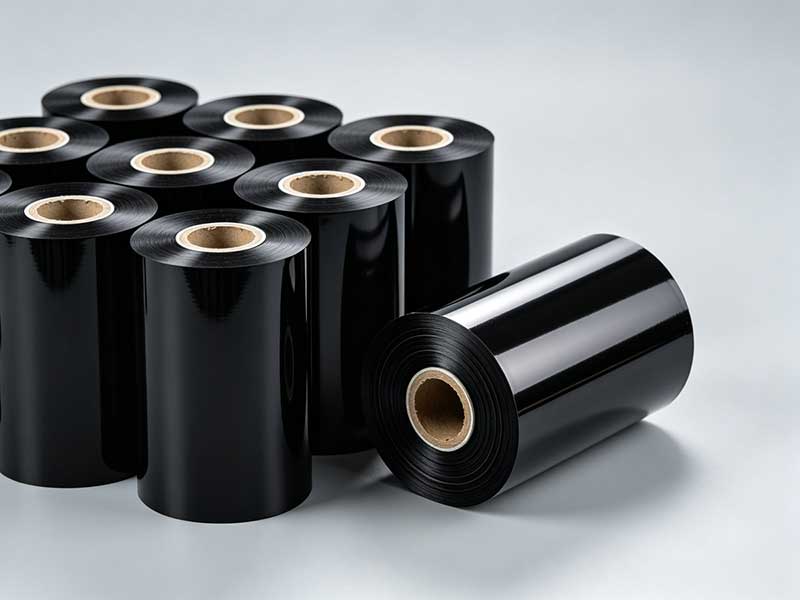 What ribbon materials are suitable for the barcode ribbon slitting machine?
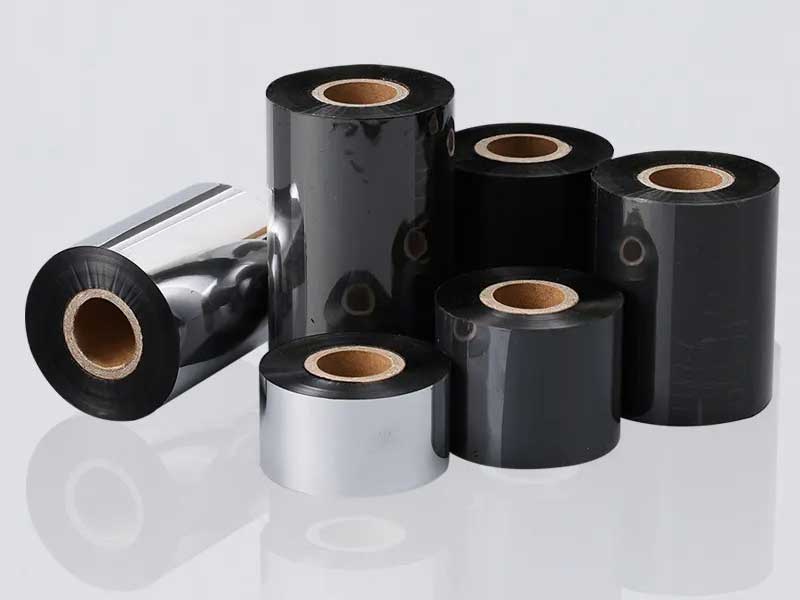 How to propose customized requirements for barcode ribbon slitting machines?How to choose a barcode ribbon slitting machine? Core Features and Key Selection PointsThe ribbon slitting machine for the barcode printer is suitable for ribbon types


 English
 Deutsch
 Français
 Español
 Português
 日本語
日本語 русский
 한국어
한국어 عربي
عربي ภาษาไทย
 Tiếng Việt
 Italiano
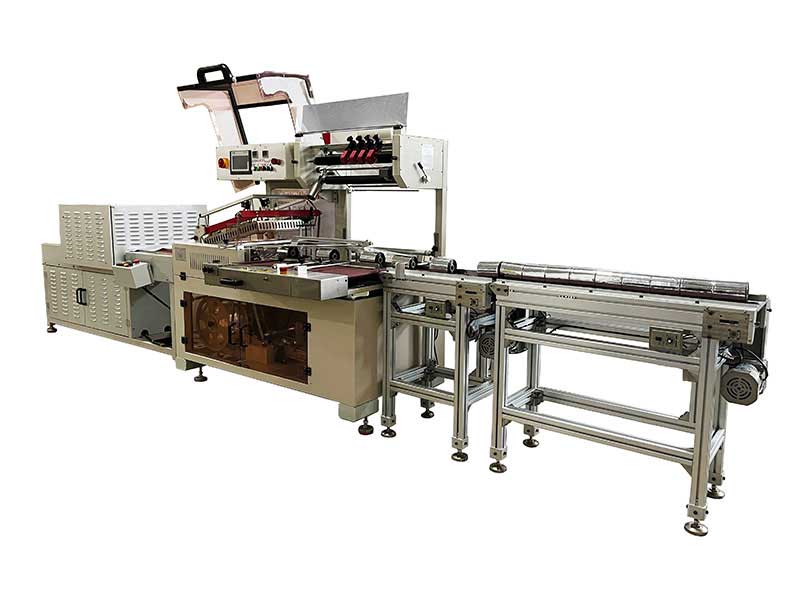 Thermal Transfer Ribbons Packaging Machine
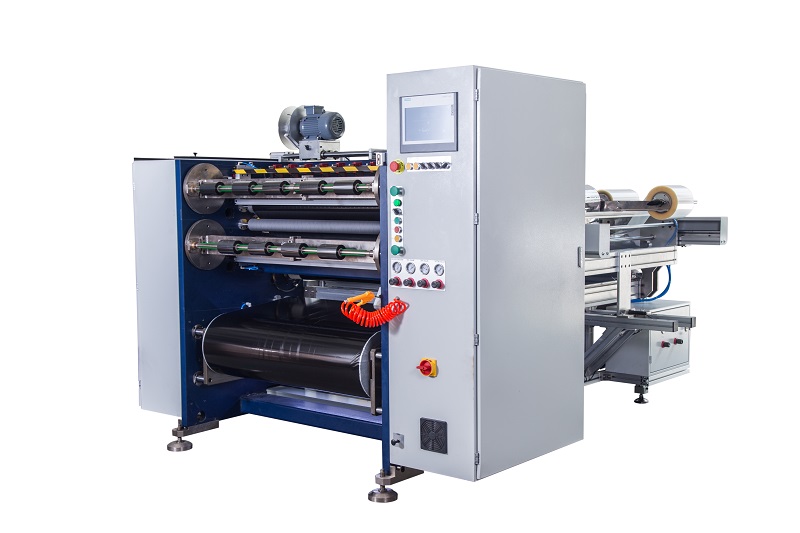
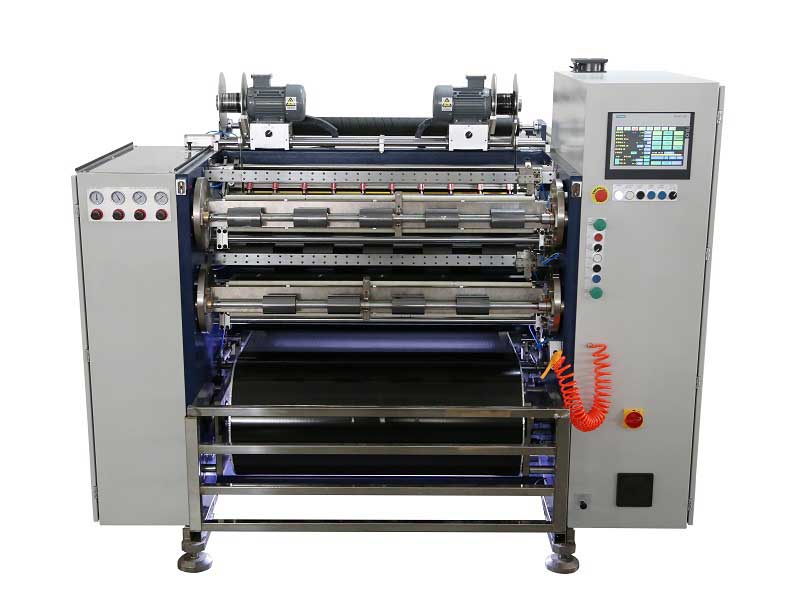 Automatic Thermal Transfer Ribbon Slitting Machine RSDS8 H PLUS
 Semi Automatic Thermal Transfer Ribbon Slitting Machine RSDS5 PLUS
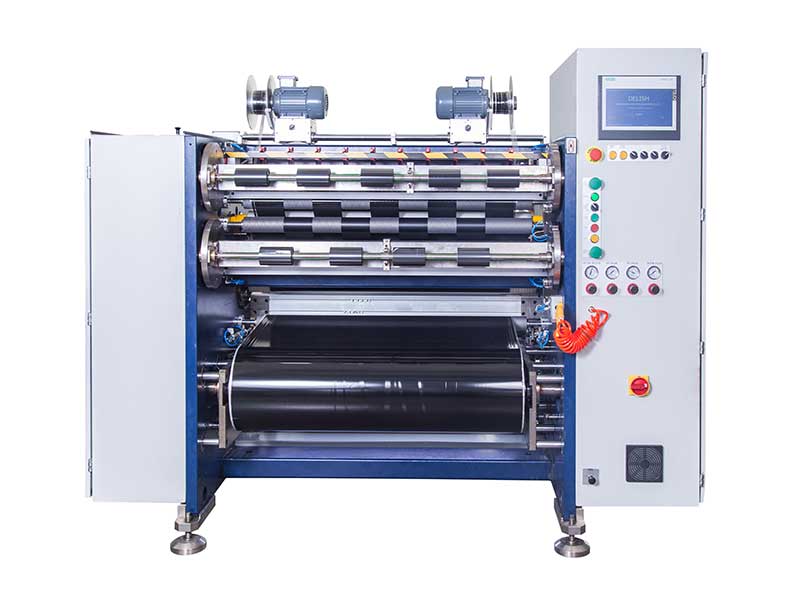 TTR Slitting Machine