
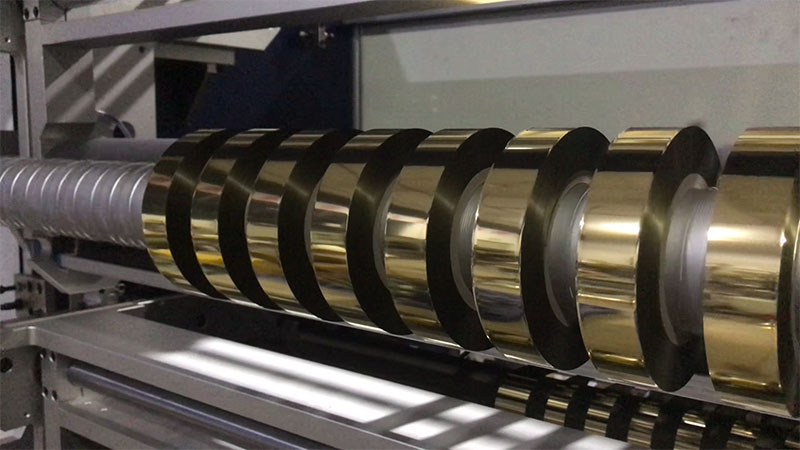
The hot stamping foil slitting machine is a key equipment in the back-end process of the printing and packaging industry, and its function is to cut large rolls of hot stamping foil (electrochemical aluminum) into narrow rolls according to the specified specifications for use by the hot stamping machine. Due to its fast operating speed (usually up to 200-400 m/min) and high precision requirements (tension control, winding neatness), the stable operation of the equipment directly determines the quality and efficiency of the hot stamping process.
If not properly maintained, the slitting machine is very prone to failures such as uneven end faces, tension fluctuations, and scratches. This article will elaborate on the scientific maintenance cycle of this type of equipment and the troubleshooting ideas of common faults.
1. Maintenance cycle
In order to ensure that the equipment is in a high-precision state for a long time, it is recommended to adopt a four-level maintenance system of "daily warranty, weekly warranty, monthly warranty, and annual warranty".
1. Routine maintenance (per shift)
Key points: cleaning, lubrication, spot inspection
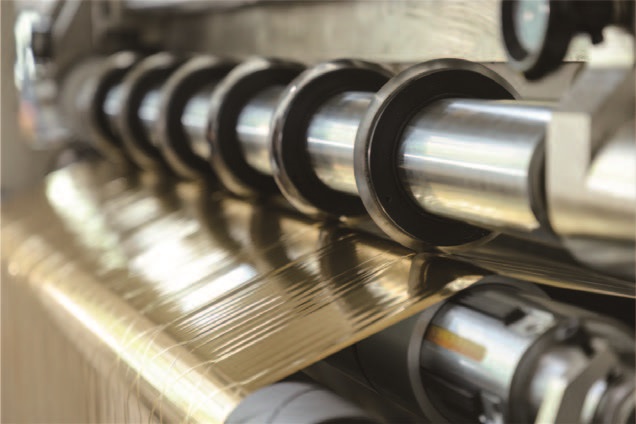
• Cleaning: Use an air gun or brush to remove dust and foil powder from tool holders, retracting reels, unwinding reels and passing rollers. Hot stamping foil is prone to electrostatic adsorption debris during the slitting process, which will cause indentations or scratches if not cleaned.
• Air circuit inspection: Check whether the barometer reading is in the standard range (usually 0.5-0.7MPa), check whether the water filter is stagnant water, and need to be manually drained before work.
• Blade inspection: Check whether the round or flat knife has chipping or passivation. If there is a burr on the slitting edge, the blade needs to be replaced immediately.
• Safety device: confirm whether the emergency stop switch and protective cover photoelectric induction are sensitive and effective.
2. Weekly maintenance (once a week)
Key points: transmission parts, tension rollers
• Roller cleaning: Use absolute alcohol to wipe down all rollers (especially rubber press rollers and aluminum rollers) to remove gum residue accumulated due to electrostatic adsorption and prevent film slippage or longitudinal streaks.
• Chain and screw: Lubricate the screw of the tool rowing mechanism and the chain of the winding arm, and add an appropriate amount of butter or lubricating oil to ensure that the tool row moves smoothly without stuttering.
• Screw tightening: Check whether the tool holder fixing screws and coupling screws are loose. The high-frequency vibration of the slitting machine can easily cause the screws to loosen, which can cause the tool position to shift or abnormal noise.
3. Monthly maintenance (once a month)
Focus: electrical control, precision calibration
• Electrical cabinet maintenance: When the power is off, use a vacuum cleaner to clean up the dust in the control cabinet (especially the dust accumulated on the frequency converter and PLC module) and check whether the cooling fan is running normally. Overheating is the number one cause of damage to electrical components.
• Tension System Calibration: Check if the zero point of the tension sensor (tension controller) is drifting. The unwinding and rewinding tensions are reviewed and calibrated using weights or standard methods.
• Transmission belt: Check the tension of the main drive belt and motor belt, too loose will cause slippage and loss of rotation, and too tight will damage the bearing.
4. Annual maintenance (once a year)
Focus: mechanical overhaul, core component replacement
• Bearing Replacement: Check the bearing clearance of all over rollers. For equipment that has been operating for more than 8000 hours, it is recommended to disassemble and inspect the spindle bearing and rewinding shaft bearing, and replace it immediately if there is any wear gap.
• Slip shaft maintenance: If the slip shaft is rewinded, it is necessary to disassemble the slip shaft, clean the friction plate inside, and check whether the steel ball is worn. The deterioration of slip shaft performance is the most common cause of uneven tightness of the winding.
• Accuracy restoration: Use a laser centering instrument to check the parallelism of each group of rollers, if the rollers are not parallel due to foundation settlement or long-term stress, mechanical adjustment is required.
2. Common fault analysis and troubleshooting
In the operation of the hot stamping foil slitting machine, the faults are often concentrated in three aspects: "end face quality", "tension control" and "operating noise".
Fault 1: Uneven slitting end face (jagged, burr)
Phenomenon: The edges of the foil roll after slitting are uneven, with sticking or white burrs.
Cause analysis:
1. Tool wear: The slitting blade has become dull, or the bite of the upper and lower knives (round knives) is not properly adjusted.
2. Changes in foil hardness: The coating hardness of different batches of hot stamping foil is different, and the original knife type (such as flat knife and flower knife) does not match.
3. Electrostatic interference: The humidity in the workshop is too low, causing the foil powder to be adsorbed at the knife edge, hindering smooth slitting.
Solution:
• Replace sharp blades, adjust the amount of overlap of the circular knife (usually 0.5-1mm) and lateral pressure.
• Install static elimination rods (electrostatic ropes) and appropriately increase the humidity in the workshop.
• Check the rigidity of the tool holder to prevent micro-vibration during high-speed operation.
Fault 2: Uneven winding end face (telescope phenomenon)
Phenomenon: The end face of the rolled foil roll is protruding layer by layer like a telescope, or it is "honeycomb-shaped".
Cause analysis:
1. Improper winding tension: The winding tension is too small, and the loose core leads to deviation; If the tension is too large, the material will stretch and deform.
2. Uneven pressure of the roller: The pressure at both ends of the winding roller (contact roller) is unbalanced, resulting in the foil roll being tight and loose.
3. Guidance system failure: The sensitivity of the guidance correction sensor (EPC) is reduced or the dead zone is set too large to track the edge in real time.
Solution:
• Reset the winding taper tension (the tension decreases as the coil diameter increases).
• Adjust the cylinder pressure at both ends of the winding press to ensure parallel contact.
• Clean the guise correction sensor lens and recalibrate the edge tracking points.
Fault 3: Material breakage (belt breakage) during operation
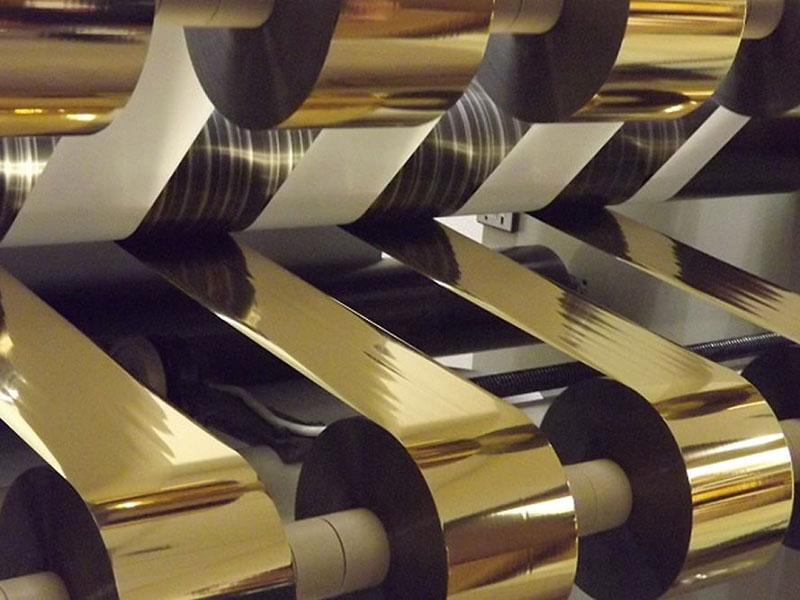
Phenomenon: When the equipment is running at high speed, the foil film suddenly breaks.
Cause analysis:
1. Raw material defects: There are weak joints or wrinkles inside the large coil master coil.
2. Sudden tension: The brake pads of the reel are severely worn, resulting in uneven braking force; Or the frequency converter parameter setting is too aggressive when accelerating and decelerating.
3. Foreign object jamming: There are hard foil chips or rubber blocks stuck in the gaps of the rollers, instantly scratching and tearing the foil film.
Solution:
• Check whether the torque output of the unwinding magnetic particle brake or servo motor is smooth.
• Adjust the acceleration and deceleration time of the frequency converter (appropriately extended) to avoid sudden stops and start-ups.
• Thoroughly clean the dirt accumulation on the surface and crevices of each passing roller.
Fault 4: Scratches or abrasions on the winding surface
Phenomenon: There are obvious line-like scratches on the surface of the foil roll after slitting.
Cause analysis:
1. The guide roller does not rotate: a certain roller bearing is stuck, causing the stationary roller surface to slide and rub with the high-speed moving foil surface.
2. Hard impurities: There is hardened glue or scars on the surface of the guide rollers.
Solution:
• Check the rollers one by one and check whether they rotate flexibly by hand.
• Lubricate or replace bearings that do not rotate.
• Use fine sandpaper to sand down the surface of the aluminum roller for minor scratches.
3. Conclusion
The hot stamping foil slitting machine belongs to high-precision processing equipment, and its characteristics of "three points rely on repair and seven points rely on maintenance" are particularly obvious.
In daily management, operators should establish a detailed equipment inspection record sheet to digitize tension parameters, blade replacement records, and bearing lubrication records. Through scientific periodic maintenance (especially regular calibration of the air circuit cleaning and tension system), it can not only greatly reduce downtime due to equipment failure, but also significantly improve the yield of hot stamping foil, providing high-quality raw material guarantee for the subsequent hot stamping process.
(Note: There are differences in structure and parameters of different brands and models of slitting machines, please be sure to refer to the "Instruction Manual" provided by the equipment manufacturer for specific maintenance operations.) )
 Common Problems with Hot Stamping Foil Slitting Machines and How to Solve Them
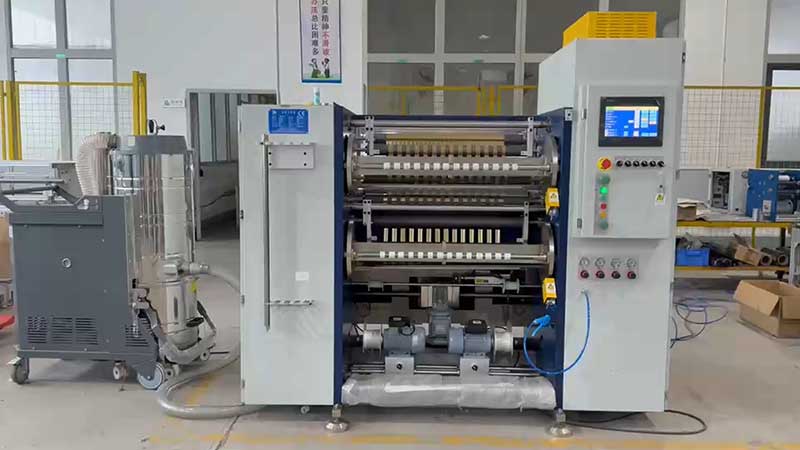 What Specifications Should You Look for in a Hot Stamping Foil Slitting Machine?
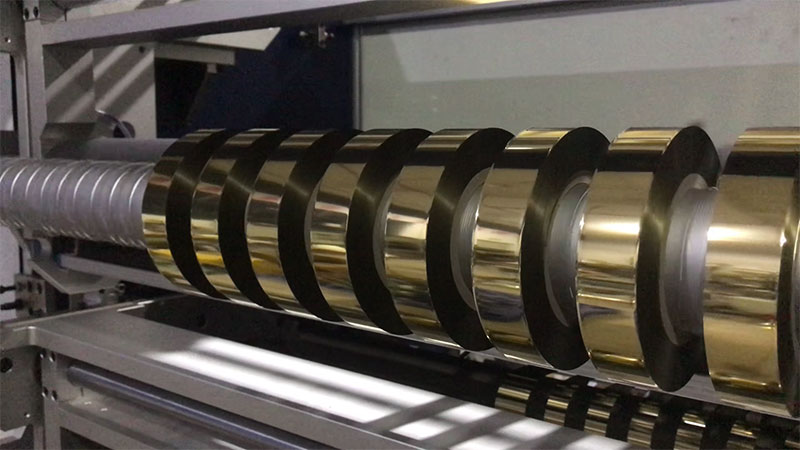 Hot Stamping Foil Slitting Machine Selection Guide: Tension Control Is Key
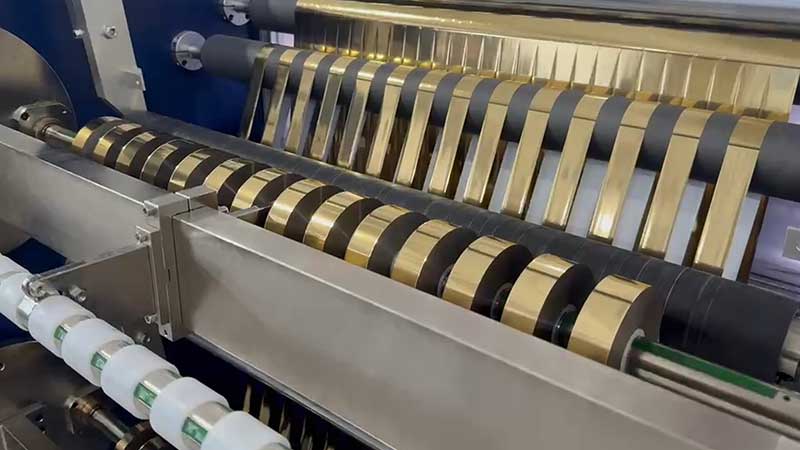 How to choose a hot stamping foil slitting machine? Let's first look at these three parameters
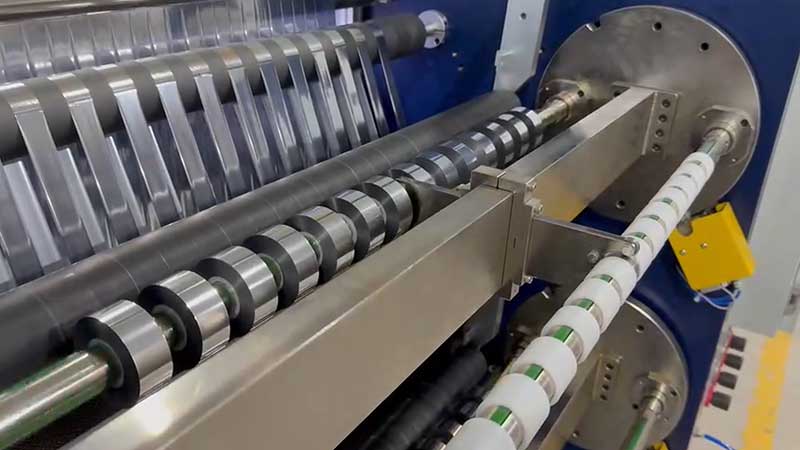 Selection of hot stamping foil slitting machines: how to match width and speed


 English
 Deutsch
 Français
 Español
 Português
 日本語
日本語 русский
 한국어
한국어 عربي
عربي ภาษาไทย
 Tiếng Việt
 Italiano
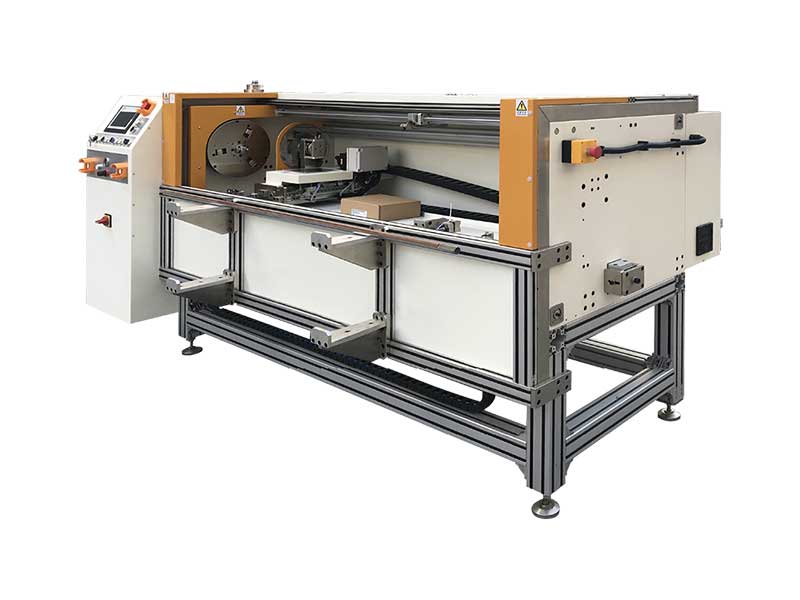 Automatic Foil Roll Cutting Machine
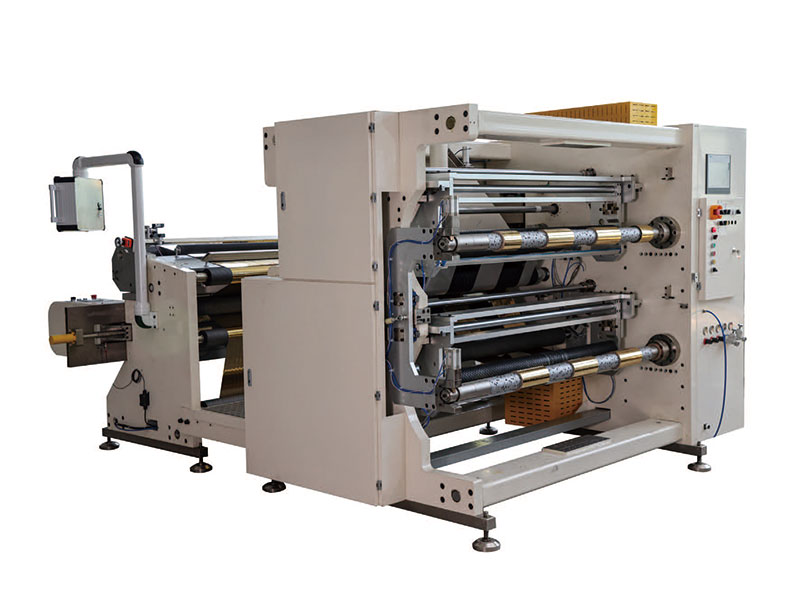 1400mm Hot Stamping Foil Slitting Machine
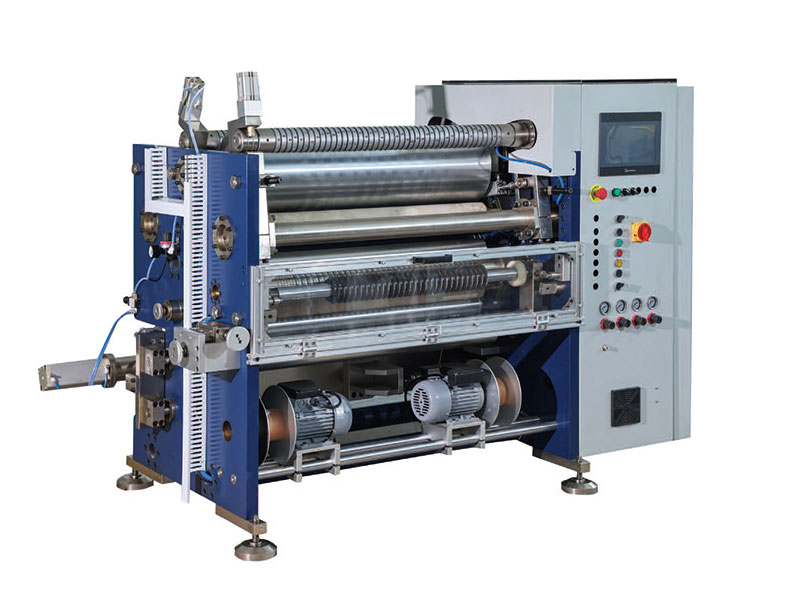 800mm Hot Stamping Foil Slitting Machine
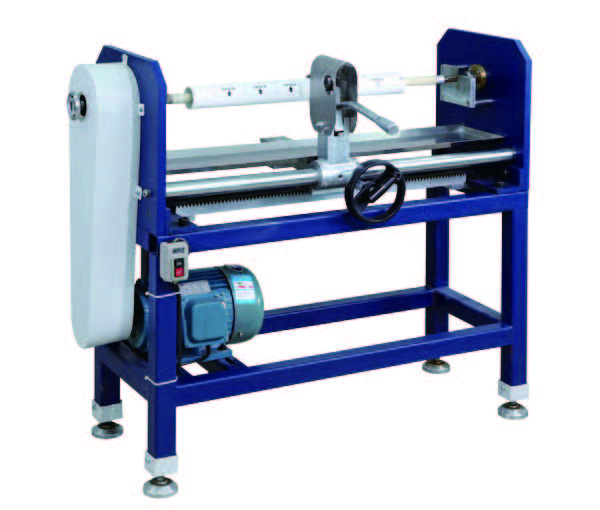 Manual Foil Roll Cutting Machine