
When the ribbon slitter is restarted after a shutdown, the ribbon wrinkling problem often occurs. This not only affects product quality, but also causes material waste and reduced production efficiency. This article will analyze in detail the main causes of wrinkles after downtime and provide practical solutions.
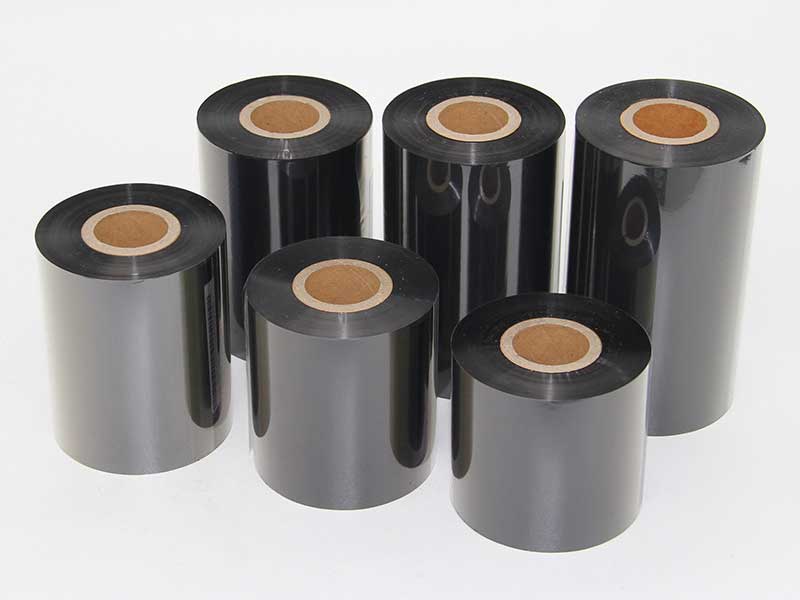
1. The main reasons for wrinkling after shutdown
1. Improper tension control
During shutdown, if the tension is not released or maintained constant in time, uneven stress distribution will occur between the layers of the ribbon. On restart, this stress difference manifests itself directly as folds.
2. Temperature and humidity changes
During downtime, fluctuations in the temperature and humidity of the shop floor environment can cause the ribbon material, especially the substrate and ink layer, to expand and contract. The expansion coefficient of different material layers is different, which is easy to generate internal stress, and the stress release forms wrinkles after restarting.
3. Deformation or contamination of the pressure roller and guide roller
When the machine is stopped, the pressure roller is in the same pressure position for a long time, which may cause local elastic deformation. In addition, residual adhesive or dust on the roll surface can create uneven friction on the ribbon during restart, causing wrinkles.
4. The retraction reel is eccentric or loose
If the reel is not locked after shutdown, or if there is a slight displacement due to vibration, the belt trajectory will deviate from the centerline when restarting, causing edge wrinkling or lateral folding.
5. The slitting blade is in poor condition
Worn blades or unbalanced installation can create uneven shear forces on the ribbon edges during downtime. After restarting, edge stress release results in localized wavy folds.
2. On-site diagnosis steps
Before taking corrective action, it is recommended to investigate in the following order:
1. Observe the fold morphology: longitudinal folds are mostly related to tension; transverse folds are mostly related to pressure rollers or guide rollers; Edge folds are often caused by the eccentricity of the scroll.
2. Check the duration of downtime: The causes of wrinkles can be different for short downtime (such as shift changes) and longer downtime (such as weekends).
3. Measure environmental data: Record temperature and humidity changes before and after shutdown.
4. Review operation records: Confirm whether standard tension release and roller lifting operations were performed during shutdown.
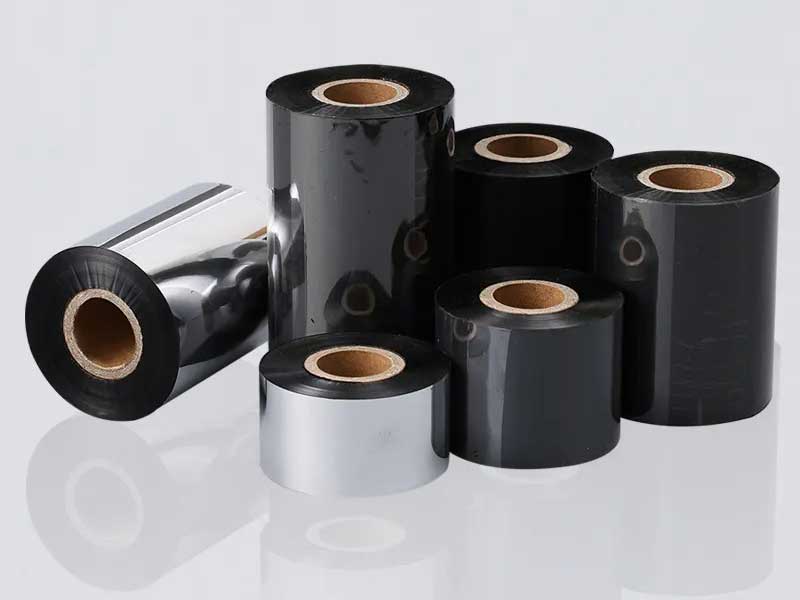
3. Solutions and preventive measures
Measures against tension problems
| Problem scenario | Workaround |
| Manual tension control | Manually reduce the tension to the minimum safe value (about 20% of the working tension) before shutdown, and slowly increase the pressure when restarting |
| Automatic tension control | Check the zero point drift of the tension sensor and recalibrate it if necessary; Set the "Soft Start" parameter so that the tension rises linearly within 3~5 seconds |
| Extended downtime (>8 hours) | Completely release the retraction and rewinding tension, and secure the core with a special clamp to prevent the reel from reversing |
Measures to address environmental impacts
• Install temperature and humidity monitor: ideal range: temperature 22±3°C, relative humidity 50%±10%.
• Avoid direct air conditioning blowing equipment: Local drastic temperature changes are an invisible killer.
• Cover with anti-static moisture barrier during downtime: reduce direct contact of the material with outside air.
Measures for mechanical conditions
1. Roller maintenance: develop the habit of lifting the roller when the machine is stopped; Check the cylindrical degree of the rubber press roller regularly, and replace it when the wear exceeds 0.2mm.
2. Guide Roller Cleaning: Clean all guide roller surfaces with absolute alcohol every week, paying special attention to the edge grooves.
3. Reel concentricity correction: Use a dial indicator to detect the radial runout of the retracting and unwinding reel every month, with a permissible range ≤ 0.05mm.
Optimized for slitting blades
• After stopping, the tool holder should be retracted to a safe position to prevent the blade from pressing the ribbon for a long time.
• Check the overlap and side pressure of the blade, and the recommended overlap amount is 50%~70% of the material thickness.
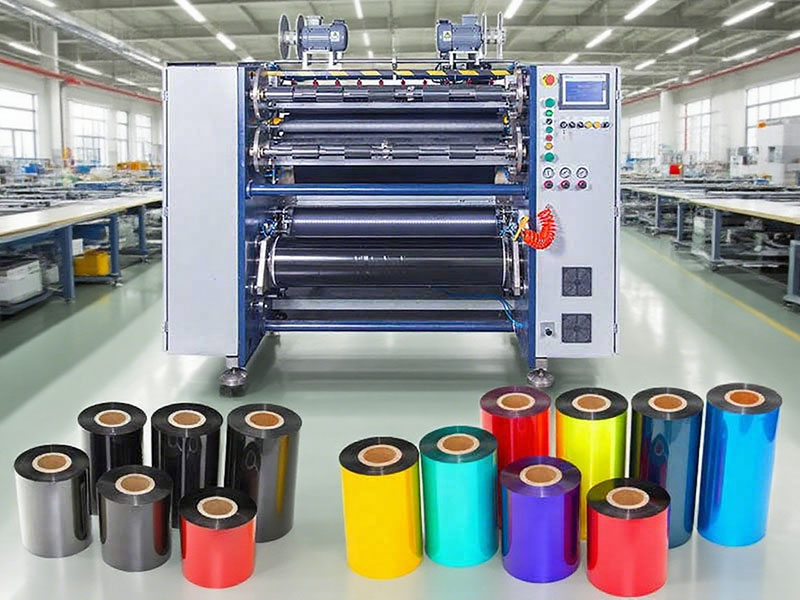
4. Emergency handling skills
If there is already a slight wrinkle after restarting, there is no need to stop immediately:
1. Low-speed running combination: Run 10~15 meters at 30% of normal speed to let the ribbon flatten naturally.
2. Fine-tune the angle of the guide roller: Slight swing of an adjustable guide roller (usually within ±2°) to artificially introduce a reverse bending stress to offset the fold.
3. Section inspection and cutting: If the folds are concentrated in a certain section, you can mark and cut off the section to prevent it from getting involved in the finished roll.
5. Suggestions for operating specifications
Develop and implement the following operating specifications to fundamentally reduce downtime and wrinkle problems:
• Standard shutdown process: deceleration → tension reduction → lifting of the roller → release reel lock → recording of the shutdown position.
• Standard start-up process: check the cleanliness of the roll face → confirm the reel alignment → run at low speed (20% speed) for 5 meters → gradually increase the speed and tension to normal values.
• Shift handover checklist: including roller status, guide roller cleaning, blade position, temperature and humidity.
Epilogue
Wrinkling after the carbon ribbon slitting machine is not inevitable, the key is to understand the interaction between tension, environment, and machinery. Through standardized operation, regular maintenance, and scientific debugging, the vast majority of wrinkling problems can be effectively controlled. If the above methods still cannot be solved, it is recommended to contact the equipment manufacturer for an in-depth diagnosis of the tension control system, or consider upgrading to a closed-loop automatic tension adjustment system.
I hope this article can provide a practical reference for your production site.
 Can a barcode ribbon slitting machine cut and thermal transfer ribbons?
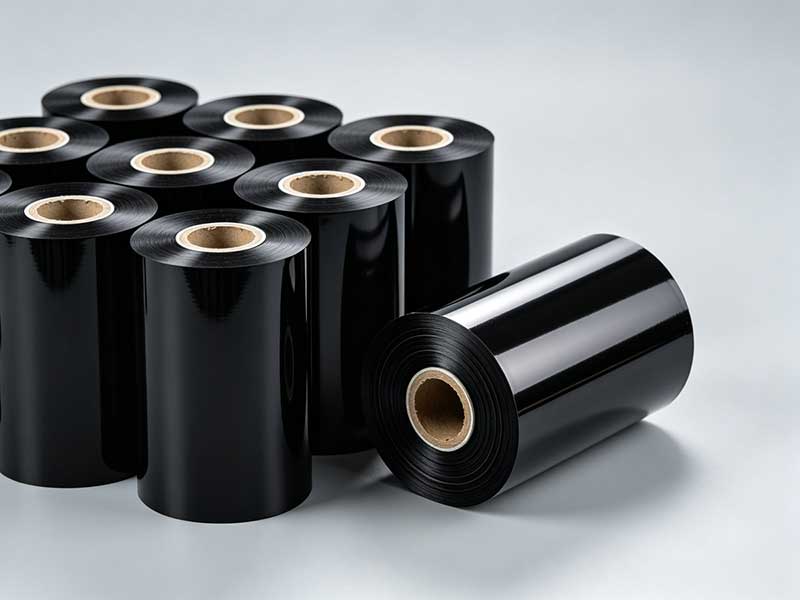 What ribbon materials are suitable for the barcode ribbon slitting machine?
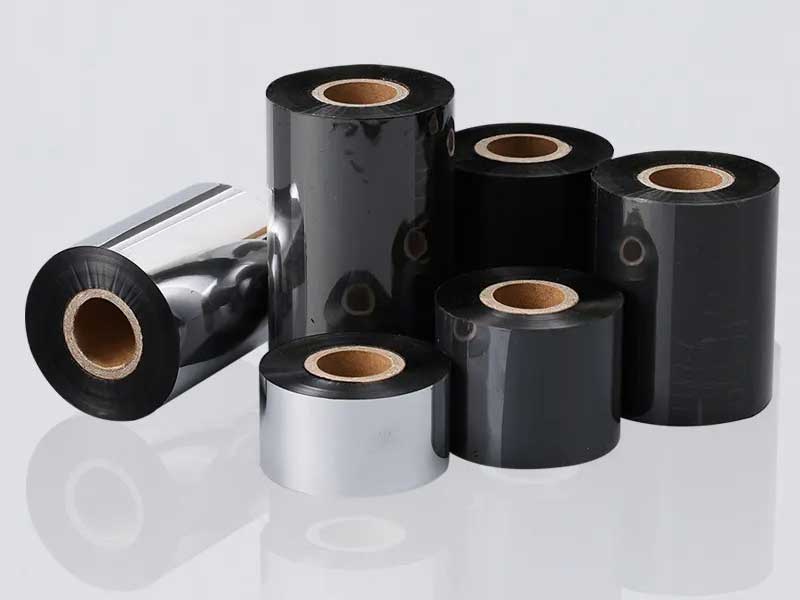 How to propose customized requirements for barcode ribbon slitting machines?How to choose a barcode ribbon slitting machine? Core Features and Key Selection PointsThe ribbon slitting machine for the barcode printer is suitable for ribbon types


 English
 Deutsch
 Français
 Español
 Português
 日本語
日本語 русский
 한국어
한국어 عربي
عربي ภาษาไทย
 Tiếng Việt
 Italiano
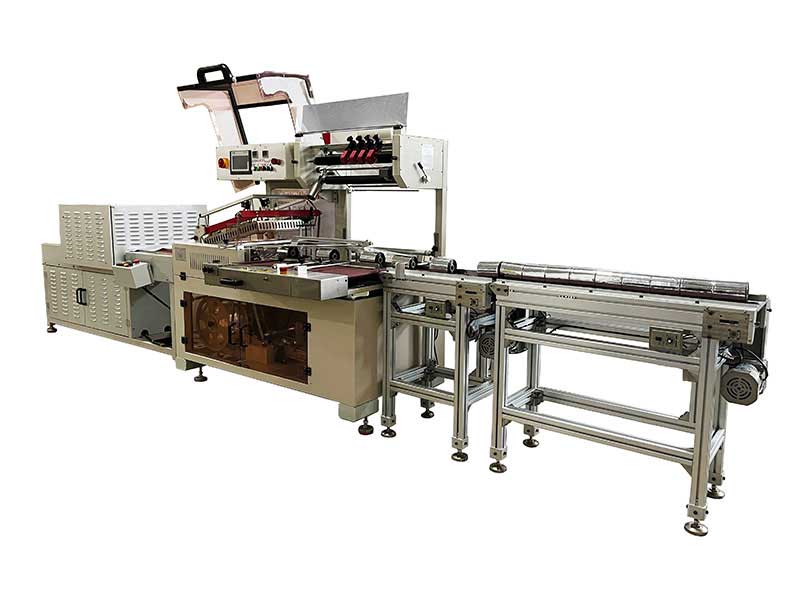 Thermal Transfer Ribbons Packaging Machine
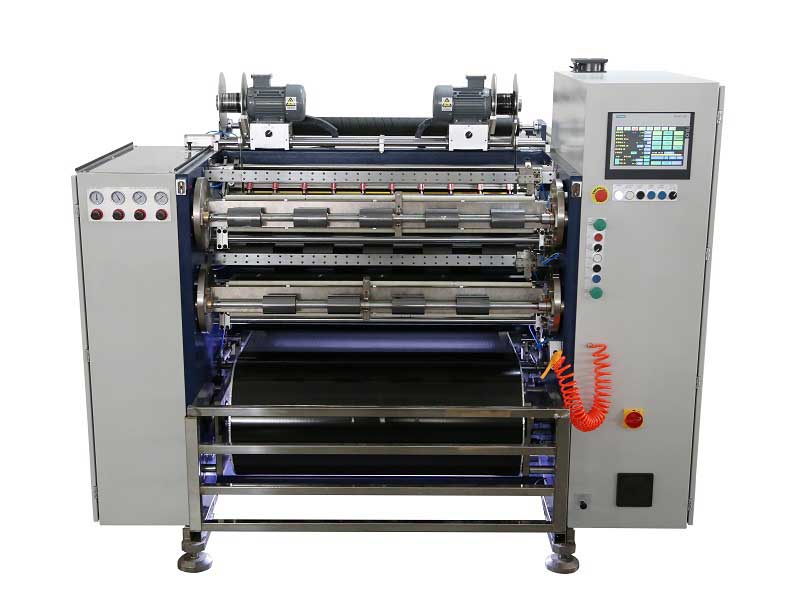 Automatic Thermal Transfer Ribbon Slitting Machine RSDS8 H PLUS
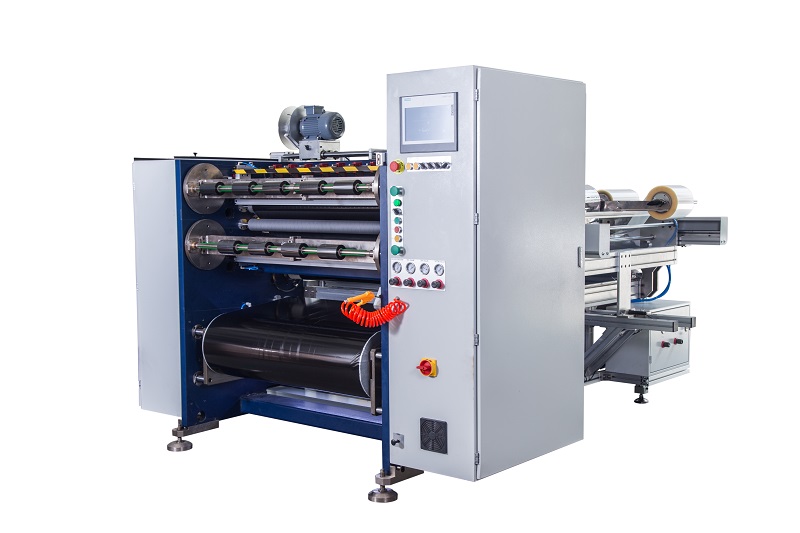 Semi Automatic Thermal Transfer Ribbon Slitting Machine RSDS5 PLUS
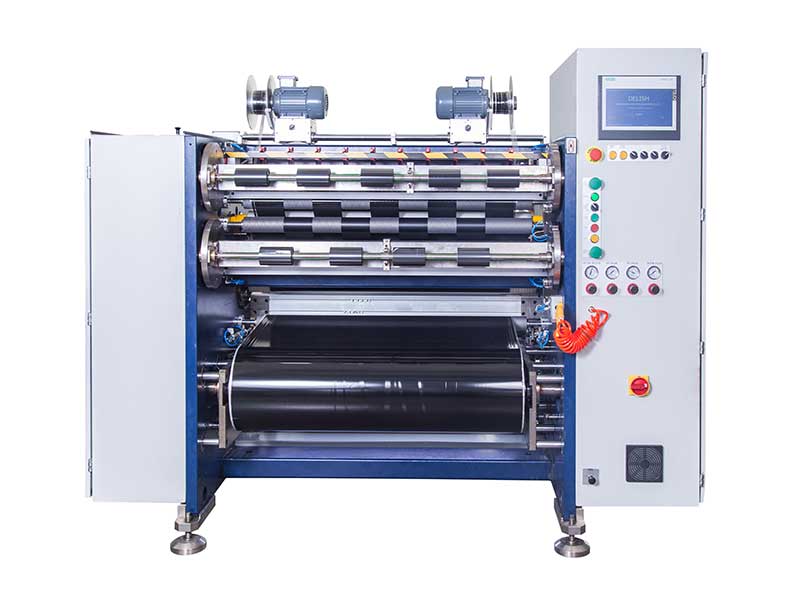 TTR Slitting Machine