
In the production and processing of hot stamping foil, the slitting machine is the core equipment to realize the fixed width slitting of coils. However, many operators will find that the noise of the equipment will gradually increase after long-term use, especially in high-speed and high-precision slitting tasks, the harsh abnormal noise not only affects the working environment, but may also be an early signal of hidden dangers of the equipment. Among them, bearing condition and tool seat rigidity are the two most important directions.
1. Noise characteristics: first identify the type, and then find the source
The noise of the slitting machine during operation can be roughly divided into three categories:
1. Continuous high-frequency whistling: Often associated with poor bearing lubrication, worn rolling elements, or damaged cages.
2. Periodic impact sound: mostly caused by bending of the tool shaft, loose tool holder, or uneven gap between the blade and the bottom knife.
3. Low-frequency resonance sound: It is common in the lack of rigidity of the tool holder, deformation of the mounting base, or loose fasteners.
For hot stamping foil slitting machines (thin material, tension sensitive and high speed), high-frequency whistling and periodic impact sounds are the most typical, directed directly to the bearing and tool block system.
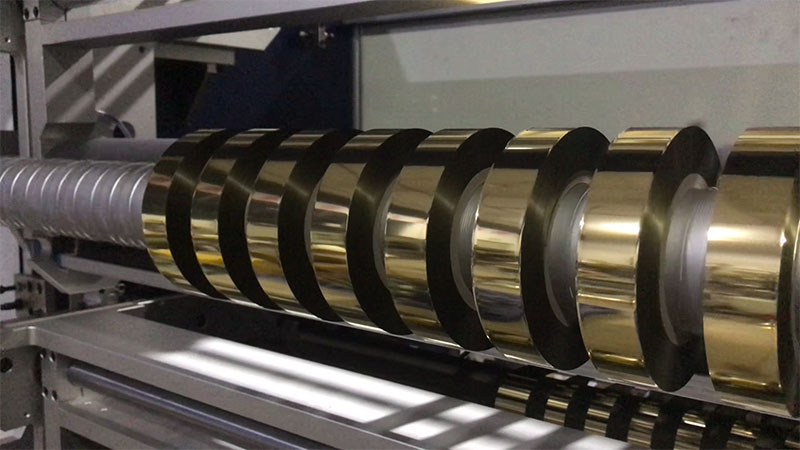
2. Bearing inspection: health examination of the "joint" of the slitting machine
The spindle bearings of slitting machines are subjected to radial cutting forces and periodic vibrations, which are the number one source of noise.
Troubleshooting steps:
1. Preliminary judgment of hearing and touch
If you hear an obvious "click" sound or feel a sense of stagnation, it means that the rolling element or raceway has been damaged. Use a listening stick against the housing during operation to compare the front and rear sounds.
2. Temperature monitoring
When the bearing is severely worn or lubrication fails, the surface temperature will rise abnormally (usually above 70°C is a warning). The surface of the bearing housing can be measured at multiple points with an infrared temperature measuring gun.
3. Vibration analysis
A portable vibrometer is used to detect the vibration velocity (mm/s) and acceleration (high frequency) of the bearing position. If the acceleration value increases significantly, it usually means that the bearing is fatigued and peeling off in the early stages.
4. Disassembly inspection
If the above abnormalities are obvious, the bearing should be removed to check: whether the cage is broken, whether the rolling element has pockmarks, and whether the inner and outer ring raceways have peeling or indentation. The hot stamping foil slitting machine often uses high-precision angular contact ball bearings or cylindrical roller bearings, and it is recommended to choose the precision level above P5 when replacing it, and install it according to the preload force.
Common consequences:
After the bearing clearance is too large or worn, the radial runout of the cutter shaft increases, which directly leads to slitting edge jagging, burrs, and even foil tearing.
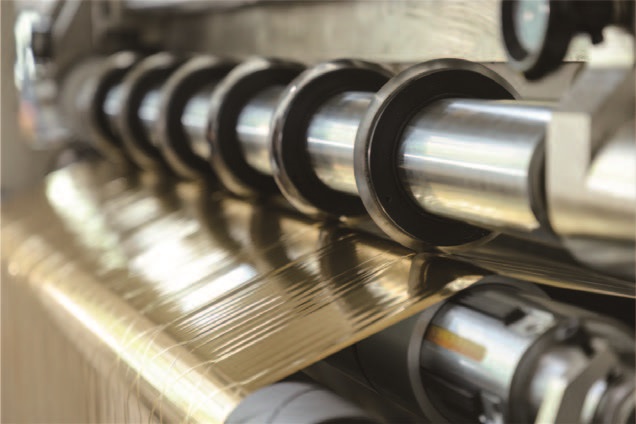
3. Rigidity investigation of the tool seat: the double test of static stiffness and dynamic stiffness
The tool holder system includes the tool shaft, tool sleeve, lock nut, blade mounting flange, and connection to the frame. When the rigidity is insufficient, the cutting force will stimulate the structural resonance and produce abnormal noise.
Key points of investigation:
1. Check the locking status
Is the lock nut between the blade and the cutter shaft loose? The hot stamping foil slitting machine has high speed, frequent start and stop, and is easy to loosen when connected with ordinary flat keys or single nut locks. Check whether double nut anti-loosening, hydraulic locking or taper sleeve connection should be used.
2. Tool holder mating clearance
Is the mating gap between the tool shaft and the bearing housing, the tool sleeve and the tool shaft exceeding the standard? Generally, slitting machines require a mating gap within 0.003-0.01mm. When the gap is too large, the radial runout of the knife shaft can be measured with a dial indicator (usually required ≤ 0.01mm).
3. Connecting bolts between the frame and the tool holder
Check for loose bolts between the tool holder base and the main frame. Long-term vibration can cause bolt preload to drop or even break. A torque wrench should be used to re-tighten the standard torque.
4. Structural resonance analysis
If the noise occurs only in a specific speed range, it may coincide with the natural frequency of the tool holder system with the excitation frequency. You can try changing the slitting speed to see if the noise disappears. If it disappears, it means that the static stiffness of the tool holder needs to be increased (such as adding a rib plate or switching to a monolithic casting seat) or increasing damping (such as filling polymer damping material).
Typical manifestations of insufficient stiffness of the knife seat:
◦ Obvious vibration lines appear during slitting (wavy edges of the foil strip).
◦ Noise increases significantly with increased blade wear.
◦ Blade life is greatly reduced and even chipped.
4. Comprehensive diagnosis process suggestions
When the noise of the slitting machine is too loud, it is recommended to troubleshoot in the following order:
1. Stop the machine safely, clean up the waste debris, and visually check whether the blade has chips and whether there are visible cracks in the knife holder.
2. Manually turn the wheel, feel whether the rotation is uniform and whether there are any jamming points.
3. No-load operation, acceleration step by step, recording the rotational speed and characteristics of noise.
4. Load operation (slitting the actual foil), compare the difference in no-load noise, and judge whether it is related to cutting force.
5. Check the bearing and tool holder separately:
◦ Vibration, temperature, → locking bearings.
◦ Measure runout, locking torque, resonance point, → Lock tool holder rigidity.
6. Repair or replacement: If the bearing is damaged, replace it in pairs (pay attention to the original clearance group); If the tool holder is not rigid enough, it can be fastened first, and if the design defect is defective, consider adding a support or replacing the tool holder with high rigidity.
5. Preventive maintenance suggestions
• Regular lubrication: According to the requirements of the equipment manual, add the appropriate grade of grease or lubricating oil to the bearings to avoid noise and ablation caused by dry friction.
• Dynamic balance verification: The tool shaft assembly (including blades and knife sleeves) should be dynamically balanced every six months to avoid vibration noise caused by unbalanced mass.
• Torque marking method: Torque marking (line drawing method) is used for key bolts in the tool holder, and the markings are visually checked for misalignment before each start-up.
• Noise baseline recording: Regularly record noise decibel values and spectral characteristics at different speeds to establish a "healthy baseline" for early detection of anomalies.
Epilogue
The noise of the hot stamping foil slitting machine is not an inevitable "normal phenomenon", it is often a direct reflection of the deterioration of the accuracy of the equipment. Once there is a problem between the two, it will not only produce noise, but also directly affect the slitting quality of the hot stamping foil - there will be serious defects such as burrs, width deviations, and foil powder falling off.
Therefore, when the noise of the slitting machine increases abnormally, please check the bearing and measure the rigidity as soon as possible. A quiet tool shaft system is a reliable prerequisite for efficient, stable and high-quality production.
 Common Problems with Hot Stamping Foil Slitting Machines and How to Solve Them
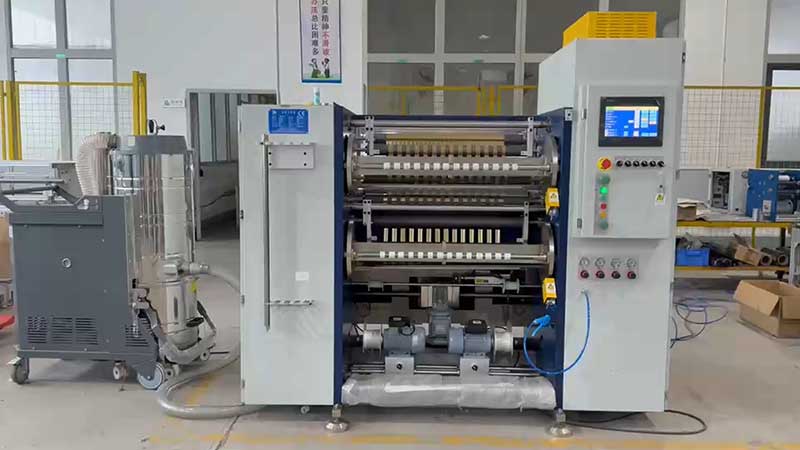 What Specifications Should You Look for in a Hot Stamping Foil Slitting Machine?
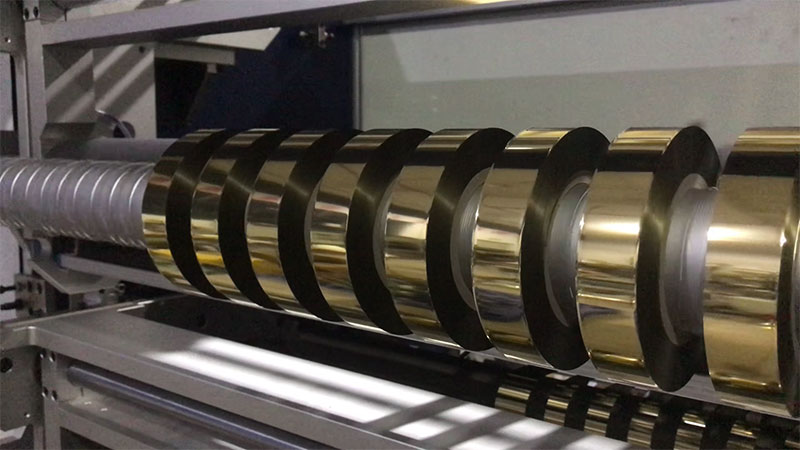 Hot Stamping Foil Slitting Machine Selection Guide: Tension Control Is Key
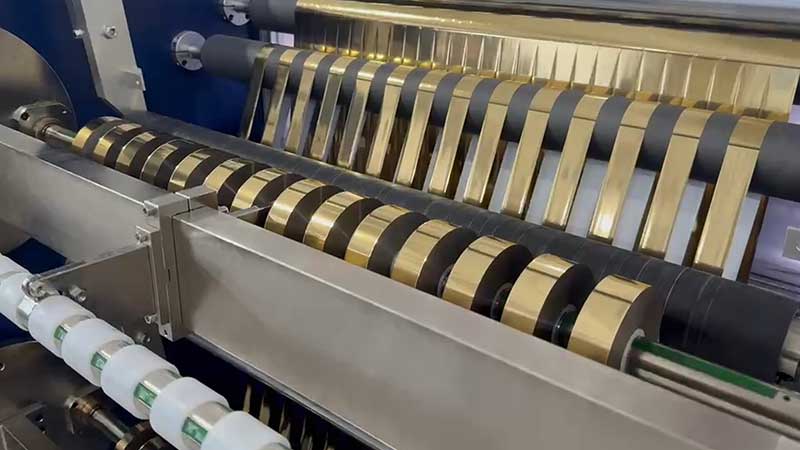 How to choose a hot stamping foil slitting machine? Let's first look at these three parameters
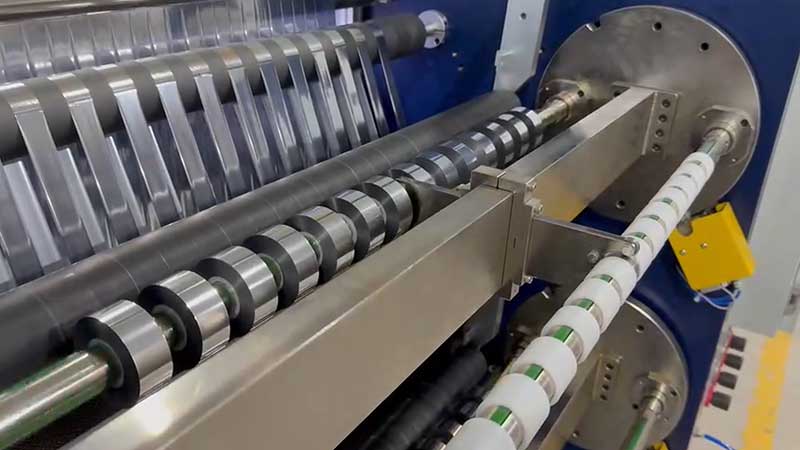 Selection of hot stamping foil slitting machines: how to match width and speed


 English
 Deutsch
 Français
 Español
 Português
 日本語
日本語 русский
 한국어
한국어 عربي
عربي ภาษาไทย
 Tiếng Việt
 Italiano
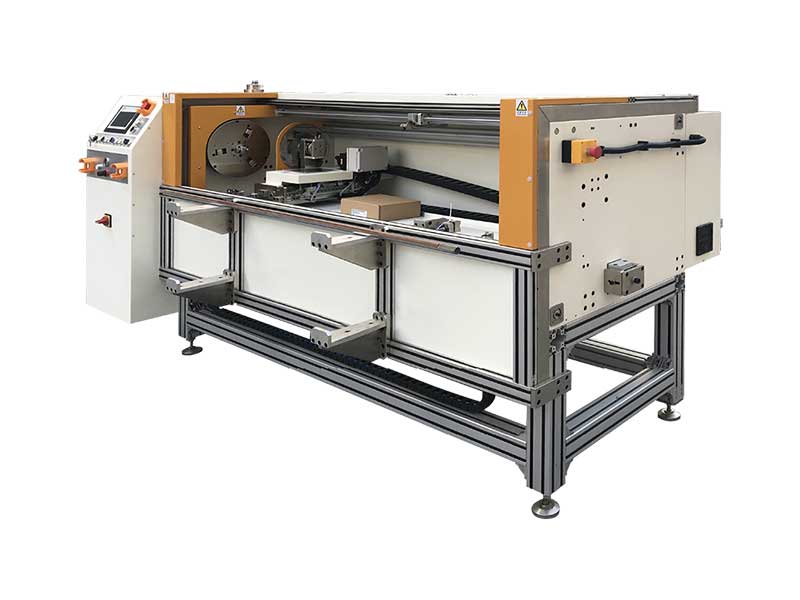 Automatic Foil Roll Cutting Machine
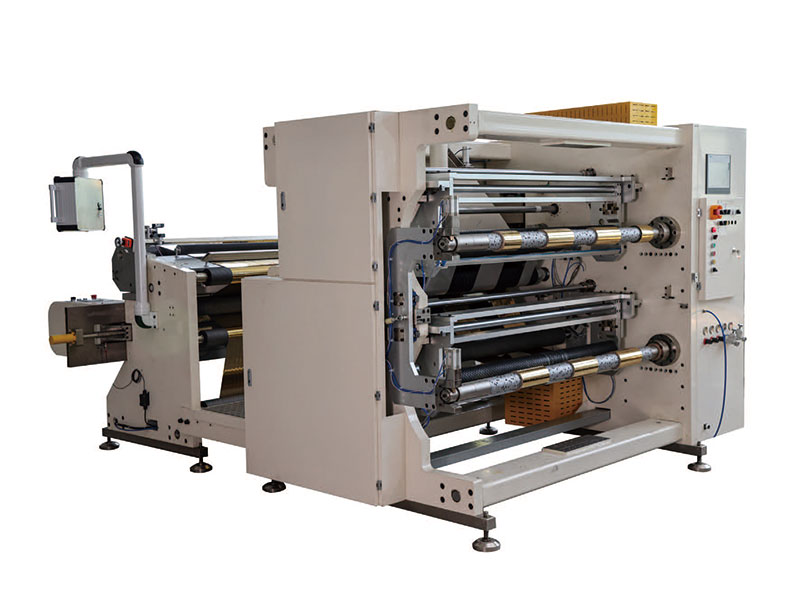 1400mm Hot Stamping Foil Slitting Machine
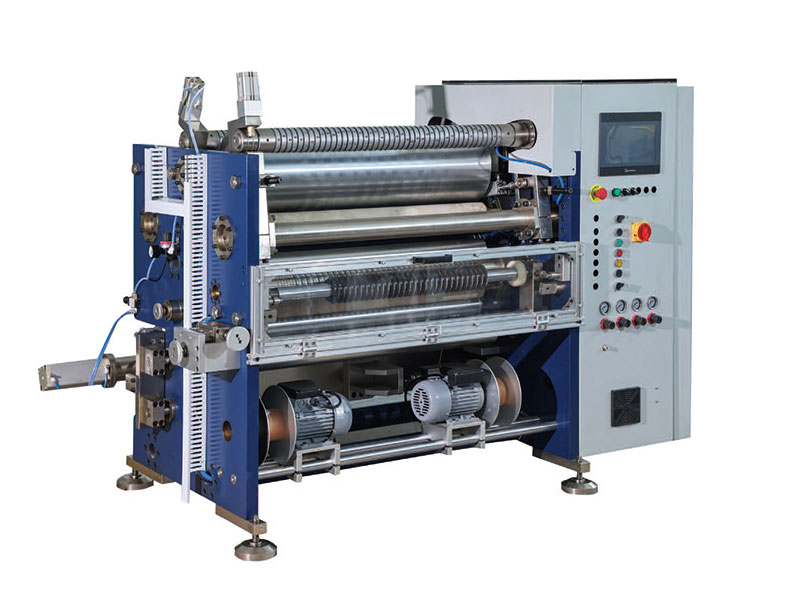 800mm Hot Stamping Foil Slitting Machine
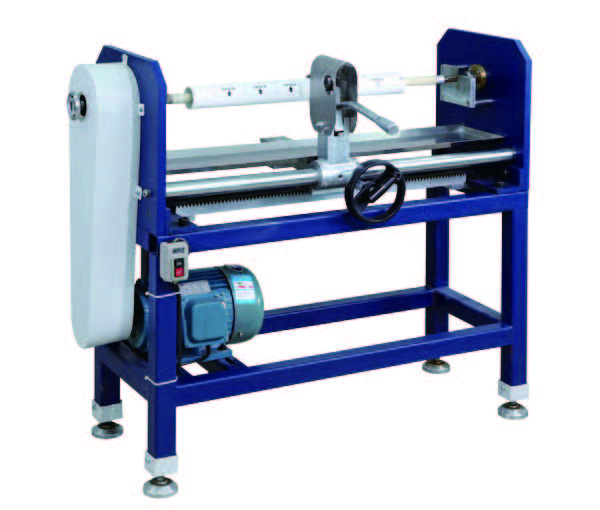 Manual Foil Roll Cutting Machine