
In industries such as barcode printing and packaging marking, ribbon slitting machines are key equipment that connects raw materials with finished coils. If you choose the right one, the production efficiency will double and the scrap rate will plummet; If you choose the wrong one, not only will the edges of the cut ribbon be rough and uneven, but you may also have problems such as deviation and broken belt, which will affect the subsequent printing effect.
So, in the face of different brands and configurations of slitting machines on the market, how to choose? In fact, by grasping the following three core parameters, you can quickly judge whether a piece of equipment is suitable for your production needs.
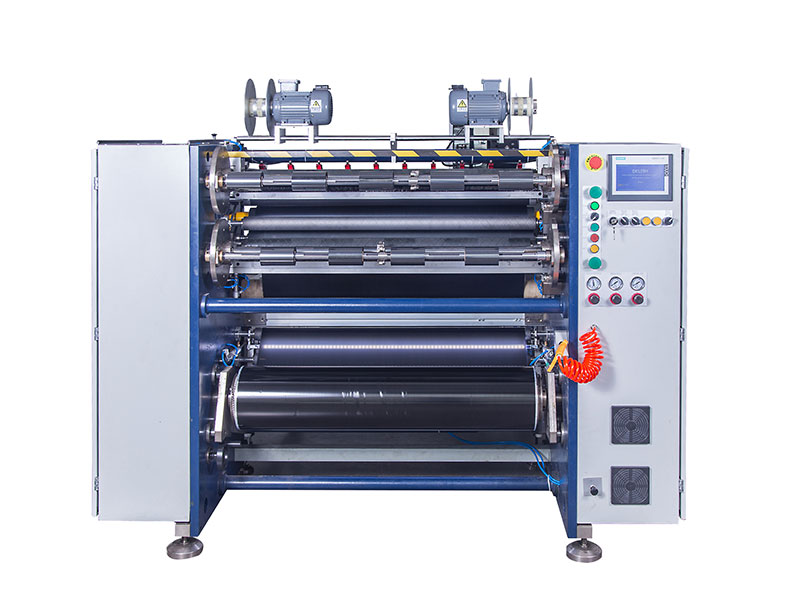
Parameter 1: Slitting accuracy (tolerance range)
The slitting accuracy is the primary indicator to measure the performance of the ribbon slitting machine, which directly determines the width consistency of the finished ribbon.
• Industry standard reference: The accuracy of ordinary grade slitting machines is usually around ±0.5mm; The high-precision model can be controlled within ±0.1mm or even ±0.05mm.
• Impact analysis: Insufficient accuracy can lead to uneven ribbon edges, which can easily lead to problems such as belt shift, missing printed content, or uneven ink layer shedding during printing. For ribbons used in high-resolution barcodes, precision electronic labels, and other scenarios, the accuracy requirements are particularly stringent.
• Selection suggestion: Prefer equipment equipped with servo-controlled tension system and highly rigid tool holder structure, and require manufacturers to provide the actual slitting sample detection data rather than theoretical values.
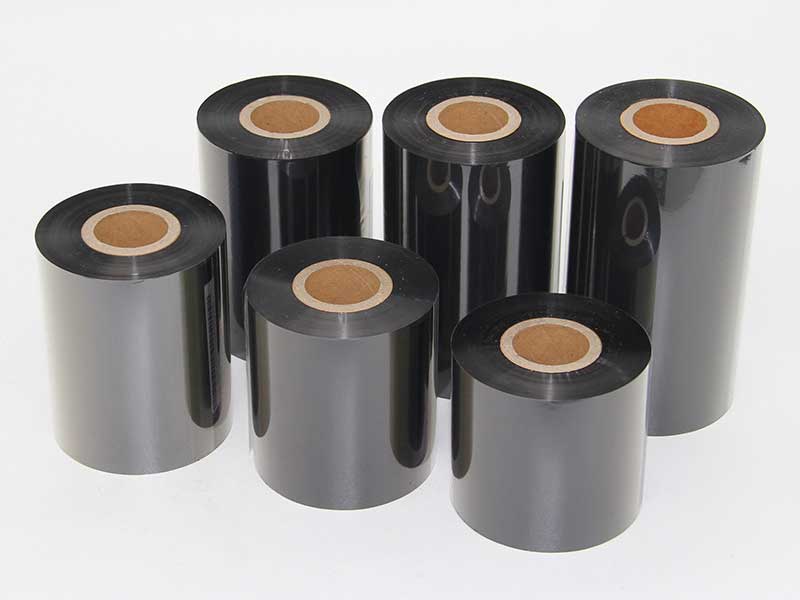
Parameter 2: Maximum slitting speed (m/min)
Slitting speed determines the output per unit time and is the core indicator of efficiency.
• Common speed ranges:
◦ Low-speed economy: 50–100 m/min
◦ Medium speed general purpose: 150–250 m/min
◦ High-speed production type: 300–500 m/min and above
• Myth reminder: You can't just look at the nominal maximum speed. The actual available speed is affected by the ribbon material (wax-based, mixed-based, resin-based), thickness, width, and winding diameter. For example, resin-based ribbons usually need to run at a 20%–30% lower speed due to their harder coating and lower toughness.
• Selection suggestion: According to your main product type, the manufacturer is required to use the same specification of carbon ribbon for on-site trial cutting, and observe the start-stop control, winding neatness and joint processing effect at high speed.
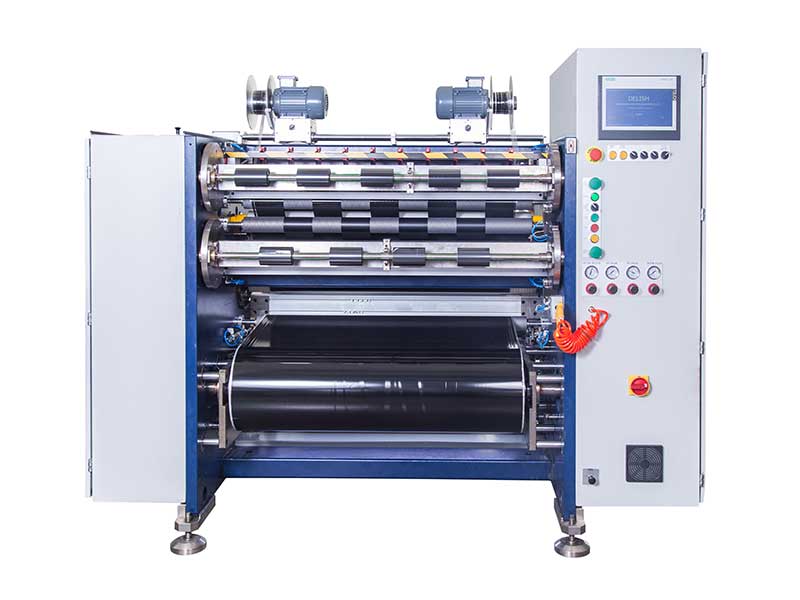
Parameter 3: Winding neatness (end face deviation)
Winding neatness is often overlooked, but it directly affects back-end packaging, automatic reel change, and printer belt smoothness.
• Key control indicators: End-face deviation should generally be controlled within ±1mm (up to ±0.5mm for high-end devices).
• Influencing factors: mainly depends on the winding tension control system (automatic taper tension vs. manual mechanical friction plates) and the guiding device (ultrasonic or photoelectric edge correction).
• Common problems: "flare" on the end face, "jagged" edges, or internal wrinkles after slitting indicate a problem with the winding control. These defects can easily cause ribbon breakage or printer cassettes during subsequent unwinding printing.
• Selection suggestion: Choose a model equipped with closed-loop tension control + active deviation correction, and check whether the winding arm is uniform and whether the mandrel runout is small enough.
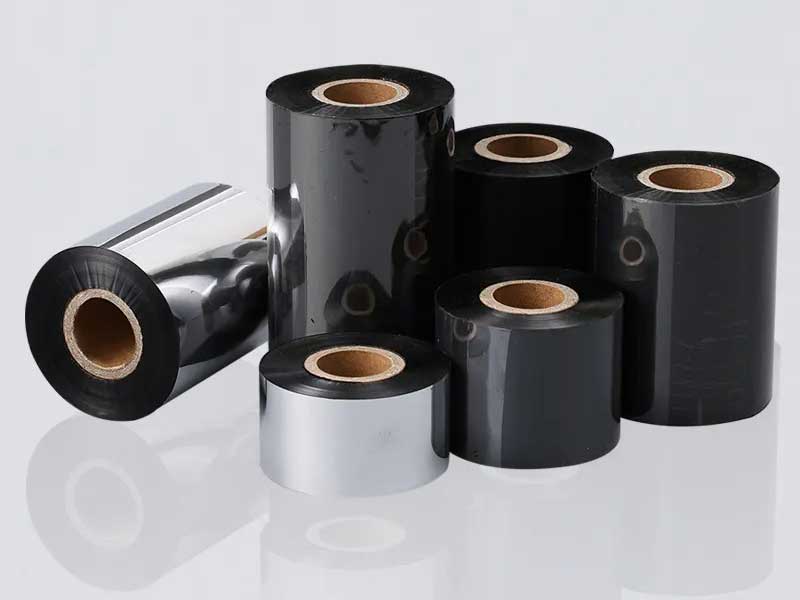
Comprehensive selection strategy
In addition to the above three core parameters, it should also combine its own business characteristics:
| Type of business | Recommended configuration focus | Reference speed | Accuracy requirements |
| Small batches, multiple specifications (proofing, short orders) | Easy order change, programmable tool position, wide adaptability | 100–150m/min | ± within 0.3mm |
| Large quantities of standard wide ribbons | High-speed continuous operation, automatic cutter, large coil winding | More than 250m/min | ± within 0.2mm |
| High-end resin-based/specialty ribbons | Low tension control, anti-static treatment, blade heating function | 150–200m/min | ± within 0.1mm |
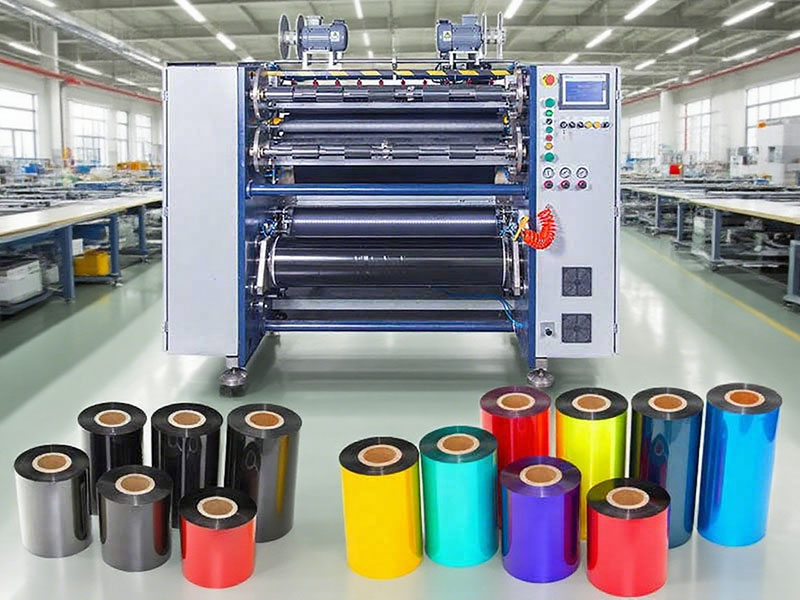
One last reminder: trial cutting is more important than parameters
No matter how beautiful the parameter table is, it is highly recommended to use your own ribbon master roll for on-site trial cutting before purchasing. Focus on:
1. Edge quality at different widths (narrowest and widest gauges);
2. Rewinding stability during high-speed start and emergency stop;
3. Tension consistency when running continuously for more than 2000 meters.
A good ribbon slitting machine is not only the equipment, but also part of quality control. Only by grasping the three core parameters of slitting accuracy, slitting speed and winding neatness, combined with their own product structure and output needs, can we choose the right model that truly improves efficiency and reduces losses.
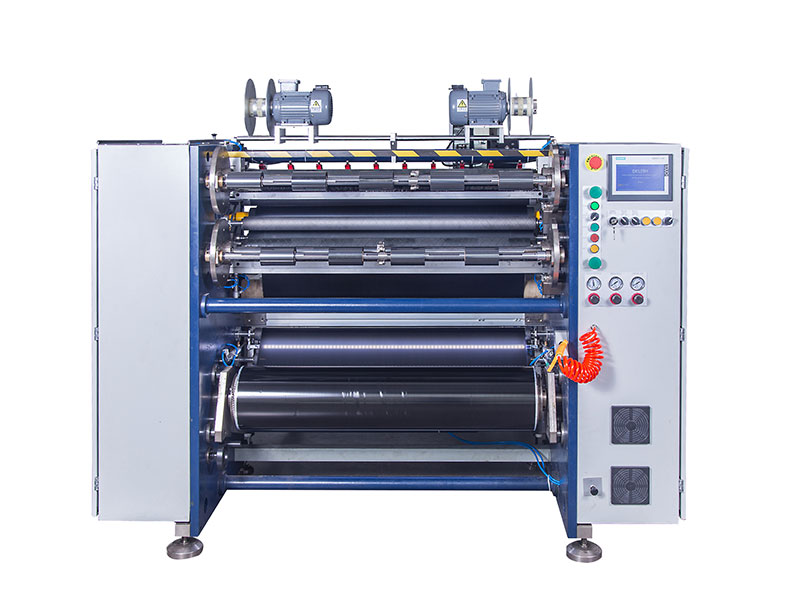 Can a barcode ribbon slitting machine cut and thermal transfer ribbons?
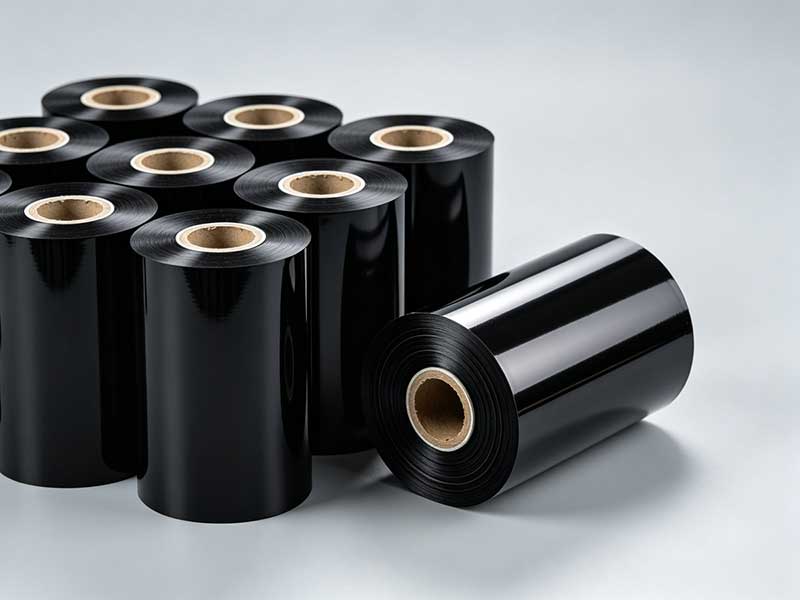 What ribbon materials are suitable for the barcode ribbon slitting machine?
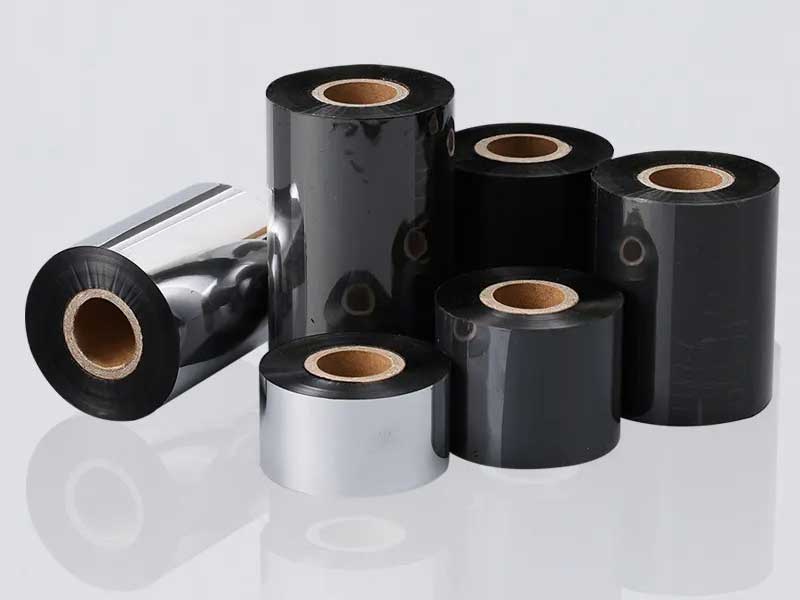 How to propose customized requirements for barcode ribbon slitting machines?How to choose a barcode ribbon slitting machine? Core Features and Key Selection PointsThe ribbon slitting machine for the barcode printer is suitable for ribbon types


 English
 Deutsch
 Français
 Español
 Português
 日本語
日本語 русский
 한국어
한국어 عربي
عربي ภาษาไทย
 Tiếng Việt
 Italiano
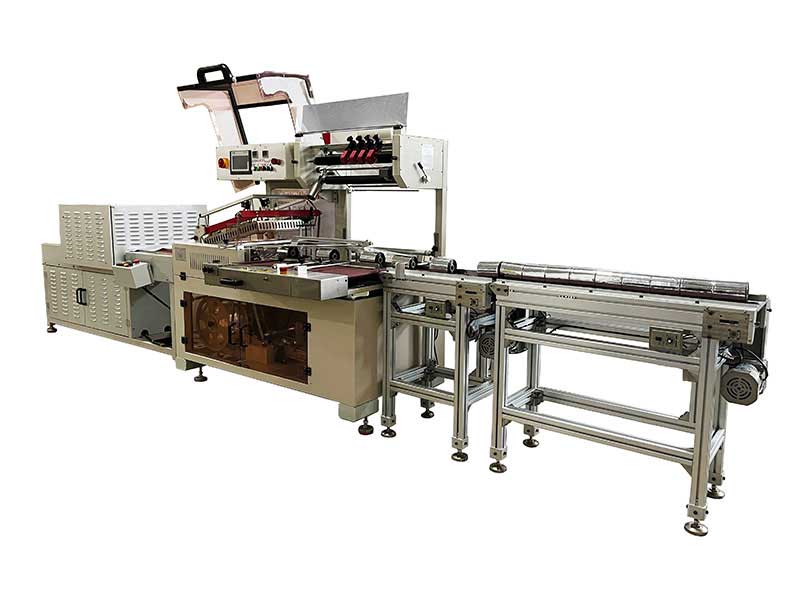 Thermal Transfer Ribbons Packaging Machine
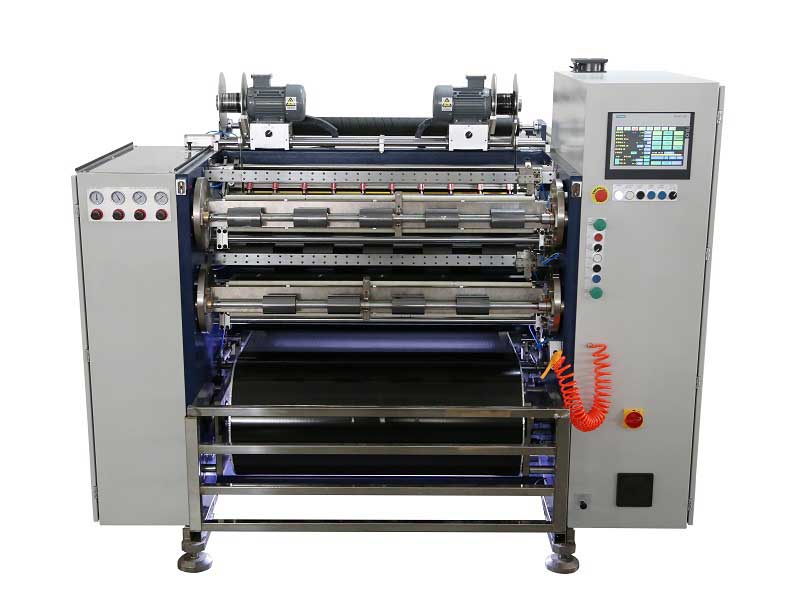 Automatic Thermal Transfer Ribbon Slitting Machine RSDS8 H PLUS
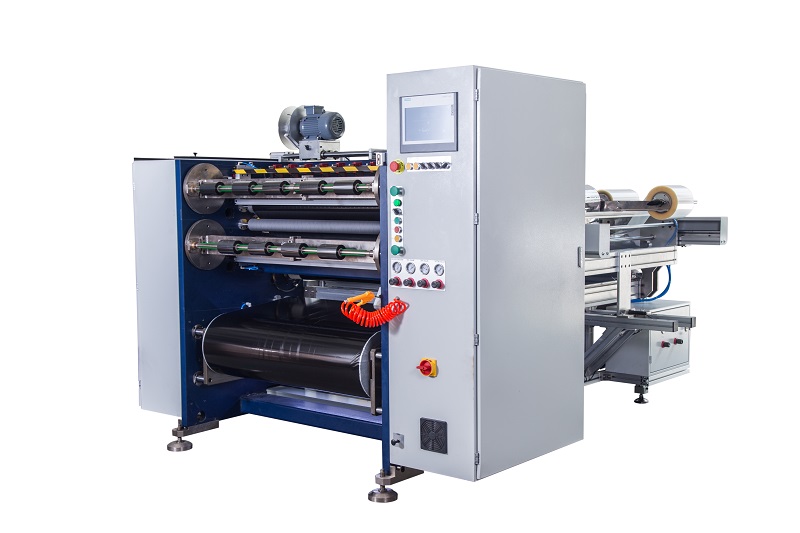 Semi Automatic Thermal Transfer Ribbon Slitting Machine RSDS5 PLUS
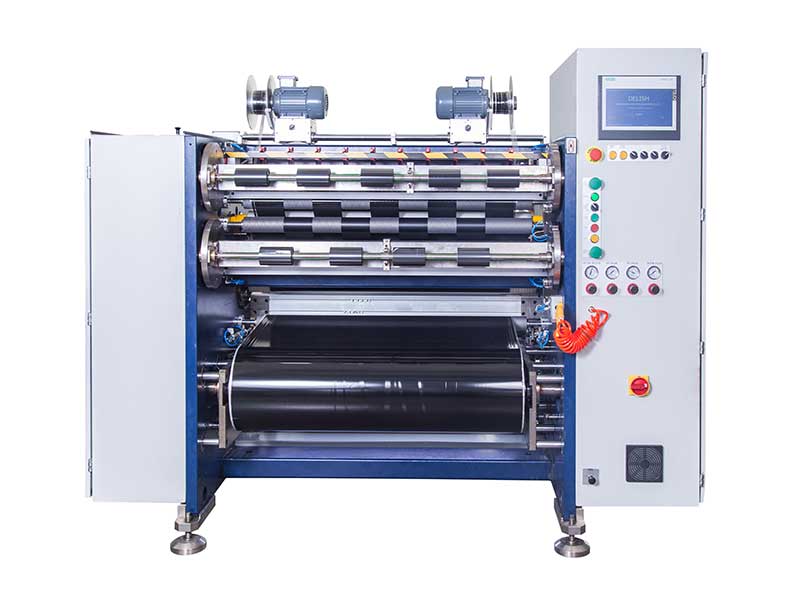 TTR Slitting Machine