
Abstract
During the slitting process of hot stamping foil, warping of the winding edge (edge curling) is a core problem that leads to material waste and reduced production efficiency. Based on the thinness, high ductility, and thermal sensitivity characteristics of hot stamping foil, this paper analyzes the mechanical causes of edge curling and proposes an adaptive winding and compression roller solution integrating automatic pressure adjustment, real-time edge detection, and dynamic roller surface shaping. By integrating pneumatic servo control with intelligent sensing, the company achieves a leap from "passive deviation correction" to "active roll suppression," significantly improving the slitting yield.
1. Pain points of gold foil slitting and curling edges
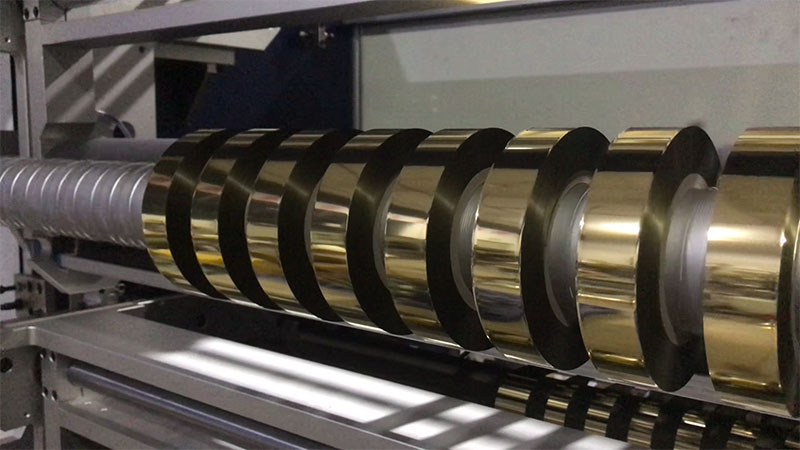
Hot stamping foil (electrochemical aluminum) is made by composing PET base film, release layer, color layer, and aluminum plating layer, with a total thickness of only 12–30μm. During high-speed slitting (150–300 m/min), three major edge curling factors emerge during the winding stage:
• Edge stress concentration: The slitting blade causes fine burrs or stretching deformation at the edge of the foil strip, leading to edge loosening and then rolling up or down under the action of the rewinding pressure roller.
• Static electricity and film effect: High-speed friction generates static electricity, causing the foil layers to repel each other; At the same time, high-speed airflow forms an air film between the foil belt and the pressure roller, reducing contact pressure and preventing effective compression at the edges.
• Uneven roller surface contact: Traditional rigid or fixed soft pressure rollers cannot adapt to transverse thickness fluctuations of the foil strip (slight bulging at the edges of each strip after slitting), and when pressure distribution is constant, the edge forces are insufficient.
Once edge curling occurs, it can cause wrinkles, broken bands, and multilayer adhesion, and in severe cases, the entire roll can be scrapped. Statistics show that about 30% of slitting loss in hot stamping foil comes from the edge of the winding process.
2. Core architecture of the adaptive winding roller
This solution breaks the traditional idea of "pressing rollers only axial compaction," designing the rewinding rollers as a perceptible, deformable, and adjustable closed-loop system. The overall architecture is divided into three layers (Figure 1 for illustration, described here):
Layer 1: Edge rolled edge online perception
• Each slitting strip is equipped with miniature laser displacement sensors or opposed photoelectric edge detection modules to measure the height difference between the foil strip edge and the roller surface in real time (resolution≤0.01mm).
• Simultaneous embedding of electrostatic sensors and speed synchronous encoders to determine whether curling is caused by static electricity or gas film.
Layer 2: Pressure Adaptive Control Unit
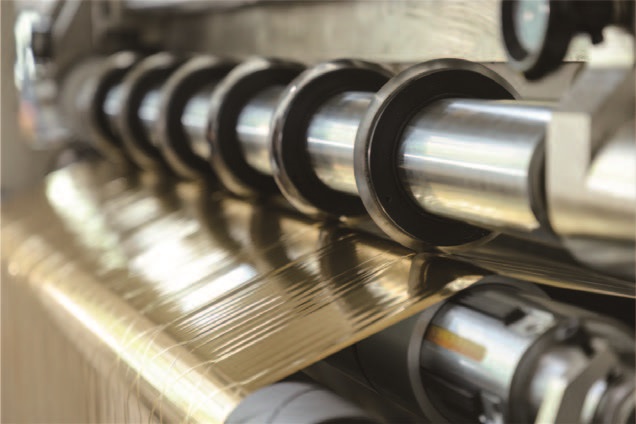
• The pressure roller adopts a segmented pneumatic bladder structure—each slitting bar has an independent airbag chamber, and the pressure in each chamber is independently controlled by a proportional pressure regulating valve.
• The controller applies additional pressure to the chamber on the rolled side (e.g., from the reference 0.2MPa to 0.28MPa) based on the edge height difference signal, dynamically counteracting edge upward tilt.
Layer 3: Roller surface shape adaptive mechanism
• The roller surface is covered with a polyurethane elastic layer (Shore A 20–30), embedded with a miniature hydraulic actuator array. When a certain edge is continuously rolled down (reverse curling), the push rod array can locally slightly converge, 0.1–0.5mm, forming a "reverse support" curved surface to geometrically correct the foil strip edge path.
3. Key workflows and algorithms
Dynamic scroll suppression logic
1. Initial learning: The equipment is idling or slow (20m/min) for trial cutting, recording the natural warping trend of the edge of each slitting strip, and generating a "crimped edge feature curve".
2. Real-Time Feedback Control:
◦ If the edge lift is > set threshold (e.g. 0.15mm), the corresponding air bag pressure increases, and the increment ΔP = Kp· (Lifting amount) + Ki·∫Lifting amount·dt;
◦ At the same time, check whether the electrostatic voltage exceeds 2kV, and if so, start the grounding static elimination brush of the pressure roller.
3. Roll surface shaping: For periodic crimping (such as caused by blade wear), activate the hydraulic actuator array to form a local boss to physically press the edge to avoid excessive pressure and cause indentation on the foil surface.
Anti-overvoltage protection
Through the thin film pressure sensor on the roller surface (range 0–0.5MPa), it prevents excessive chamber pressure from causing lateral stretching deformation of the foil strip or damage to the base film. The maximum pressure limit does not exceed 0.35MPa.
4. Comparison of implementation results
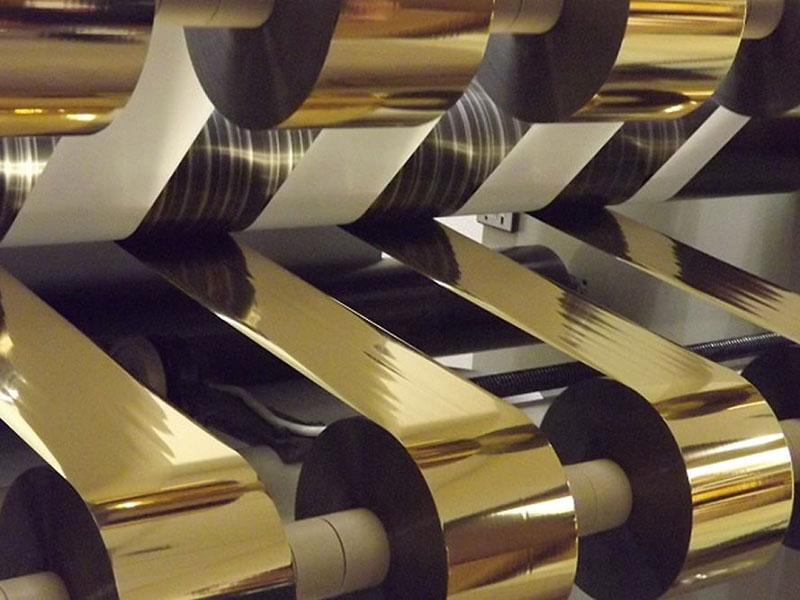
At a hot stamping foil manufacturing plant, actual measurements were conducted on PET-based electrochemical aluminum slitting (20 strips× 40mm width) with widths of 800mm and 12μm:
| Indicators | Traditional rigid silicone press roller | Adaptive roller compression scheme | Improvement rate |
| Winding edge warping rate (%) | 12.7 | 1.8 | 85.8% |
| Number of downtime for broken tape/edge rolling (times/shift) | 5.4 | 0.6 | 88.9% |
| Winding end face neatness (mm deviation) | ±1.2 | ±0.3 | 75% |
| Whole Volume Scrap Rate (%) | 4.6 | 0.7 | 84.8% |
Additionally, this solution allows for a reduction of about 15%–20% in winding tension (since the curling edge is actively suppressed, eliminating the need for high-tension edge flattening), further reducing the stretching deformation of the foil strip.
5. Economy and applicability
• Retrofit cost: Adding modular adaptive pressure roller units (including sensors, pneumatic bags, and controllers) to the existing slitting machine winding station costs about 8%–12% of the total machine price.
• Payback period: Based on an average of 8 hours per day and a 3.9 percentage point reduction in scrap rate, the loss of hot stamping foil can be reduced by about 1.2 tons per year (unit price 80 yuan/kg), and the payback period is about 6-10 months.
• Scope of application: In addition to hot stamping foil, it is also suitable for winding aluminum foil, capacitive film, heat transfer film and other thin and easy-to-curl materials.
6. Conclusion
The adaptive winding and pressing roller solution of the anti-rolling hot stamping foil slitting machine fundamentally solves the industry's stubborn problem of thin foil winding edge instability through local pressure dynamic compensation, roll surface shape fine-tuning and multi-sensor fusion detection. This technology changes the traditional "relying on operator experience to adjust the pressure of the roller" to "automatic closed-loop suppression", which has significant value in improving product consistency, reducing manual intervention, and reducing waste. In the future, combined with AI hemming trend prediction, predictive pressure adjustment can be further realized and move towards fully intelligent slitting and winding.
 Common Problems with Hot Stamping Foil Slitting Machines and How to Solve Them
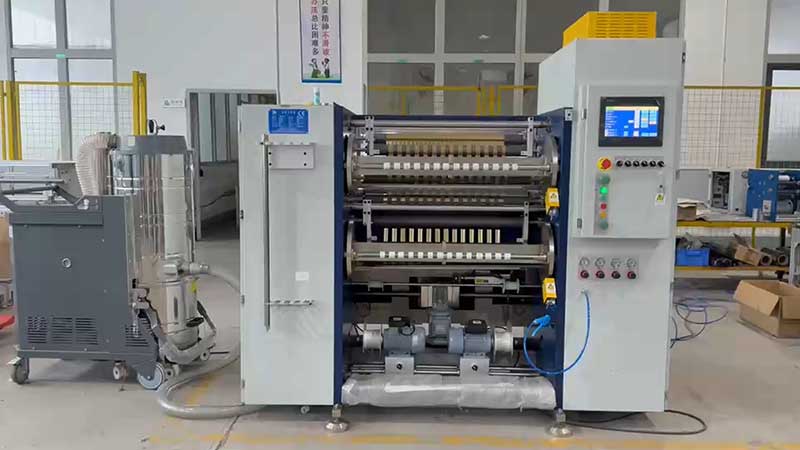 What Specifications Should You Look for in a Hot Stamping Foil Slitting Machine?
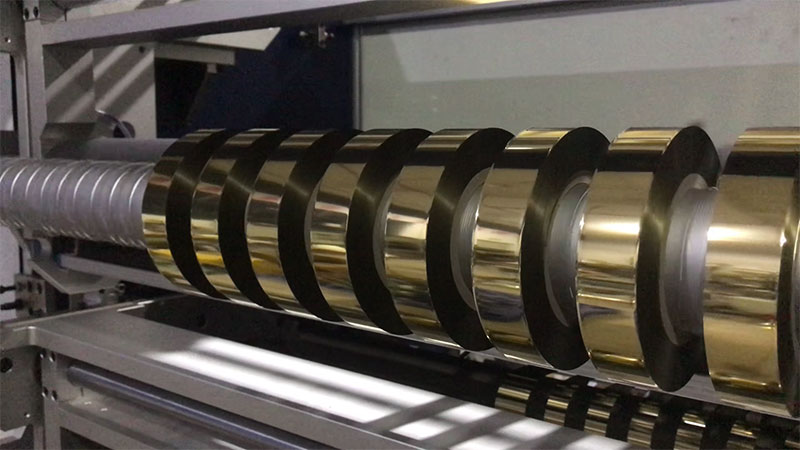 Hot Stamping Foil Slitting Machine Selection Guide: Tension Control Is Key
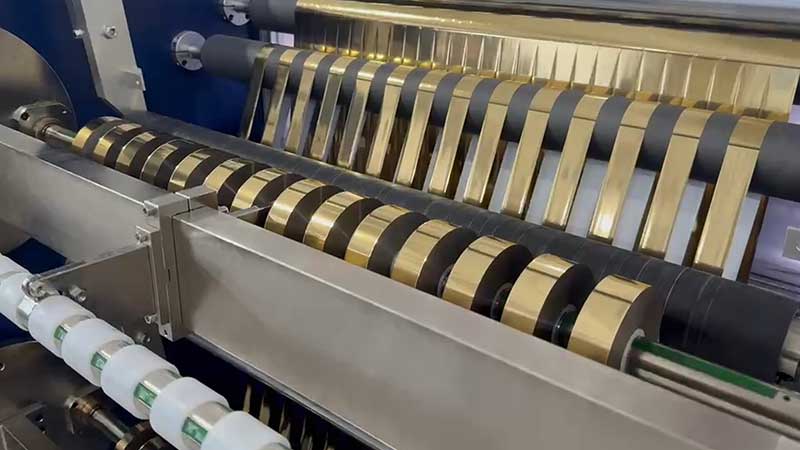 How to choose a hot stamping foil slitting machine? Let's first look at these three parameters
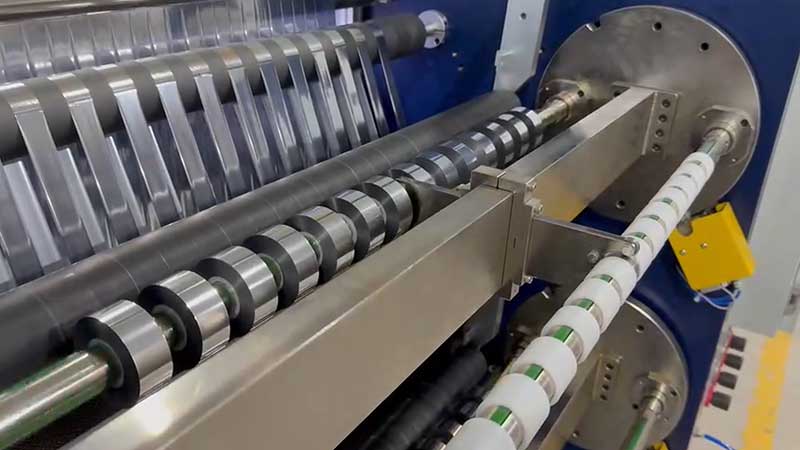 Selection of hot stamping foil slitting machines: how to match width and speed


 English
 Deutsch
 Français
 Español
 Português
 日本語
日本語 русский
 한국어
한국어 عربي
عربي ภาษาไทย
 Tiếng Việt
 Italiano
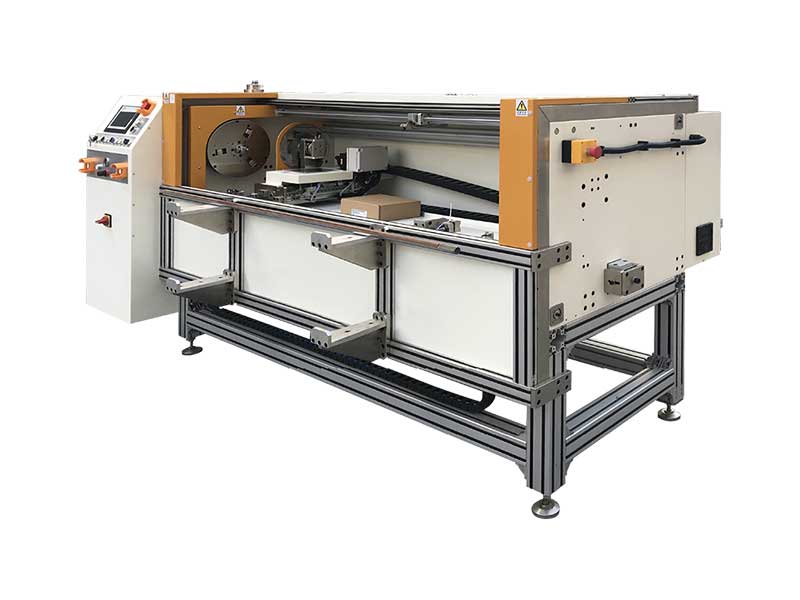 Automatic Foil Roll Cutting Machine
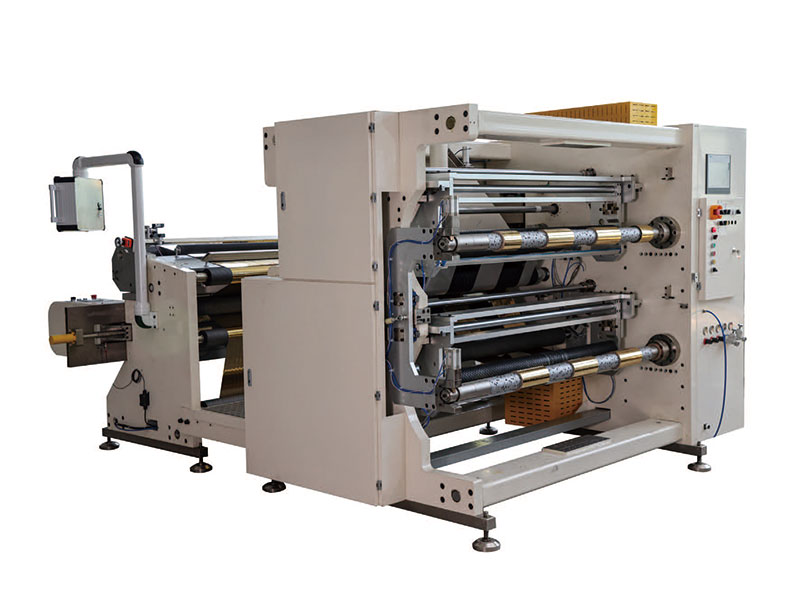 1400mm Hot Stamping Foil Slitting Machine
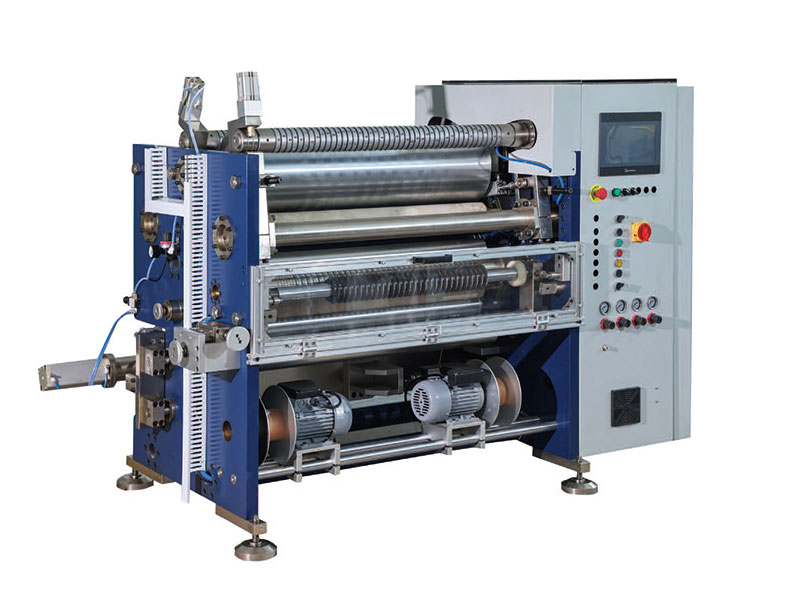 800mm Hot Stamping Foil Slitting Machine
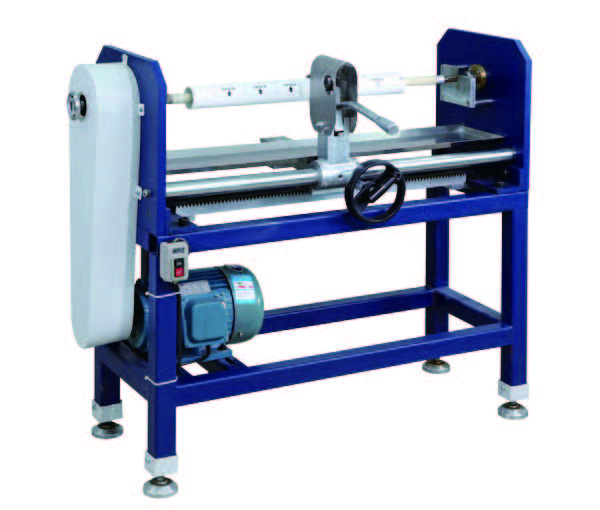 Manual Foil Roll Cutting Machine