
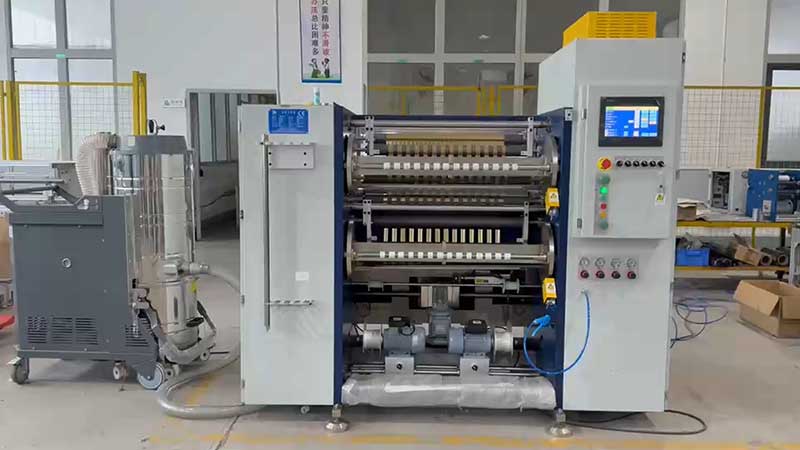
Introduction: The hot stamping foil slitting machine is a key piece of equipment in the downstream processes of the printing and packaging industry. Its operating speed typically reaches 200-400 meters per minute, and slitting accuracy must be kept within ±0.1mm. The stable operation of the equipment directly determines the quality and efficiency of the hot stamping process. If not properly maintained, the slitting machine is prone to uneven end faces, tension fluctuations, scratches, and other faults. This article will provide a detailed analysis of the scientific maintenance intervals and key points of hot stamping foil slitting machines, helping enterprises shift from "post-failure repairs" to "preventive maintenance," extending equipment lifespan and reducing failure rates.
1. Why is the maintenance cycle so important?
Hot stamping foil (electrochemical aluminum) is usually only 6-12μm thick, with surface layers coated with easily detachable aluminum and release layers, requiring extremely high slitting precision. When operating at high speeds, issues such as blade wear, electrostatic adsorption of debris, and tension fluctuations directly affect product quality.
Establishing a scientific maintenance cycle has three core goals:
1. Ensure slitting quality: Avoid defects such as burrs, scratches, and uneven end faces.
2. Extends equipment lifespan: Reduces abnormal wear on bearings, guide rails, and transmission components.
3. Reducing Sudden Faults: Transform "fire-fighting maintenance" into "fire-resistant maintenance" to minimize downtime losses.
The industry generally adopts a four-level maintenance system of "daily, weekly, monthly, and annual," with each level of maintenance coordinated to form a closed-loop management system.
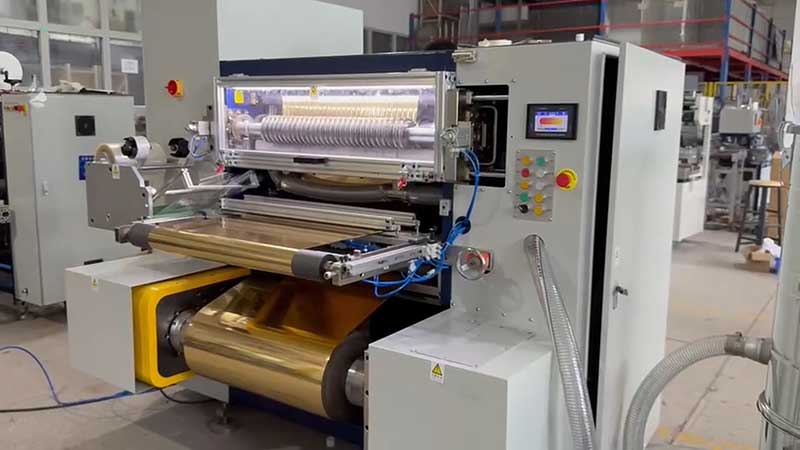
2. Detailed explanation of the four-level maintenance cycle for hot stamping foil slitting machines
1. Daily maintenance (per shift) — cleaning and inspection
Daily maintenance is the foundation of equipment upkeep, performed by on-duty operators, usually before startup and after work.
| Maintenance items | Specific content | Standards/requirements |
| Cleaning work | Use an air gun or soft brush to remove dust and foil powder from the knife holder, retractor reels, and all rollers | During high-speed slitting, hot stamping foil can easily attract debris due to static electricity, and if not cleaned, it can cause dents or scratches |
| Tool inspection | Check whether the slitting blade has chipped or obvious dullness | If the cut has burrs, serrations, or drawing, it must be replaced immediately |
| Airway examination | Check the air pressure gauge readings and check the water accumulation in the water separator | The standard air pressure is usually 0.5-0.7MPa, and manual drainage is required before leaving work |
| Safety devices | Confirm whether the emergency stop button and the photoelectric sensor on the protective cover are sensitive and effective | Safety devices are the last line of defense and must be always effective |
Operation tip: Avoid using compressed air to blow directly into the tool holder to prevent debris from entering the bearing.
2. Weekly maintenance (once a week) — transmission and lubrication
Weekly maintenance is carried out by operators assisting maintenance personnel, with a focus on inspecting transmission components and tension systems.
| Maintenance items | Specific content | Standards/requirements |
| Roller drums are clean | Wipe all rollers (especially rubber pressure rollers and aluminum rollers) with anhydrous alcohol. | Removes adhesive residues accumulated by electrostatic adsorption, preventing film slipping or longitudinal scratches |
| Lubrication and maintenance | Lubricating the tool screw, coiling arm chain, and other moving parts | Following the principle of "appropriate amount, fixed quality, and targeted spot," excessive lubrication can actually attract dust |
| Fastening inspection | Thoroughly check whether the tool holder fixing screws and coupling screws are loose | High-frequency vibration can easily cause screws to loosen, which can shift the tool position at best, or cause accidents at worst |
3. Monthly maintenance (once a month) — electrical and precision calibration
Monthly maintenance requires dedicated downtime, with maintenance personnel leading systematic inspections and calibrations.
| Maintenance items | Specific content | Standards/requirements |
| Electrical cabinet maintenance | When the power is off, use a vacuum cleaner to clean dust accumulated inside the electrical control cabinet (especially the frequency converter and PLC module). | Overheating is the primary cause of electrical component damage, and check whether the cooling fan is functioning properly |
| Tension system calibration | Check whether the zero point of the tension sensor is drifting, and use standard methods for recalibration | Tension control is the core parameter for slitting, and sensor signal distortion directly leads to quality defects |
| Transmission belt inspection | Check the tension of the main drive belt and motor belt | Too loose causes slipping and missing rotation, while overtightening accelerates bearing wear. Press the midpoint of the belt; a 10-15mm sink is normal |
| Cutter shaft runout detection | Use a dial indicator to detect the runout of the blade shaft | If the thickness exceeds 0.02mm, stop the machine immediately for correction to prevent vibration damage to the equipment |
4. Annual maintenance (once a year) — core component replacement and accuracy restoration
Annual maintenance is considered a "major overhaul" of the equipment. It is recommended to arrange for a full machine shutdown for maintenance, and contact the equipment manufacturer for assistance if necessary.
| Maintenance items | Specific content | Standards/requirements |
| Bearing replacement | Check the bearing clearance of all rollers | For equipment operating for more than 8,000 hours, it is recommended to disassemble and inspect the spindle bearing and rewinding shaft bearing; if there is a wear gap, replace immediately |
| Slip shaft maintenance | Remove the slip shaft, clean the internal friction plates, and check whether the steel balls are worn | The most common reason for inconsistent tightness of the slip shaft is the degradation of slip shaft performance |
| Accuracy restoration | Use a laser centering instrument to check the parallelism of each roller group | If foundation settlement or prolonged stress causes the rollers to be not parallel, mechanical adjustment is required |
| Vibration damping foundation inspection | Use a laser level to check the basic levelness of the equipment | Settlement exceeding 0.1mm/m requires additional adjustment shims |
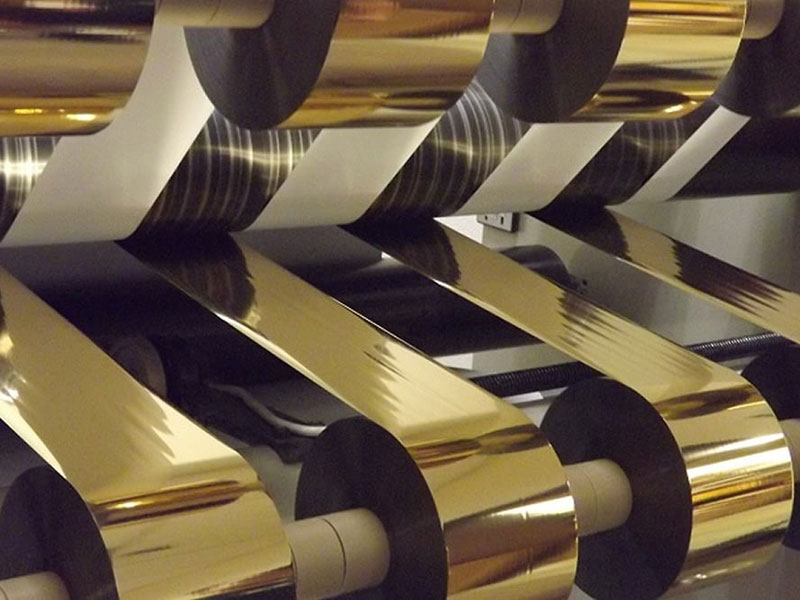
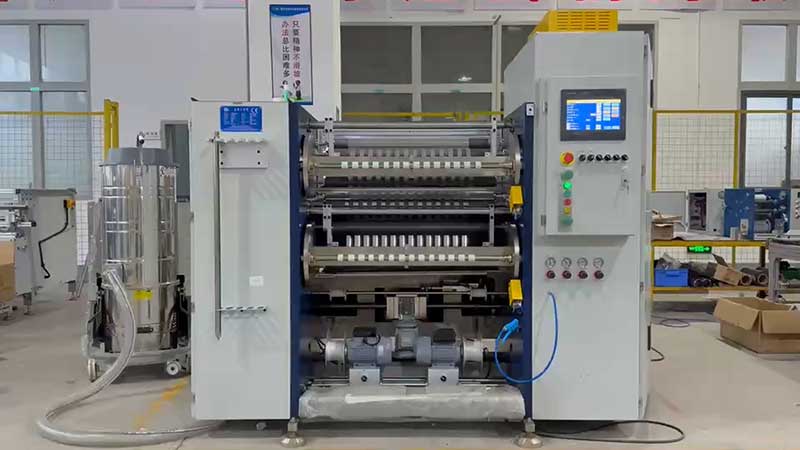
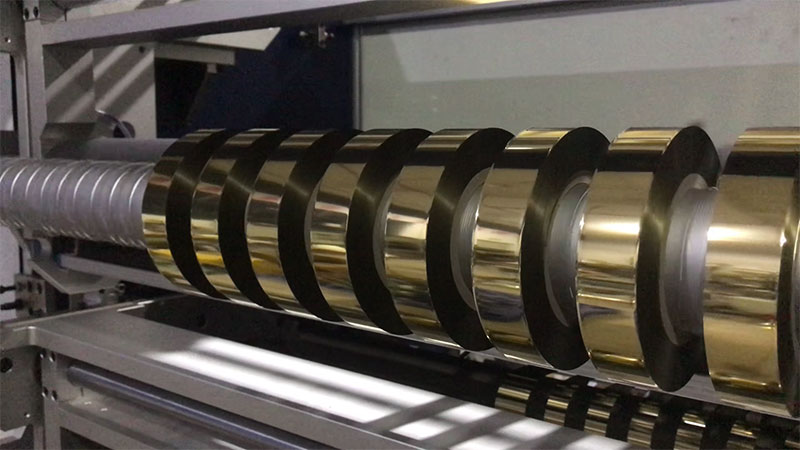
Maintenance interval for the hot stamping foil slitting machine: daily/weekly/monthly/yearly standard
3. Blade Change Cycle: A Critical Efficiency Point That Has Been Seriously Overlooked
Equipment is clearly running, but output is not rising—the root cause often lies in poor management of the tool change cycle.
The three dimensions of the scientific tool change cycle
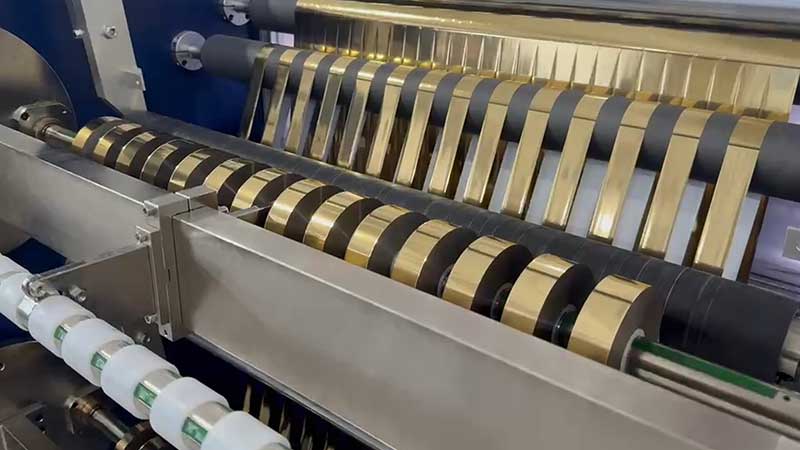
1. Set grinding intervals based on the number of meters: Industry experience shows that circular cutters are recommended for grinding every 50,000 to 100,000 meters of cutting; Flat blades consumables are faster; the cutting edge should be checked every 2-3 rolls of replacement. Enterprises should establish a tool usage ledger to record the cumulative slicing meter, and mandatory repair upon expiration.
2. Replace the node according to the quality signal: Check the blade sharpness every 8-12 hours of operation. Handle the following signals immediately:
◦ Continuous burrs or tiny notches appear at the slitting edges
◦ The winding end face shows "trailing" or stringing phenomena
◦ Dust increases significantly during slitting
◦ The mating clearance between upper and lower blades exceeds the 0.02-0.05mm range
3. Determine prevention cycles based on equipment status: Check the concentricity of the blade shaft and guide rail clearance quarterly to avoid "new blades and old machines."
Quick tool change: minimize downtime
Traditional tool changes often take more than 30 minutes. Promoting rapid die change (SMED) technology, using pneumatic locking devices instead of bolt fixation, can reduce tool change time from 30 minutes to under 5 minutes.
4. Common maintenance misconceptions and precautions
| Misconception | The correct approach |
| "Change the blade only when it can't be used" | After blade passivation, slitting resistance increases, forcing equipment to slow down. This seems to save blade costs, but in reality, it results in loss of production capacity and yield |
| Clean the knife holder with compressed air blowing directly | Debris easily enters the bearing interior, accelerating wear |
| Neglecting dust protection in electrical cabinets | Overheating is the primary cause of electrical component damage, so dust buildup on the inverter and PLC module needs to be cleaned regularly |
| Tension is not calibrated after changing blades | After changing tools, the tension sensor and tool shaft concentricity should be checked together to ensure that "new tools and machines are new" |
5. Establishing equipment health records: from experience judgment to data management
It is recommended to establish an independent maintenance record for each device, recording:
• Slitting accuracy after each maintenance (measuring slitting width variance with a micrometer)
• Data on energy consumption changes
• Record and abnormal situations of parts replacement
Predict potential failures through trend analysis. A certain company once detected abnormal wear in the main transmission gearbox two weeks in advance through vibration spectrum analysis, avoiding the scrapping of a 200,000 yuan rotary assembly that was worth 200,000 yuan.
Conclusion
Maintenance of the hot stamping foil slitting machine is not about "repairing it when it breaks," but about "repairing it when it expires." Upgrading maintenance intervals from "empirical judgment" to "data management," forming a closed-loop system of daily, weekly, monthly, and annual maintenance, making a 20%-30% increase in equipment overall efficiency (OEE) not out of reach.
Friendly reminder: Different brands and models of slitting machines may differ in structure and parameters. Please refer to the "User Manual" provided by the equipment manufacturer for specific maintenance and operation.
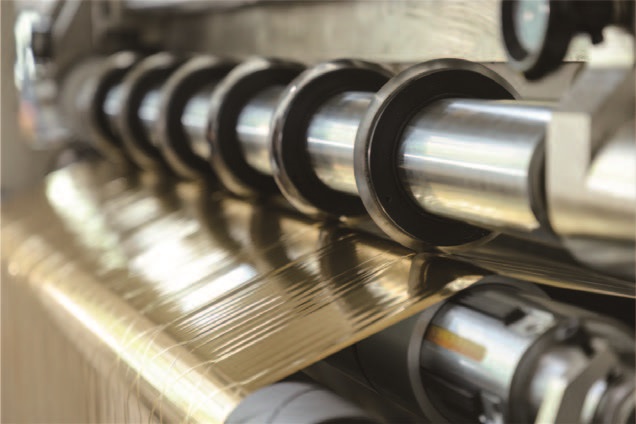 The hot stamping foil slitting machine is suitable for both materials and scenarios
 Working principle and advantages of the hot stamping foil slitting machine
 Common Problems with Hot Stamping Foil Slitting Machines and How to Solve ThemWhat Specifications Should You Look for in a Hot Stamping Foil Slitting Machine?
 Hot Stamping Foil Slitting Machine Selection Guide: Tension Control Is Key


 English
 Deutsch
 Français
 Español
 Português
 日本語
日本語 русский
 한국어
한국어 عربي
عربي ภาษาไทย
 Tiếng Việt
 Italiano
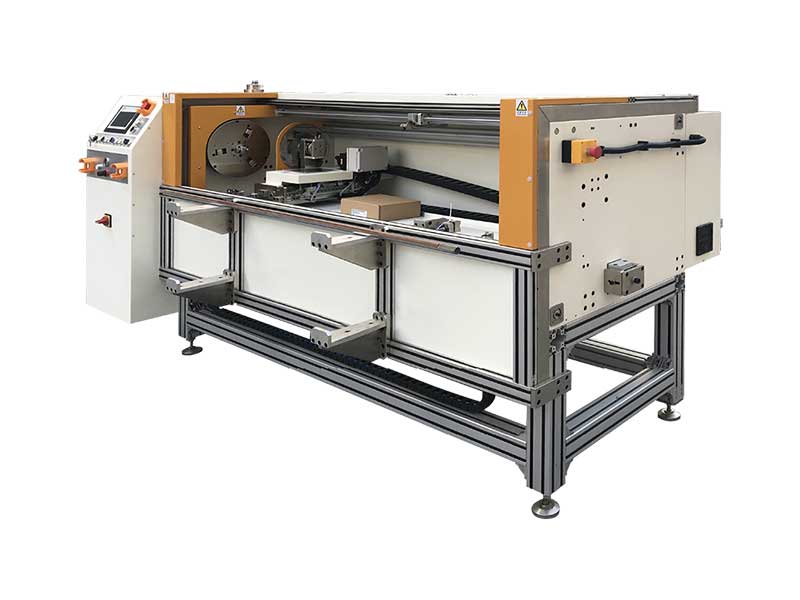 Automatic Foil Roll Cutting Machine
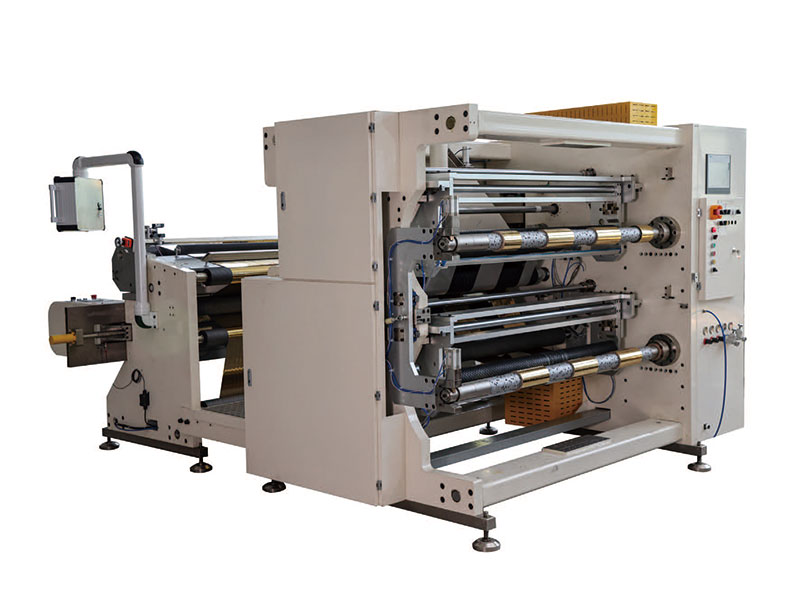 1400mm Hot Stamping Foil Slitting Machine
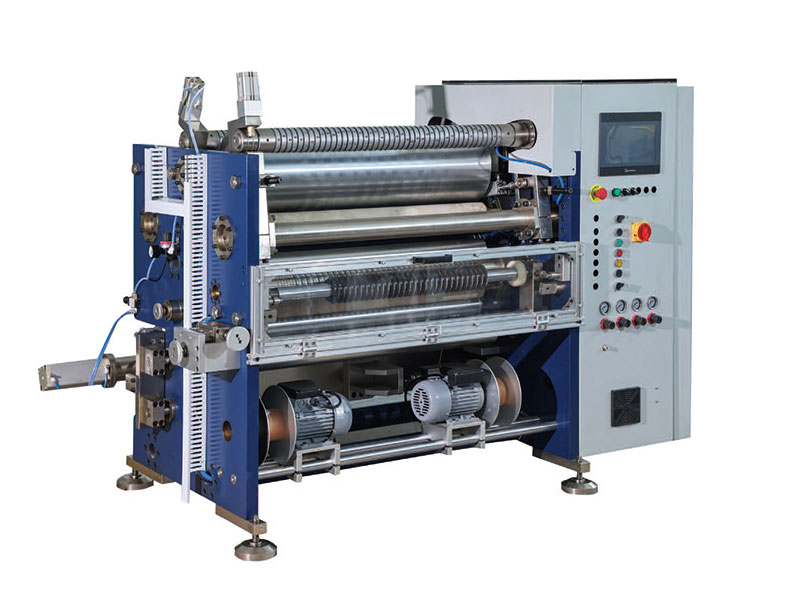 800mm Hot Stamping Foil Slitting Machine
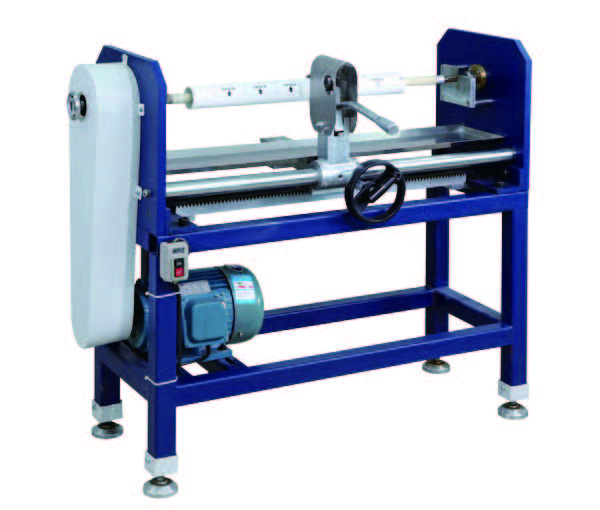 Manual Foil Roll Cutting Machine