
In the fields of packaging printing and label manufacturing, hot stamping has always been a key means to enhance product premium. However, as the demand for personalized packaging, irregular labels, and small-batch, multi-variety products in the end market continues to grow, many companies have found that what truly holds the production neck is often not the hot stamping machine itself, but the seemingly inconspicuous slitting machine at the front end. When standardized hot stamping foil slitting machines face non-standard specifications of 12mm, 17mm, or even narrower, uncontrolled tension often leads to misalignment and uneven end faces, with material loss rates often reaching 10% to 15%. The value of customized slitting solutions lies in turning "cutting accurately, changing quickly, and no waste" from a slogan into a quantifiable production indicator.
An effective customization plan first needs to move beyond the mindset of "selling equipment" and return to defining the problem within the customer's specific production scenario. Should the ultra-narrow slitting strips be used for fine labeling, or should large roll diameter master rolls be processed to match high-speed hot stamping machines? Is it a small-batch model with frequent order changes, or continuous production of long-term orders of a single specification? The answers are different, and the focus of customization is completely different.
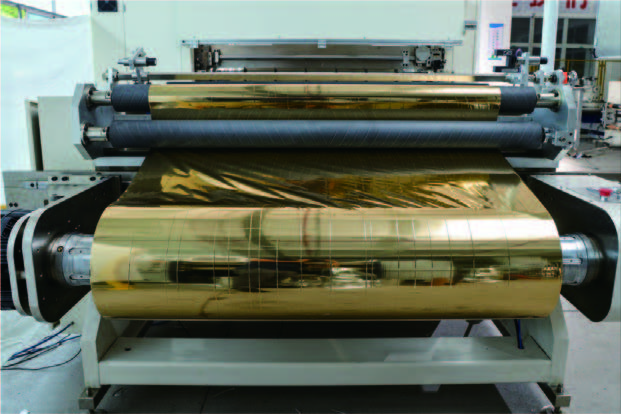
1. Core dimension of customized plans: diagnosis first, then prescription
1. Fit the width and rigidity of the mechanical structure
If customers require ultra-narrow strips with a slitting width less than 5mm, the standard tool holder and rewinding reel cannot provide sufficient independent tension control, making narrow strips prone to slipping or sticking. The custom solution requires a "micro-pitch" tool holder combined with an independent slip shaft winding structure to ensure that each narrow strip receives matching tension. Conversely, if the width of the main roll exceeds 1400mm and high-speed operation is required, the span of the unwinding and rewinding shafts must be widened, and the wall panels should be made of heavy-duty cast iron with finite element analysis to verify rigidity to avoid vibration at high speeds affecting slitting accuracy.
2. Material-grade tuning for tension control
The thickness of hot stamping foil is usually between 12μm and 32μm, making it extremely thin and sensitive to tension. Tension fluctuations in general-purpose equipment may be "usable," but customized solutions calibrate PID algorithm parameters based on the actual materials used by the customer—whether it's ordinary hot stamping foil, holographic laser foil, or biodegradable foil foil. For example, when slitting holographic foil, the guide roller needs to be customized with a large-diameter, low-friction design, and combined with servo direct drive to eliminate static electricity and heat generated by mechanical friction, protecting the optical effect from damage. The taper tension curve during the winding stage must also be set separately according to the material's elongation to prevent inner layer compression damage or "daisy core" curling.
3. Automated configuration for order change efficiency
For companies that need to handle a dozen or even twenty small batch orders daily, the time cost of tool changes and gauge adjustments often exceeds the production time. Customized solutions can introduce servo-driven automatic tool holder positioning systems: operators input the finished product width on the touchscreen, and the tool holder automatically moves into position, achieving positioning accuracy of up to ±0.1mm, reducing order change time from over thirty minutes to under five minutes. If your budget is limited, at least a quick-change tool holder and recipe storage function should be provided, allowing commonly used specifications to be accessed with one click, reducing reliance on senior technicians.
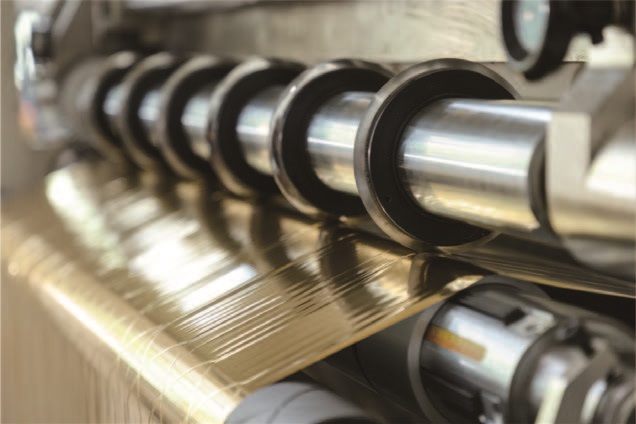
2. From Demand to Delivery: Five Key Nodes in the Customization Process
Node 1: On-site diagnosis and demand quantification
The starting point of the customization process is not the quotation sheet, but the collection of the customer's existing production data. It is necessary to clarify: maximum width and outer diameter of the busbar, range and distribution of normally cut specifications, average daily order changeover, current equipment wear rate, and main failure points. This data determines the maximum width, tool turret type, and automation level of the customized equipment. For example, if a customer reports that "misaligned narrow strip end faces cause gold flying during hot stamping," the problem may not lie with the tool itself, but rather with the tension distribution method of the winding reel, prioritizing adjustment of the winding structure rather than simply upgrading the blade.
Node 2: Solution design and configuration locking
Based on the diagnostic results, the manufacturer issues a proposal including mechanical configuration, electrical architecture, and software functions. Core confirmation items include: slitting method (circular blade/square blade/laser), winding shaft type (pneumatic shaft/slip shaft), deviation correction mode (chasing edge/line tracking), whether a waste edge suction device is integrated, and whether an MES interface is reserved. In such cases, manufacturers should be required to provide successful slitting cases or trial cutting commitments for similar materials, rather than relying solely on the parameter list for judgment. For special materials such as cold stamping foil or ultra-thin PET substrates, specific tension control strategies should be clearly defined in the scheme.
Node 3: In-factory testing and parameter solidification
After equipment assembly is completed, the actual customized validation takes place during the in-plant trial cutting phase. Customers should provide actual samples of hot stamping foil, and the manufacturer will complete the entire process testing on the custom machine, from loading the main roll to the finished product winding. Key observations: whether the end face uniformity is stable during narrow strip slitting, whether tension fluctuations during acceleration and deceleration are within the tolerance, and whether the winding hardness is consistent inside and outside. After trial cutting passes, the verified parameters such as speed, tension, and taper are written into the recipe library as initial settings for delivery.
Node 4: Installation, debugging, and operation handover
Debugging after equipment arrives at the factory is not simply powering on and testing the machine. Manufacturer technicians need to calibrate the tension sensor and correction system on-site based on the customer's workshop's temperature and humidity environment, power supply stability, air supply quality, and other conditions. Operation training should cover daily tool change procedures, formula application methods, and troubleshooting common abnormalities (such as uneven end faces and folded folds). A detail that is easily overlooked is: requiring manufacturers to provide specification lists and replacement interval recommendations for key wear parts upon delivery, to avoid future downtime due to waiting for spare parts.
Node 5: Run tracking and fine-tuning parameters
The benefits of customized equipment typically require a break-in period of one to two weeks. During this period, manufacturers should track the equipment's performance on different batches of materials remotely or on-site, and fine-tune the tension curve or tool compression parameters according to the actual slitting effect. Some high-end customized solutions already support production data uploads, allowing manufacturers to determine whether further optimization is needed based on changes in actual yield and loss rates.
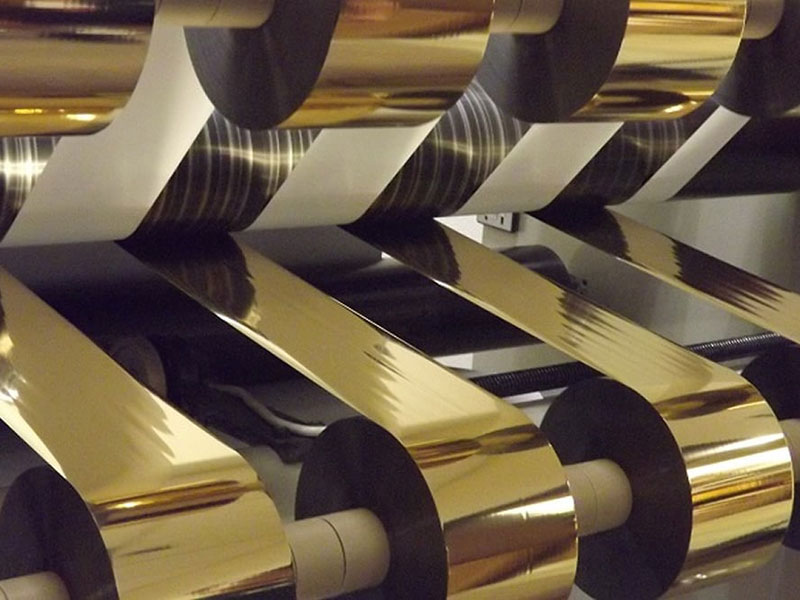
3. Pragmatic advice in customized decision-making
Custom hot stamping foil slitting machines are not always better with higher configurations, but rather better with the production model. For enterprises that mainly focus on long orders and single specifications, it is more practical to focus the budget on slitting accuracy and long-term operational stability (such as high-rigidity frames and closed-loop tension control); For small-batch flexible production scenarios, order change speed and material utilization are the core indicators for measuring return on investment, and automatic tool turret positioning and formula management systems should be prioritized over other additional features.
Another often underestimated aspect is the waste edge treatment. Hot stamping foil is expensive, and if the 2mm to 5mm edge material generated by slitting cannot be effectively recovered, the accumulated waste over the year can be considerable. During customization, an automatic waste suction device with variable frequency adjustment is installed to rewind or recycle edge material separately or in compressed blocks. For high-value materials (such as holographic foil and laser foil), the payback period is often shorter than expected.
Ultimately, the custom plan and process for hot stamping foil slitting machines essentially push the equipment from "cutting capability" to "cutting value." When slitting accuracy stabilizes within ±0.1mm, order change times are measured by minutes, and material loss is reduced from double digits to single digits, the equipment is no longer a negligible link on the production line, but a direct source of profit. For printing companies riding the wave of personalized packaging, this may be a more practical step than purchasing a new hot stamping machine.
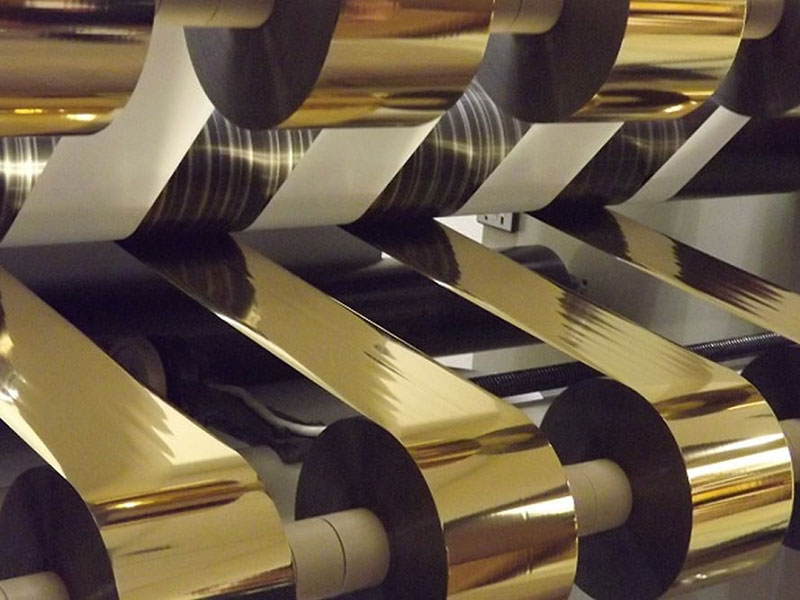 Detailed explanation of the automation functions of the hot stamping foil slitting machine
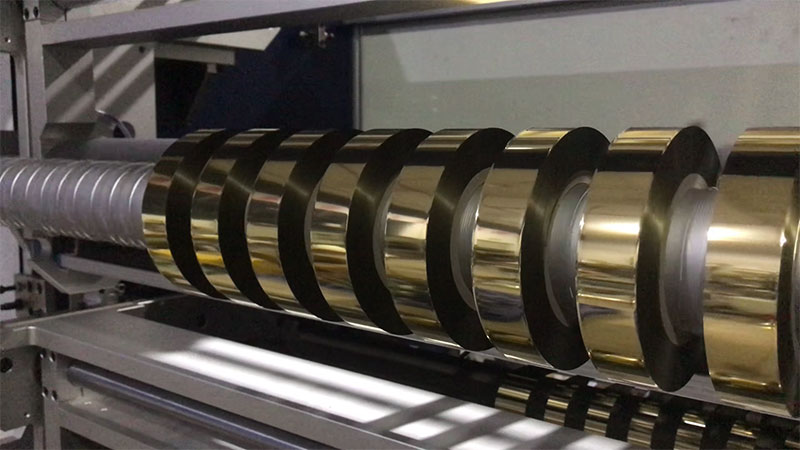 Description of the hot stamping foil slitting machine's winding and rewinding systemThe hot stamping foil slitting machine is suitable for both materials and scenariosWorking principle and advantages of the hot stamping foil slitting machine
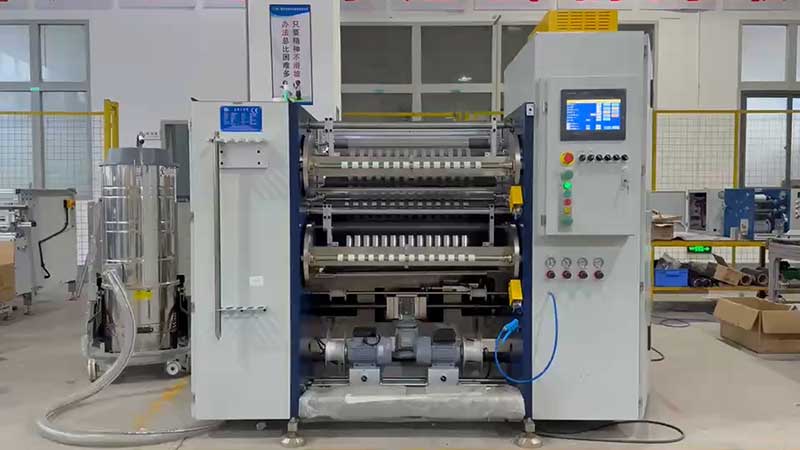 Common Problems with Hot Stamping Foil Slitting Machines and How to Solve Them


 English
 Deutsch
 Français
 Español
 Português
 日本語
 русский
 한국어
 عربي
 ภาษาไทย
 Tiếng Việt
 Italiano
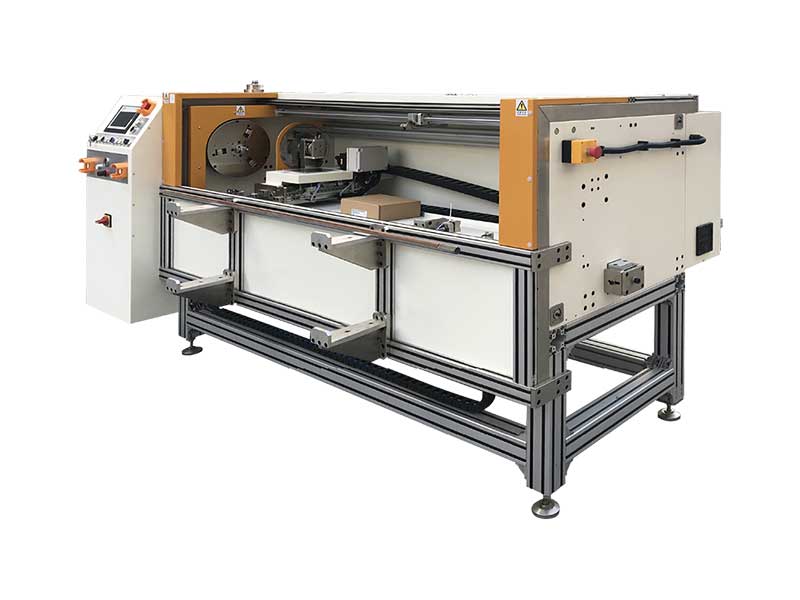 Automatic Foil Roll Cutting Machine
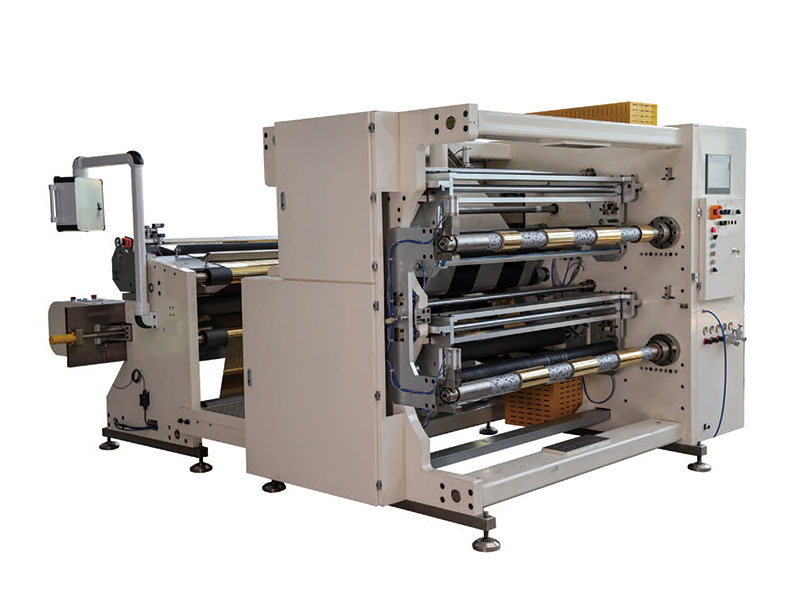 1400mm Hot Stamping Foil Slitting Machine
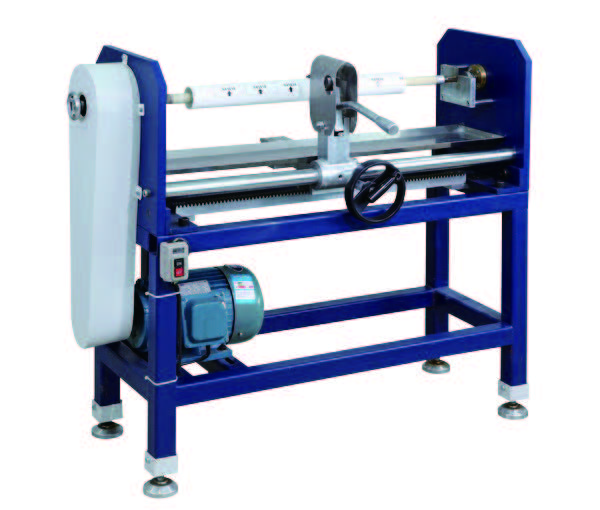 Manual Foil Roll Cutting Machine
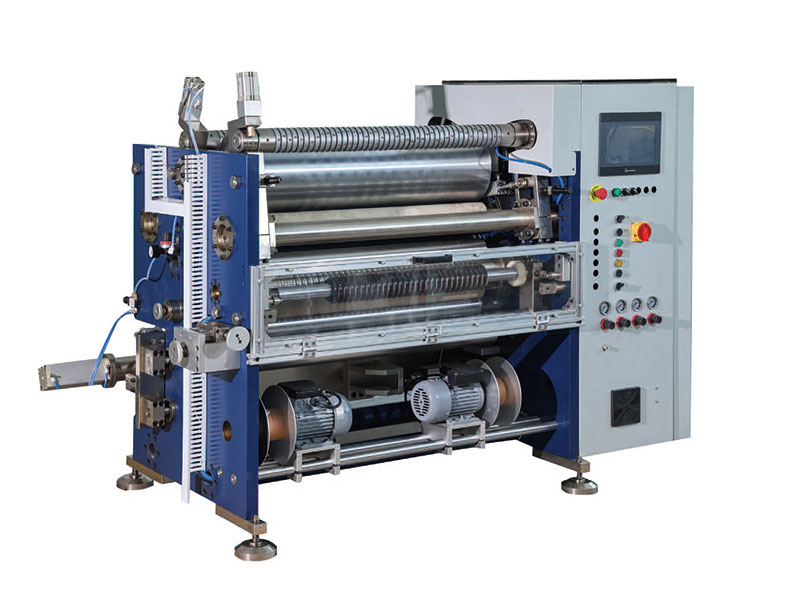 800mm Hot Stamping Foil Slitting Machine