
Film slitting is the final critical process in flexible packaging and functional film processing, and its efficiency directly determines delivery capability and unit cost. However, "efficiency" in the slitting process has never been a single speed indicator—it is constrained by the complex interplay of roll-change downtime, tension fluctuation, deviation correction accuracy, tool condition, and manual intervention. Simply increasing line speed often comes at the cost of precision degradation and rising scrap rates. Truly effective efficiency improvement requires systematic advancement along five mutually supporting directions.
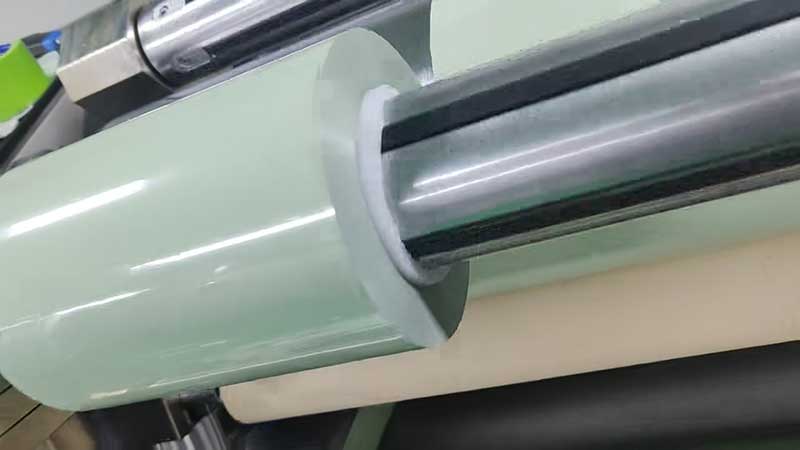
Direction One: Compress Non-Production Time with Automation at the Core
The effective output time of a slitting machine is consumed by numerous auxiliary actions: roll changing, film threading, blade setting, and unloading. Traditional manual roll changing takes 10 to 15 minutes, while models equipped with automatic clamping, centering, and splicing systems can compress this to 2 to 3 minutes. The dual-turret winding systems of leading equipment manufacturers have already achieved cycle times at the 35-second level, making frequent changeovers for small-batch, multi-specification orders no longer an efficiency bottleneck. Even more valuable is the maturation of automatic roll changing and finished roll auto-splicing technology—when the slitting machine is linked with upstream extrusion lines or downstream packaging lines, continuous production without stopping becomes possible, and equipment utilization rates rise significantly. The return logic of automation upgrades is clear: every downtime eliminated is net additional effective capacity.
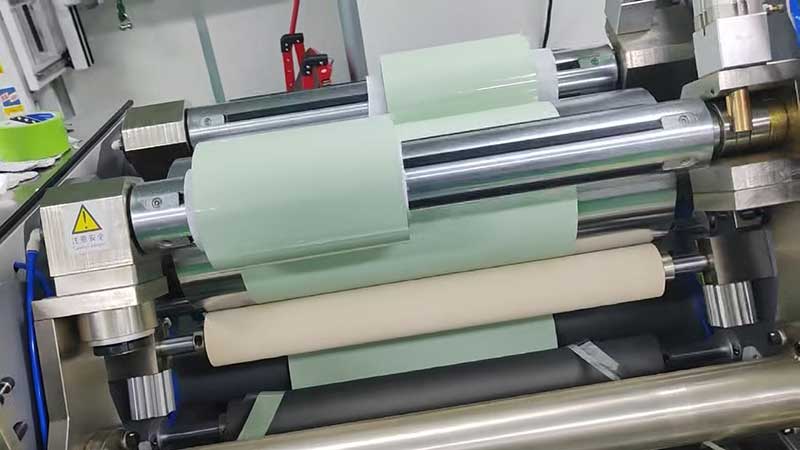
Direction Two: Maintain the Speed Ceiling with Closed-Loop Tension Control
There is an inherent tension between speed and precision: measured data shows that when slitting speed increases from low speed to above 300 m/min, lateral deviation can deteriorate from ±0.10 mm to ±0.35 mm, and winding tension fluctuation expands from ±2% to ±8%. This means that without precise tension control, high-speed operation is merely a scrap-rate amplifier. The solution lies in upgrading a single tension setting to segmented closed-loop control: the unwinding zone maintains higher tension to ensure flattening, the slitting zone moderately reduces tension to minimize lateral shrinkage, and the winding zone adopts taper-decreasing tension to adapt to increasing roll diameter. Actual measurements on a production line showed that after segmented control retrofit, winding end-face alignment improved from ±0.31 mm to ±0.14 mm, and film surface stretching deformation rate dropped from 2.1% to 0.8%. Only when tension is stable does speed have meaning.
Direction Three: Reduce Hidden Losses with Intelligent Deviation Correction and Tool Management
Slitting deviation and edge stringing are the most insidious efficiency killers in the slitting process—they do not manifest as downtime but continuously erode profits in the form of scrap and downgraded products. The root cause of deviation often lies not in the deviation correction system itself but in "end details" such as rubber roller pressure distribution: when the pressure difference between the operating side and drive side of the upper rubber roller reaches 30%, the traction force across the film width becomes unbalanced, and deviation amplifies sharply as roll diameter increases. Therefore, efficiency improvement requires extending monitoring reach to the execution end—independent pressure monitoring and automatic compensation at both ends of the rubber roller, and predictive maintenance of cylinder seal conditions should all be incorporated into daily management. On the tool side, laser cutting offers a new option as a non-contact solution, particularly suitable for ultra-thin films, eliminating edge micro-cracks caused by mechanical stress; on the traditional circular blade path, the combination of diamond-coated blades and automatic sharpening devices greatly compresses blade change frequency and blade adjustment time.
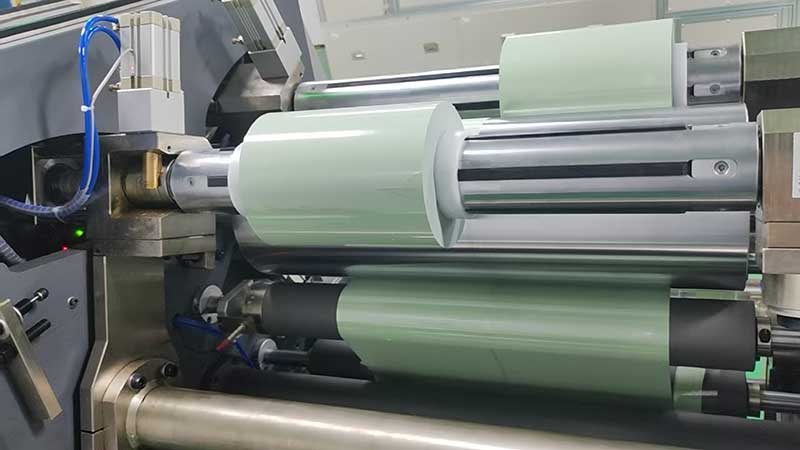
Direction Four: Achieve Adaptive Matching of Process Parameters with Data-Driven Methods
The same slitting machine faces completely different optimal parameter combinations for different materials. Ordinary PE film can still maintain over 97% yield at 350 to 400 m/min, while optical film or battery separator faces precision loss risk above 80 to 120 m/min. Debugging order by order based on operator experience is both slow and unstable. The fourth direction of efficiency improvement is to solidify process knowledge into a callable recipe system: automatically matching tension curves, speed curves, and blade pressure parameters by film type, thickness, and width, with one-click recall during changeovers. Furthermore, adaptive feedforward control technology detects the trend of film edge position changes in real time and adjusts the deviation correction roller angle 0.2 seconds in advance, reducing deviation at high speed by 42%. When parameters no longer depend on "the veteran's feel," the fluctuation range of efficiency is narrowed.
Direction Five: Replace Post-Failure Repair with Predictive Maintenance
A considerable proportion of slitting machine efficiency loss comes from unplanned downtime. Bearing wear, cylinder seal aging, abnormal blade shaft vibration—if these progressive faults are only discovered when wave patterns or deviation appear on the finished end face, downtime losses have already occurred. The effective approach is to move monitoring nodes forward: vibration sensors track abnormal frequency spectra of the spindle and tools, temperature sensors monitor bearing temperature rise, and the PLC system integrates a fault code library for automatic localization and alarming. When the system can prompt replacement at the early stage of seal ring leakage and automatically schedule grinding when blade edge wear reaches a threshold, sudden failures are transformed into planned maintenance windows. For enterprises operating multiple slitting machines in parallel, this transformation has a particularly significant impact on overall equipment effectiveness.
The five directions are not isolated options but a progressive efficiency chain: automation addresses "how long the downtime lasts," tension control addresses "how fast it runs," deviation correction and tools address "how well it cuts," parameter adaptation addresses "how fast changeovers are," and predictive maintenance addresses "how many surprises occur." Any single-point breakthrough can bring visible improvement, but only systematic advancement can transform the slitting process from a bottleneck passively chasing delivery deadlines into a stable and controllable cornerstone of capacity.
Film slitting machine selection guide: match according to material and production capacity Detailed explanation of the automation functions of the hot stamping foil slitting machineComplete Guide to Selecting Film Slitting MachinesThe Game and Symbiosis of Speed and Precision in Film Slitting MachinesApplications of new energy film slitting machines


 English
 Deutsch
 Français
 Español
 Português
 日本語
 русский
 한국어
 عربي
 ภาษาไทย
 Tiếng Việt
 Italiano
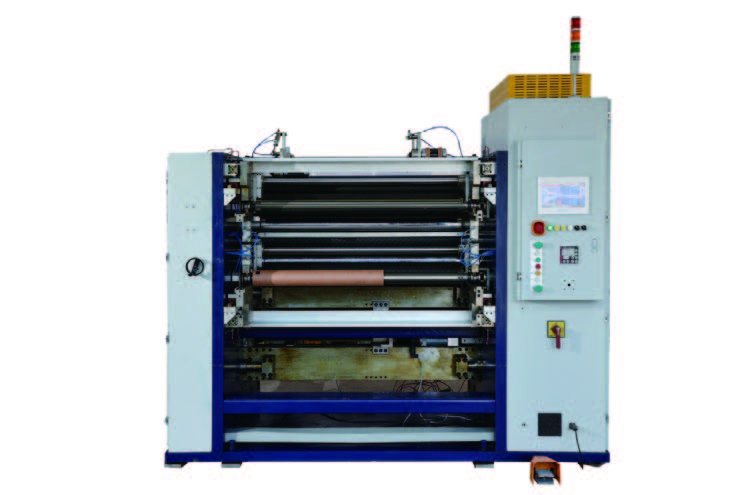 New Energy Ultra-thin Film Slitting Machine For Capacitive Film
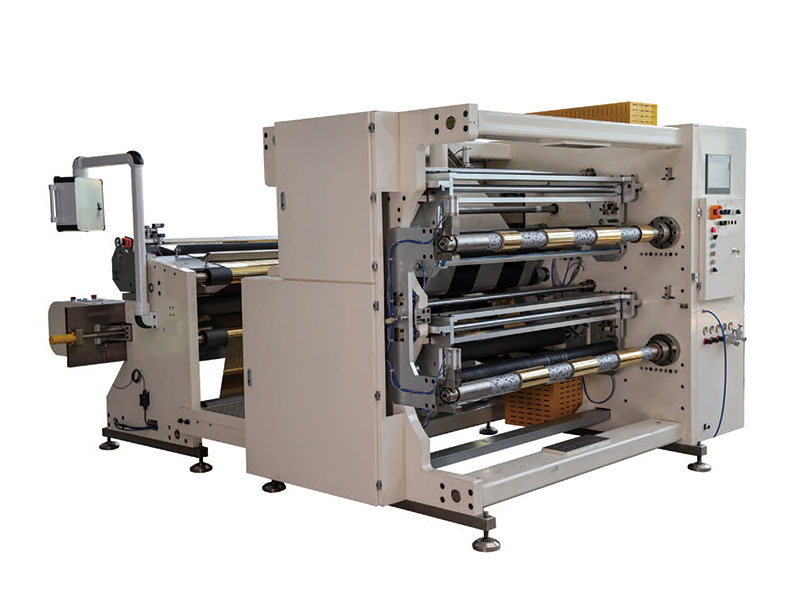 1400mm Hot Stamping Foil Slitting Machine
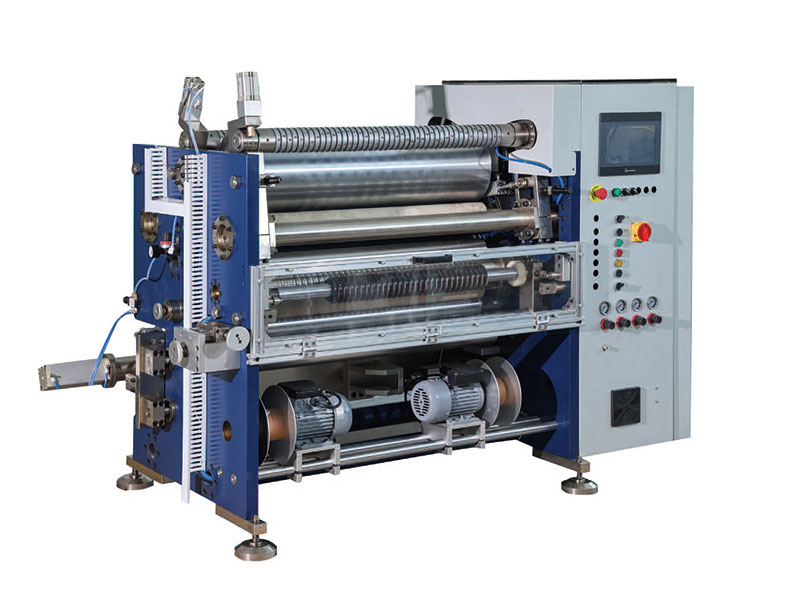 800mm Hot Stamping Foil Slitting Machine
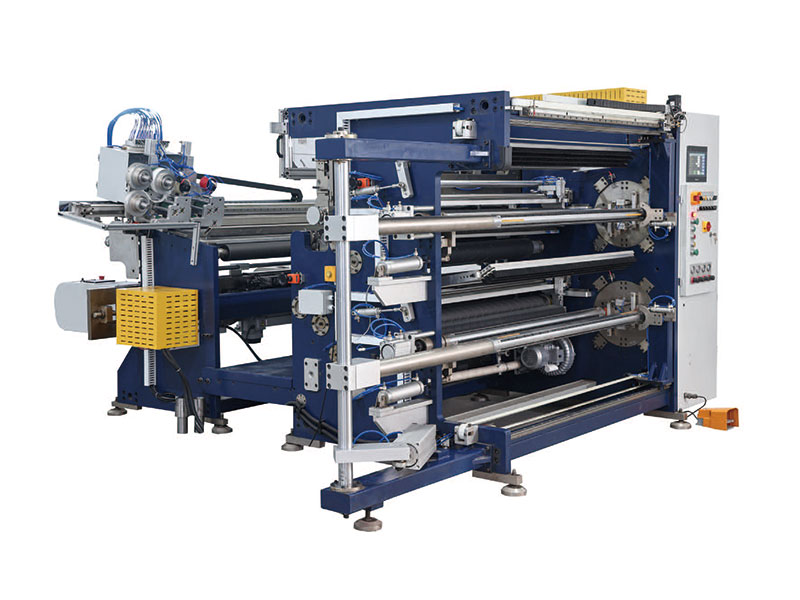 1350mm Hot Stamping Foil Slitting Machine