
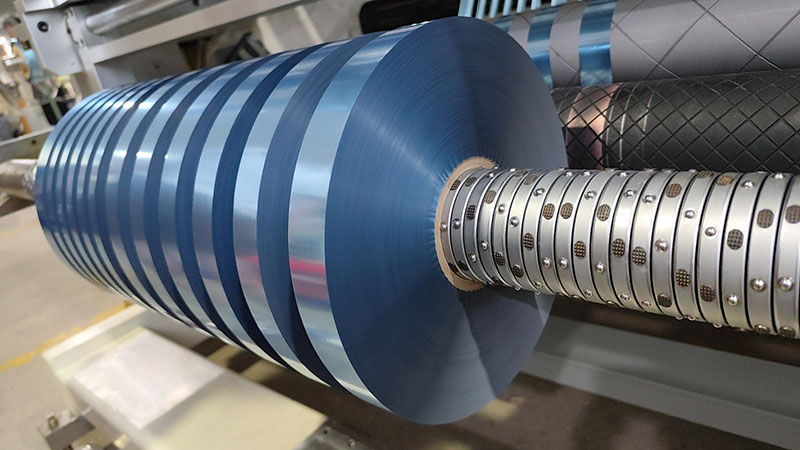
As one of the indispensable equipment in modern industrial production, the slitting machine undertakes the task of accurately dividing wide raw materials into the required specifications, and is widely used in the processing of various materials such as film, paper, metal foil, and nonwovens. This article will delve into the core technology, classification, working principle of slitter and its important role in improving the accuracy and efficiency of material processing, and reveal why it is an accurate choice for the material processing industry.
Core Technology and Classification:
The core of slitting machine technology lies in high-precision cutting system and advanced control system. According to the different cutting methods, the slitting machine can be roughly divided into the following categories:
- Round knife slitting: Continuous cutting with a round blade that rotates at high speed, suitable for soft materials such as film and paper.
- Guillotine slitting: The cutting action is completed by a straight knife that reciprocates up and down, and is suitable for thick or hard materials.
- Laser slitting: Uses a laser beam to cut at high temperatures, with high precision, suitable for complex patterns and hard materials.
- Ultrasonic slitting: suitable for fusible and viscous materials, cutting through ultrasonic vibration to reduce thermal damage of materials.
How it works:
Slitters typically include a feeding system, a traction system, a cutting unit, and a winding/stacking system. The feeding system ensures that the material enters the cutting area evenly and smoothly, the traction system controls the forward speed of the material, and the cutting unit performs an accurate cut before the finished product is processed by a winding or stacking system. The whole process is controlled by a PLC or more CNC system to achieve accurate setting of cutting dimensions and automated production.
Improve machining accuracy and efficiency:
The slitting machine ensures that the cutting size error is small and the material utilization rate is improved through high-precision guide rail system, servo drive technology and precise thickness measurement and control system. At the same time, the automated and standardized control interface simplifies the operation process, accelerates the production cycle, and reduces manual intervention, thereby greatly improving production efficiency and product quality consistency.
Conclusion:
In the pursuit of fast and accurate modern manufacturing environment, the continuous innovation and application of slitting machine technology provides strong technical support for the material processing industry. Whether it is to improve processing accuracy, optimize production processes, or meet diversified cutting needs, slitting machines are an accurate choice to achieve rapid utilization and quality of materials, and continue to promote the development of good quality in related industries.
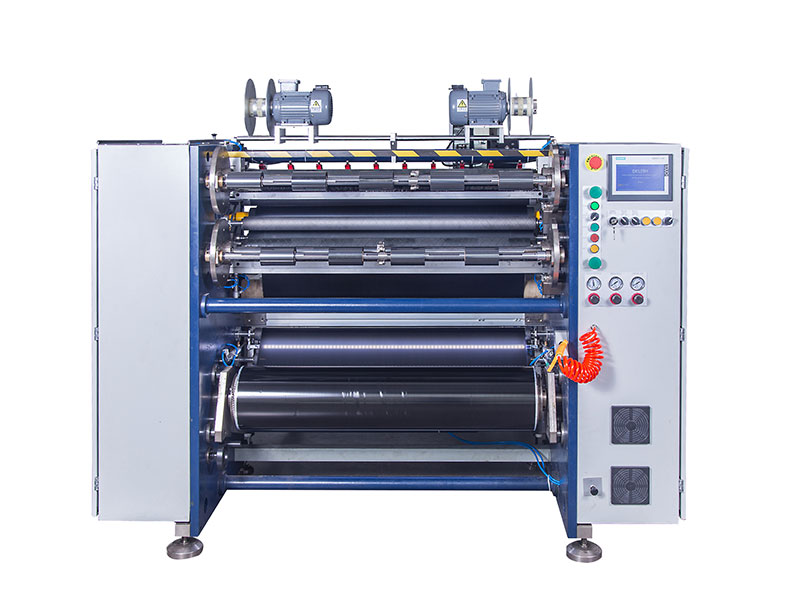 Can a barcode ribbon slitting machine cut and thermal transfer ribbons?
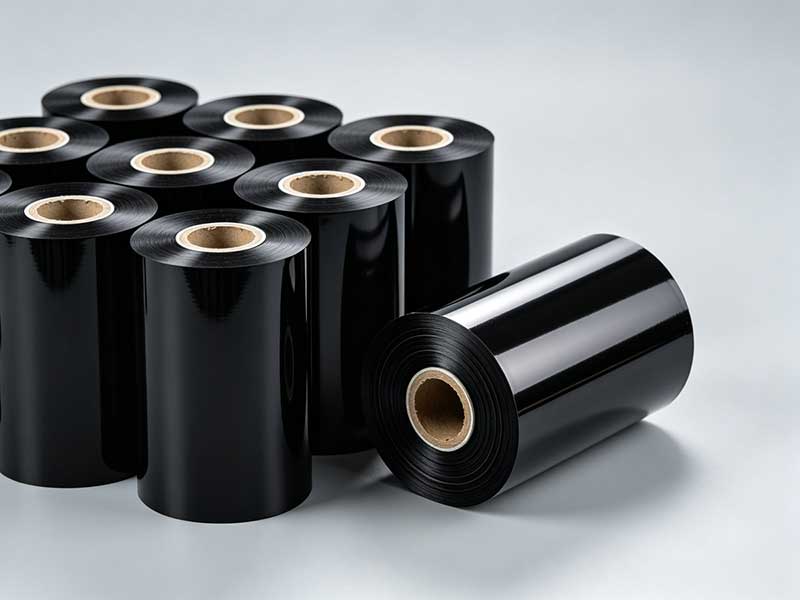 What ribbon materials are suitable for the barcode ribbon slitting machine?
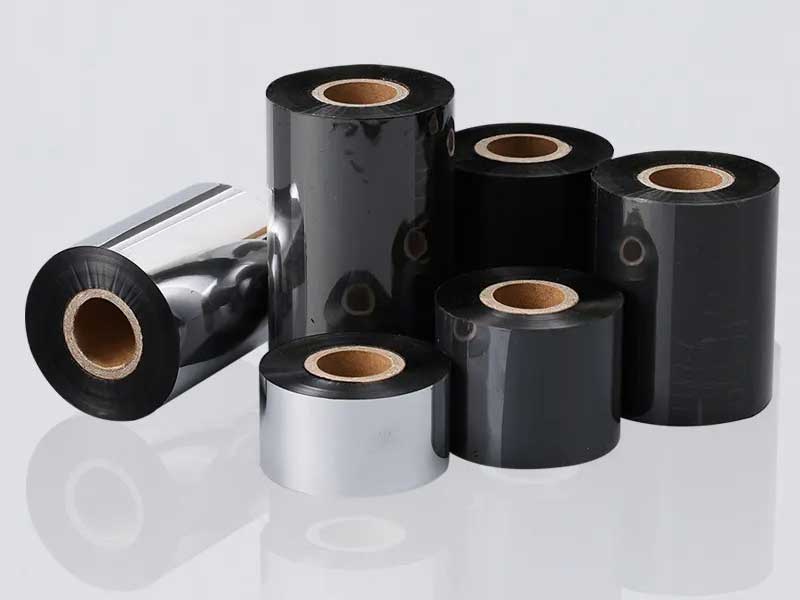 How to propose customized requirements for barcode ribbon slitting machines?How to choose a barcode ribbon slitting machine? Core Features and Key Selection Points
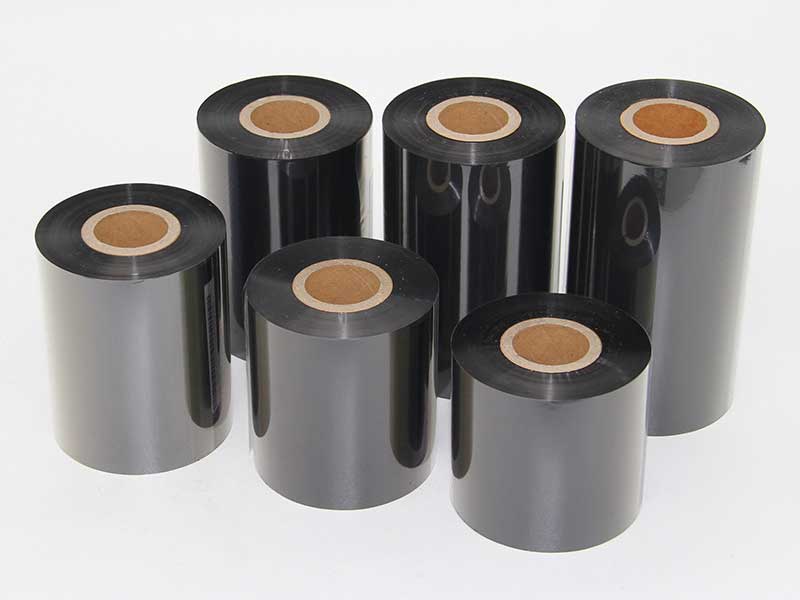 The ribbon slitting machine for the barcode printer is suitable for ribbon types


 English
 Deutsch
 Français
 Español
 Português
 日本語
日本語 русский
 한국어
한국어 عربي
عربي ภาษาไทย
 Tiếng Việt
 Italiano
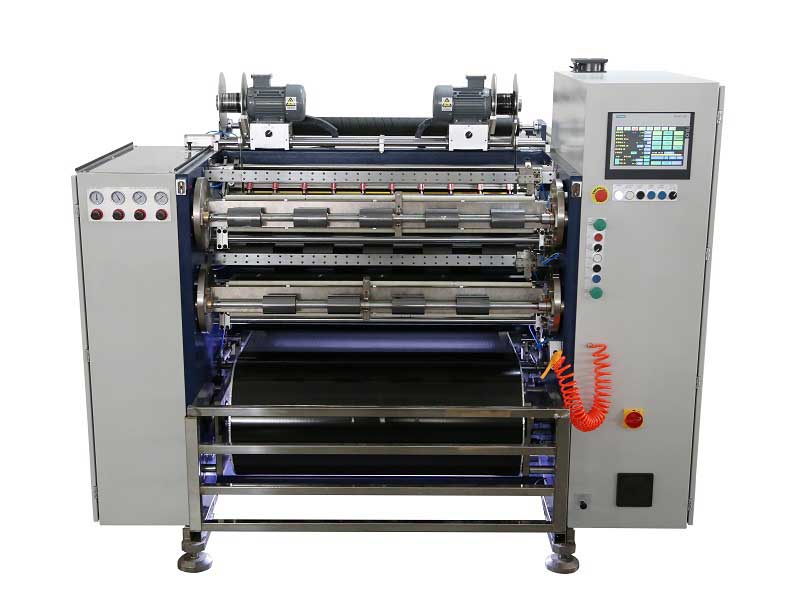 Automatic Thermal Transfer Ribbon Slitting Machine RSDS8 H PLUS
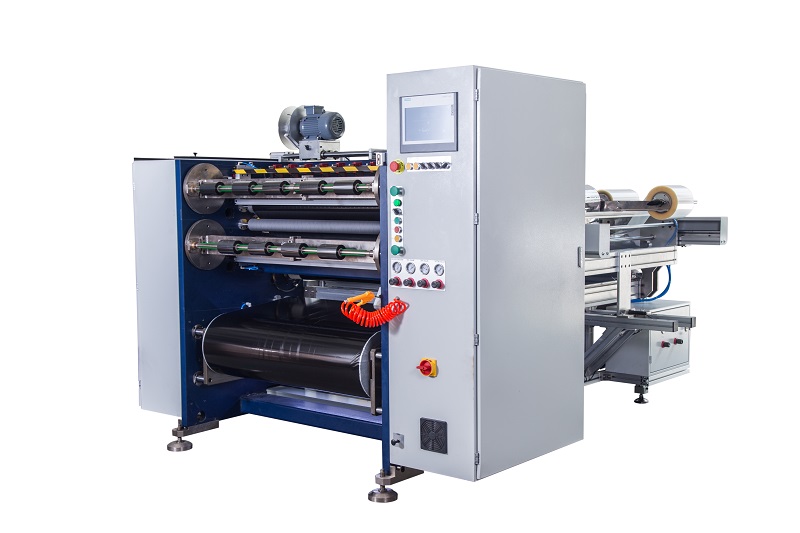 Semi Automatic Thermal Transfer Ribbon Slitting Machine RSDS5 PLUS
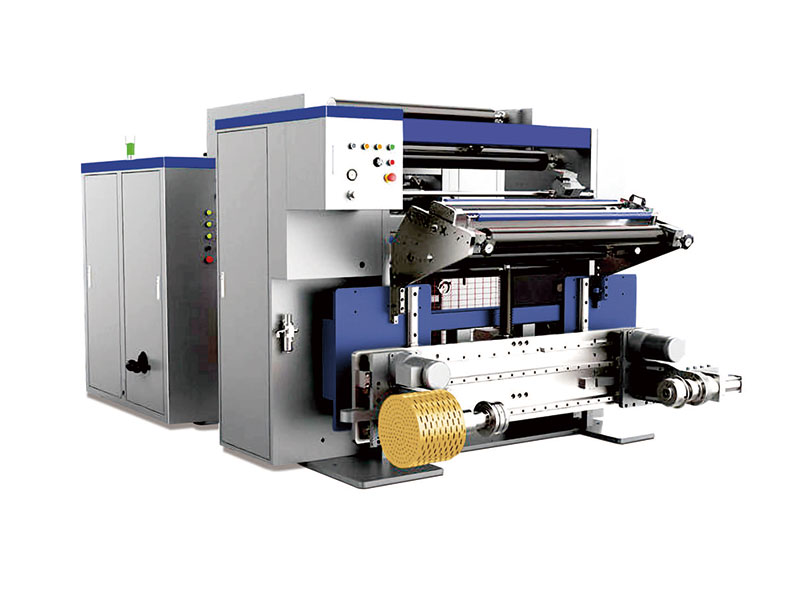 High Speed Slitting Machine
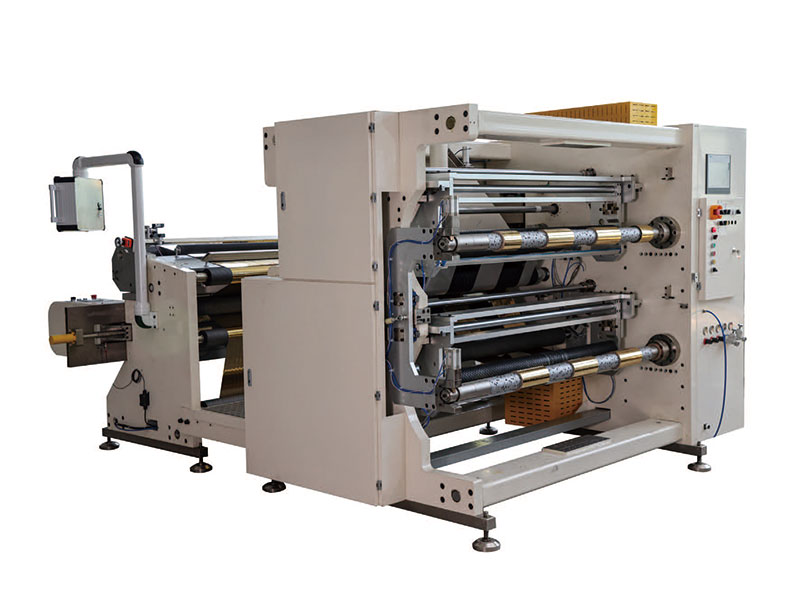 1400mm Hot Stamping Foil Slitting Machine