
In the barcode label printing industry, ribbon slitting machines are key equipment for processing wide mother rolls into suitable specifications for various printers. Its value lies in two aspects: first, cost control, directly purchasing large roll raw materials for self-slitting, avoiding high premiums for pre-cut ribbons; Second, flexibility: the slitting width can be adjusted at any time according to orders, without the need to keep multiple finished product inventory. But slitting machines on the market range from tens of thousands to hundreds of thousands, with a wide variety of specifications. How do you choose? This article starts from actual usage scenarios to outline a clear selection approach.
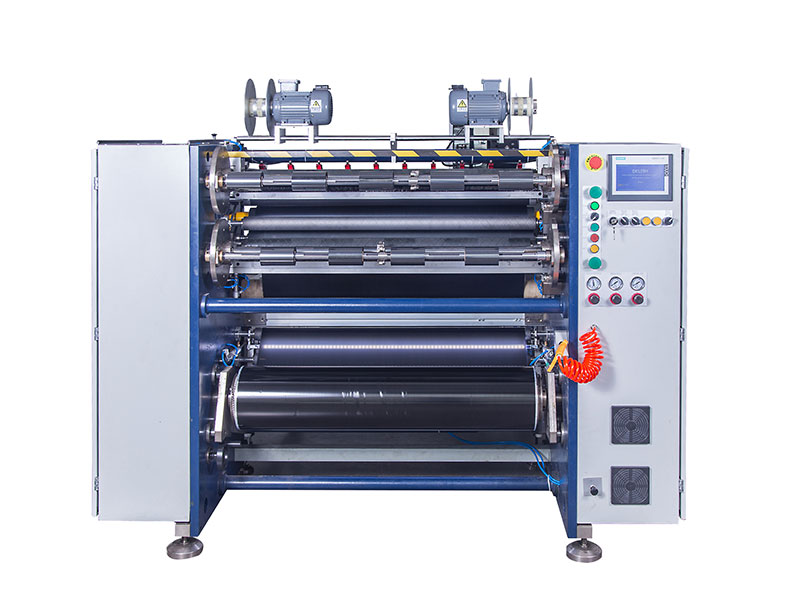
First, figure out your ribbon type and precision requirements
Before choosing equipment, first consider your own production needs. Ribbons are mainly divided into three categories: wax-based, mixed-based, and resin-based. Wax-based ribbons are soft in texture and have relatively low tension sensitivity, allowing slitting at higher speeds; Resin-based ribbon coatings are hard and have low toughness, typically requiring operating speeds 20%–30% lower than wax-based ones, and require higher tool hardness and tension control.
Precision requirements directly determine the grade of the equipment. For conventional commercial labels, a slitting tolerance controlled within 0.3~0.5mm meets printing needs; For precision electronic tags, medical traceability labels, or if the carbon ribbon width is narrow (such as less than 10mm), an accuracy of 0.1mm or even 0.05mm is required. The consequences of insufficient precision are direct: ribbon edges are rough, tape misalignment during printing, and in severe cases, scratches the print head—and the cost of replacing the print head is much higher than the price difference of a slitting machine.
How to interpret core parameters: accuracy, speed, and winding neatness
Slitting precision is the lifeline of quality. Here's a common selection mistake: you can't just look at the theoretical values in the parameter table. Be sure to ask the manufacturer to conduct on-site trial cutting with your own ribbon roller, then use a vernier caliper to measure the deviation between the slitting width and the set value, and observe whether the edges are smooth and free of burrs. No matter how beautiful the parameter sheet is, a roll of actual samples is more convincing.
Slitting speed needs to be viewed rationally. Common speed ranges are as follows: low-speed economical type 50–100m/min, suitable for small batches and multiple varieties; Medium-speed general-purpose models 150–250 m/min, covering most commercial orders; High-speed production type: 300–500 m/min, suitable for large-scale continuous production. A key reminder: the nominal maximum speed is usually "laboratory data," and the actual usable speed is greatly affected by the ribbon material. When selecting models, you should pay more attention to operational stability at common speeds rather than peak speeds. Observing the winding state during highway starts and emergency stops is more meaningful than looking at the maximum speed when empty.
Roll neatness is the most easily overlooked but directly affects subsequent printing. End face deviation should be controlled within 1mm, and high-end equipment can reach up to 0.5mm. If the winding end face is "bell-shaped," the edges are "serrated," or there are internal folds, the root cause is almost always tension control and correction devices. Such ribbons are prone to jamming or breaking when unwinding on printers, and the saved equipment costs ultimately turn into scrap rates and downtime.
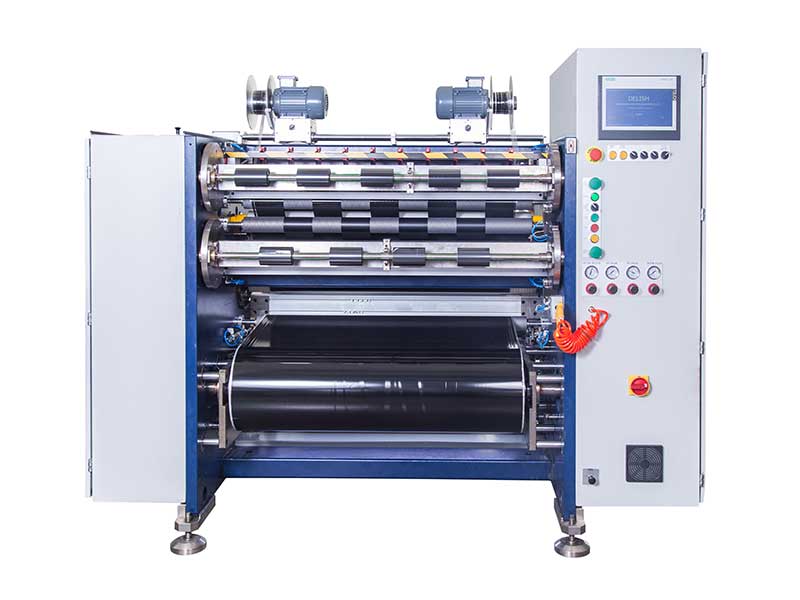
Tension control is the "soul," and the reel layout is a plus
The ribbon substrate is PET film only 4.5 to 10 microns thick, which is extremely sensitive to tension. Excessive tension causes the base film to stretch and deform, damaging the ink layer and causing powder shedding and contamination of the print head; Insufficient tension, loose and wrinkled when rolled, resulting in white lines and creases during printing; Uneven tension causes the finished roll to be "loose inside and tight outside," causing the core to shift during transportation or installation.
Selection recommendation: Prioritize a fully automatic closed-loop tension control system that can monitor and adjust tension in real time during unwinding, traction, and winding stages. For rewinding shaft configurations, if high-end ribbons or frequent specification changes are involved, slip shafts are worth considering—each winding unit independently controls torque, effectively solving the "core core" problem when slitting multiple specifications. Pneumatic slip shafts have higher control precision and a wider adjustment range than mechanical ones.
Blade type choice: round or square blade, thickness speaks
The choice of tool type directly affects the quality of the cut and the lifespan of the tool. In the industry, 100μm is usually used as the reference dividing line.
Square knives are specialists in thin ribbons. Suitable for slitting thin wax-based and mixed-based ribbons below 70μm, with high cut precision and neat edges. For square slitting, the suspended type is convenient but slightly less accurate, while the grooved type offers higher precision but is more troublesome to set the tool. Round knives are the main force for thick materials and high-speed production. When the ribbon film thickness exceeds 100μm or involves resin-based or other harder coatings, the cutting method of the circular blade is more suitable, with fast cutting speed and strong durability, making it suitable for mass production.
No matter which tool type you choose, the blade material directly affects lifespan and cut quality. Blades made of cemented carbide or with nano-coated layers can reduce friction and prevent material adhesion, offering a significant longevity advantage in resin-based ribbon scenarios.
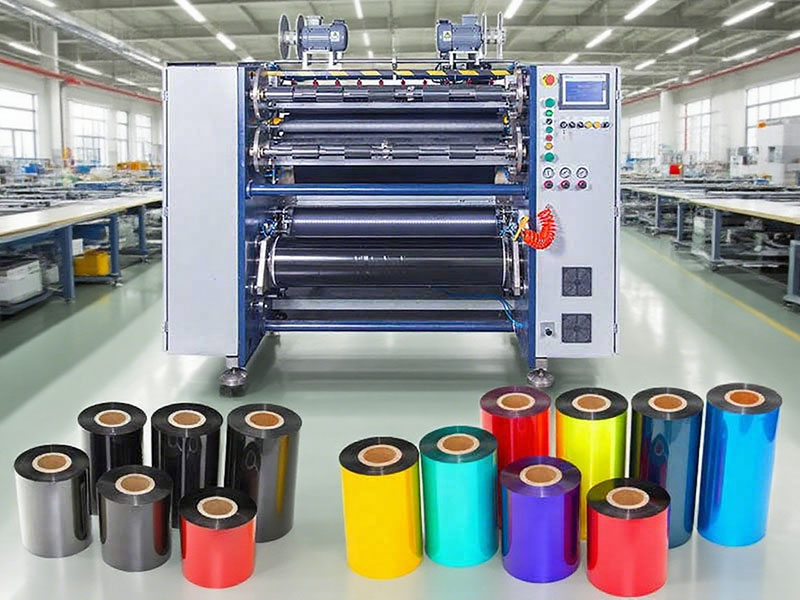
Match your business scenario and tailor it accordingly
Small offices or retail stores: occasionally slit, simple specifications, limited budget. Desktop manual or semi-automatic models are sufficient, focusing on ease of operation and footprint, with accuracy at 0.5mm level sufficient.
Small and medium-sized printing service providers: medium batch sizes, frequent specification changes. Semi-automatic or fully automatic models are recommended, featuring digital settings and basic tension control, aiming accuracy of 0.3mm, speeds in the 150–250m/min range, with core considerations being order change efficiency and accuracy stability.
Large manufacturing enterprises or professional ribbon processors: large-scale continuous production with high precision requirements. A fully automatic slitting machine is required, equipped with closed-loop tension control and an active deviation correction system, with an accuracy within 0.1mm and a speed above 300m/min. If multiple specifications are wound simultaneously, the slip shaft configuration is worth investing in.
Final advice: Trial cutting is more important than the specification table
No matter how beautiful the spec sheet is, using your own ribbon roll for on-site trial cutting before buying is the most effective way to avoid pitfalls. During trial cutting, focus on three key details: whether edge quality is consistent at the narrowest and widest specifications, rolling stability during high-speed starts and emergency stops, and tension drift after several hours of continuous operation. Only a slitting machine that can withstand real-world testing can truly make your barcode printing business worry-free and efficient.
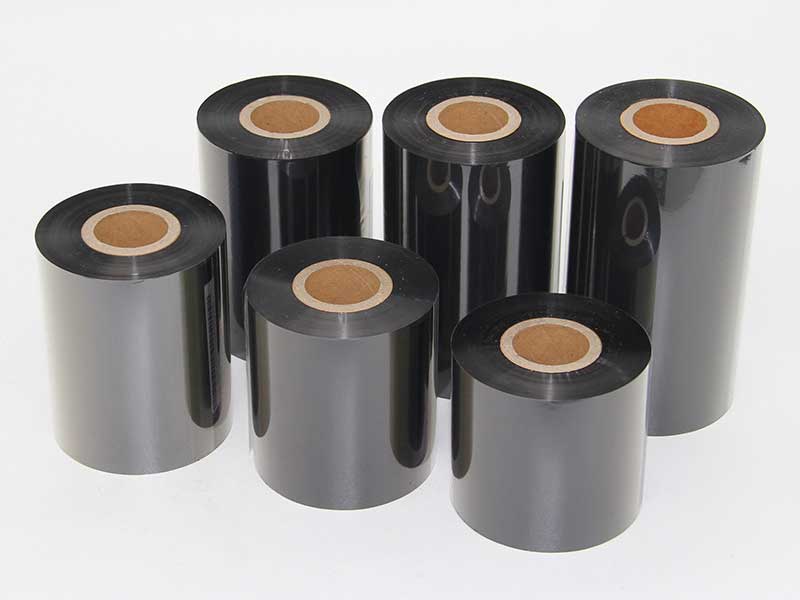 The ribbon slitting machine for the barcode printer is suitable for ribbon types
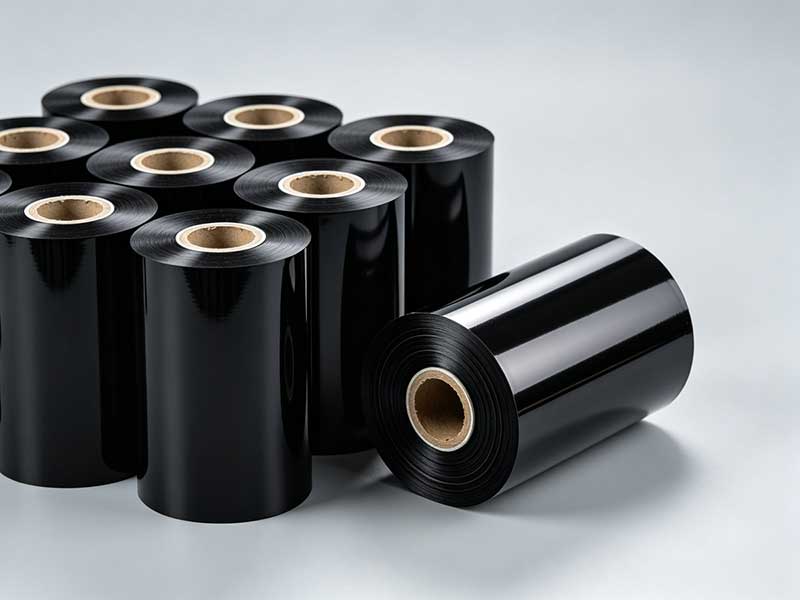 Core functions of the ribbon slitting machine for barcode printersCauses of uneven end faces in ribbon slitting machinesHow to solve wrinkled winding in ribbon slitting machinesRibbon slitting machine selection: wax-based, mixed-based, or resin-based


 English
 Deutsch
 Français
 Español
 Português
 日本語
日本語 русский
 한국어
한국어 عربي
عربي ภาษาไทย
 Tiếng Việt
 Italiano
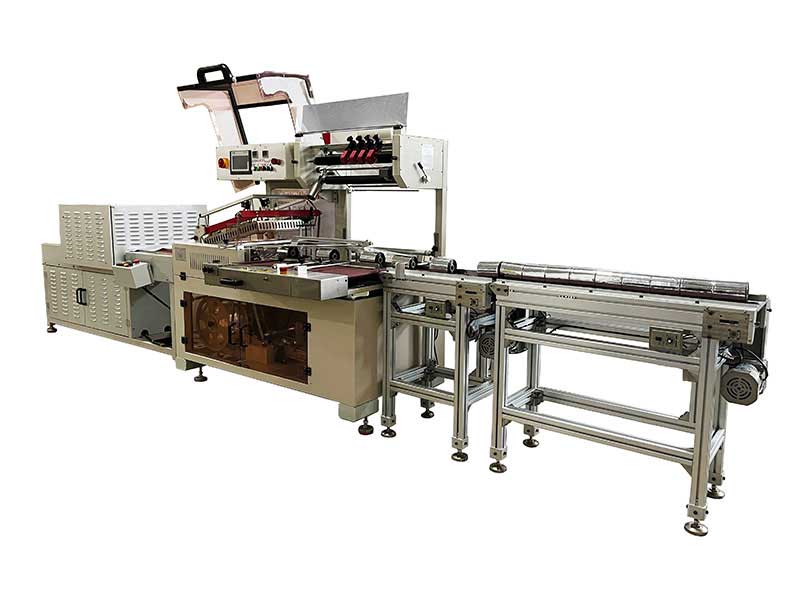 Thermal Transfer Ribbons Packaging Machine
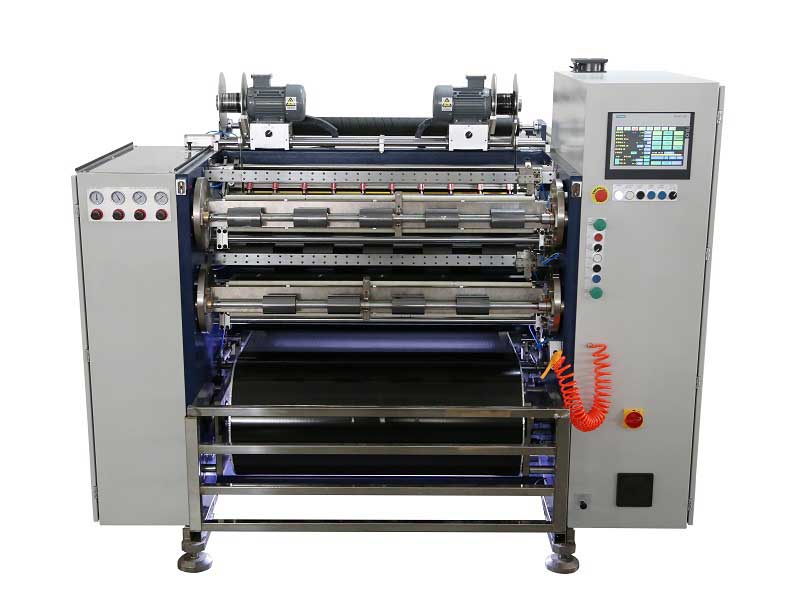 Automatic Thermal Transfer Ribbon Slitting Machine RSDS8 H PLUS
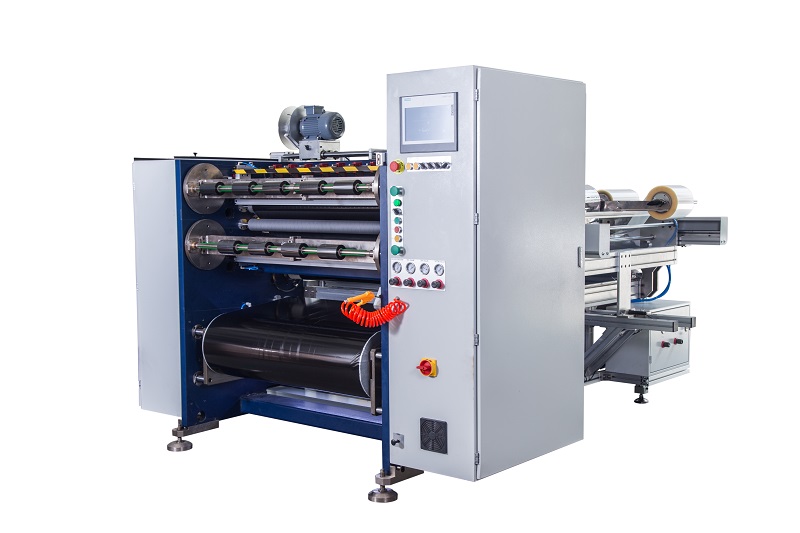 Semi Automatic Thermal Transfer Ribbon Slitting Machine RSDS5 PLUS
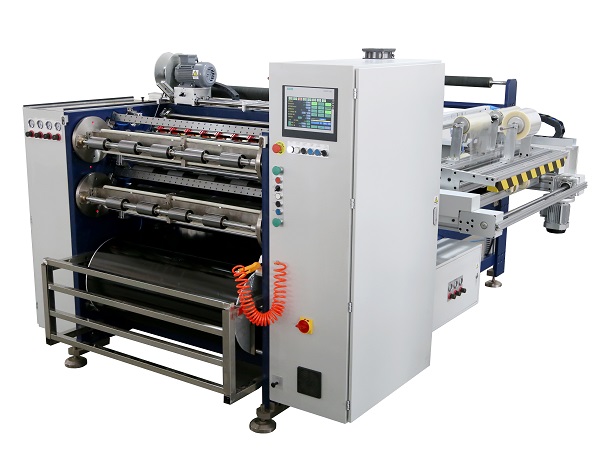 Automatic Thermal Transfer Ribbon Slitting Machine RSDS8 PLUS