
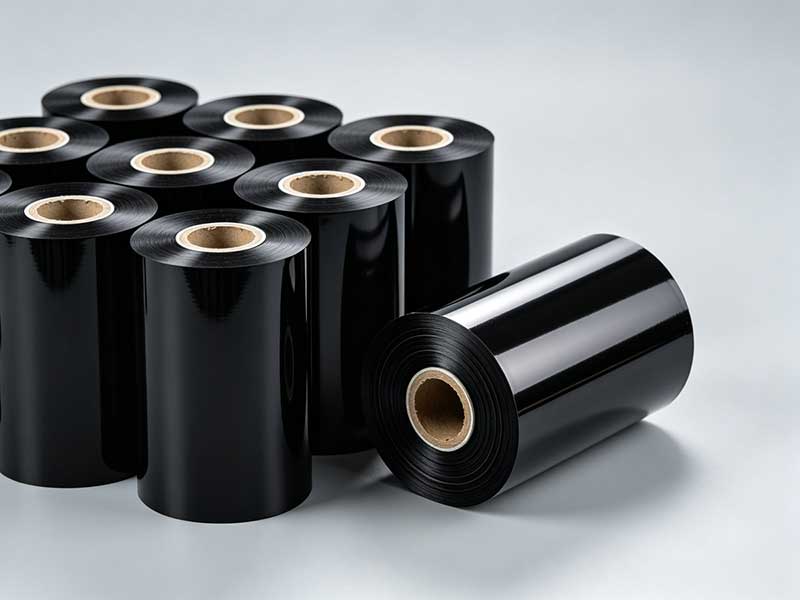
In the barcode printing industry chain, ribbon slitting machines play the role of a "bridge"—they precisely slice the large, wide rolls of coated ribbons into small rolls suitable for different models of barcode printers. This process may seem simple, but it directly determines the quality of the final print: insufficient slitting accuracy can cause ribbon misalignment and white lines in print; Improper tension control can cause powder shedding, wrinkles, or even broken ribbons. The core function of a ribbon slitting machine revolves around three dimensions: "precise cutting, stable rolling, and fast running."
Slitting precision control: from mechanical execution to system collaboration
Slitting accuracy is the most fundamental performance indicator of ribbon slitting machines. Its core requirement is to slice the wide ribbon into sub-rolls of specified width, with width errors usually controlled within ±0.1mm. This precision is not achieved by a single component, but is the result of a coordinated system.
Slitting actuators typically use circular or flat blade systems, with the number and spacing of blade groups adjustable manually or CNC according to order requirements. For harder materials like resin-based ribbons, the blade's wear resistance and sharpness are key. But relying solely on the tool itself is far from enough—the correction system plays the role of the "calibrator." By monitoring the ribbon edge position in real time through photoelectric sensors, the correction system can dynamically adjust the ribbon's lateral position to ensure that the ribbon edge remains theoretically aligned with the tool throughout the slitting process. Without this layer of protection, even with precise tool installation, even slight lateral drift during ribbon operation can accumulate into significant width deviations.
Deeper precision assurance comes from parametric control systems. Modern ribbon slitting machines generally use PLC or touchscreen interfaces, allowing operators to set parameters such as slitting length, speed, and quantity, and the system automatically calculates a reasonable operating curve based on these settings. Some advanced models also feature buffer start and stop control functions, automatically adjusting speed and tension during startup and stop stages to avoid fluctuations in slitting tolerances caused by instantaneous impacts. Data shows that this optimization can improve slitting accuracy by more than 50%.
Tension control: the lifeline of quality throughout the entire process
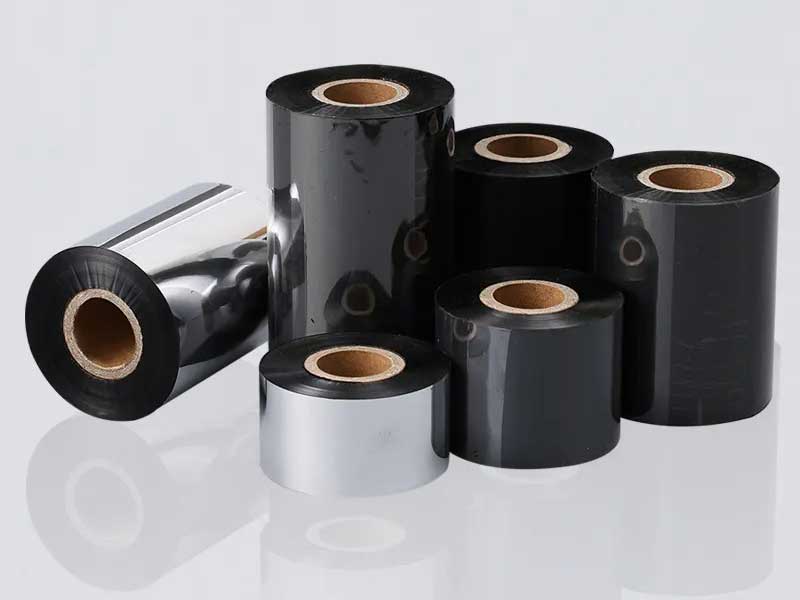
If slitting accuracy determines the ribbon's "dimensional compliance," then tension control determines the ribbon's "printing performance." Tension is the most core and subtle process variable in ribbon slitting: excessive tension causes tensile damage to the PET base film, causing physical changes in the ink layer adhering to it, resulting in powder shedding during use; Insufficient tension, ribbon rewinding becomes loose, causing wrinkles and white lines or indentations during printing; Uneven tension leads to core misalignment and lateral slippage.
The tension control system of a ribbon slitting machine needs to achieve independent adjustment for unwinding and winding, and have taper tension control capabilities. Taper tension refers to the decreasing tension as the winding diameter increases—if the tension remains constant at all times, the outer carbon ribbon will tighten and 'squeeze' the inner layer to deform. A common solution for this control is to use servo motors paired with magnetic powder clutches: the magnetic powder clutch provides the base tension torque, while the servo system fine-tunes in real time according to changes in the reel diameter.
The effect of tension control is ultimately reflected in the flatness of the finished ribbon's rewinding. The ribbon must be completely flat and kept parallel to the die core so that the ribbon edges are evenly stressed during printing. If the rewinding is uneven, the force points concentrate on one side of the ribbon edge, significantly increasing the risk of breakage. Therefore, the tension system and the reeling shaft design are often linked: the reeling requires sufficient rigidity and concentricity, and some models are equipped with automatic brackets to reduce sway during high-speed operations.
Winding and switching efficiency: from "shutdown and shaft replacement" to "continuous production"
Slitting is only halfway through; the ribbon still needs to be neatly rewound onto the finished core. The performance of the winding device directly affects production efficiency and finished product quality. Current mainstream devices support simultaneous multi-roll winding, commonly configured as three-axis or four-axis winding systems, capable of handling multiple sub-rolls simultaneously. The reel specifications are usually compatible with both 1-inch and 1/2-inch dies to accommodate different brands of barcode printers (such as Zebra, Honeywell, etc.).
The bottleneck for efficiency often lies not in slitting speed, but in the downtime during reroll changes. Traditional equipment requires shutdown after winding and manually disassembles the material shaft and replaces the core with a new tube, a time-consuming and complex process. To address this pain point, the flip-shaft winding system was developed: the winding station uses a rotating bracket structure; when one shaft is fully loaded, the system automatically flips to the next shaft to continue winding, simultaneously completing full shaft discharge and preparation for new shafts. Some high-end models also integrate automatic cutting functions, cutting ribbons the moment winding is complete, with neat cuts and avoiding skewing and inconsistency caused by manual cutting.
The waste collection system is also an important guarantee for continuous production. During ribbon slitting, the blank edge material on both sides of the mother roll must be wound promptly; otherwise, it may entangle the equipment and affect operation. The torque motor-driven waste coiling device can rewind the edge material into compact scrap coils with stable torque, ensuring that the main slitting line is not disturbed.
Automation and Intelligence: From "Operating Equipment" to "Management System"
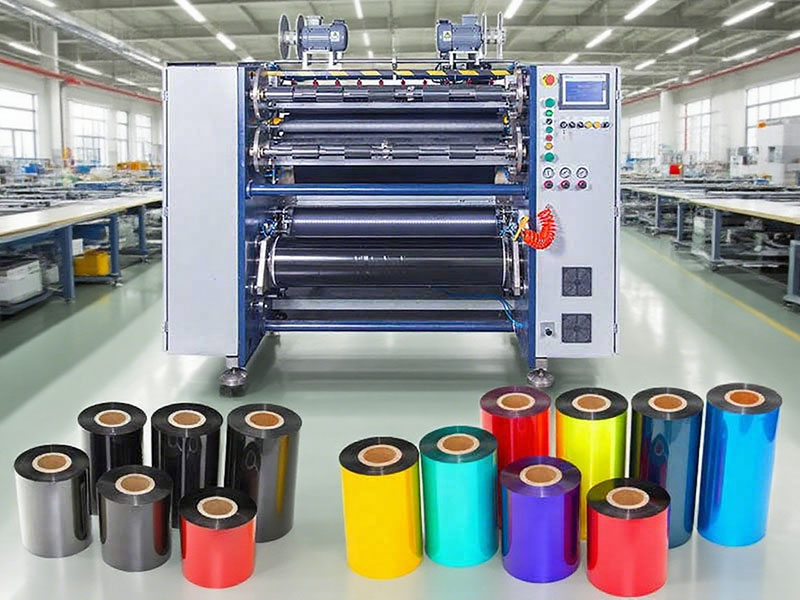
The functional boundaries of modern ribbon slitting machines have long surpassed simple "cutting" and "rolling." The increase in automation is redefining the role of operators.
The guide belt console is a typical example. After slitting, the finished ribbon needs to be fed with a guide film (lead ribbon) on the roll core so that end users can insert the ribbon into the printer. Manually applying guide tape is not only inefficient but also difficult to ensure consistency. The fully automatic guide belt platform can automatically complete the joining, cutting, and bonding of the ribbon, significantly reducing manual intervention while saving materials.
Parametric formula management gives the equipment "memory capability." Different batches and materials of ribbons (wax-based, mixed, resin-based) correspond to different tension curves, speed parameters, and tool group configurations. Operators can save verified parameter combinations as recipes and recall them with one click for the next production, reducing debugging time and human error. The "optimal tension range" data accumulated during commissioning has also become a key asset for equipment maintenance and technology transfer.
Online inspection and fault diagnosis functions further enhance production reliability. The system monitors the edge alignment status, tension fluctuations, and operating speed of the ribbon in real time. Once an abnormality is detected, it triggers an alarm or automatically shuts down to prevent mass quality accidents.
Conclusion
The core function of the ribbon slitting machine for barcode printers is essentially a technological closed loop built around "precision, tension, and efficiency." Slitting precision control solves the problem of "how wide to cut," tension control solves the problem of "cutting well and usability," and winding and automation solve the problem of "cutting fast or saving manpower." These three factors both restrict and support each other: without precision, tension control is impossible; Without tension guarantees, the flatness of the roll is like castles in the air; Without efficient winding and switching, no matter how high the slitting speed, it cannot be converted into actual production capacity.
For ribbon processing companies, understanding the technical logic behind these core functions is not only the basis for selecting equipment, but also the foundation for optimizing production processes and enhancing product competitiveness. In today's increasingly refined barcode printing applications, every technical detail in the slitting process ultimately leaves a mark on the quality of terminal printing.
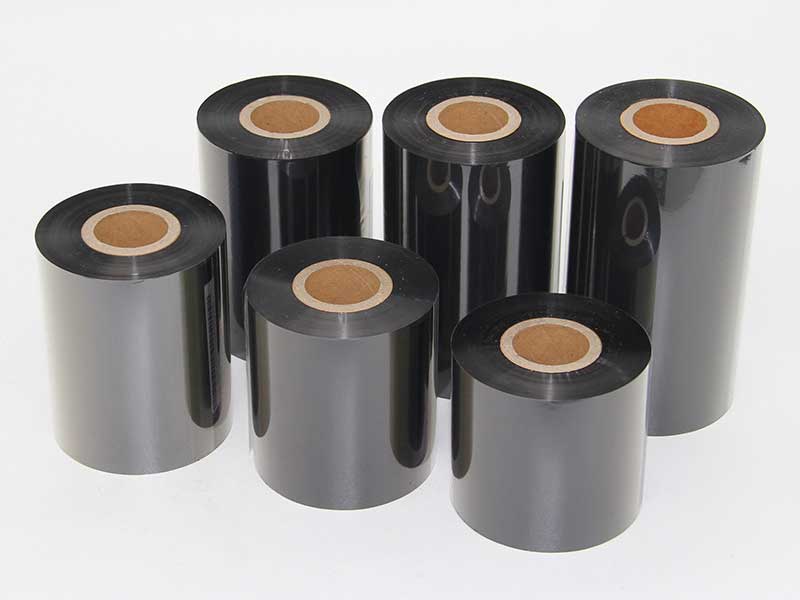 The ribbon slitting machine for the barcode printer is suitable for ribbon types
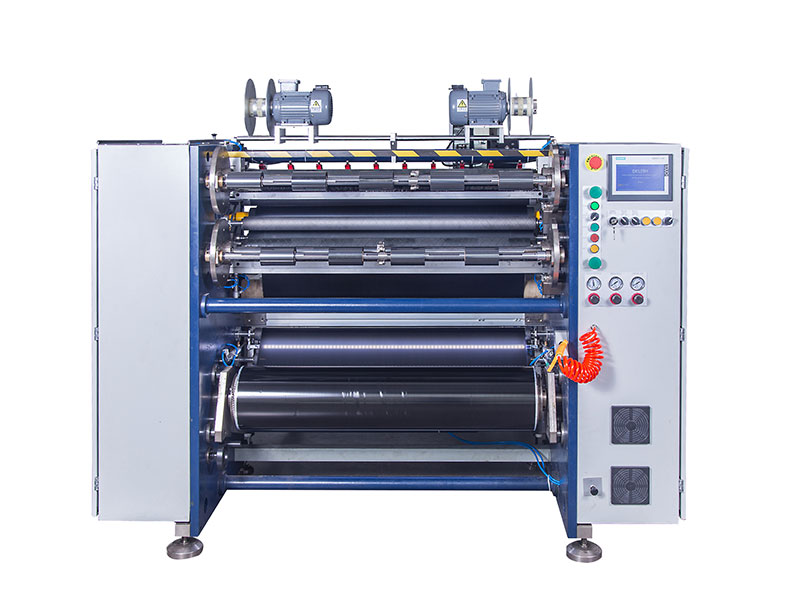 How to choose a ribbon slitting machine for a barcode printer?Causes of uneven end faces in ribbon slitting machinesHow to solve wrinkled winding in ribbon slitting machinesRibbon slitting machine selection: wax-based, mixed-based, or resin-based


 English
 Deutsch
 Français
 Español
 Português
 日本語
日本語 русский
 한국어
한국어 عربي
عربي ภาษาไทย
 Tiếng Việt
 Italiano
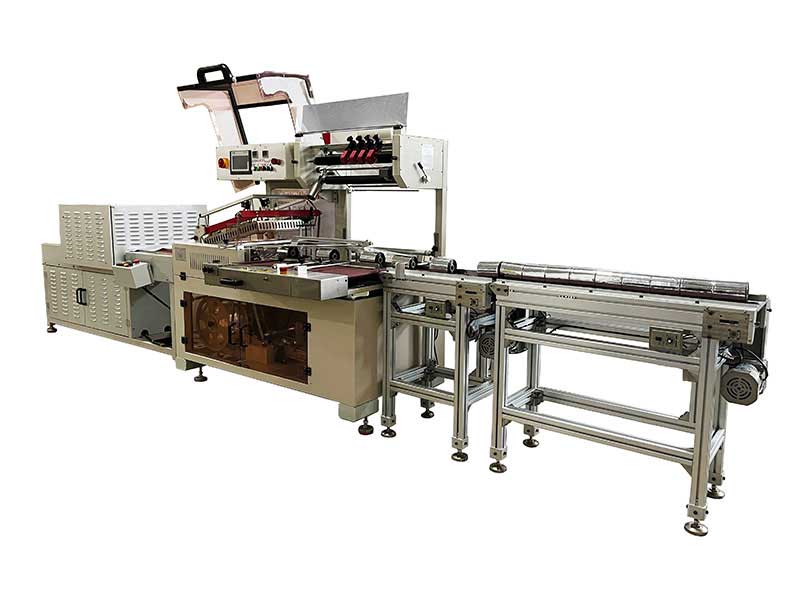 Thermal Transfer Ribbons Packaging Machine
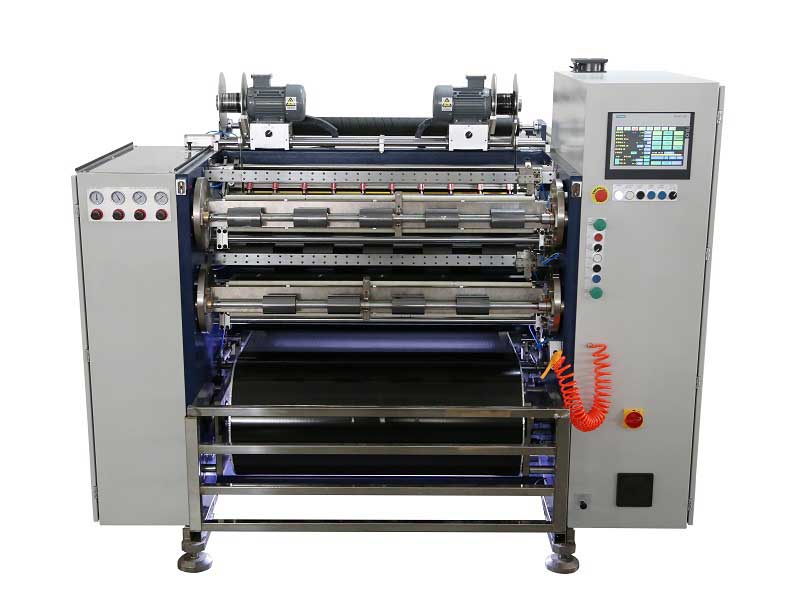 Automatic Thermal Transfer Ribbon Slitting Machine RSDS8 H PLUS
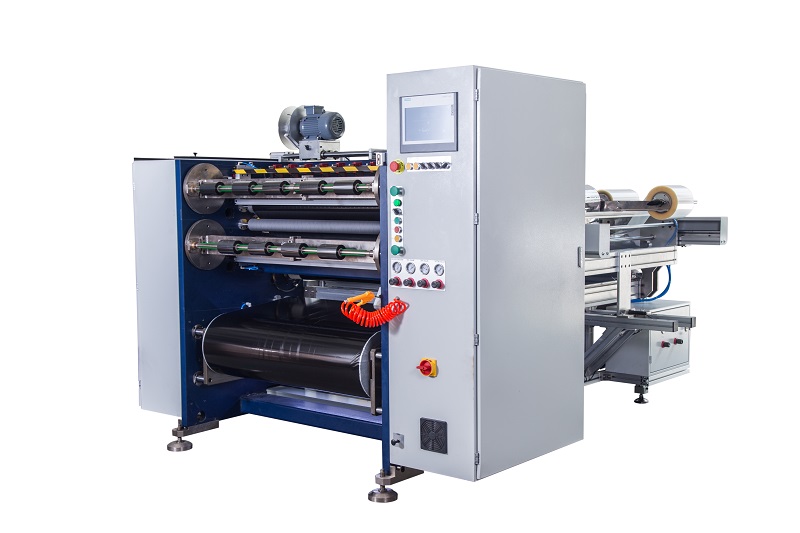 Semi Automatic Thermal Transfer Ribbon Slitting Machine RSDS5 PLUS
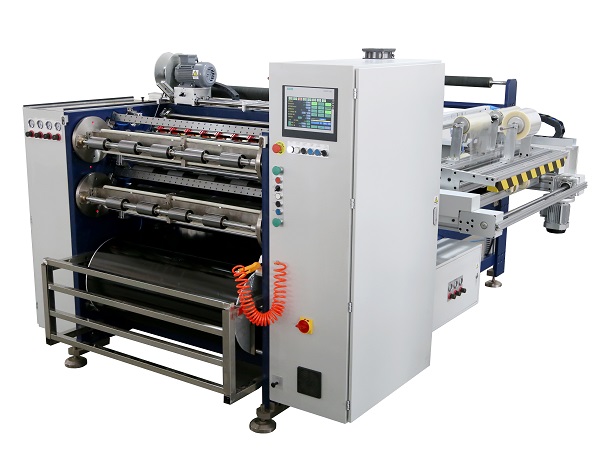 Automatic Thermal Transfer Ribbon Slitting Machine RSDS8 PLUS